Quick Answer: Is the Chevrolet Spark Electric?
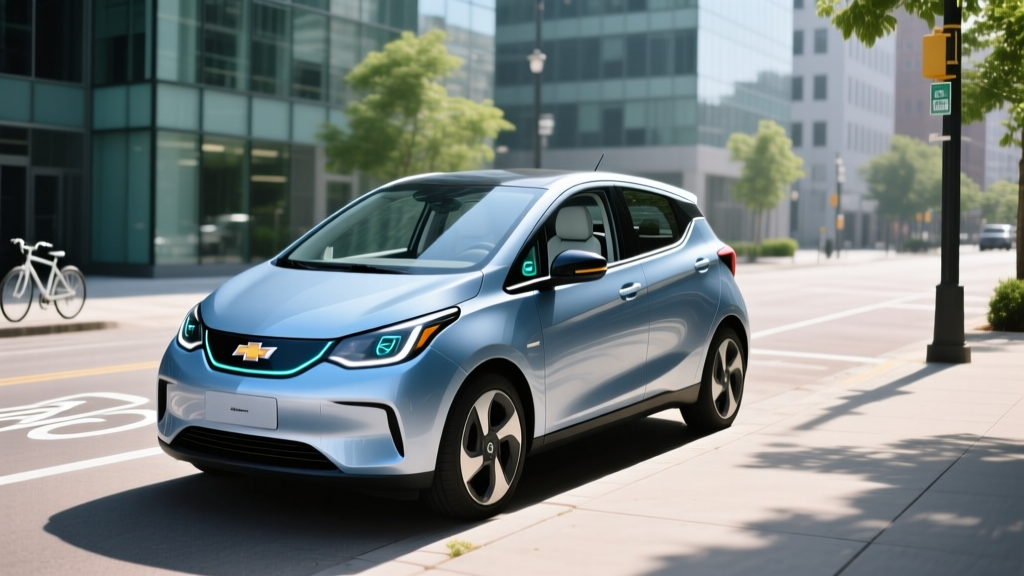
No, the Chevrolet Spark was never sold as a fully electric vehicle. The Spark was exclusively a gasoline-powered subcompact hatchback throughout its entire U.S. production run, and Chevrolet discontinued the model after the 2022 model year. If you've seen references to an "electric Spark," they may be confusing it with the Chevrolet Bolt EV — Chevy's affordable electric hatchback that shares a similar urban-friendly footprint but runs entirely on battery power. The Bolt EV was also discontinued after 2023, but Chevrolet revived the Bolt nameplate for the 2026 model year on the Ultium platform with updated range and faster charging.
Why the Confusion? Spark vs. Bolt Explained
The Chevrolet Spark and Chevrolet Bolt EV occupied adjacent spaces in Chevy's lineup — both are compact, affordable, city-oriented hatchbacks. But their powertrains couldn't be more different:
| Spec | Chevrolet Spark (2022 Final Year) | Chevrolet Bolt EV (2026 Ultium) |
|---|---|---|
| Powertrain | 1.4L 4-cylinder gas | Single-motor BEV |
| Horsepower | 98 hp | 200 hp |
| EPA Range / MPG | 29 city / 38 hwy MPG | 255 mi (EPA est.) |
| Battery | N/A (12V auxiliary only) | ~65 kWh usable (NMC, Ultium) |
| 0–60 mph | ~10.8 seconds | ~6.5 seconds |
| MSRP (Base) | $14,095 (discontinued) | ~$28,995 (2026 est.) |
| Federal Tax Credit | N/A | Up to $7,500 (§30D, income/MSRP/sourcing rules apply) |
| Availability | Discontinued after 2022 | On sale (2026 model year) |
The Spark's appeal was its rock-bottom price — under $15,000 new. No current EV matches that sticker price, but the Bolt's effective price after the federal tax credit and fuel savings narrows the gap significantly over a 5-year ownership period.
The Real Spark Legacy: Gas-Only to the End
Throughout its U.S. availability (2013–2022), the Chevrolet Spark used a small 1.4-liter naturally aspirated inline-four producing 98 horsepower. It was one of the cheapest new cars you could buy, but it was never electrified — not even a mild hybrid. Some international markets received a limited battery-electric version called the Spark EV between 2013 and 2016, but this was a low-volume compliance car sold only in select regions (South Korea, parts of Europe) and was never officially offered in the United States. Per fueleconomy.gov, all U.S.-spec Spark models are classified as gasoline vehicles.
2026 Chevy Bolt EV: The Spiritual Successor to the Spark
If you wanted a Spark but electric, the 2026 Chevrolet Bolt EV is the closest equivalent in Chevy's current lineup. Built on GM's Ultium battery architecture, the redesigned Bolt addresses the two biggest complaints about the previous generation: slow DC fast charging and dated interior tech.
2026 Bolt EV — Real-World Range Expectations
EPA estimated range: 255 miles
Real-world highway (70 mph): Expect ~215–230 miles in moderate temperatures
Cold weather (below 30°F): Expect ~175–200 miles due to battery resistance and cabin heating load
Preconditioning the battery via the app before fast charging or departure can recover 10–15% of cold-weather range loss.
Key 2026 Bolt EV specifications:
- Battery: ~65 kWh usable capacity, NMC (nickel manganese cobalt) Ultium chemistry
- DC fast charging: Peak ~150 kW (a major upgrade from the prior generation's 55 kW cap), 10–80% in approximately 28 minutes
- Level 2 charging: 11.5 kW onboard charger, 0–100% in ~7 hours on a 48-amp home charger
- Connector: NACS (native Tesla Supercharger compatibility — no adapter needed)
- Motor: 200 hp, 236 lb-ft torque, front-wheel drive
- Warranty: 8 years / 100,000 miles on battery and powertrain (capacity retention threshold: 60%)
Cost Comparison: What a Spark Would Have Cost vs. a 2026 Bolt EV
The Spark's $14,095 sticker price looks impossibly cheap compared to any EV. But total cost of ownership tells a different story. Here's a 5-year / 75,000-mile breakdown comparing a hypothetical late-model used Spark to the 2026 Bolt EV:
| Cost Category (5 yr / 75k mi) | Used 2022 Spark (Gas) | 2026 Bolt EV (New) |
|---|---|---|
| Purchase Price | ~$12,000 (used market) | $28,995 MSRP |
| Federal Tax Credit (§30D) | $0 | Up to –$7,500 (point-of-sale)* |
| Effective Purchase | $12,000 | ~$21,495 |
| Fuel / Energy (75k mi) | ~$7,800 (33 MPG avg, $3.45/gal) | ~$2,850 ($0.13/kWh avg, 28 kWh/100mi) |
| Maintenance | ~$3,200 (oil, filters, brakes, spark plugs) | ~$1,100 (cabin filter, tire rotation, wipers) |
| Insurance (avg) | ~$5,400 ($108/mo) | ~$7,200 ($144/mo) |
| Estimated Depreciation | ~$5,000 | ~$9,500 |
| 5-Year Total Cost | ~$33,400 | ~$42,145 |
*§30D credit eligibility depends on buyer income caps ($150k single / $300k joint), vehicle MSRP cap ($55,000 for cars), and battery critical-mineral sourcing requirements. Rules may change — verify current eligibility at IRS.gov or consult a tax professional.
The Bolt costs roughly $8,700 more over five years, but you get a dramatically safer, faster, more tech-forward vehicle with 255 miles of range, zero tailpipe emissions, and the ability to fuel at home overnight. The gap narrows further if gas prices rise or if your state offers additional EV rebates.
Common Misconceptions About the Spark and Budget EVs
| Myth | Fact |
|---|---|
| "Chevy made an electric Spark in the U.S." | The Spark EV was sold only in select international markets (2013–2016) and never officially in the U.S. All U.S. Sparks are gas-powered. |
| "EVs are always more expensive to own." | Higher upfront cost is offset by ~$5,000 less in fuel and ~$2,100 less in maintenance over 5 years. The gap depends on local electricity rates and driving habits. |
| "You can't get a cheap EV." | The 2026 Bolt EV starts under $29,000 before incentives. After the $7,500 credit, the effective price drops to ~$21,500 — competitive with many used gas cars. |
| "Small EVs have terrible range." | The 2026 Bolt EV delivers 255 miles EPA — enough for 90%+ of daily driving and most road trips with one DC fast-charge stop. |
| "I need a Tesla to use Superchargers." | The 2026 Bolt EV uses the NACS connector natively, giving it direct access to Tesla's Supercharger network — over 25,000 stalls in North America. |
First-Time EV Buyer: What You Need to Know Before Switching
If you're coming from a Spark or similar budget gas car, the jump to an EV involves a few practical adjustments:
Home Charging Is the Foundation
Over 80% of EV charging happens at home. A standard 120V outlet (Level 1) adds roughly 3–5 miles of range per hour — adequate if you drive under 40 miles daily. For faster overnight replenishment, a Level 2 home charger (240V, 48 amps) adds ~35–40 miles per hour and fully recharges the Bolt EV overnight. Installation costs typically range from $800 to $2,500 depending on whether your electrical panel needs an upgrade. Renters and apartment dwellers should verify charging access before committing to an EV.
Public Charging: Better Than You Think, Worse Than You Hope
The Bolt EV's native NACS connector unlocks Tesla Superchargers, which are the most reliable DC fast-charging network in the U.S. At 150 kW peak, you'll add ~150 miles in a 20-minute stop. However, public charging outside the Supercharger network remains inconsistent — plan routes using apps like A Better Routeplanner and expect occasional downtime at non-Tesla stations.
Cold Weather Cuts Range
Lithium-ion batteries lose efficiency in cold temperatures. In sub-freezing conditions, expect 20–30% range reduction. The 2026 Bolt EV includes a heat pump to mitigate cabin heating energy draw, but the physics of battery chemistry can't be fully eliminated. If you live in northern climates, budget for ~180 miles of real-world winter range and precondition the battery before driving.
Should You Buy a 2026 Bolt EV (or Look Elsewhere)?
Choose the Bolt EV if:
- You want the most affordable new EV with 250+ miles of range
- You have access to home Level 2 charging (or can install it)
- Your daily commute is under 100 miles round-trip
- You qualify for the §30D federal tax credit (income under $150k single / $300k joint)
- You want native Supercharger access without adapters
Look at a used gas car or hybrid if:
- You cannot install or access any home or workplace charging
- You regularly drive 300+ miles in a single trip through areas with sparse charging infrastructure
- Your budget is strictly under $15,000 total
- You live in extreme cold (–20°F or below regularly) and have no garage
Consider a PHEV (like the Toyota Prius Prime) if:
- You want electric-only commuting (~40 miles) but gas flexibility for long road trips
- You're not ready to commit to full EV infrastructure
Frequently Asked Questions
Was there ever an electric Chevrolet Spark sold in the United States?
No. A limited-production Spark EV existed for international markets (South Korea, parts of Europe) from 2013 to 2016, but it was never officially sold through U.S. Chevrolet dealerships. Every U.S.-spec Spark is gasoline-powered.
What is the cheapest new electric car you can buy in 2026?
The 2026 Chevrolet Bolt EV, starting at approximately $28,995 before incentives, is among the most affordable new EVs available. After the federal §30D tax credit (up to $7,500 at point of sale, subject to eligibility), the effective price can drop to around $21,500. The Nissan Leaf is another budget option, though with less range and CHAdeMO charging (a declining standard).
Does the 2026 Bolt EV qualify for the $7,500 federal tax credit?
The Bolt EV is expected to qualify for at least partial §30D credit, but eligibility depends on three factors: (1) your adjusted gross income must fall below IRS caps, (2) the vehicle MSRP must be under $55,000 for passenger cars, and (3) the battery must meet critical-mineral and component sourcing thresholds that tighten annually. Always verify current rules at IRS.gov before purchasing.
Can I charge the 2026 Bolt EV at Tesla Superchargers?
Yes. The 2026 Bolt EV is built with a native NACS (North American Charging Standard) connector, meaning it plugs directly into Tesla Supercharger stalls without an adapter. This is a significant advantage over CCS-equipped vehicles that require adapters for Supercharger access.
How long will the Bolt EV battery last?
GM warranties the Ultium battery for 8 years or 100,000 miles against degradation below 60% of original capacity. Real-world data from the previous-generation Bolt EV suggests NMC batteries typically retain 85–90% capacity after 100,000 miles with normal use. Avoid habitual DC fast charging and routinely charging to 100% to maximize longevity — daily charging to 80% is optimal.
Is the Spark coming back as an EV?
Chevrolet has not announced any plans to revive the Spark nameplate, electric or otherwise. The brand's affordable-EV strategy centers on the Bolt nameplate and the Ultium platform. If you want a small, affordable Chevy EV, the 2026 Bolt EV is the answer.