The Short Answer
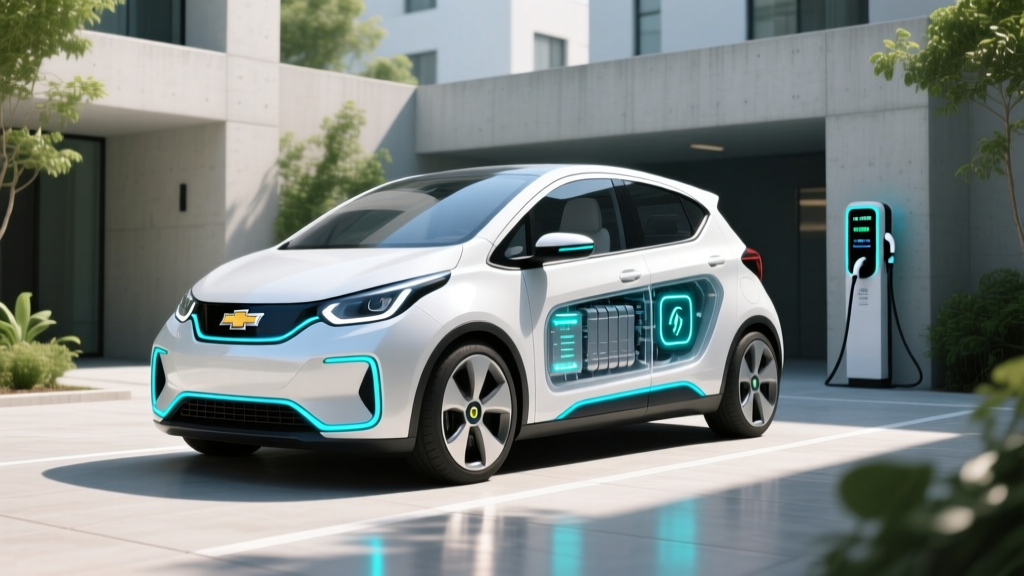
No, the Chevrolet Spark sold in the U.S. from 2013–2022 was a gasoline-powered subcompact hatchback. Chevrolet did produce an all-electric version called the Spark EV from 2013 to 2016, but it was discontinued nearly a decade ago and is only available on the used market. The gas-only Spark was retired after the 2022 model year, and Chevrolet has not announced a direct electric successor for 2026.
If you're asking "is the Chevrolet Spark an electric car" because you want a small, affordable Chevy EV, the closest current option is the 2026 Chevrolet Equinox EV (starting around $33,600) or a used Spark EV. Below, we break down the Spark EV's history, its specs, and the best 2026 alternatives with real numbers.
The Spark EV: Chevrolet's Forgotten Electric Hatchback
Chevrolet introduced the Spark EV for the 2014 model year as a compliance car — a small-volume EV built primarily to meet California's zero-emission vehicle (ZEV) mandate. It was sold only in California, Oregon, and Maryland, with limited availability through select dealerships.
The Spark EV was notable for being surprisingly quick off the line and for using an early DC fast-charging standard. Here are the key specifications:
| Specification | 2014–2016 Chevrolet Spark EV |
|---|---|
| Battery Capacity | 21.3 kWh usable (2014–2015); 18.4 kWh usable (2016) |
| EPA Range | 82 miles (2014–2015); 82 miles (2016) |
| Motor Output | 136 hp (2014–2015); 130 hp (2016) |
| 0–60 mph | ~7.6 seconds |
| DC Fast Charging | CHAdeMO connector; ~50 kW peak (80% in ~30 min) |
| Level 2 AC Charging | 3.3 kW (full charge in ~7 hours) |
| MPGe (Combined) | 119 MPGe (EPA) |
| Original MSRP | ~$26,685 (before incentives, 2014) |
According to fueleconomy.gov, the Spark EV delivered 119 MPGe combined — competitive even by today's efficiency standards. However, its 82-mile EPA range and limited geographic availability made it impractical for most buyers.
Why it was discontinued: The Spark EV was a stopgap. By 2017, Chevrolet launched the Bolt EV with 238 miles of EPA range and a starting price of $37,495 (later reduced), which rendered the Spark EV obsolete. The CHAdeMO connector also lost the standards war to CCS and later NACS, making used Spark EV charging infrastructure increasingly scarce.
Used Spark EV in 2026: What You'd Actually Get
If you find a used Spark EV on the market today, here's what to expect in real-world ownership:
Real-World Range Reality
EPA Sticker: 82 miles
Actual Highway (65–70 mph): ~65–70 miles
Cold Weather (below 32°F): ~50–55 miles
Battery Degradation (10-year-old pack): Expect 15–25% capacity loss, bringing usable range to 60–70 miles in ideal conditions
The Spark EV's small 21.3 kWh battery (18.4 kWh for 2016 models with LG Chem cells) was air-cooled in early models, which accelerated degradation in hot climates. The 2016 model switched to liquid cooling, making it a more reliable used pick if you can find one.
Charging in 2026 is a significant problem. The Spark EV uses the CHAdeMO DC fast-charging connector, which has been largely abandoned in the U.S. Electrify America, EVgo, and most other networks have shifted to CCS1 and NACS. You'll find CHAdeMO plugs at older stations, but new installations rarely include them. For home Level 2 charging, the Spark EV uses the standard J1772 connector, which remains universal.
2026 Alternatives: Affordable Small EVs Compared
Since Chevrolet doesn't offer a new Spark EV, here are the closest 2026 alternatives for buyers wanting a compact, budget-friendly EV:
| Model | Starting MSRP | EPA Range | Battery | DC Fast Charge (Peak kW) | 10–80% Time | Federal Credit (§30D) |
|---|---|---|---|---|---|---|
| 2026 Chevy Equinox EV 2LT | $33,600 | 319 mi | 85 kWh (NMC) | 150 kW | ~28 min | Up to $7,500* |
| 2026 Nissan LEAF S | $28,140 | 149 mi | 40 kWh (NMC) | 50 kW (CHAdeMO) | ~40 min | Up to $3,750* |
| 2026 Hyundai Kona Electric SE | $32,975 | 261 mi | 65.4 kWh (NMC) | 100 kW | ~43 min | Up to $7,500* |
| Used Spark EV (2016) | $6,000–$9,000 | 82 mi (new) | 18.4 kWh | 50 kW (CHAdeMO) | ~30 min | Up to $4,000 (used EV credit) |
*Federal EV tax credit eligibility under IRS §30D depends on buyer income caps, vehicle MSRP caps, and battery critical-mineral sourcing requirements. Check IRS.gov for current-year rules. Point-of-sale transfer is available for qualifying purchases.
Cost of Ownership: Spark EV vs. Gas Spark vs. Modern EV
To put the economics in perspective, here's a 5-year total cost of ownership comparison assuming 12,000 miles/year, national average electricity at $0.16/kWh, and gas at $3.40/gallon:
| Cost Factor | Used Spark EV (2016) | Used Gas Spark (2022) | 2026 Equinox EV 2LT |
|---|---|---|---|
| Purchase Price | $7,500 | $14,000 | $33,600 (−$7,500 credit = $26,100) |
| Fuel/Energy (5 yr) | $2,880 | $6,800 | $3,200 |
| Maintenance (5 yr) | $1,200 | $3,500 | $1,500 |
| Insurance (5 yr est.) | $5,500 | $5,000 | $7,200 |
| Depreciation (5 yr) | −$3,000 | −$5,000 | −$10,000 |
| 5-Year Total | $14,080 | $24,300 | $28,000 |
The used Spark EV wins on pure cost, but the trade-off is severely limited range and dwindling CHAdeMO charging access. The Equinox EV costs more upfront but delivers 4× the range, modern safety tech, and NACS/CCS charging compatibility. According to IIHS, the 2026 Equinox EV earned top safety marks, while the discontinued Spark lacks modern automatic emergency braking and lane-keeping assist.
Decision Framework: What Should You Actually Buy?
If/Then Buying Guide
- If you need a dirt-cheap city runabout and have home charging: A used 2016 Spark EV (~$7,500) works if your daily commute is under 40 miles round-trip and you never need to fast-charge on the road. Install a Level 2 home charger ($500–$1,200 installed) for overnight top-ups.
- If you want a new affordable EV with real range: The 2026 Hyundai Kona Electric (261 mi EPA, ~$33K) or Chevy Equinox EV (319 mi EPA, ~$34K) are the current value leaders. Both use CCS/NACS connectors with broad public charging access.
- If you need a budget car but lack home charging: Skip the EV entirely. A used gas Spark or a 2026 Toyota Corolla Hybrid (52 MPG combined) avoids the public-charging dependency that makes short-range EVs frustrating.
- If you're considering a Spark EV for road trips: Don't. With 82 miles of range and CHAdeMO fast-charging that's increasingly unavailable, you'll spend more time searching for compatible chargers than driving.
Common Misconceptions About the Spark and EVs
| Myth | Fact |
|---|---|
| "The Chevy Spark is an electric car" | The standard Spark (2013–2022) was gas-only. Only the Spark EV (2014–2016) was electric, and it was discontinued. |
| "I can charge a Spark EV anywhere" | The Spark EV uses CHAdeMO for DC fast charging, which is being phased out at most U.S. networks. J1772 Level 2 charging remains compatible at home and most public Level 2 stations. |
| "Old EVs aren't worth buying" | A well-maintained Spark EV with a healthy battery can serve as a reliable city car, but battery State of Health (SoH) must be verified before purchase. Ask for a diagnostic report showing remaining capacity. |
| "All EVs qualify for the $7,500 tax credit" | Federal §30D credits have MSRP caps ($55,000 for cars), buyer income limits, and battery-sourcing requirements. Many new EVs qualify for partial credits. Used EVs can qualify for up to $4,000 (30% of sale price) under the separate used-vehicle credit. |
What a First-Time EV Buyer Should Know
If the Spark EV question is your entry point into EV shopping, here are the essentials before you commit to any electric vehicle:
- Home charging is non-negotiable for convenience. Without a Level 2 home charger (240V, typically 32–48 amps / 7.7–11.5 kW), daily EV ownership becomes a chore. Budget $800–$2,000 for professional installation, and confirm your electrical panel has capacity (a 200-amp panel is standard; older homes with 100-amp panels may need a $1,500–$3,000 upgrade).
- Understand kW vs. kWh. Kilowatts (kW) measure power — how fast you charge. Kilowatt-hours (kWh) measure energy — how big your battery is. A 65 kWh battery charging at 100 kW will fill faster than a 85 kWh battery at 50 kW.
- Real range is less than the EPA sticker. Expect 15–20% range loss at sustained highway speeds (70+ mph) and 20–40% loss in freezing temperatures. An EV rated at 260 miles EPA may deliver 200 miles on a winter road trip.
- Charging speed matters more than peak kW. Manufacturers advertise peak charge rates (e.g., "150 kW"), but the charge curve tapers significantly above 80% State of Charge. What matters is the 10–80% time — the practical window for road-trip stops.
- Connector compatibility is critical. In 2026, the NACS (Tesla-style) connector is becoming the U.S. standard, with CCS1 still widely available. Avoid CHAdeMO vehicles (like the Spark EV or older LEAF) unless you've confirmed compatible chargers near your regular routes.
Frequently Asked Questions
Does Chevrolet make an electric Spark in 2026?
No. The Spark EV was discontinued after 2016, and the gas-powered Spark was retired after 2022. Chevrolet's most affordable 2026 EV is the Equinox EV, starting around $33,600 before incentives.
How much does a used Spark EV cost in 2026?
Used 2014–2016 Spark EVs typically sell for $6,000–$9,000 depending on mileage and battery health. Buyers may qualify for the federal used EV tax credit (up to $4,000 or 30% of sale price, whichever is less) if purchased through a licensed dealer and income requirements are met.
Can I fast-charge a Spark EV on a road trip?
Technically yes, but practically it's very difficult. The Spark EV uses the CHAdeMO DC fast-charging connector, which most new public charging stations no longer include. You'd need to map CHAdeMO-compatible stations along your route using apps like PlugShare, and availability is shrinking every year.
Is the Spark EV a good first EV?
Only as a city-only second car with home charging. Its 82-mile range and declining fast-charging infrastructure make it unsuitable as a primary vehicle. For a first EV, prioritize at least 200+ miles of EPA range and a CCS or NACS connector.
What replaced the Chevrolet Spark?
Chevrolet did not produce a direct successor to the Spark in the U.S. The brand's smallest current offering is the Trax (gas-only crossover) or the Equinox EV for electric buyers. The subcompact hatchback segment has largely been abandoned by U.S. automakers in favor of small crossovers.