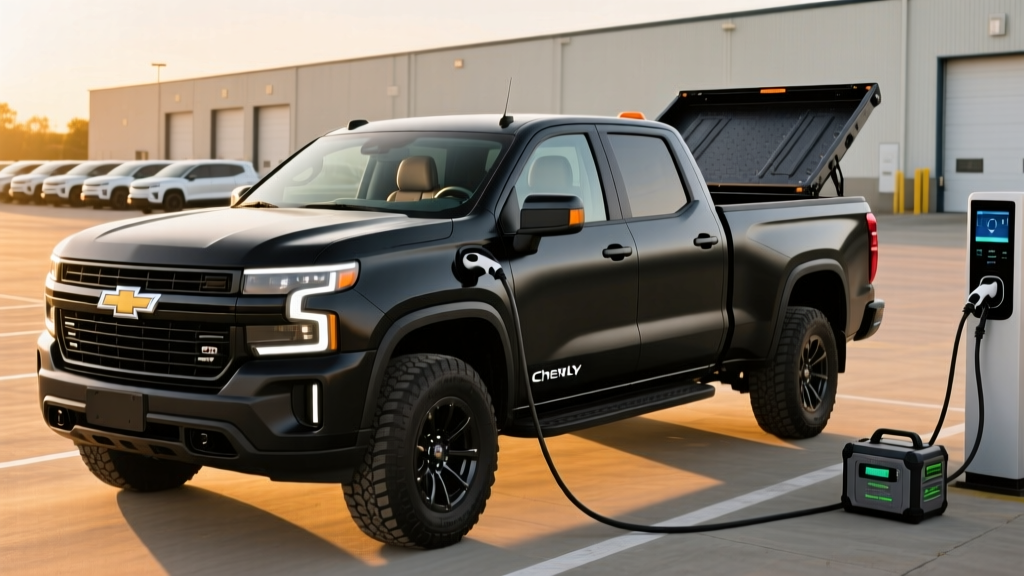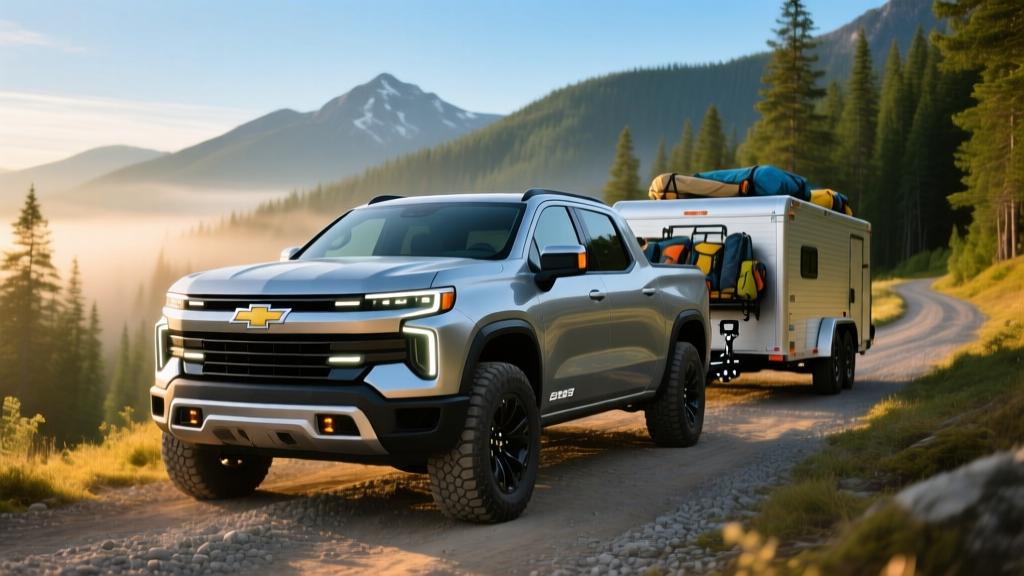
The Chevrolet Silverado EV is one of the heaviest production pickups on the road. With a curb weight pushing past 8,800 pounds for the 4WT and topping 9,000 pounds in top-trim RST form, the Silverado EV's mass is the single most consequential factor in how it drives, how far it goes, and how much energy it consumes. But weight isn't inherently a penalty in a full-size electric truck — it's also a function of a massive battery pack that enables over 400 miles of EPA-rated range and 10,000 pounds of max towing capacity.
This review examines the 2026 Chevrolet Silverado EV lineup through the lens of its weight: how those thousands of pounds translate to real-world range, charging behavior, efficiency, and ownership practicality. If you're cross-shopping the Silverado EV against the Ford F-150 Lightning, Rivian R1T, or Tesla Cybertruck, the numbers below will clarify which truck fits your use case.
2026 Silverado EV Curb Weight by Trim
GM's Ultium platform underpins the Silverado EV with a structural battery pack that serves as a stressed chassis member. The result is a rigid, low-center-of-gravity truck — but also one that tips the scales heavily. Here's how the 2026 trims break down:
| Trim | Battery (usable kWh) | Curb Weight (lbs) | GVWR (lbs) | Drivetrain |
|---|---|---|---|---|
| 4WT (Work Truck) | 200 kWh (NMC) | ~8,820 | 10,500 | Dual-motor AWD |
| LT | 200 kWh (NMC) | ~8,900 | 10,500 | Dual-motor AWD |
| RST | 200 kWh (NMC) | ~9,100 | 10,700 | Dual-motor AWD |
| Trail Boss | 200 kWh (NMC) | ~9,050 | 10,600 | Dual-motor AWD |
For context, the Ford F-150 Lightning Extended Range weighs approximately 6,800 pounds — roughly 2,000 pounds less than the Silverado EV. The Rivian R1T Dual-Motor Max sits around 7,150 pounds. The Silverado EV's extra mass comes primarily from its larger 200 kWh battery (vs. the Lightning's ~131 kWh and the R1T Max's ~149 kWh), plus the Silverado's physically larger frame.
The weight has real consequences: higher tire wear, longer braking distances when loaded, and reduced efficiency per mile. But it also means more energy on board, which is exactly how Chevy achieves its headline range figure despite the truck's bulk.
EPA Range and Real-World Expectations
EPA Range (RST): 440 miles
EPA Range (Trail Boss): 410 miles
Real-World Expectation: Plan for 340–380 miles in mixed highway driving at 70 mph. In cold weather (below 32°F), expect 280–330 miles depending on cabin heat usage and terrain. Towing a 6,000-lb trailer at highway speeds will cut range to approximately 180–220 miles.
The Silverado EV's 450-mile EPA figure (on the 4WT and LT trims with the 200 kWh pack) is among the highest of any production EV sold in the U.S. But EPA combined-cycle testing includes substantial low-speed and city driving where regenerative braking recovers energy and aerodynamic drag is minimal.
At highway speeds — where most road-trip miles accumulate — the Silverado EV's tall, flat-faced profile creates significant drag. Combined with 9,000 pounds of mass to accelerate and decelerate, real-world highway efficiency drops to roughly 2.0–2.2 kWh/mile. That math yields 340–380 miles from the ~200 kWh usable pack.
Cold weather compounds the issue. Lithium-ion NMC chemistry loses roughly 15–25% of effective capacity in freezing temperatures, and the Silverado EV's cabin and battery heating demands are proportional to its large interior volume and massive pack. The truck does feature a heat pump (standard on LT and above), which mitigates some loss, but buyers in northern climates should plan conservatively.
The most dramatic range reduction comes from towing. The Silverado EV is rated for up to 10,000 pounds (4WT with max tow package), but pulling a loaded trailer at 65 mph pushes energy consumption above 3.5 kWh/mile. That's a hard reality of physics, not a Chevy-specific flaw — the F-150 Lightning and Cybertruck experience similar towing range cuts.
Battery Chemistry, Efficiency, and MPGe
All 2026 Silverado EV trims use GM's Ultium NMC (nickel manganese cobalt) lithium-ion pouch cells. The usable capacity is approximately 200 kWh — making it one of the largest battery packs in any consumer vehicle. (For comparison, the Tesla Model S uses a ~100 kWh pack.)
| Specification | 4WT / LT | RST | Trail Boss |
|---|---|---|---|
| Battery Usable Capacity | ~200 kWh (NMC) | ~200 kWh (NMC) | ~200 kWh (NMC) |
| EPA Efficiency (MPGe) | 63 MPGe | 61 MPGe | 58 MPGe |
| Energy Consumption | ~53 kWh/100 mi | ~55 kWh/100 mi | ~58 kWh/100 mi |
| Voltage Architecture | 400V (with parallel charging) | 400V (with parallel charging) | 400V (with parallel charging) |
The efficiency figures reflect the weight penalty. At 53–58 kWh per 100 miles, the Silverado EV consumes significantly more energy per mile than lighter EVs (a Tesla Model Y uses roughly 28 kWh/100 mi). But among full-size electric trucks, it's competitive — the F-150 Lightning Extended Range achieves about 66 MPGe combined (49 kWh/100 mi) but with far less total range due to its smaller battery.
The 400-volt architecture is a notable spec choice. Unlike the 800V systems in the Hyundai Ioniq 5 or Rivian R1T, the Silverado EV uses GM's parallel-charging workaround to split the pack into two 400V halves during DC fast charging. This allows higher charge rates without requiring a full 800V inverter system, though it adds complexity and slightly slower peak charging than a native 800V platform would deliver.
Charging Speed: DC Fast and Level 2 Home Charging
The Silverado EV's charging performance is where its weight and battery size create a trade-off. A bigger battery means more range, but it also takes longer to fill — even at high charge rates.
| Charging Level | Power / Rate | Time / Miles Added |
|---|---|---|
| DC Fast Charge (Peak) | 350 kW (max capable) | 10–80% in ~45 minutes |
| DC Fast Charge (Sustained avg) | ~200–250 kW avg | ~200 miles added in 30 min |
| Level 2 (Home, 48A / 11.5 kW) | 11.5 kW | ~19 mi/hr; full charge ~18 hours |
| Level 2 (Home, 80A / 19.2 kW) | 19.2 kW (w/ Ultium charger) | ~32 mi/hr; full charge ~10 hours |
| Level 1 (120V, 12A) | 1.4 kW | ~2.5 mi/hr; not practical for daily use |
The Silverado EV can accept up to 350 kW at a compatible DC fast charger (such as Electrify America's 350 kW stalls). However, peak charge rate is not sustained rate. The charge curve tapers significantly above 60% state of charge, and the enormous pack means even at 250 kW average, a 10–80% session takes roughly 45 minutes. That's longer than the F-150 Lightning (10–80% in ~41 min on a 150 kW charger) and notably longer than the Rivian R1T Max (~30 min on a 500 kW charger thanks to its 900V architecture).
For home charging, the math is straightforward but demanding. A standard 48-amp Level 2 charger (11.5 kW) adds roughly 19 miles per hour — meaning a full 0–100% charge takes approximately 18 hours. Most owners will charge from 20–80% overnight, which takes about 10–11 hours at this rate. GM offers an available 19.2 kW Ultium Home Charger (80A, requiring a 100-amp dedicated circuit) that cuts full-charge time to roughly 10 hours. This is a worthwhile investment for Silverado EV owners who deplete the battery regularly through towing or long trips.
Home electrical note: A 100-amp circuit requires significant panel capacity. Many homes with 200-amp service will need a panel upgrade or a load-management device. Budget $1,500–$4,000 for a professional Level 2 installation, and consult a licensed electrician for your specific situation.
Performance: Horsepower, 0-60, and Towing
The Silverado EV's dual-motor all-wheel-drive powertrain delivers substantial output across the lineup:
| Trim | Horsepower | Torque (lb-ft) | 0-60 mph | Max Towing | Max Payload |
|---|---|---|---|---|---|
| 4WT | 510 hp | 615 | ~5.5 sec | 10,000 lbs | 1,800 lbs |
| LT | 625 hp | 775 | ~4.5 sec | 10,000 lbs | 1,600 lbs |
| RST | 754 hp | 785 | ~4.0 sec | 10,000 lbs | 1,400 lbs |
| Trail Boss | 625 hp | 775 | ~4.5 sec | 10,000 lbs | 1,500 lbs |
The RST's 754 horsepower and sub-4-second 0-60 time make it one of the quickest full-size pickups ever sold, gas or electric. But the weight shows up in the driving dynamics: the Silverado EV carries its mass noticeably through corners, and the regenerative braking system, while strong, requires planning for stops from highway speeds.
Towing is where the weight actually helps. The Silverado EV's 9,000-pound curb weight means it doesn't get pushed around by a heavy trailer the way lighter trucks can. The dual-motor torque delivery is instantaneous, eliminating the gear-hunting and turbo lag of gas trucks on grades. However, the range penalty is severe — expect 180–220 miles of range when towing 6,000+ pounds at highway speeds, and plan charging stops accordingly.
The available 4-wheel steer system (standard on RST) reduces the turning circle to 37.4 feet — remarkable for a truck with a 145-inch wheelbase — and makes low-speed maneuvering in tight job sites or parking structures surprisingly manageable.
Cargo, Interior Space, and the Multi-Flex Midgate
The Silverado EV's body style diverges from the traditional Silverado. It features a fixed-glass roof, a crew cab with four full doors, and a 5-foot-11-inch bed that can be extended to nearly 11 feet using the Multi-Flex Midgate — a fold-down partition between the cab and bed that allows long items like lumber or kayaks to pass through into the rear seat area.
| Dimension | Measurement |
|---|---|
| Bed Length (Midgate closed) | 5 ft 11 in |
| Bed Length (Midgate open) | 10 ft 11 in |
| Bed Volume | ~55 cu ft (midgate closed) |
| Front Trunk (Frunk) | 10.2 cu ft (lockable, drainable) |
| Rear Legroom | 43.1 in |
| Front Legroom | 42.6 in |
| Front Headroom | 40.5 in |
The 10.2-cubic-foot frunk is lockable and drainable, useful for job-site tool storage or tailgate ice chests. Interior materials vary by trim: the 4WT uses durable vinyl and rubber flooring, while the RST offers perforated leather, open-pore wood accents, and a 17.7-inch diagonal infotainment touchscreen running Google Built-In.
One drawback of the EV platform's raised floor (to accommodate the battery pack) is a slightly higher step-in height than the gas Silverado. Running boards are available and recommended for shorter passengers.
Pricing, Trim Levels, and Federal Tax Credit Eligibility
| Trim | Base MSRP (2026) | Est. As-Tested Price | §30D Credit Eligible? |
|---|---|---|---|
| 4WT (Regular Cab option avail.) | $57,900 | $62,000–$68,000 | Yes (subject to rules below) |
| LT | $72,900 | $78,000–$85,000 | Yes (subject to rules below) |
| Trail Boss | $78,900 | $84,000–$92,000 | Yes (subject to rules below) |
| RST | $89,900 | $95,000–$105,000 | Yes (subject to rules below) |
Federal tax credit (§30D) — critical details: The Silverado EV qualifies as a truck, so the MSRP cap is $80,000 (not the $55,000 sedan cap). This means the 4WT and LT trims fall under the cap, while the Trail Boss and RST trims may exceed it depending on options. To claim the up-to-$7,500 credit, buyers must also meet:
- Income caps: Modified AGI ≤ $150,000 (single), $225,000 (head of household), or $300,000 (joint filers)
- Battery sourcing: A percentage of critical minerals and battery components must be sourced from the U.S. or FTA partners — GM has been progressively shifting Ultium cell sourcing to U.S. plants (Lansing, MI and Spring Hill, TN), but the exact credit amount ($3,750 vs. $7,500) depends on the model year's compliance percentage. Check the latest IRS clean vehicle credit page for the current determination.
- Point-of-sale transfer: As of 2024, buyers can transfer the credit to the dealer at purchase, reducing the out-of-pocket price directly — no need to wait for tax filing.
- VIN verification: Confirm the specific vehicle's eligibility at fueleconomy.gov before signing paperwork.
For the 4WT at $57,900 base, a full $7,500 credit brings the effective price to roughly $50,400 — competitive with a well-equipped gas Silverado 1500 LTZ. For the RST at $89,900, even with the credit, buyers are looking at an $82,000+ truck, which enters luxury-truck territory.
Warranty and Long-Term Ownership
Chevrolet backs the Silverado EV with:
- Battery & Propulsion: 8 years / 100,000 miles (whichever comes first), warrantied to retain at least 70% of original capacity
- Bumper-to-Bumper: 3 years / 36,000 miles
- Powertrain (non-battery): 5 years / 60,000 miles
- Corrosion: 6 years / 100,000 miles
The 70% battery retention threshold is standard for the industry. In practice, GM's NMC Ultium cells have shown moderate degradation in early Bolt EV and Cadillac Lyriq data — typically 5–8% loss over the first 50,000 miles, after which the curve flattens. For a 200 kWh pack, even a 10% loss means 180 kWh usable, still yielding over 380 miles of real-world range.
Replacement cost is the elephant in the room. A 200 kWh NMC pack replacement out of warranty would likely cost $20,000–$30,000 based on current cell pricing trends. However, individual module replacement (rather than the full pack) may be possible and significantly cheaper. The battery warranty's 100,000-mile coverage should protect most first owners through the primary depreciation period.
Tech, Driver Assistance, and the Super Cruise Factor
The 2026 Silverado EV includes Chevy's Super Cruise — a Level 2 hands-free driver-assistance system — as standard on LT and above, and available on the 4WT. Super Cruise operates on over 750,000 miles of mapped divided highways in the U.S. and Canada, using a combination of LiDAR-mapped road data, cameras, and a driver-attention monitoring camera on the steering column.
The infotainment system uses a 17.7-inch touchscreen with Google Built-In (Google Maps, Google Assistant, Play Store) on LT and above. The 4WT uses an 11-inch screen. Apple CarPlay and Android Auto are wireless across the lineup. A 12-speaker Bose audio system is available on the RST.
One notable tech feature: the Silverado EV supports Vehicle-to-Home (V2H) power through GM's Energy Assist platform, allowing the truck to power essential home circuits during an outage. With 200 kWh on board, the truck could theoretically power an average home for several days — a meaningful advantage for buyers in areas with unreliable grid power.
Drawbacks include the absence of a traditional rear window (replaced by a camera-based rearview mirror system, which takes adjustment) and the lack of a native 800V architecture, which limits peak charging efficiency compared to competitors like the Rivian R1T and upcoming platforms from Hyundai/Genesis.
Silverado EV vs. Key Competitors
| Spec | Chevy Silverado EV (LT) | Ford F-150 Lightning (Lariat ER) | Rivian R1T (Dual-Motor Max) | Tesla Cybertruck (AWD) |
|---|---|---|---|---|
| Curb Weight | ~8,900 lbs | ~6,800 lbs | ~7,150 lbs | ~6,600 lbs |
| EPA Range | 450 mi | 320 mi | 410 mi | 340 mi |
| Battery (usable) | ~200 kWh | ~131 kWh | ~149 kWh | ~123 kWh |
| Max DC Charge | 350 kW | 150 kW | 500 kW (900V) | 250 kW |
| 10–80% Time | ~45 min | ~41 min | ~27 min | ~35 min |
| 0-60 mph | ~4.5 sec | ~4.5 sec | ~3.5 sec | ~3.9 sec |
| Max Towing | 10,000 lbs | 10,000 lbs | 11,000 lbs | 11,000 lbs |
| Base MSRP (comparable trim) | $72,900 | $69,995 | $87,600 | $79,990 |
Choose the F-150 Lightning if: You want a more traditional truck form factor, lower curb weight for better efficiency, a larger dealer/service network, or a lower starting price for fleet and work-truck applications.
Choose the Rivian R1T if: You prioritize charging speed (500 kW on 900V), off-road capability, adventure-oriented design, or a more premium interior — and can absorb the higher price.
Choose the Cybertruck if: You want the most distinctive design, stainless-steel durability, and Tesla's Supercharger network access without an adapter — and can tolerate limited service infrastructure.
Pros and Cons
- Class-leading 450-mile EPA range
- Multi-Flex Midgate enables 11-ft cargo length
- 10,000-lb towing with stable, planted feel
- Super Cruise hands-free highway driving
- V2H home backup power capability
- Lockable, drainable 10.2 cu-ft frunk
- 4-wheel steer for tight maneuvering (RST)
- 9,000-lb curb weight hurts efficiency and tire wear
- 10–80% DC charge takes ~45 min (slower than R1T, Cybertruck)
- 400V architecture limits sustained charge rate
- No traditional rear window (camera mirror takes adjustment)
- High starting price; RST exceeds $80K §30D cap
- Highway and towing range significantly below EPA sticker
- Higher step-in height than gas Silverado
Who Should Buy the 2026 Silverado EV?
The Silverado EV makes the most sense for three buyer profiles:
1. Long-distance commuters and road trippers who need 400+ miles of range and have access to home Level 2 charging. The 4WT or LT at ~$58K–$73K (after potential credit) delivers more range per dollar than any other electric truck.
2. Job-site professionals who value the frunk for secure tool storage, the Midgate for hauling long materials, and V2H/V2L for powering equipment. The 4WT's vinyl interior and rubber floor are purpose-built for work.
3. Homeowners in outage-prone areas who want a 200 kWh rolling backup generator. With V2H, the Silverado EV can power a home's essential circuits for 3–5 days — a capability no gas truck can match without a separate generator.
Buyers who primarily drive short city routes, lack home charging access, or need a lightweight, agile truck for trails will be better served by the Rivian R1T or the Ford F-150 Lightning.
Frequently Asked Questions
Why is the Chevrolet Silverado EV so heavy?
The Silverado EV's ~8,800–9,100-pound curb weight comes primarily from its 200 kWh NMC battery pack, which alone weighs roughly 2,900 pounds. The truck's full-size frame, dual-motor drivetrain, and steel-intensive body structure add to the total. The weight is a deliberate trade-off: more battery mass means more onboard energy, which is how Chevy achieves 450 miles of EPA range.
Does the Silverado EV's weight hurt its range?
Yes and no. Weight increases energy consumption per mile (the truck uses 53–58 kWh per 100 miles), but the 200 kWh pack compensates with sheer capacity. The real-world highway range of 340–380 miles is still class-leading. The weight penalty shows up more in tire wear, braking distance, and towing range (180–220 miles with a heavy trailer).
How long does it take to charge the Silverado EV at home?
On a standard 48-amp Level 2 charger (11.5 kW), a full charge takes approximately 18 hours. On GM's available 19.2 kW Ultium Home Charger (80A), it drops to roughly 10 hours. Most owners charge from 20–80% overnight, which takes 10–11 hours on a 48A charger.
Does the 2026 Silverado EV qualify for the $7,500 federal tax credit?
The 4WT and LT trims (under the $80,000 truck MSRP cap) are eligible for up to $7,500 under IRS §30D, provided the buyer meets income caps ($150K single / $300K joint) and the vehicle's battery sourcing meets current-year critical-mineral and component requirements. The Trail Boss and RST may exceed the MSRP cap depending on options. Always verify eligibility at fueleconomy.gov and consult a tax professional before purchase.
Can the Silverado EV power my home during an outage?
Yes. With GM's Energy Assist V2H system and a compatible home energy management setup, the Silverado EV can supply power to essential home circuits. With ~200 kWh of usable battery, it can sustain an average home's essential loads (refrigerator, lights, HVAC blower, well pump) for 3–5 days. Installation of the V2H bidirectional charger and transfer switch typically costs $3,000–$6,000 from a licensed electrician.
Is the Silverado EV good for towing?
The Silverado EV is rated for up to 10,000 pounds of towing and delivers exceptional low-speed torque and stability thanks to its 9,000-pound curb weight. However, towing at highway speeds reduces range to approximately 180–220 miles. For frequent long-distance towing, plan charging stops carefully and ensure your route has 350 kW-capable DC fast chargers.