Quick Verdict: Can the Silverado EV Actually Tow?
The 2026 Chevrolet Silverado EV is the first full-size electric pickup built on a dedicated EV platform (GM's Ultium/BT1 architecture) that takes truck duty seriously. With a maximum towing capacity of 12,500 pounds on properly equipped WT and RST trims, it surpasses the Ford F-150 Lightning's 10,000-pound limit and rivals many gas-powered half-tons. But towing is only part of the story — the Silverado EV also delivers up to 492 miles of EPA-estimated range, 350 kW DC fast charging, and a 200-kWh battery that dwarfs anything else in the electric truck segment.
This review breaks down every spec that matters to truck buyers: real-world range under load, charging infrastructure reality for trailers, tax credit eligibility under current IRS §30D rules, and whether the Silverado EV's premium pricing makes sense against the Lightning and Rivian R1T.
Full Spec Sheet: 2026 Silverado EV by Trim
| Specification | Work Truck (WT) | LT | RST | Trail Boss |
|---|---|---|---|---|
| EPA Range | 393 mi | 492 mi | 460 mi | ~400 mi (est.) |
| Battery (usable) | 200 kWh NMC | 200 kWh NMC | 200 kWh NMC | 200 kWh NMC |
| Max Tow Capacity | 12,500 lbs | 10,200 lbs | 12,500 lbs | 10,200 lbs |
| Max Payload | 1,800 lbs | 1,600 lbs | 1,500 lbs | 1,500 lbs |
| Horsepower | 510 hp | 664 hp | 754 hp | 664 hp |
| Torque | 615 lb-ft | 780 lb-ft | 785 lb-ft | 780 lb-ft |
| 0-60 mph | ~5.4 sec | ~4.2 sec | ~3.8 sec | ~4.2 sec |
| Drivetrain | Dual-Motor AWD | Dual-Motor AWD | Dual-Motor AWD | Dual-Motor AWD |
| Max DC Charge Rate | 350 kW | 350 kW | 350 kW | 350 kW |
| 10-80% DC Time | ~45 min | ~45 min | ~45 min | ~45 min |
| Level 2 Home Rate | 19.2 kW (80A) | 19.2 kW (80A) | 19.2 kW (80A) | 19.2 kW (80A) |
| Base MSRP | $39,900 | $69,900 | $87,300 | $74,900 |
| Efficiency | 57 MPGe | 59 MPGe | 56 MPGe | ~55 MPGe (est.) |
Real-World Range: What the EPA Sticker Doesn't Tell You
EPA vs. Reality: The LT trim's 492-mile EPA estimate is class-leading, but real-world conditions compress that figure significantly. Expect 380–420 miles on a mixed highway commute at 70 mph in moderate temperatures. In cold weather (below 30°F), plan for 320–360 miles due to battery thermal demands and cabin heating. When towing near max capacity, range drops to approximately 150–200 miles depending on trailer weight and terrain.
The 200 kWh Ultium battery pack uses NMC (nickel manganese cobalt) chemistry, which offers higher energy density than LFP but is more sensitive to extreme state-of-charge levels. GM recommends daily charging to 80-90% for battery longevity and reserving 100% for long trips. The massive pack means even at 80%, you're working with roughly 160 kWh of usable energy — more than most EVs carry at full charge.
Efficiency figures hover around 56-59 MPGe combined across trims, translating to roughly 56-60 kWh per 100 miles. That's thirsty by EV standards but expected for a 9,000-pound truck with the aerodynamics of a brick. For context, the F-150 Lightning achieves 66-70 MPGe with its smaller 131 kWh pack, but carries 230 miles less range.
According to EPA fueleconomy.gov data, the Silverado EV's efficiency is competitive within the electric truck segment, though buyers should budget for higher electricity costs compared to sedan-based EVs. At the national average of $0.16/kWh, a full 200 kWh charge costs roughly $32 — compare that to $80+ filling a gas truck's 26-gallon tank at $3.20/gallon.
Towing Deep Dive: 12,500 Pounds in Practice
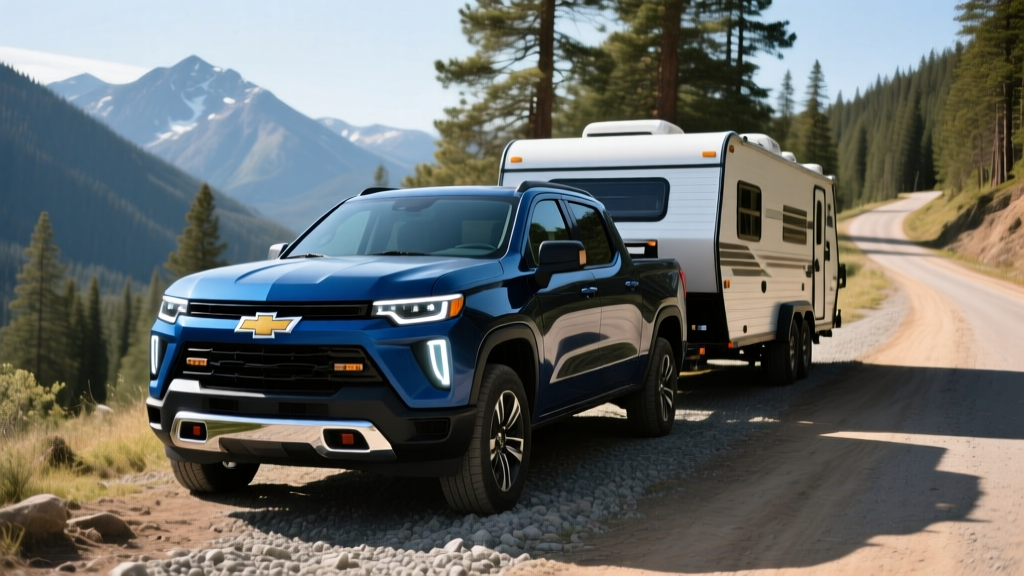
The Silverado EV's headline towing number — 12,500 pounds — is available on the WT and RST trims when equipped with the Max Tow package. That package includes an integrated trailer brake controller, enhanced cooling for the rear drive unit, and a heavier-duty hitch receiver. The LT and Trail Boss trims are rated at 10,200 pounds, still competitive with most gas half-tons.
What makes the Silverado EV's towing experience fundamentally different from a gas truck is the instant torque delivery. With 785 lb-ft available from 0 RPM on the RST, there's no transmission hunting on grades and no turbo lag when merging with a heavy trailer. The dual-motor AWD system can vector torque front-to-rear continuously, providing superior traction on wet boat ramps and gravel driveways.
However, the physics of towing an electric truck are brutal on range. A 7,000-pound enclosed trailer at highway speeds will cut your range roughly in half. An 10,000-pound fifth-wheel in mountainous terrain could drop it to 150 miles or less. GM's Super Cruise with trailering assist helps reduce driver fatigue on long hauls, but it doesn't change the math: if you tow frequently over long distances, you'll need to plan charging stops carefully.
The truck's regenerative braking is a genuine advantage on downhill grades with a trailer. The combined regen and friction braking system can slow the truck and trailer without overheating brake pads — a common issue with gas trucks on mountain passes. Drivers report significantly less brake wear when towing with the Silverado EV compared to equivalent ICE trucks.
Charging Speed: 350 kW Peaks, But What About the Curve?
| Charging Level | Power (kW) | Miles Added Per Hour | Typical Use Case |
|---|---|---|---|
| Level 1 (120V, 12A) | 1.4 kW | ~2 mi/hr | Emergency/trickle only |
| Level 2 (240V, 48A) | 11.5 kW | ~19 mi/hr | Standard home charging |
| Level 2 (240V, 80A) | 19.2 kW | ~32 mi/hr | Fast home / depot charging |
| DC Fast (150 kW station) | ~150 kW sustained | ~250 mi/hr | Public highway charging |
| DC Fast (350 kW station) | ~350 kW peak | ~580 mi/hr (peak) | Ultra-fast corridors |
The Silverado EV's 350 kW peak charge rate is impressive on paper, but the charging curve tells the real story. With a 200 kWh battery, the truck can sustain high charge rates longer than smaller-battery EVs because it takes more energy to reach the taper threshold (typically around 80% state of charge). In practice at a 350 kW Electrify America or EVgo station, expect:
- 10-30%: Sustained ~300-350 kW (roughly 12-15 minutes)
- 30-60%: Gradual taper to ~250-280 kW (roughly 15-18 minutes)
- 60-80%: Further taper to ~150-200 kW (roughly 12-15 minutes)
- 80-100%: Sharp taper below 50 kW (30+ minutes — avoid unless necessary)
Total 10-80% time runs approximately 45 minutes. That's slower than a Hyundai Ioniq 5's 18-minute 10-80% sprint, but the Silverado EV is adding far more total energy (140 kWh vs. ~55 kWh). The truck's battery preconditioning system activates automatically when you navigate to a DC fast charger, warming the pack for optimal charge acceptance.
For home charging, the Silverado EV supports up to 19.2 kW on a hardwired 80-amp Level 2 station. That requires a 100-amp dedicated circuit and likely a panel upgrade for most homes. At 19.2 kW, a full 10-100% charge takes roughly 11 hours — plan for overnight charging. On a more common 48-amp Level 2 (11.5 kW), the same charge stretches to 18+ hours. Most owners will need to install a high-amperage home charger or rely on partial daily charges rather than full depletion-to-full cycles.
The Silverado EV uses the NACS (North American Charging Standard) connector natively, giving it seamless access to Tesla Supercharger stations via GM's approved adapter. This is a significant infrastructure advantage over CCS-equipped trucks like the F-150 Lightning, which still requires an adapter for Supercharger access. The Chevrolet charging ecosystem integrates route planning with real-time charger availability across multiple networks.
Pricing, Trims & Federal Tax Credit Eligibility
| Trim | Base MSRP | As-Tested Range | §30D Credit Eligible? | Effective Price (after credit) |
|---|---|---|---|---|
| WT (Work Truck) | $39,900 | $42,000-$48,000 | Yes — up to $7,500 | ~$32,400-$40,500 |
| LT | $69,900 | $72,000-$82,000 | Yes — up to $7,500 | ~$62,400-$74,500 |
| Trail Boss | $74,900 | $78,000-$88,000 | Yes — up to $7,500 | ~$67,400-$80,500 |
| RST | $87,300 | $90,000-$97,000 | Yes — up to $7,500 | ~$79,800-$89,500 |
§30D Tax Credit Rules (2026): All Silverado EV trims qualify for the full $7,500 federal tax credit under current IRS rules because the MSRP is below the $80,000 truck cap, the vehicle is assembled in North America (Orion Township, MI — though production is moving to Factory Zero in Detroit-Hamtramck), and GM's battery sourcing meets critical-mineral and battery-component thresholds. However, buyer income caps apply: $150,000 single / $225,000 head of household / $300,000 joint filing (modified AGI). The credit can be transferred to the dealer at point of sale as an instant discount. Always verify current eligibility at IRS.gov and consult a tax professional before purchasing.
The WT trim at $39,900 is the value leader and one of the most affordable full-size electric trucks on the market. After the $7,500 credit, it undercuts the base F-150 Lightning Pro by several thousand dollars while offering more range and towing capacity. The catch: WT trucks are primarily sold to fleet buyers, and retail availability is limited. Most individual buyers will be shopping the LT ($69,900) or Trail Boss ($74,900) trims.
The RST at $87,300 is the performance flagship — 754 hp, 460 miles range, and premium interior appointments. It competes directly with the Rivian R1T Tri-Motor and the GMC Hummer EV Pickup in the luxury electric truck space. Fully optioned with the High Country package, an RST can push past $97,000, at which point you're in premium SUV territory.
Interior, Cargo & Technology
The Silverado EV ditches the traditional truck cabin layout for a more car-like experience. The available 17.7-inch diagonal infotainment screen dominates the dashboard, running GM's latest Google Built-in system with native Google Maps, Google Assistant, and Play Store apps. The instrument cluster is an 11-inch digital display, and a head-up display projects range, speed, and navigation onto the windshield.
Interior space is generous thanks to the flat floor (no transmission tunnel). Rear-seat legroom measures 43.2 inches — competitive with crew-cab gas Silverados. The front trunk ("eTrunk") offers 10.7 cubic feet of lockable, weatherproof storage — large enough for several carry-on bags or a set of tools. The 5-foot-11-inch bed (shorter than the gas Silverado's 6-foot-6 standard) includes a Multi-Flex tailgate with six positions and a built-in load floor that extends bed length to 9 feet with the tailgate down and midgate folded.
The midgate is the Silverado EV's party trick: it splits 60/40 and folds forward into the cabin, allowing long items like lumber, kayaks, or ladders to pass through from bed to cab. This is genuinely useful for contractors and outdoor enthusiasts, though it eliminates rear-seat passenger space when deployed.
Driver assistance comes via GM's Super Cruise, which enables hands-free driving on over 750,000 miles of compatible highways in the US and Canada. This is a SAE Level 2 system — the driver must remain attentive, and the cabin camera monitors eye gaze. Super Cruise is not self-driving and does not handle city streets, construction zones, or adverse weather. It is, however, one of the most refined highway assist systems available, with smooth lane changes and reliable on-ramp-to-off-ramp operation. The trailering-capable version of Super Cruise can maintain hands-free operation with a compatible trailer attached, which is a first for the segment.
Battery Warranty, Degradation & Long-Term Ownership
GM backs the Silverado EV's Ultium battery pack with an 8-year/100,000-mile warranty that guarantees the battery will retain at least 70% of its original capacity. If degradation falls below that threshold within the warranty period, GM will repair or replace the pack. For context, industry data from Recurrent Auto shows that most modern NMC packs lose 5-10% capacity in the first 50,000 miles, then degrade more slowly — the 70% threshold is conservative and unlikely to be reached under normal use.
The powertrain (motors, power electronics, reduction gearset) carries the same 8-year/100,000-mile warranty. The bumper-to-bumper coverage is 3 years/36,000 miles, which is standard for the industry.
Replacement cost for the 200 kWh battery pack is not publicly listed by GM, but based on current Ultium pack pricing estimates and industry averages of $130-$150/kWh for replacement modules, a full pack swap could cost $25,000-$35,000 out of warranty. However, individual module replacement (the pack contains 24 modules) would be significantly less — typically $1,500-$3,000 per module depending on labor.
For owners planning to keep the truck 10+ years, the NMC chemistry will likely see 15-20% total degradation by 150,000 miles, leaving you with roughly 400 miles of range on the LT trim. That's still more than adequate for most use cases. To maximize longevity, avoid frequent 100% charges, minimize DC fast charging when possible, and use the truck's scheduled departure preconditioning to warm or cool the battery while still plugged in.
Pros, Cons & Who Should Buy
Pros
- Class-leading 492-mile EPA range (LT trim)
- 12,500-lb towing capacity exceeds F-150 Lightning
- NACS connector = native Supercharger access
- Innovative midgate extends bed to 9 feet
- 350 kW DC fast charging with sustained curve
- Super Cruise with trailering capability
- Full $7,500 tax credit eligibility across trims
- WT trim at $39,900 is an exceptional value
Cons
- 200 kWh battery means very long home charge times (11-18 hrs)
- Towing cuts range dramatically (150-200 mi with heavy trailer)
- 5'11" bed is shorter than most gas half-tons
- WT retail availability is limited (fleet-focused)
- Premium trims (RST) approach $100,000
- 80-amp home charger requires panel upgrade for most homes
- Efficiency is poor vs. sedan-based EVs (56 MPGe)
- NMC chemistry requires more careful SoC management than LFP
Best for: Fleet operators and contractors who need serious towing and payload with daily depot charging; outdoor enthusiasts who value the midgate for long cargo; highway commuters with home Level 2 charging who want maximum range and Super Cruise for daily drives. The WT trim is a compelling work truck, while the LT offers the best range-to-price ratio for retail buyers.
Look elsewhere if: You tow heavy trailers over 200+ miles frequently (the range penalty is severe); you need a standard 6.5-foot bed; you don't have access to home or depot charging (the 200 kWh battery makes public-only charging impractical); or you want a sub-$50,000 truck and can't access the WT trim.
Competitor Comparison: Silverado EV vs. F-150 Lightning vs. Rivian R1T
| Attribute | Silverado EV LT | F-150 Lightning Lariat | Rivian R1T Dual-Motor |
|---|---|---|---|
| EPA Range | 492 mi | 320 mi | 352 mi |
| Battery | 200 kWh NMC | 131 kWh NMC | 149 kWh NMC |
| Max Tow | 12,500 lbs (RST/WT) | 10,000 lbs | 11,000 lbs |
| Max DC Charge | 350 kW | 150 kW | 220 kW |
| 10-80% Time | ~45 min | ~41 min | ~30 min |
| Bed Length | 5'11" (+ midgate) | 5'5.5" | 4'6" (+ gear tunnel) |
| Base MSRP | $69,900 | $69,995 | $75,900 |
| Connector | NACS (native) | CCS1 (adapter for NACS) | NACS (native) |
The Silverado EV wins on range and towing capacity but loses on charge speed percentage (its battery is so large that 10-80% takes longer in absolute minutes). The F-150 Lightning remains the best-selling electric truck for good reason — its 150 kW charging on a smaller battery means faster stops, and the Ford dealer network is broader. The Rivian R1T is the most refined as a daily driver and off-roader but carries a premium price and shorter bed.
Frequently Asked Questions
What is the real-world range of the Silverado EV when towing?
Expect 150-200 miles when towing near the 12,500-pound maximum on flat highway terrain. With a 5,000-pound trailer, range improves to roughly 250-300 miles. Mountainous terrain and cold weather reduce these figures further. Always plan charging stops conservatively when towing — a 20% battery buffer is recommended.
How fast does the Silverado EV charge at home?
On a hardwired 80-amp Level 2 station (19.2 kW), the Silverado EV gains roughly 32 miles of range per hour, and a full 10-100% charge takes approximately 11 hours. On a more common 48-amp station (11.5 kW), it gains about 19 miles per hour and a full charge takes 18+ hours. Most owners charge partially each night rather than from empty to full.
Does the Silverado EV qualify for the $7,500 federal tax credit?
Yes, all 2026 Silverado EV trims qualify for the full $7,500 §30D credit, provided the buyer meets income caps ($150K single / $300K joint) and the vehicle's battery sourcing meets critical-mineral and component requirements (which GM has confirmed for 2026 models). The credit can be applied as a point-of-sale discount at the dealership. Verify current rules at IRS.gov before purchase.
Is the Silverado EV worth buying over the F-150 Lightning?
If range and towing capacity are your top priorities, the Silverado EV is the stronger choice — 492 miles and 12,500 lbs vs. 320 miles and 10,000 lbs. If you value faster DC charging stops, a wider dealer network, or the Pro Power Onboard generator feature, the Lightning may be better. Test-drive both and compare real-world pricing after incentives.
What's the biggest drawback of the Silverado EV?
The 200 kWh battery requires significant home electrical infrastructure — an 80-amp charger needs a 100-amp circuit, which may require a $2,000-$5,000 panel upgrade. Additionally, the battery's sheer size means home charging from empty to full takes 11-18 hours depending on your equipment. For owners without reliable home or depot charging, this is a dealbreaker.
How does the Silverado EV handle off-road?
The Trail Boss trim includes a 2-inch factory lift, 35-inch all-terrain tires, and GM's off-road driving modes. Ground clearance is competitive at roughly 10.8 inches. The instant torque and precise throttle control of electric motors are advantageous in technical off-road situations. However, the truck's 9,000-pound curb weight means it can struggle in deep mud and sand compared to lighter off-roaders.
Sources: EPA fueleconomy.gov, Chevrolet Silverado EV specifications, IRS Clean Vehicle Credits.