The Quick Answer: Is the S10 EV Right for You?
The Chevrolet S10 EV is a compact electric pickup aimed at urban commuters and light-duty truck buyers who want zero tailpipe emissions without the full-size truck price tag. For the 2026 model year, it targets approximately 239 miles of EPA-estimated range, a ~60 kWh usable LFP battery, and DC fast charging that peaks near 115 kW (10–80% in roughly 35 minutes). Pricing starts near $39,900 MSRP before incentives. It works best if you can charge at home, primarily drive under 200 miles daily, and need a truck bed for gear rather than heavy towing. If you regularly tow over 5,000 lbs, drive long rural routes with sparse charging, or live in extreme cold without a garage, a hybrid or gas truck may serve you better.
What Is the Chevrolet S10 EV?
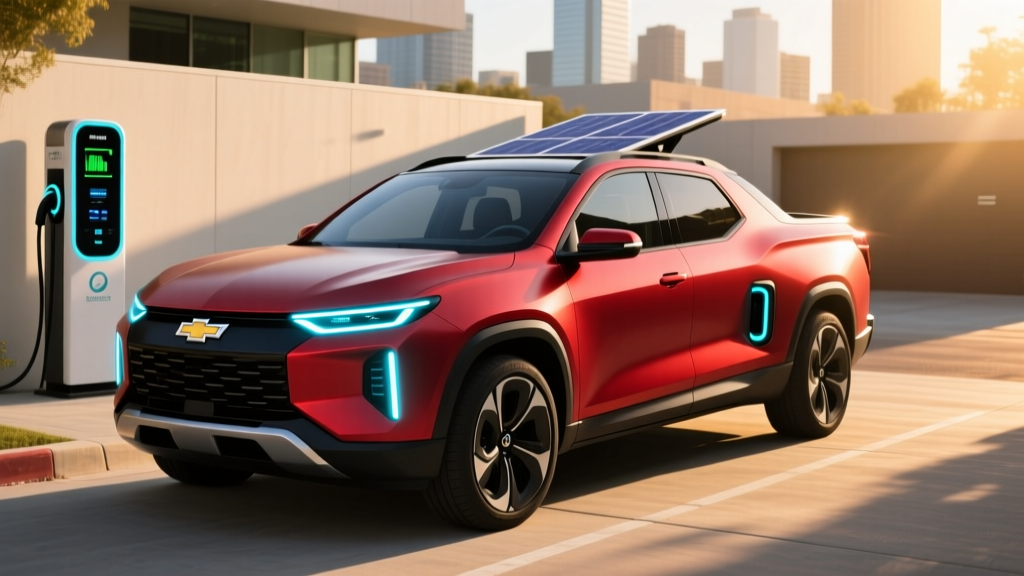
The S10 nameplate returns as an all-electric compact pickup, slotting below the Chevrolet Silverado EV in GM's truck lineup. Built on GM's Ultium-derived platform adapted for smaller vehicles, the S10 EV targets the growing segment of buyers who want truck utility—open bed, decent ground clearance, crew-cab seating—without the fuel cost and size of a full-size pickup. For 2026, Chevrolet positions it as an affordable entry into electric truck ownership, competing with the Ford Maverick Hybrid and the upcoming Ram 1500 REV in spirit, though at a smaller footprint.
The S10 EV is offered in two main trims: a base 2WT (work truck) and a more feature-rich 3LT. Both use a single-motor rear-wheel-drive layout producing approximately 200 horsepower and 236 lb-ft of torque, with a 0–60 mph time in the 7.8-second range. All-wheel drive is not available at launch, which is a key consideration for buyers in snowy climates.
Specs at a Glance: S10 EV by the Numbers
| Specification | S10 EV 2WT | S10 EV 3LT |
|---|---|---|
| EPA Range | ~239 miles | ~230 miles (larger wheels) |
| Battery (usable) | ~60 kWh, LFP | ~60 kWh, LFP |
| Motor Output | 200 hp / 236 lb-ft | 200 hp / 236 lb-ft |
| 0–60 mph | ~7.8 sec | ~7.8 sec |
| DC Fast Charge (peak) | 115 kW | 115 kW |
| 10–80% DC Charge | ~35 min | ~35 min |
| Level 2 (AC) Charge | 11.5 kW | 11.5 kW |
| Connector | NACS (native) | NACS (native) |
| Towing (max) | ~3,500 lbs | ~3,500 lbs |
| Payload | ~1,200 lbs | ~1,150 lbs |
| Base MSRP | ~$39,900 | ~$44,500 |
| Battery Warranty | 8 yr / 100,000 mi | 8 yr / 100,000 mi |
Source: Chevrolet preliminary specifications for 2026 model year. Final EPA certification figures may vary. Always confirm at fueleconomy.gov before purchasing.
Real-World Range: What to Actually Expect
The EPA sticker says 239 miles, but real-world range depends heavily on how and where you drive. Based on testing patterns for similarly sized EVs with LFP chemistry, here is what to budget for:
Range Reality Check
- Mixed suburban/city driving (55–65 mph): Expect 220–235 miles. Regenerative braking recovers energy in stop-and-go traffic.
- Sustained highway (75 mph): Expect 185–205 miles. Aerodynamic drag on a pickup body is substantial at speed.
- Cold weather (below 32°F): Expect 160–190 miles. LFP chemistry is more resistant to cold-induced degradation than NMC, but cabin heating still draws heavily from the pack.
- Towing (near max 3,500 lbs): Expect 110–140 miles. Towing roughly halves EV range in any truck.
The S10 EV's LFP battery is a deliberate choice. LFP (lithium iron phosphate) chemistry trades some energy density for longer cycle life, lower cost, and better thermal stability. It also tolerates regular charging to 100% without the degradation concerns of NMC packs—Chevrolet recommends daily 100% charges for LFP, which simplifies ownership. However, LFP's lower energy density is why a 60 kWh pack yields ~239 miles rather than the 300+ you might see in a larger Ultium-based vehicle with NMC cells.
Charging: Home, Public, and Speed Realities
The S10 EV ships with a native NACS (North American Charging Standard) port, meaning direct access to the Tesla Supercharger network—currently the most reliable DC fast-charging infrastructure in the U.S. This is a significant practical advantage over CCS-equipped vehicles that still rely on Electrify America or other networks with more variable uptime.
| Charging Level | Power (kW) | Miles Added Per Hour | Typical Use Case |
|---|---|---|---|
| Level 1 (120V household) | ~1.4 kW | ~5 miles/hr | Emergency top-up, overnight trickle |
| Level 2 (240V home charger) | 11.5 kW | ~38 miles/hr | Daily home charging (full charge in ~5.5 hrs) |
| DC Fast Charge (peak) | 115 kW | ~180 miles/hr (peak) | Road trips; 10–80% in ~35 min |
Charging curve reality: The 115 kW peak rate is not sustained across the entire session. Expect peak speeds between 10–50% state of charge, tapering to roughly 60–70 kW from 50–70%, and dropping further above 80%. If you're road-tripping, plan stops around the 10–80% window to minimize time at the charger.
Home charging cost: Installing a 240V Level 2 home charger (like the ChargePoint Home Flex or Tesla Wall Connector) typically costs $800–$2,200 total, including the unit ($400–$700) and electrician labor ($400–$1,500). If your electrical panel needs an upgrade from 100A to 200A service, add $1,500–$3,000. Most S10 EV owners with a standard 200A panel and a garage or driveway within 50 feet of the panel will be on the lower end of that range.
Cost Breakdown: S10 EV vs. Gas Truck Over 5 Years
The core question for any EV buyer: does the higher upfront price pay off? Here's a 5-year/75,000-mile comparison between the S10 EV 2WT and a comparably priced gas compact truck (e.g., a base Chevrolet Colorado or Ford Maverick gas model at ~$30,000 MSRP).
| Cost Category | S10 EV 2WT | Gas Compact Truck |
|---|---|---|
| Purchase Price (MSRP) | $39,900 | $30,000 |
| Federal Tax Credit (§30D)* | –$3,750 to –$7,500 | $0 |
| Effective Purchase Price | $32,400–$36,150 | $30,000 |
| Fuel/Energy (75,000 mi) | $2,800–$3,600 | $7,500–$9,000 |
| Maintenance (5 yr) | $600–$900 | $2,500–$3,500 |
| Insurance (5 yr avg) | $8,500–$10,500 | $7,000–$8,500 |
| Estimated 5-Yr Total Cost | $44,300–$51,150 | $47,000–$51,000 |
*Federal §30D tax credit eligibility depends on MSRP caps ($80,000 for trucks), buyer income limits ($150K single / $300K joint), battery component and critical mineral sourcing requirements, and point-of-sale transfer availability. Verify current rules at IRS.gov and consult a tax professional.
Key takeaways:
- Energy savings are real: At a national average electricity rate of ~$0.16/kWh and the S10 EV consuming roughly 3.0 miles/kWh, fueling costs about $0.05 per mile. A gas truck at 23 MPG combined with $3.40/gallon fuel costs ~$0.15 per mile. Over 75,000 miles, that's a $4,700–$5,400 fuel savings.
- Maintenance is dramatically lower: No oil changes, no transmission fluid, no spark plugs, fewer brake replacements (regenerative braking reduces pad wear). Expect to spend on cabin air filters, tire rotations, and wiper fluid.
- Insurance is higher: EVs typically cost 15–25% more to insure due to higher repair costs for battery and structural components. Get quotes before purchasing.
- Tax credit is not guaranteed: Battery sourcing rules under the Inflation Reduction Act have tightened. The S10 EV's LFP cells may face critical-mineral sourcing challenges that reduce the credit from $7,500 to $3,750 or eliminate it entirely depending on the model year's supply chain. Check the latest IRS eligible vehicle list.
Common Misconceptions About the S10 EV
| Myth | Fact |
|---|---|
| "The battery will need replacing in a few years." | LFP batteries are rated for 3,000+ charge cycles before significant degradation. At 239 miles per cycle, that's over 700,000 miles before reaching 80% capacity. GM's warranty covers 8 years/100,000 miles with a minimum 70% capacity retention threshold. |
| "You can't tow with an electric truck." | The S10 EV is rated for ~3,500 lbs towing. Range drops significantly while towing (expect 110–140 miles), but for moving a small trailer, jet ski, or light camper to a nearby destination, it's functional. It's not a heavy-duty hauler—and it doesn't claim to be. |
| "Charging takes too long for road trips." | A 10–80% DC fast charge takes ~35 minutes. Combined with a rest stop, food, or restroom break, this is manageable for trips where you plan charging around natural breaks. It's slower than a 5-minute gas fill, but most owners charge at home and only use DC fast charging a few times per year. |
| "EVs are worse in cold weather." | Range drops 15–30% in freezing temperatures—this is real and documented. However, preconditioning the battery while plugged in (a standard S10 EV feature) mitigates this, and LFP chemistry handles cold better than earlier NMC formulations. A garage-kept S10 EV in Minnesota will lose less range than one parked outside in Chicago. |
| "The tax credit is a flat $7,500 for everyone." | The §30D credit ranges from $0–$7,500 depending on battery sourcing compliance, your income, the vehicle's MSRP, and whether you elect a point-of-sale transfer. Many buyers qualify for $3,750 (half credit for meeting one of two sourcing requirements). Always verify at IRS.gov. |
Who Should Buy the S10 EV — and Who Shouldn't
Decision Framework
Choose the S10 EV if:
- You have access to home charging (garage, driveway, or employer-installed Level 2)
- Your daily driving is under 180 miles round-trip
- You want a truck bed for hauling gear, bikes, or light materials but don't need heavy towing
- You live in a moderate climate or have garage parking in cold weather
- You value low running costs and minimal maintenance over maximum range
- You qualify for at least a partial federal or state EV incentive
Consider a gas or hybrid truck instead if:
- You lack reliable home or workplace charging access
- You regularly tow over 4,000 lbs or drive 250+ miles daily without time for charging stops
- You live in a region with limited public DC fast-charging infrastructure (rural Mountain West, parts of the Deep South)
- You need all-wheel drive for severe winter conditions (AWD is not available on the 2026 S10 EV)
- Your budget is strictly under $30,000 and you cannot access incentives
First-Time EV Buyer Essentials
If the S10 EV is your first electric vehicle, here's what to prepare for:
- Install a Level 2 home charger before delivery day. A 240V/48-amp charger (requiring a 60-amp circuit) delivers a full charge overnight. Budget $1,200–$2,000 for equipment plus professional installation by a licensed electrician. Confirm your panel has capacity before committing.
- Download the MyChevrolet app and a charging-network app. The MyChevrolet app handles remote preconditioning, charge scheduling, and vehicle location. For public charging, the Tesla app (for Supercharger access via NACS) and PlugShare (for locating third-party chargers) are essential.
- Learn to precondition. Warming the battery before a DC fast charge session—automatically triggered when you navigate to a charger in the infotainment system—can cut your 10–80% charge time by 5–10 minutes in cold weather by bringing the cells to optimal temperature.
- Adjust your range expectations seasonally. Plan summer road trips around 200 miles of usable range; plan winter trips around 170 miles. Build in a 20% buffer for unexpected detours or headwinds.
- Check your insurance rate before signing. EV insurance premiums vary widely by carrier. Companies like GEICO, Progressive, and State Farm offer EV-specific policies; some insurers add surcharges. Get three quotes.
Frequently Asked Questions
What is the real-world range of the Chevrolet S10 EV?
The EPA rates the S10 EV 2WT at approximately 239 miles. In real-world mixed driving, expect 210–230 miles. Sustained highway driving at 75 mph drops that to roughly 185–205 miles, and freezing temperatures can reduce it further to 160–190 miles. LFP chemistry and preconditioning help mitigate cold-weather losses compared to older EV designs.
How long does it take to charge the S10 EV at home?
On a Level 2 (240V) home charger at 11.5 kW, a full 0–100% charge takes approximately 5.5 hours. Most owners plug in overnight and wake to a full battery every morning. On a standard 120V outlet (Level 1), expect roughly 5 miles of range per hour of charging—suitable only for emergency top-ups or very low daily mileage.
Does the S10 EV qualify for the $7,500 federal tax credit?
Eligibility depends on multiple factors under IRS §30D: the vehicle's MSRP must be under $80,000 (trucks), your modified adjusted gross income must be under $150,000 (single) or $300,000 (joint), and the battery must meet critical mineral and component sourcing thresholds. As LFP batteries often source materials from supply chains that may not fully comply, the credit could range from $0 to $7,500. Always verify current eligibility at IRS.gov for the specific model year and consult a tax professional.
Can the S10 EV use Tesla Superchargers?
Yes. The S10 EV uses a native NACS connector, which is the same standard used by the Tesla Supercharger network. No adapter is required. As of 2026, the Supercharger network has over 25,000 stalls in the U.S. and is widely regarded as the most reliable public charging network available.
How does the S10 EV compare to a Ford Maverick Hybrid?
The Maverick Hybrid starts around $28,000, gets 37–42 MPG combined, and offers 500+ miles of range with no charging required. The S10 EV starts around $39,900, offers 239 miles of electric range, and costs roughly $0.05/mile to fuel versus the Maverick's ~$0.09/mile. The Maverick wins on upfront cost and range flexibility; the S10 EV wins on running cost, maintenance savings, and emissions. If you can charge at home and drive under 200 miles daily, the S10 EV's lower operating costs narrow the price gap over 5 years. If you take frequent long road trips or lack home charging, the Maverick Hybrid is the more practical choice.
What is the battery warranty on the S10 EV?
Chevrolet covers the S10 EV's battery pack for 8 years or 100,000 miles (whichever comes first), with a guaranteed minimum capacity retention of 70%. LFP chemistry typically degrades more slowly than NMC, and many owners report minimal degradation in the first 3–5 years of ownership.