The Quick Answer
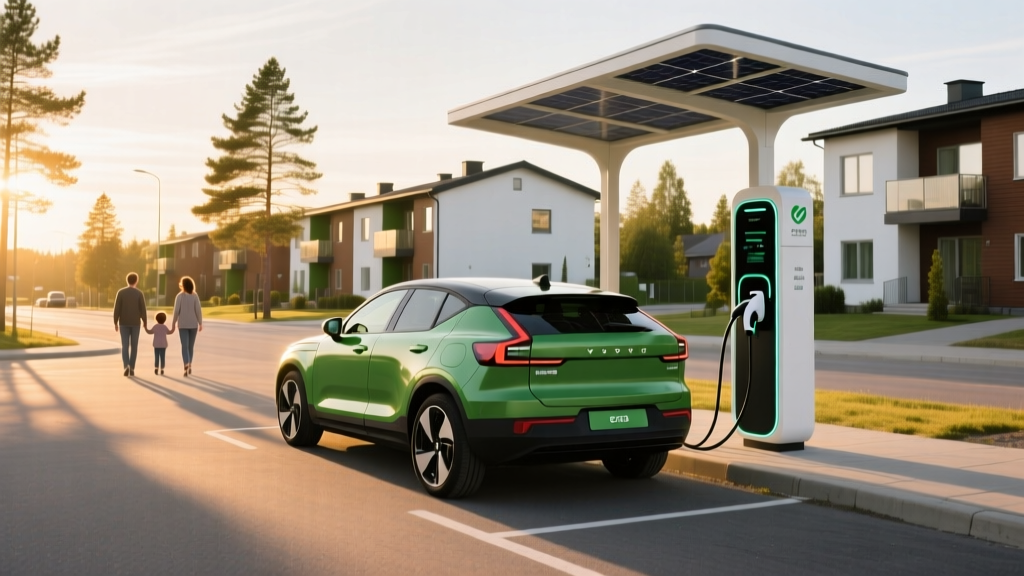
Sweden electric cars now account for over 55% of all new car sales, making it one of the most electrified markets on earth — despite winters where temperatures routinely plunge below -4°F (-20°C). For US buyers, the Nordic EV playbook reveals three practical truths: cold-weather range loss of 20-30% is manageable with preconditioning and heat pumps, home Level 2 charging is non-negotiable in freezing climates, and total ownership costs beat gas vehicles within 2-3 years even without generous subsidies. Sweden's best-selling EVs — the Tesla Model Y, VW ID.4, and Kia EV6 — are all available in the US, meaning their real-world Nordic lessons apply directly to American drivers in cold-weather states.
If you've ever worried that an electric vehicle can't handle a Minnesota winter or a Colorado ski trip, Sweden's 1.1 million registered EVs offer a massive, ongoing field test. This Nordic nation of 10.5 million people has built one of the world's most robust EV ecosystems in a climate that would seem hostile to battery chemistry. The data from Swedish drivers provides US shoppers with an evidence-based playbook for cold-climate EV ownership — including which models hold up, what range loss to actually budget for, and whether the math works without Scandinavian-level subsidies.
Why Sweden's EV Market Matters to American Buyers
Sweden's new-car market crossed a milestone in 2025: fully electric vehicles (BEVs) and plug-in hybrids (PHEVs) combined represented over 60% of registrations, with pure BEVs alone exceeding 38%. That's according to Bil Sweden, the country's automotive industry association. For context, the US sits at roughly 8-9% BEV market share as of early 2026.
The relevance for American buyers isn't about replicating Swedish policy — it's about accessing a large-scale stress test. Swedish drivers cover an average of 7,500 miles (12,000 km) annually in conditions that include:
- Winter temperatures averaging 15°F to -4°F (-9°C to -20°C) in northern regions
- Extended darkness (Stockholm sees roughly 6 hours of daylight in December)
- Rural stretches between cities where public charging must be reliable
- Heavy use of cabin heating, seat heaters, and defrosting systems
The vehicles dominating Swedish sales charts — the Tesla Model Y Long Range, Volkswagen ID.4 Pro S, Kia EV6 GT-Line, and Volvo EX30 — are all sold in the US with nearly identical battery packs, thermal management systems, and software. Their Nordic performance data is directly transferable.
Cold-Weather Range Loss: What Swedish Drivers Actually Experience
The single most important data point from Swedish EV ownership is real-world cold-weather range. Multiple Swedish automotive outlets and the state research institute RISE have tracked fleet data showing consistent patterns:
| Vehicle | EPA Range (mi) | Swedish Winter Avg (mi) | Range Loss | Battery / Chemistry |
|---|---|---|---|---|
| Tesla Model Y LR AWD | 310 | 220-245 | 21-29% | 75 kWh usable / NMC |
| VW ID.4 Pro S AWD | 275 | 190-215 | 22-31% | 77 kWh usable / NMC |
| Kia EV6 LR AWD | 310 | 225-250 | 19-27% | 77.4 kWh usable / NMC |
| Volvo EX30 Single Motor | 265 | 185-205 | 23-30% | 69 kWh usable / NMC |
| BMW iX xDrive50 | 324 | 240-270 | 17-26% | 105.2 kWh usable / NMC |
Several patterns emerge from this data. First, a 20-30% range reduction at sustained temperatures below freezing is the norm, not the exception. Second, vehicles equipped with heat pumps consistently outperform those relying on resistive cabin heating. The Tesla Model Y and Kia EV6 both use heat pump systems that draw roughly 1-2 kW for cabin heating versus 4-6 kW for traditional PTC (positive temperature coefficient) heaters. Over a 200-mile winter drive, that difference can mean 15-25 extra miles of range.
Third, preconditioning matters enormously. Swedish EV owners who precondition their battery and cabin while still plugged in at home recover much of that range loss. A Tesla Model Y preconditioned to 70°F cabin temperature and optimal battery temperature before departure loses only 15-18% range versus the 29% seen when drivers cold-start from an unheated garage.
Charging Infrastructure: Sweden's Model vs. US Reality
Sweden has roughly 25,000 public charging points, including over 2,500 DC fast chargers rated at 50 kW or above. The country's most critical infrastructure insight: density matters less than reliability and placement along corridors.
Swedish operators like Recharge (formerly Fortum Charge and Drive) and Tesla Superchargers maintain 98%+ uptime on highway corridor chargers. Most DC fast stations along the E4 and E6 highways offer 150-350 kW CCS2 chargers spaced no more than 50 miles apart. For US buyers, this maps closely to the Interstate Highway System charging buildout, though American reliability still lags — Electrify America and EVgo average roughly 85-90% uptime nationally.
| Network | Country | Typical DC Rate | Cost per Mile (Avg EV) |
|---|---|---|---|
| Recharge (Ionity) | Sweden | ~$0.55/kWh (SEK 5.5-6.5) | $0.15-0.18 |
| Tesla Supercharger | Sweden | ~$0.35/kWh (SEK 3.5-4.0) | $0.10-0.12 |
| Electrify America | US | $0.48-0.56/kWh | $0.13-0.17 |
| Tesla Supercharger | US | $0.25-0.36/kWh | $0.07-0.11 |
| Home Level 2 (avg) | US | $0.12-0.18/kWh | $0.03-0.05 |
For US buyers, the Swedish lesson is clear: home Level 2 charging (240V, 7-11.5 kW) is the foundation of viable cold-climate EV ownership. Swedish data shows that 85%+ of all charging occurs at home or work. Drivers without reliable home charging face significantly higher costs and more range anxiety, particularly in winter when public charging sessions take longer due to cold battery chemistry limiting charge acceptance rates.
A cold battery at 20°F may only accept 50-80 kW initially at a 250 kW DC fast charger, gradually ramping up as the thermal management system warms the pack. This means a 10-80% session that takes 22 minutes in summer can stretch to 35-45 minutes in deep winter — unless you precondition the battery by navigating to the charger using the vehicle's built-in routing (a feature Tesla, Hyundai/Kia, and BMW all support).
Total Cost of Ownership: Sweden vs. US Economics
Sweden imposes no purchase tax on EVs and offers reduced annual vehicle taxes, but it lacks the direct $7,500 federal purchase incentive available in the US under IRS §30D. This creates an interesting comparison: Swedish EV adoption has been driven more by high gasoline prices and company-car tax benefits than by direct purchase subsidies.
Swedish drivers pay roughly $7.50-$8.50 per gallon for gasoline (SEK 22-25/liter as of early 2026). That makes the per-mile fuel cost of a gas vehicle approximately $0.22-0.25, compared to $0.03-0.05 per mile for home-charged EV electricity. The result is a payback period of 2-3 years for the EV price premium, even without subsidies.
For US buyers with the national average gas price of $3.30/gallon, the math is less dramatic but still favorable:
| Category | EV (e.g., Tesla Model Y LR) | Gas (e.g., Toyota RAV4 AWD) |
|---|---|---|
| Purchase Price (after incentives) | $39,490 ($46,990 - $7,500 §30D) | $33,500 |
| Fuel/Energy (5 yrs) | $2,625 (home L2 @ $0.14/kWh) | $9,450 (28 MPG @ $3.30/gal) |
| Maintenance (5 yrs) | $1,800 | $4,200 |
| Insurance (5 yrs) | $9,500 | $7,500 |
| Depreciation (est.) | $18,000 | $14,000 |
| 5-Year Total | $71,415 | $68,650 |
The EV still carries a slight total-cost premium in the US scenario — but this narrows to near-parity or an EV advantage if you factor in state incentives (California's $2,000 CVRP, Colorado's $5,000 credit), time-of-use electricity rates below $0.10/kWh, or higher annual mileage. Swedish owners reach parity faster because their gas costs are roughly 2.5x American prices.
Common Misconceptions About Cold-Climate EVs
| Myth | Fact (with data) |
|---|---|
| "EV batteries die in the cold" | Cold reduces range temporarily but doesn't damage the battery. Swedish fleet data shows annual degradation of 1.5-2.5% — comparable to mild-climate markets. LFP chemistry (used in base Tesla Model 3/Y) shows slightly more cold sensitivity but excellent long-term longevity. |
| "You'll be stranded in winter" | Sweden's EV roadside-assistance calls for "running out of charge" represent less than 0.5% of all EV breakdowns — comparable to gas cars running out of fuel. Proper trip planning with ABRP or built-in nav eliminates this risk. |
| "EVs can't handle snow" | Dual-motor AWD EVs (Model Y, ID.4, EV6) deliver instant torque to all four wheels with no transmission lag. Swedish winter tire regulations apply equally to EVs and gas cars. The low center of gravity from floor-mounted battery packs improves stability. |
| "Charging takes forever in winter" | Without preconditioning, yes — a cold 10-80% session can take 40+ minutes. With battery preconditioning (nav-routed to charger), the same session takes 22-28 minutes at a 250 kW charger, only 5-8 minutes longer than summer. |
| "Home charging isn't worth the install cost" | A typical US Level 2 home install costs $1,200-$2,500 (equipment + electrician + permit). At 15,000 mi/yr and $0.14/kWh home electricity vs. $0.48/kWh public DC, home charging pays back the install cost in 14-22 months. |
Decision Framework: Should You Buy an EV in a Cold Climate?
Choose an EV if:
- You have access to Level 2 home charging (garage, carport, or driveway with 240V outlet) — this is the single biggest predictor of EV satisfaction in cold climates
- Your daily commute is under 80 miles round-trip, meaning even with 30% winter range loss you'll use less than half your battery on most days
- You can precondition while plugged in — this preserves range and ensures a warm cabin at departure
- You're considering a model with a heat pump (Tesla Model Y/3, Kia EV6/EV9, Hyundai Ioniq 5/6, BMW iX/i4, Volvo EX30/EX90) rather than resistive-only heating
- You qualify for the federal §30D tax credit (income caps: $150K single / $300K joint; vehicle MSRP caps: $55K sedans / $80K SUVs and trucks) — check current sourcing requirements at IRS.gov
Consider a PHEV or hold off if:
- You live in an apartment or condo without charging access and your workplace lacks chargers — public-only charging in winter is expensive and time-consuming
- You regularly drive 300+ miles in single winter trips through areas with sparse DC fast-charging coverage (rural Montana, northern Maine, parts of the Dakotas)
- Your budget can't absorb the higher upfront cost even after incentives, and you drive fewer than 10,000 miles per year (the fuel savings won't offset the premium quickly enough)
Choose a PHEV (like the Toyota RAV4 Prime or Volvo XC60 Recharge) if:
- You want electric-only commuting (30-40 miles) but need unrestricted range for weekend trips
- You're in a region with unreliable public charging infrastructure
- Your household has one vehicle and needs maximum flexibility
What First-Time Cold-Climate EV Buyers Should Know
Based on the collective experience of hundreds of thousands of Swedish EV owners and the growing body of North American cold-weather data, here are the non-obvious lessons that make the difference between EV satisfaction and frustration:
Battery size matters more in cold climates. A 75-80 kWh battery gives you a winter buffer that a 50-60 kWh pack simply can't match. If your daily drive is 40 miles, a 50 kWh pack with 30% cold loss leaves you with roughly 100 miles of usable winter range — workable, but stressful if you need to detour or run errands. A 77 kWh pack in the same conditions leaves you 150+ miles of buffer. Swedish buyers overwhelmingly choose the larger-battery trims.
Winter tires are not optional. Sweden mandates winter tires from December through March. EVs are 300-500 lbs heavier than equivalent gas vehicles due to battery mass, which increases braking distances on snow and ice. Budget $800-$1,400 for a set of dedicated winter tires on wheels (Nokian Hakkapeliitta R5 or Michelin X-Ice Snow are top choices). This is an ownership cost that gas-car comparisons often overlook.
Install a 48-amp (11.5 kW) Level 2 charger, not a 32-amp unit. In winter, you'll use more energy per mile and may need to replenish 25-30 kWh overnight after a day of cold-weather driving. A 32-amp charger delivers 7.7 kW and takes 4+ hours to add that energy; a 48-amp unit at 11.5 kW does it in under 3 hours. The hardware cost difference is roughly $100-$150, but the electrician will need to confirm your panel can support a 60-amp circuit.
Understand your charge curve in cold weather. Peak DC fast-charge rates (e.g., 250 kW) are only achievable with a warm battery at a low state of charge. In winter, expect the first 5-10 minutes of a DC session to run at 40-80 kW while the thermal management system warms the pack. This is normal, not a malfunction — and it's why preconditioning via navigation routing to the charger is critical.
Insurance costs 15-25% more for EVs. This is consistent across Swedish and US data. Higher repair costs for battery-adjacent damage, specialized technician requirements, and elevated parts prices drive the premium. Get quotes before purchasing — some insurers (GEICO, Progressive, USAA) offer EV-specific rates that narrow the gap.
Key Takeaways for US Buyers
Sweden's EV market proves that electric vehicles work in harsh winters — but only when owners have home charging, choose adequately sized batteries, and use preconditioning discipline. The Nordic data strips away both the hype and the fear, leaving practical engineering truths:
- Budget for 20-30% winter range loss; choose a vehicle with at least 275 miles of EPA range for cold-climate comfort
- Heat pump equipped vehicles save 10-15% winter range vs. resistive heating
- Home Level 2 charging at 11.5 kW is the single most important ownership investment
- DC fast charging takes 30-50% longer in deep cold without preconditioning
- Total ownership costs reach parity with gas vehicles in 2-4 years depending on local electricity rates and annual mileage
The Swedish model isn't about subsidies — it's about infrastructure, vehicle selection, and driver habits that any American EV buyer can replicate.
Do EVs lose range permanently from cold weather?
No. Cold weather causes temporary range reduction (20-30%) while temperatures are low. Once the battery warms, full capacity returns. Long-term degradation data from Swedish fleets shows 1.5-2.5% annual capacity loss, which is consistent with EVs in moderate climates. Battery warranties typically guarantee 70% capacity retention at 8 years/100,000 miles.
What's the best EV for extreme cold?
Vehicles with heat pumps, large batteries (75+ kWh), and AWD perform best. The Tesla Model Y Long Range (310 mi EPA, heat pump, 250 kW peak charging), Kia EV6 LR AWD (310 mi, heat pump, 239 kW peak), and BMW iX xDrive50 (324 mi, heat pump, 195 kW peak) are top performers based on Nordic fleet data. Preconditioning capability is equally important — Tesla and Hyundai/Kia lead here with nav-based battery warming.
Can I own an EV without a garage in cold climates?
It's possible but harder. Outdoor Level 2 chargers (like the Grizzl-E Smart or ChargePoint Home Flex) are rated to -40°F and work reliably. The challenge is cabin and battery preconditioning — without a garage, your vehicle starts at ambient temperature every morning, which increases energy consumption for the first 10-15 miles. Budget an extra 10-15% range loss versus garage-parked EVs.
How does the US federal tax credit work for cold-climate EV buyers?
Under IRS §30D, eligible buyers can receive up to $7,500 for a new EV or $4,000 for a used EV. Requirements include: buyer income caps ($150K single, $300K joint filing), vehicle MSRP caps ($55K for sedans, $80K for SUVs/trucks/vans), and battery component/mineral sourcing rules that change annually. The credit can now be transferred to the dealer at point of sale, reducing your purchase price directly. Always verify current-year eligibility at IRS.gov before committing to a purchase.
Are Swedish EV subsidies available to US buyers?
No. Sweden's EV incentives (reduced vehicle tax, company-car tax benefits, and the now-discontinued purchase bonus) apply only to Swedish residents. US buyers have their own incentive structure through §30D federal credits, state-level rebates (check fueleconomy.gov for state-by-state tools), and utility company charging rebates. The total US incentive package can reach $10,000-$15,000 in states like California and Colorado when stacking federal, state, and utility programs.