The Short Answer on Chevrolet EV Cars
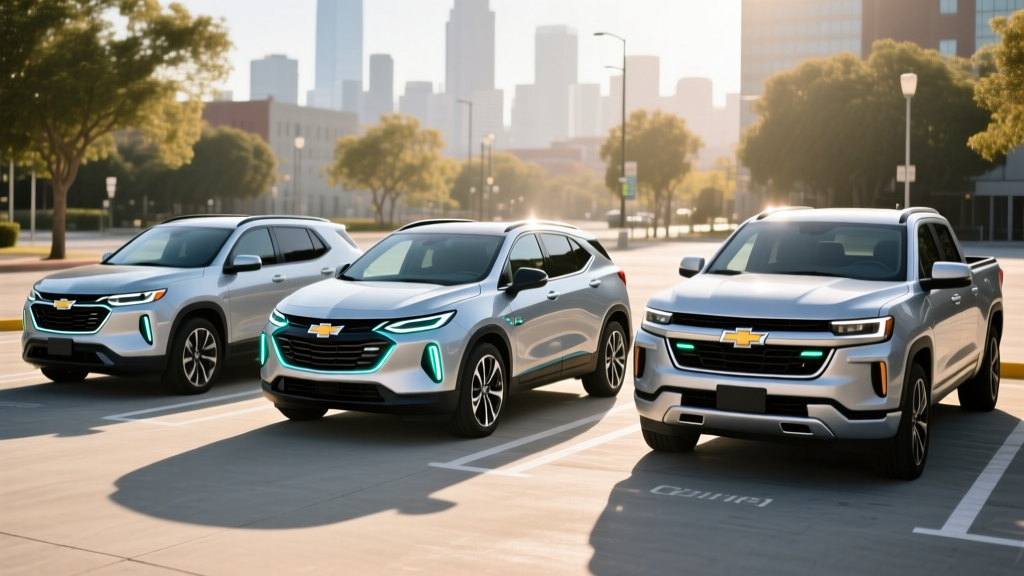
Chevrolet's 2026 EV lineup spans three core models built on GM's Ultium platform: the Equinox EV (compact SUV, 319 mi EPA range, from ~$33,000), the Blazer EV (midsize SUV, up to 324 mi EPA, from ~$44,600), and the Silverado EV (full-size pickup, up to 492 mi EPA on the 4WT Max Range, from ~$55,000+). All use an 85–200 kWh Ultium NMC battery depending on trim, support DC fast charging up to 190–350 kW, and use the NACS connector natively — giving access to Tesla Superchargers without an adapter. Federal §30D tax credit eligibility varies by trim, battery sourcing, and buyer income, so verify current-year rules at IRS.gov before purchasing.
Chevrolet's 2026 EV Lineup: Spec-by-Spec Breakdown
Chevrolet has consolidated its EV offerings around three high-volume vehicles, discontinuing the Bolt EV/EUV after 2023 to focus on the Ultium architecture. Here's how the current lineup stacks up on the numbers that matter most.
| Spec | Equinox EV (2LT Launch) | Blazer EV (2LT AWD) | Silverado EV (4WT Max Range) |
|---|---|---|---|
| EPA Range | 319 mi | 324 mi (RS RWD) | 492 mi |
| Battery (usable) | ~85 kWh NMC | ~102 kWh NMC | ~200 kWh NMC |
| Peak DC Fast Charge | 150 kW | 190 kW | 350 kW |
| 10–80% DCFC Time | ~34 min | ~28 min | ~40 min |
| Level 2 Rate | 11.5 kW | 11.5 kW | 19.2 kW (optional) |
| Horsepower | 213 hp (FWD) | 288 hp (AWD) | 510 hp (AWD) |
| 0–60 mph | ~8.4 sec | ~6.0 sec | ~4.5 sec |
| Towing Capacity | 1,500 lb | 3,500 lb | 12,500 lb |
| Base MSRP | ~$33,000 | ~$44,600 | ~$55,000 (WT); $75,000+ (RST) |
| Battery Warranty | 8 yr / 100,000 mi | 8 yr / 100,000 mi | 8 yr / 100,000 mi |
Real-World Range Reality Check
EPA estimates are measured under controlled conditions. In real-world driving, expect:
- Highway (70–80 mph): Reduce EPA range by 10–15%. The Equinox EV's 319 mi drops to roughly 270–285 mi at sustained freeway speeds.
- Cold weather (below 32°F): Expect 20–30% range loss without preconditioning. The Blazer EV's 324 mi may yield 225–260 mi in freezing conditions. All three models include a heat pump to mitigate this.
- Towing (Silverado EV): Heavy towing can cut range by 40–50%. The 492 mi Max Range figure assumes an unladen bed. Plan for ~250 mi with a 7,000 lb trailer.
How Chevrolet EVs Compare to Gas and Hybrid Alternatives
Numbers don't lie — but context matters. Here's how the Equinox EV stacks against its direct gas and hybrid competition in the compact SUV segment.
| Metric | Equinox EV 2LT | Toyota RAV4 Hybrid (AWD) | Honda CR-V (Gas AWD) |
|---|---|---|---|
| EPA Combined | 92 MPGe | 39 MPG | 29 MPG |
| "Fuel" Cost / 1,000 mi | ~$38 (home L2 @ $0.14/kWh) | ~$90 (@ $3.50/gal) | ~$121 (@ $3.50/gal) |
| 0–60 mph | ~8.4 sec | ~7.4 sec | ~8.7 sec |
| Base MSRP | ~$33,000 | ~$33,500 | ~$33,000 |
| Annual Maintenance | ~$300 | ~$550 | ~$600 |
| CO₂ Tailpipe | 0 g/mi | ~228 g/mi | ~305 g/mi |
The Equinox EV matches or beats gas competitors on price while delivering dramatically lower operating costs. The RAV4 Hybrid remains a strong choice for buyers without home charging access — it requires zero infrastructure change and delivers consistent 39 MPG regardless of where you "refuel."
Ownership Costs: The 5-Year Picture
Upfront sticker price tells only part of the story. Here's a realistic 5-year / 75,000-mile total cost of ownership for the Equinox EV versus a comparable gas SUV, assuming 15,000 miles driven annually.
| Cost Category (5 yr / 75k mi) | Equinox EV | Gas Compact SUV |
|---|---|---|
| Purchase Price (MSRP) | $33,000 | $33,000 |
| Federal Tax Credit (§30D)* | –$0 to –$7,500 | $0 |
| Fuel / Electricity | $2,850 (home L2) | $9,050 (@ $3.50/gal, 29 MPG) |
| Maintenance | $1,500 | $3,000 |
| Insurance (avg) | $7,800 | $6,500 |
| Estimated Depreciation | $14,000 | $12,000 |
| 5-Year Total (before credit) | $59,150 | $63,550 |
| 5-Year Total (with $7,500 credit) | $51,650 | $63,550 |
*§30D credit eligibility depends on MSRP caps (SUVs ≤$80,000), buyer income limits ($150k single / $300k joint for new vehicles), and battery critical-mineral and component sourcing requirements. Rules change frequently — verify at IRS.gov or consult a tax professional. The credit can be transferred to the dealer at point of sale as an upfront discount.
Key takeaway: even without the tax credit, the Equinox EV saves roughly $4,400 over five years through lower fuel and maintenance costs. With the full credit, savings exceed $11,900. However, EV insurance premiums run 15–25% higher on average — get quotes before committing.
Charging at Home and on the Road: What You Actually Need
Charging infrastructure is the single biggest variable in EV satisfaction. Here's the practical breakdown for Chevrolet EV owners.
Home Charging (Level 2)
All three models support Level 2 AC charging via a NACS (J3400) connector. The Equinox and Blazer accept up to 11.5 kW; the Silverado EV supports 19.2 kW with the optional onboard charger upgrade.
- Equipment: A 48-amp hardwired Level 2 charger (e.g., ChargePoint Home Flex, Emporia V2) costs $500–$750.
- Electrical work: Most homes need a 60-amp dedicated circuit. Expect $800–$2,500 for a licensed electrician, depending on panel proximity and local permit fees.
- Panel upgrade: If your home has a 100-amp main panel, you may need a $2,000–$4,000 upgrade to 200 amps — especially if you already run electric HVAC, a dryer, and an EVSE simultaneously.
- Charge time: A full 0–100% Level 2 charge takes roughly 9 hours for the Equinox EV and 12+ hours for the Silverado EV at standard 11.5 kW.
DC Fast Charging on the Road
Chevrolet's switch to the NACS connector means direct access to Tesla Supercharger stations (17,000+ stalls in North America) without an adapter, plus Electrify America, EVgo, and other networks.
| Charging Level | Power (kW) | Miles Added / Hour | Use Case |
|---|---|---|---|
| Level 1 (120V outlet) | ~1.4 kW | ~4 mi/hr | Emergency / overnight trickle |
| Level 2 (240V home) | 11.5–19.2 kW | 35–55 mi/hr | Daily home charging |
| DC Fast (Equinox/Blazer) | 150–190 kW peak | ~500+ mi/hr (peak) | Road trips; 10–80% in 28–34 min |
| DC Fast (Silverado EV) | 350 kW peak | ~800+ mi/hr (peak) | Road trips; 10–80% in ~40 min |
Charge-curve reality: Peak kW rates are sustained only between roughly 10–50% State of Charge. Above 80%, charging slows dramatically to protect the battery — a session from 80–100% can take as long as 10–80%. For road trips, plan stops around the 15–80% window for maximum speed.
Common EV Myths — Fact-Checked for Chevrolet Buyers
| Myth | Fact |
|---|---|
| "EV batteries need replacing every few years." | GM's Ultium batteries carry an 8-year / 100,000-mile warranty guaranteeing ≥60% capacity retention. Real-world degradation data from earlier Ultium vehicles shows ~8–12% loss over 100,000 miles — meaning you'll still have ~280+ mi of the Equinox EV's 319 mi range after a decade of typical use. |
| "You can't drive an EV in winter." | Cold reduces range by 20–30% due to battery chemistry and cabin heating demands. Preconditioning the battery while plugged in (using the MyChevy app) restores much of this loss. The heat pump in all three models is significantly more efficient than resistive heating. |
| "Public charging is always broken." | Reliability varies by network. Tesla Superchargers (now accessible to Chevy EVs via NACS) consistently report 95%+ uptime. Electrify America and EVgo have improved but still lag. Use PlugShare to check station status before a trip. |
| "EVs cost more to insure." | Partly true. Average EV insurance premiums run 15–25% higher due to repair complexity and parts cost. Shop quotes from multiple carriers — some now offer EV-specific discounts. |
| "The tax credit is a guaranteed $7,500." | No. §30D has MSRP caps, buyer income limits, and battery-sourcing requirements that change as automakers shift supply chains. Some Chevrolet trims may qualify for partial or full credit; others may not. Always verify on IRS.gov for the current tax year. |
Decision Framework: Which Chevrolet EV Is Right for You?
Choose Based on Your Driving Reality
Choose the Equinox EV if:
- You want the lowest entry price (~$33,000) with over 300 miles of range
- Your daily commute is under 80 miles round-trip
- You have (or can install) Level 2 home charging
- You don't need to tow more than 1,500 lb
Choose the Blazer EV if:
- You need AWD and more cargo space than the Equinox offers
- You want faster DC charging (190 kW vs. 150 kW) for frequent road trips
- You value sportier performance (288 hp, ~6.0-sec 0–60)
- Your budget allows $44,000+ before incentives
Choose the Silverado EV if:
- You need serious towing (up to 12,500 lb) or a full-size truck bed
- You want maximum range (492 mi on Max Range trim) for long-haul work
- You need 350 kW DC fast charging to minimize downtime on job sites
- You're willing to pay $55,000+ and accept higher insurance and tire costs
Consider a hybrid (PHEV/HEV) instead if:
- You live in an apartment or condo with no home charging option
- You regularly drive in rural areas with sparse DC fast-charging infrastructure
- You frequently tow heavy loads in extreme cold (below 0°F) where EV range loss is severe
- Your budget is under $30,000 and you need immediate availability
What First-Time EV Buyers Must Know Before Signing
If this is your first EV purchase, here are the practical realities no brochure will tell you:
- Home charging is non-negotiable for daily convenience. Public charging works for road trips, but relying on it daily is expensive ($0.30–$0.50/kWh at public DCFC vs. $0.10–$0.16/kWh at home) and time-consuming. Confirm you can install a Level 2 charger before buying.
- Precondition the battery. Use the MyChevy app to warm the battery 15–20 minutes before DC fast charging — especially in cold weather. This can cut your 10–80% charge time by 30–40%.
- The 12V battery still exists and can die. EVs still have a conventional 12V auxiliary battery for electronics. If it dies, the car won't start even with a full traction battery. Keep jumper cables or a lithium jump-starter in the frunk/trunk.
- Tires wear faster. EVs are heavier and deliver instant torque. Expect tire replacement 20–30% sooner than on a comparable gas vehicle. Budget accordingly.
- Check your electrical panel first. Before committing to an EV, have an electrician assess your home's panel capacity. A 200-amp panel is generally sufficient; a 100-amp panel may require a costly upgrade.
Frequently Asked Questions
Do all 2026 Chevrolet EV cars qualify for the $7,500 federal tax credit?
No. Eligibility under IRS §30D depends on the specific trim's MSRP (must be ≤$80,000 for SUVs/trucks), your adjusted gross income (≤$150,000 single / $300,000 joint), and whether the battery meets critical-mineral and component-sourcing thresholds. These thresholds tighten annually. Always verify current eligibility at IRS.gov or ask your dealer for the IRS-listed VIN eligibility before purchase. The credit can be transferred to the dealer at point of sale as an immediate price reduction.
Can I charge a Chevrolet EV at a Tesla Supercharger?
Yes. All 2026 Chevrolet EVs use the NACS (J3400) connector natively, meaning you can plug directly into Tesla Supercharger stalls without an adapter. This gives Chevy owners access to the most reliable and extensive DC fast-charging network in North America.
How long will the Ultium battery last before needing replacement?
GM warranties the Ultium battery for 8 years or 100,000 miles against dropping below 60% of original capacity. Real-world data from early Ultium vehicles and similar NMC chemistries suggests 85–92% capacity retention at 100,000 miles. A full battery replacement (rarely needed) would cost approximately $12,000–$18,000 depending on pack size, though this is expected to decrease as battery costs continue falling.
What's the real highway range of the Equinox EV at 75 mph?
Expect roughly 270–285 miles at a sustained 75 mph in moderate temperatures (60–80°F). In cold weather (below 32°F), plan for 220–250 miles. These figures assume no preconditioning losses and standard tire pressure. Check fueleconomy.gov for the official EPA breakdown by trim.
Is the Silverado EV practical for daily driving, or is it just a work truck?
The WT (Work Truck) trims are fleet-oriented but fully usable as daily drivers. The RST and LTZ trims offer premium interiors, Super Cruise (Level 2 hands-free driving on compatible highways), and a comfortable ride. However, the 200 kWh battery makes the truck heavy (~9,000 lb curb weight), which affects tire wear and handling agility. For pure daily commuting without towing needs, the Equinox or Blazer EV is more practical and affordable.
Does Super Cruise make the Blazer EV self-driving?
No. Super Cruise is an SAE Level 2 driver-assistance system — it controls steering, acceleration, and braking on pre-mapped divided highways, but the driver must remain attentive and ready to take over at any time. A camera monitors driver engagement. It is not autonomous driving. Only Level 4 systems (like Waymo's robotaxi service) operate without a human driver.