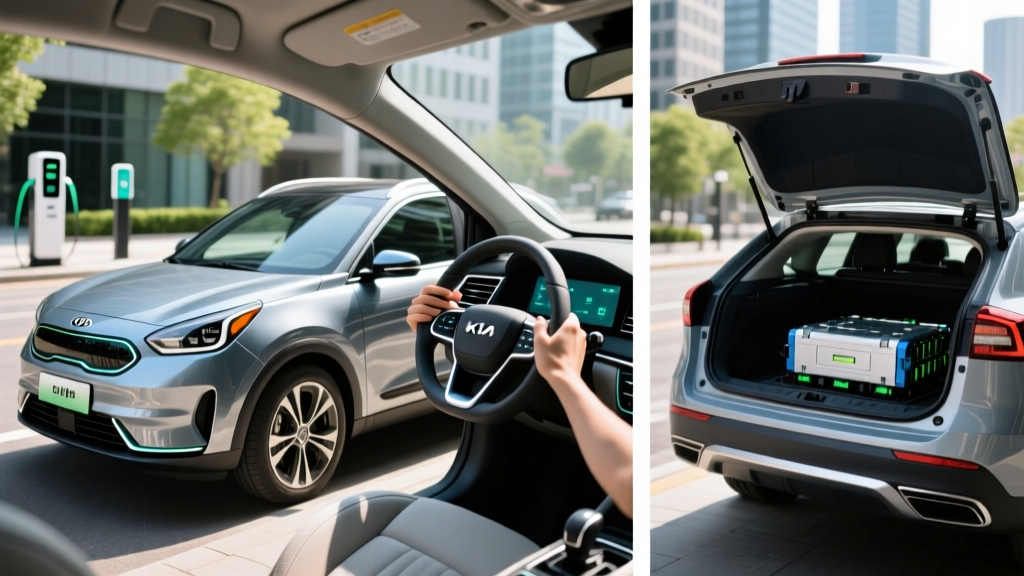
Quick Verdict: The 2019 Kia Niro EV delivers an EPA-estimated 239 miles of range from its 64 kWh battery, making it one of the most capable used EVs under $20,000 in 2026. It charges at up to 77 kW DC (CCS), reaching 10–80% in roughly 54 minutes. For buyers with home Level 2 charging and mostly suburban or city driving, it remains a practical daily commuter — but its aging DC charge speed and CCS connector (in a NACS-dominant market) are real trade-offs to weigh.
Is the 2019 Kia Niro EV Still Worth Buying in 2026?
Seven years after its US launch, the 2019 Kia Niro EV occupies a specific niche: an affordable, efficient electric crossover with genuine range for daily use. With used prices hovering between $13,000 and $19,000 depending on mileage and condition (per Kelley Blue Book and dealer listings), it undercuts most new EVs by $20,000 or more while offering range that still competes with 2024-era base models.
The Niro EV was built on the same platform as the Hyundai Kona Electric and shares its 64 kWh liquid-cooled NMC (nickel-manganese-cobalt) battery pack. That pack has held up well in real-world ownership data — most examples retain 90%+ State of Health (SoH) at 60,000 miles, though individual results vary based on charging habits and climate exposure.
However, the EV market has moved fast. The 2019 Niro EV's 77 kW peak DC charge rate was competitive in 2019 but feels dated next to the 150–350 kW rates common on 2025–2026 models. If you rely on public fast charging for road trips, the Niro's slower charge curve is a tangible limitation. For home-charging commuters, it matters far less.
Range, Battery, and Real-World Efficiency
| Specification | 2019 Kia Niro EV |
|---|---|
| EPA Range | 239 miles |
| Battery Capacity | 64 kWh (usable), NMC chemistry |
| Combined MPGe | 112 MPGe (source: fueleconomy.gov) |
| Energy Consumption | 30 kWh/100 mi |
| Motor Output | 201 hp / 291 lb-ft torque |
| 0–60 mph | ~7.5 seconds |
| DC Fast Charge (Peak) | 77 kW (CCS1) |
| 10–80% DC Charge Time | ~54 minutes |
| Level 2 AC Charge Rate | 7.2 kW |
| Level 2 0–100% Time | ~9.5 hours |
| Battery Warranty (Original) | 10 yr / 100,000 mi (transfers to second owner at 10/100 in most states; verify with dealer) |
Real-World Range Expectations: The EPA sticker says 239 miles, but real-world results depend heavily on conditions. In mild weather (60–80°F) with mixed city/highway driving, expect 220–240 miles. Sustained highway driving at 75+ mph drops that to roughly 190–210 miles. In freezing temperatures (below 32°F), range can fall to 160–185 miles due to battery resistance and cabin heating load. The Niro EV uses a resistive PTC heater rather than a heat pump, which draws more energy in cold climates.
The 64 kWh NMC pack in the Niro EV has demonstrated solid longevity. Kia's battery management system maintains a conservative top and bottom buffer (roughly 2–3 kWh on each end that the driver cannot access), which reduces degradation stress. Owners who primarily charge at home on Level 2 and avoid frequent DC fast charging tend to see the best State of Health retention. If buying used, request a battery health report from a Kia dealer — they can pull SoH data through the OBD-II diagnostic system.
Charging at Home and on the Road
The 2019 Niro EV uses a CCS1 (Combined Charging System) connector for DC fast charging and a J1772 connector for Level 1 and Level 2 AC charging. In 2026, the North American market is transitioning toward NACS (Tesla's connector standard), which creates a practical consideration for used CCS-equipped vehicles.
| Charging Level | Power | Miles Added per Hour | Typical Use Case |
|---|---|---|---|
| Level 1 (120V) | 1.2 kW | ~4 mi/hr | Overnight trickle; emergency top-ups |
| Level 2 (240V, 32A) | 7.2 kW | ~24 mi/hr | Home daily charging; workplace |
| DC Fast Charge | 77 kW peak | ~255 mi/hr (at peak) | Road trips; public stations |
Home charging is where the Niro EV shines. At 7.2 kW on a 240V Level 2 home charger, a full 0–100% charge takes about 9.5 hours — easily achievable overnight. Most EV owners charge between 20–80% daily, which takes roughly 5.5 hours at Level 2 and is more than sufficient for daily driving needs.
Public DC fast charging is the Niro's weak point by 2026 standards. The 77 kW peak rate means a 10–80% session takes around 54 minutes — adequate for a lunch stop but noticeably slower than modern EVs that complete the same session in 18–25 minutes. The charge curve also tapers significantly above 60% State of Charge, so the back half of the session is slow.
Regarding the CCS-to-NACS transition: Tesla has opened its Supercharger network to CCS vehicles via a built-in adapter (for vehicles with NACS ports) or through third-party adapters like the Lectron or A2Z CCS-to-NACS adapter ($200–$350). Electrify America, EVgo, and ChargePoint continue to operate CCS-equipped stations, and most will maintain CCS cables alongside NACS for years. You will not be stranded — but you may need an adapter for Tesla Superchargers.
Cost Breakdown: Purchase, Charging, and Maintenance
Understanding the full cost picture is essential for any used EV purchase. Here's how the 2019 Niro EV stacks up against its gas-powered sibling, the 2019 Kia Niro FE (hybrid), and a comparable gas crossover.
| Cost Factor | 2019 Niro EV (Used) | 2019 Niro Hybrid (Used) | Gas Crossover (Avg.) |
|---|---|---|---|
| Purchase Price (2026 used market) | $14,000–$19,000 | $14,000–$18,000 | $13,000–$17,000 |
| Federal Tax Credit (Used EV, §25E) | Up to $4,000 (30% of sale price, max $4,000 — income caps apply; see IRS §25E) | $0 | $0 |
| Fuel/Energy Cost per Year (12,000 mi) | $480–$720 (home charging at $0.13–$0.20/kWh) | $1,100–$1,300 (50 MPG at $3.20/gal) | $1,600–$1,900 (28 MPG at $3.20/gal) |
| Annual Maintenance | $200–$400 (cabin filter, tire rotation, wipers) | $500–$800 (oil changes, filters, brakes) | $700–$1,100 |
| Estimated 5-Year Fuel Savings vs. Gas | $6,000–$7,500 | $3,000–$4,000 | Baseline |
| Insurance (Annual Avg.) | $1,400–$1,900 | $1,200–$1,600 | $1,200–$1,600 |
The used EV tax credit (§25E) is a significant advantage. If the vehicle sells for $15,000 and you meet the income requirements (AGI ≤ $75,000 single / $150,000 joint), you can claim 30% of the sale price — up to $4,000 — as a federal credit. This credit is available at the point of sale through participating dealers starting in 2024. Verify current eligibility rules on IRS.gov, as requirements around dealer registration and vehicle VIN reporting apply.
Maintenance savings are real and ongoing. The Niro EV has no engine oil, no transmission fluid, no spark plugs, no timing belt, and no exhaust system. Brake wear is minimal thanks to regenerative braking — many owners report original brake pads at 80,000+ miles. The primary recurring costs are cabin air filters ($20–$40 DIY), tire rotations ($30–$50), and eventual tire replacement (EVs tend to wear tires slightly faster due to instant torque and higher weight).
How Does It Compare to the Niro Hybrid and Gas Alternatives?
| Attribute | 2019 Niro EV | 2019 Niro Hybrid | 2019 Niro PHEV |
|---|---|---|---|
| EPA Range / MPG | 239 mi (112 MPGe) | 50 MPG combined | 26 mi electric + 46 MPG |
| Annual Fuel Cost (12k mi) | $480–$720 | $1,100–$1,300 | $600–$900 (mixed) |
| Home Charging Needed? | Strongly recommended | No | Recommended for EV range |
| Road-Trip Convenience | Slower DC charging; plan stops | Gas station anywhere | Gas + short EV range |
| Cargo Space | 18.5 cu ft (battery raises floor) | 22.3 cu ft | 19.4 cu ft |
| Used Tax Credit (§25E) | Up to $4,000 | $0 | $0 |
| Best For | Home-charging commuters | No home charging; road trippers | Short commutes + flexibility |
The Niro EV sacrifices about 3.8 cubic feet of cargo space compared to the hybrid due to the battery pack raising the rear cargo floor. That's roughly one carry-on suitcase worth of space — noticeable but not disqualifying for most buyers. The EV also rides slightly firmer due to the extra ~500 lbs of battery weight.
If you have reliable home charging and your daily driving stays under 80 miles round-trip (covering roughly 90% of American commutes per FHWA data), the Niro EV's operating cost advantage is substantial. If you frequently drive 300+ miles in a day or live in an apartment without charging access, the hybrid or PHEV may serve you better.
Common Misconceptions About Used EVs
| Myth | Fact |
|---|---|
| "The battery will need replacing soon and cost $15,000." | The Niro EV's 64 kWh NMC pack is liquid-cooled and conservatively managed. Most 2019 examples show 90%+ SoH at 60k miles. Full replacement is $8,000–$12,000 if ever needed, but data from fleet usage suggests these packs last 150,000+ miles before falling below 80% capacity. The original 10-year/100,000-mile battery warranty may still apply — verify transfer terms with Kia. |
| "Used EVs don't qualify for any tax credits." | The §25E used clean vehicle credit provides up to $4,000 (30% of sale price) for qualifying used EVs sold through registered dealers. Income caps apply ($75k single / $150k joint). The vehicle must be at least 2 model years old — the 2019 Niro EV qualifies. |
| "I'll be stuck with a CCS connector as everyone moves to NACS." | CCS infrastructure remains widely available through Electrify America, EVgo, and ChargePoint. Adapters exist for Tesla Superchargers. The transition to NACS will take years, and CCS vehicles will be supported through at least 2030 at major networks. |
| "Charging takes forever." | At home on Level 2, you plug in at night and wake up full — it takes zero active time. On road trips, 10–80% takes ~54 minutes at DC fast chargers — plan a meal or restroom break. It's slower than gas but manageable for most drivers. |
| "EVs are more expensive to insure." | Sometimes true — EV insurance averages 10–15% higher than equivalent gas cars due to repair cost structures. But the gap has narrowed significantly by 2026. Shop quotes from GEICO, Progressive, and State Farm; many now offer EV-specific policies. |
What First-Time EV Buyers Should Know
If the 2019 Niro EV would be your first electric vehicle, here are the practical realities no brochure will tell you:
Home charging is the foundation. Over 80% of EV charging happens at home. You'll need access to a 240V outlet (like a dryer outlet) or a professionally installed Level 2 charger. Installation costs range from $500 (if you have a 240V outlet near your parking spot) to $2,500+ (if your electrical panel needs an upgrade or the run from panel to garage is long). Get a quote from a licensed electrician before purchasing.
Preconditioning matters. The Niro EV can precondition its battery and cabin while plugged in — warming or cooling the car using grid power instead of battery power. Set a departure timer through the infotainment system, and you'll leave every morning with a warm car and full range, even in freezing weather. This is one of the most underused features among new EV owners.
Regenerative braking changes how you drive. The Niro EV offers multiple regen levels controlled by steering-wheel paddles. At the highest setting, you can drive mostly without touching the brake pedal — lifting off the accelerator slows the car significantly while recapturing energy. It takes a few days to adapt, then becomes second nature.
Plan for cold weather. If you live where temperatures regularly drop below freezing, budget 25–35% range loss in winter. The Niro EV's resistive heater is effective but energy-hungry. Using heated seats and steering wheel (available on EX and EX Premium trims) instead of cranking the cabin heat can recover 10–15 miles of range on a cold day.
Decision Framework: Should You Buy the 2019 Kia Niro EV?
Choose the 2019 Niro EV if:
- You have access to home Level 2 charging (or can install it)
- Your daily round-trip commute is under 80 miles
- You want to minimize ongoing fuel and maintenance costs
- You qualify for the §25E used EV credit (income ≤ $75k single / $150k joint)
- You primarily drive in urban or suburban environments
- You want a practical EV under $20,000 with proven battery longevity
Choose the Niro Hybrid (or a different vehicle) if:
- You live in an apartment or condo without charging access and cannot install a charger
- You regularly take road trips exceeding 250 miles in a single day
- You live in an extremely cold climate (regular sub-zero°F temps) and need maximum range flexibility
- You need maximum cargo space (the hybrid offers 3.8 cu ft more)
- You want the fastest possible DC charging for frequent public charging
The 2019 Kia Niro EV is not the flashiest used EV on the market in 2026. It won't charge at 350 kW, it doesn't have a frunk, and its infotainment system looks dated next to current models. But it delivers where it counts for most buyers: honest range, low running costs, proven reliability, and an entry price that — after the used EV tax credit — can dip as low as $10,000–$15,000. For a practical commuter vehicle that costs pennies per mile to operate, it remains one of the smartest used EV purchases available.
Frequently Asked Questions
Does the 2019 Kia Niro EV qualify for any tax credits in 2026?
Yes — it can qualify for the federal §25E used clean vehicle credit, which provides up to $4,000 (30% of the sale price). Requirements include: the buyer's AGI must not exceed $75,000 (single) or $150,000 (joint), the vehicle must be purchased through a registered dealer, and it must be at least 2 model years old. The credit can be transferred to the dealer at point of sale as a price reduction. Always verify current rules on IRS.gov and consult a tax professional.
How long will the 2019 Niro EV battery last?
Kia designed the 64 kWh NMC battery with liquid cooling and conservative charge buffers. Real-world data from high-mileage Niro EV and Kona Electric owners suggests these packs retain 85–92% capacity at 100,000 miles. The original battery warranty covers 10 years/100,000 miles against defects and excessive degradation (below ~70% capacity). Check whether the warranty transfers fully to second owners in your state — in most cases, it does.
Can I charge the Niro EV at Tesla Superchargers?
Not natively — the Niro EV has a CCS1 port, and Tesla Superchargers use NACS. However, you can use a CCS-to-NACS adapter (available from Lectron, A2Z, and others for $200–$350) at Superchargers that Tesla has opened to non-Tesla vehicles. You'll need the Tesla app to initiate the session. Alternatively, Electrify America, EVgo, and ChargePoint stations all have native CCS connectors.
What does it cost to charge the Niro EV at home?
At the US average residential electricity rate of ~$0.16/kWh, a full 64 kWh charge costs about $10.24 and provides roughly 239 miles of range — approximately 4.3 cents per mile. Compare that to a gas car at 28 MPG with $3.20/gallon fuel: about 11.4 cents per mile. If your utility offers off-peak EV rates (often $0.08–$0.10/kWh overnight), the cost drops to roughly $5–$6.50 per full charge.
Is the 2019 Niro EV safe?
The Niro EV earned a Top Safety Pick rating from the IIHS with Good ratings in most crash tests. It comes standard with automatic emergency braking, lane-keeping assist, blind-spot monitoring, and adaptive cruise control. It does not have the latest-generation driver-assist features found on 2024+ models, but its SAE Level 2 safety suite remains effective for highway and city driving. Always remember that Level 2 systems require active driver supervision — they are not self-driving.