Quick Verdict: The Equinox EV's Dimensions and Why They Matter
The 2026 Chevrolet Equinox EV slots into one of the most competitive segments in the electric-vehicle market — the compact electric crossover — and its physical dimensions tell you exactly where it fits. At 190.7 inches in overall length, the Equinox EV is nearly a foot longer than its gasoline counterpart and stretches close to midsize territory. That extra length, combined with a 115.7-inch wheelbase riding on GM's dedicated Ultium platform, unlocks interior volume that punches above its class.
But size isn't just a parking-lot concern. The Equinox EV's length, width, and height directly affect cargo capacity, rear-seat comfort, aerodynamic efficiency, and how easily it fits in a standard garage. If you're cross-shopping against the Hyundai Ioniq 5, Tesla Model Y, or Ford Mustang Mach-E, understanding the Equinox EV's exact footprint is the first step in deciding whether it fits your life — literally.
| Specification | Equinox EV | Tesla Model Y (LR) | Hyundai Ioniq 5 |
|---|---|---|---|
| Overall Length | 190.7 in | 187.0 in | 182.7 in |
| Wheelbase | 115.7 in | 113.8 in | 118.1 in |
| Width (w/o mirrors) | 74.8 in | 75.6 in | 74.4 in |
| Height | 64.4 in | 63.9 in | 63.0 in |
| Curb Weight (3LT AWD) | ~5,100 lbs | ~4,363 lbs | ~4,500 lbs |
| Ground Clearance | 6.9 in | 6.6 in | 6.1 in |
| EPA Range (max) | 319 mi | 320 mi | 311 mi |
| Battery (usable) | 85 kWh | 75 kWh | 84 kWh |
| Base MSRP | $33,600 | $44,990 | $42,450 |
The Equinox EV's 190.7-inch length places it squarely between compact and midsize crossovers. Chevrolet achieved this by stretching the Ultium skateboard platform to accommodate a large battery pack while keeping overhangs relatively tight. The result is a vehicle that fits in a standard residential garage (most are 192–204 inches deep) with a few inches to spare — but it will feel noticeably longer than a RAV4 or CR-V in tight urban parking situations.
Range and Efficiency: 319 Miles EPA, But What About the Real World?
EPA Estimated Range: 319 miles (3LT FWD) / 307 miles (RS AWD) / 285 miles (Launch Edition AWD)
Real-World Expectation: Expect 260–290 miles in mixed highway driving at 70–75 mph. In sustained sub-freezing temperatures (below 30°F), plan for 210–250 miles. City driving with regen braking can match or slightly exceed the EPA sticker.
The 2026 Equinox EV uses an 85 kWh usable Ultium battery pack with NMC (nickel manganese cobalt) chemistry. GM's large-format pouch cells are manufactured at the Ultium Cells joint-venture plants in Ohio and Tennessee. NMC chemistry offers higher energy density than LFP, which is critical for fitting 319 miles of range into a crossover footprint without excessive weight.
Efficiency varies significantly by trim and drivetrain. The FWD 3LT achieves an EPA-rated 96 MPGe combined (roughly 34 kWh/100 mi), while the dual-motor AWD RS drops to 90 MPGe combined (~37 kWh/100 mi). The heavier Launch Edition AWD, with its larger 21-inch wheels, falls to approximately 84 MPGe combined.
For context, the EPA's fueleconomy.gov data confirms the 3LT FWD at 319 miles, making it one of the most efficient non-luxury electric crossovers on the market. But real-world highway range at sustained speeds above 70 mph — particularly on flat interstates with headwinds — consistently trims 10–15% from the sticker number. Cold-weather testing in the Midwest shows losses of 20–30% without preconditioning, though the Equinox EV's standard heat pump helps mitigate this compared to vehicles using resistive cabin heating.
Charging: 150 kW DC Peak, Level 2 Home Setup, and Real Charge Times
| Charging Level | Power / Rate | Time / Speed | Notes |
|---|---|---|---|
| Level 1 (120V) | 1.4 kW | ~3–4 mi/hr added | Emergency/trickle only; 85 kWh pack takes 60+ hours |
| Level 2 (240V, 48A) | 11.5 kW | ~35 mi/hr; full charge ~9 hrs | Requires NEMA 14-50 or hardwired; recommended home setup |
| DC Fast Charge | 150 kW peak | 10–80% in ~33 min | CCS1 connector; tapers significantly above 80% |
The Equinox EV's 150 kW peak DC fast-charging rate is its most debated specification. In a segment where the Hyundai Ioniq 5 peaks at 240 kW and the Tesla Model Y at 250 kW, the Equinox EV charges noticeably slower on road trips. On a 350 kW Electrify America or EVgo station, you'll see the pack pull close to 150 kW from roughly 10–40% state of charge, then taper to ~100 kW by 60%, and drop to ~50 kW by 80%. The 10–80% session takes approximately 33 minutes — functional for highway rest stops but slower than rivals.
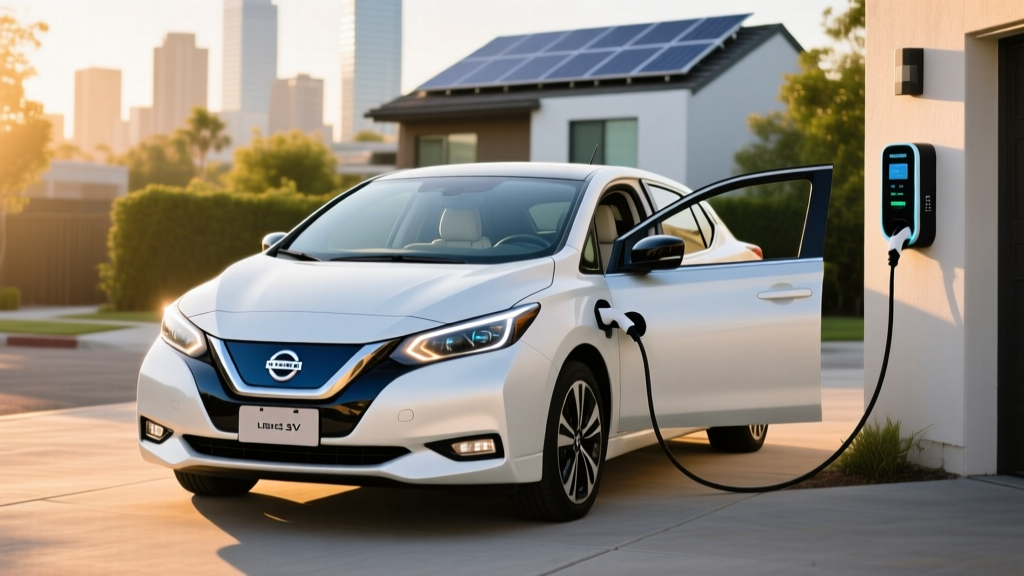
At home, the 11.5 kW onboard charger is competitive. Plugged into a 240V/48A Level 2 wall connector, the Equinox EV adds roughly 35 miles of range per hour of charging. A full 0–100% charge takes about 9 hours, meaning overnight charging easily replenishes even a nearly depleted pack. Most owners who charge nightly from a 50–80% daily window will see full replenishment in 3–4 hours.
Preconditioning tip: The Equinox EV allows you to set a departure time or manually precondition the battery via the MyChevrolet app before arriving at a DC fast charger. Preconditioning warms the battery to optimal temperature, which can shave 5–10 minutes off a 10–80% session in cold weather and improve peak charge rate sustainment.
The Equinox EV uses a CCS1 connector for DC fast charging and a J1772 inlet for Level 2 AC. With GM's transition to NACS for future models, 2026 Equinox EV owners will likely receive a NACS adapter for access to Tesla Supercharger V3/V4 stations — check Chevrolet's latest adapter availability before purchase.
Performance: 0–60 Times, Horsepower, and Drivetrain Options
The Equinox EV offers two distinct powertrain configurations:
- FWD (single front motor): 213 horsepower, 236 lb-ft torque. 0–60 mph in approximately 8.4 seconds. Available on 3LT trim.
- AWD (dual motor): 288 horsepower, 346 lb-ft torque. 0–60 mph in approximately 6.3 seconds. Available on RS and Launch Edition trims.
Neither configuration will win drag races against a Model Y Performance (3.5 seconds) or an Ioniq 5 N (3.3 seconds), but the Equinox EV isn't positioned as a performance EV. The AWD model's 6.3-second sprint is brisk enough for confident highway merging and passing. The FWD model, at 8.4 seconds, feels adequate in city driving but can feel leisurely when merging onto fast-moving freeways with a full load.
Ride quality is where the Equinox EV's weight and wheelbase pay dividends. At over 5,100 pounds (AWD), the low center of gravity from the Ultium pack provides planted, confident handling with minimal body roll. The suspension tuning leans comfort-oriented, absorbing highway expansion joints and potholes better than the firmer Model Y. Regenerative braking offers multiple levels via steering-wheel paddles, including a one-pedal driving mode that can bring the vehicle to a complete stop without touching the brake pedal.
Interior Space, Cargo Volume, and Daily Practicality
The Equinox EV's 115.7-inch wheelbase — 4.5 inches longer than the gas Equinox — translates directly into cabin room. Chevrolet claims the following interior dimensions:
- Front legroom: 42.1 inches
- Rear legroom: 38.0 inches
- Front headroom: 40.5 inches
- Rear headroom: 38.8 inches
- Cargo behind rear seats: 26.4 cu ft
- Cargo with rear seats folded: 57.2 cu ft
- Front trunk (frunk): Not available — the Ultium packaging reserves this space for HVAC and power electronics
Compared to the gas Equinox (29.9 / 63.5 cu ft cargo), the EV actually loses a small amount of cargo volume due to the raised floor accommodating the battery pack beneath. However, passenger space is genuinely generous — the rear seat comfortably fits two adults over six feet tall, and the flat floor (no transmission tunnel) makes a middle passenger viable for shorter trips.
The lack of a frunk is a notable omission. Competitors like the Ioniq 5 (0.85 cu ft frunk) and Model Y (4.1 cu ft frunk) offer at least some front storage for charging cables or a small bag. Equinox EV owners will rely entirely on the rear cargo area and under-floor storage compartment.
At 190.7 inches long and 74.8 inches wide, the Equinox EV fits comfortably in a standard two-car garage. However, if you have a single-car garage under 20 feet deep or park in tight urban structures, you'll notice the extra length compared to a RAV4 (180.9 in) or CR-V (184.8 in). The 39.4-foot turning circle is average for the class and manageable in most parking scenarios.
Pricing, Trims, and Federal Tax Credit Eligibility
| Trim | Drivetrain | MSRP | Est. After §30D Credit* |
|---|---|---|---|
| 3LT | FWD | $33,600 | ~$26,100 |
| 3LT | AWD | $36,600 | ~$29,100 |
| RS | AWD | $41,900 | ~$34,400 |
| Launch Edition | AWD | $43,400 | ~$35,900 |
*Estimated after $7,500 federal §30D credit applied at point of sale. Eligibility depends on buyer income, battery sourcing, and MSRP caps. See IRS rules below.
The Equinox EV's pricing is its most compelling argument. At $33,600 for the base 3LT FWD, it undercuts the Model Y Long Range by over $11,000 and the Ioniq 5 SE by nearly $9,000 — before any tax incentives.
Federal §30D Tax Credit Eligibility: The 2026 Equinox EV is expected to qualify for the full $7,500 federal tax credit for eligible buyers, thanks to GM's Ultium Cells battery production in Ohio and Tennessee meeting critical-mineral and battery-component sourcing requirements. The credit can now be transferred to the dealer at point of sale, reducing your purchase price directly rather than waiting for a tax refund. However, eligibility requires:
- Buyer AGI caps: $150,000 (single), $225,000 (head of household), $300,000 (married filing jointly)
- MSRP cap: Vehicle must be under $80,000 (SUVs/crossovers) — all Equinox EV trims qualify
- Battery sourcing: Critical minerals and battery components must meet phased-in percentage thresholds per IRS §30D guidelines
Always verify current-year eligibility with your tax professional and the dealer before purchase, as sourcing requirements tighten annually. Some state incentives (California, Colorado, New York, and others) may stack on top of the federal credit — check your state's energy office for details.
Technology, Safety, and Driver Assistance
The Equinox EV's cabin centers on a 17.7-inch diagonal infotainment touchscreen (one of the largest in the segment) paired with an 11-inch digital instrument cluster. The system runs Google Built-In, providing native Google Maps navigation, Google Assistant voice control, and access to the Play Store for apps like Spotify and Audible. Wireless Apple CarPlay and Android Auto are standard.
Driver-assistance technology includes Chevrolet's Super Cruise hands-free driving system on equipped trims (RS and Launch Edition; available on 3LT via package). Super Cruise is a Level 2 SAE driver-assist system — it controls steering, acceleration, and braking on over 750,000 miles of mapped divided highways in the US and Canada, but requires the driver to remain attentive and keep eyes on the road (monitored via a steering-column camera).
Important: Super Cruise is a Level 2 driver-assist system, not autonomous driving. You must remain seated in the driver's seat, keep your eyes on the road, and be prepared to take over immediately. It does not navigate city streets, construction zones, or unmapped roads. See NHTSA's guidance on automated vehicle safety for context on SAE automation levels.
Standard safety features across all trims include automatic emergency braking with pedestrian detection, lane-keep assist, following-distance indicator, rear cross-traffic alert, and a comprehensive airbag system. The Equinox EV earned strong marks in initial IIHS testing, and NHTSA crash-test ratings are expected to reflect the Ultium platform's structural rigidity.
Warranty Coverage and Battery Longevity
Chevrolet backs the Equinox EV with the following warranty structure:
- Battery & propulsion warranty: 8 years / 100,000 miles (whichever comes first), covering defects and capacity loss below 70% of original capacity
- Bumper-to-bumper: 3 years / 36,000 miles
- Powertrain (non-battery): 5 years / 60,000 miles
- Corrosion: 6 years / 100,000 miles
The 8-year/100,000-mile battery warranty with a 70% capacity-retention threshold is standard for the industry. NMC chemistry historically shows degradation of 8–12% over 100,000 miles under normal use patterns (daily charging to 80%, occasional DC fast charging). Equinox EV owners who primarily charge at home on Level 2 and avoid frequent 100% charges or repeated DC fast-charging sessions should expect the battery to retain 85–90% of original capacity at the 100,000-mile mark.
Ultium battery replacement costs remain high — estimates for a full pack replacement range from $15,000–$22,000 out of warranty, though individual module replacement (for isolated cell failures) is significantly less. As of 2026, very few Ultium packs have required full replacement, making long-term cost data still emerging.
Pros, Cons, and Who Should Buy the Equinox EV
Pros
- Class-leading value: $33,600 base with 319-mile range
- Spacious cabin with 115.7-inch wheelbase and generous rear legroom
- Standard heat pump for improved cold-weather efficiency
- 17.7-inch infotainment screen with Google Built-In
- Super Cruise hands-free highway driving available
- Federal §30D tax credit eligible ($7,500)
- Comfortable, compliant ride quality
Cons
- 150 kW peak DC charging is slower than key rivals (Ioniq 5: 240 kW, Model Y: 250 kW)
- No front trunk (frunk)
- FWD model's 8.4-second 0–60 feels sluggish for highway merging
- Cargo volume (26.4 cu ft) trails gas Equinox and some EV rivals
- 190.7-inch length may challenge tight urban garages
- Rear visibility is compromised by thick C-pillars; camera mirror recommended
Choose the Equinox EV if: You prioritize value and range over fast-charging speed, need a spacious commuter or family crossover under $35K (after credit), mostly charge at home, and rarely take road trips exceeding 250 miles without overnight stops.
Look elsewhere if: You regularly road-trip and need 20-minute DC fast-charge stops (consider Ioniq 5 or Model Y), need a frunk for charging-cable storage, or want a sporty, performance-oriented drive.
Frequently Asked Questions
What is the exact length of the 2026 Equinox EV?
The 2026 Chevrolet Equinox EV measures 190.7 inches bumper to bumper, with a 115.7-inch wheelbase. That makes it approximately 10 inches longer than the gas Equinox and 3.7 inches longer than the Tesla Model Y. It will fit in most standard residential garages (typically 20–24 feet deep) with room to spare.
What is the real-world range of the Equinox EV?
The EPA rates the 3LT FWD at 319 miles, but real-world highway driving at 70–75 mph typically yields 260–290 miles. In cold weather (below 30°F), expect 210–250 miles without preconditioning. City driving with regenerative braking can match or slightly exceed the EPA estimate. The AWD RS trim drops to 307 miles EPA, and the Launch Edition AWD to 285 miles.
How fast does the Equinox EV charge at home and on the road?
At home on a 240V/48A Level 2 charger, the Equinox EV accepts up to 11.5 kW, adding roughly 35 miles of range per hour (full charge in ~9 hours). On DC fast chargers, it peaks at 150 kW and charges from 10–80% in approximately 33 minutes. This is slower than the Ioniq 5 (240 kW, ~18 min) and Model Y (250 kW, ~20 min).
Does the Equinox EV qualify for the $7,500 federal tax credit?
Yes, the 2026 Equinox EV is expected to qualify for the full $7,500 federal §30D clean vehicle credit for eligible buyers. Eligibility requires meeting buyer income caps ($150K single / $300K joint), the vehicle MSRP cap (under $80K for SUVs — all trims qualify), and battery critical-mineral and component sourcing requirements. The credit can be applied at point of sale, reducing your purchase price immediately. Verify current eligibility with your dealer and tax professional.
Is the Equinox EV worth buying over the Tesla Model Y or Hyundai Ioniq 5?
It depends on your priorities. The Equinox EV offers the lowest entry price ($33,600 vs. $44,990 for Model Y LR and $42,450 for Ioniq 5 SE) and comparable EPA range. However, the Model Y offers faster charging, a frunk, and a more extensive Supercharger network. The Ioniq 5 charges significantly faster (240 kW peak) and offers V2L capability. If budget and range are your top priorities and you mostly charge at home, the Equinox EV is the strongest value. If road-trip charging speed matters, the Ioniq 5 or Model Y are better fits.
Does the Equinox EV have a frunk (front trunk)?
No. The Equinox EV does not include a front trunk. The space under the hood is occupied by HVAC components, the power electronics module, and the onboard charger. All cargo must go in the rear cargo area (26.4 cu ft behind the rear seats, 57.2 cu ft with seats folded).
What battery chemistry does the Equinox EV use?
The Equinox EV uses NMC (nickel manganese cobalt) lithium-ion pouch cells manufactured by Ultium Cells (a GM/LG Energy Solution joint venture) in Ohio and Tennessee. NMC offers higher energy density than LFP, enabling the 319-mile range in a compact crossover footprint. The trade-off is that NMC batteries are more sensitive to sustained 100% charges and extreme heat — daily charging to 80% is recommended for longevity.