Chevrolet Electric Van: The Quick Answer
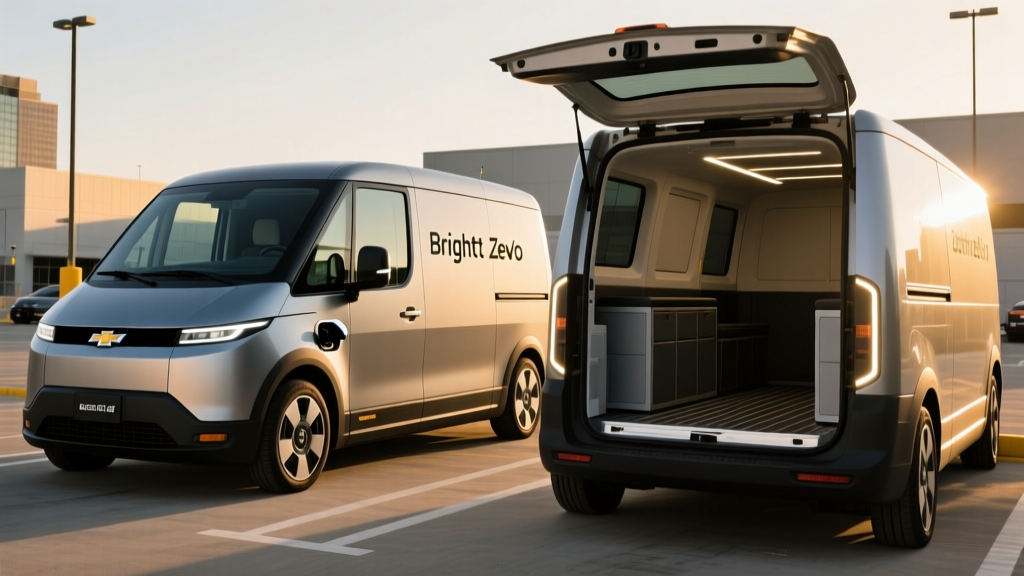
The Chevrolet electric van lineup consists of the BrightDrop Zevo 400 and Zevo 600 — purpose-built, battery-electric commercial delivery vans produced under GM's BrightDrop division and now sold through Chevrolet's commercial fleet channels. The Zevo 400 offers an EPA-estimated 272 miles of range with 412 cubic feet of cargo volume, while the larger Zevo 600 delivers up to 272 miles with 615 cubic feet. Both use GM's Ultium battery platform with a 165 kWh usable NMC pack, support DC fast charging up to 120 kW (10–80% in roughly 45 minutes), and start in the $74,000–$90,000 range before incentives. These are fleet-only commercial vehicles, not consumer minivans — if you're a private buyer seeking a family electric van, Chevrolet does not currently offer one.
What Is the Chevrolet Electric Van Lineup?
Chevrolet's electric van identity lives through BrightDrop, GM's commercial electric delivery brand. Launched with FedEx as an early fleet partner, the Zevo vans are built at GM's CAMI Assembly plant in Ingersoll, Ontario. They compete directly with the Ford E-Transit, Mercedes-Benz eSprinter, and Rivian EDV (Amazon-exclusive).
There are two models to know:
- Zevo 400: Mid-roof, ~250 cu ft cargo area (some configs up to 412 cu ft), ideal for last-mile urban routes.
- Zevo 600: High-roof, extended wheelbase, 615 cu ft cargo area, built for higher-volume parcel and cargo delivery.
Neither is a passenger van. There is no Chevrolet electric equivalent to the Chrysler Pacifica or Honda Odyssey. If you need a consumer electric people-mover, you'll need to look at the Kia EV9 (3-row SUV) or wait for future OEM announcements.
| Spec | Zevo 400 | Zevo 600 |
|---|---|---|
| EPA Range | 272 mi | 272 mi (est., varies by config) |
| Battery (usable) | 165 kWh, NMC (Ultium) | 165 kWh, NMC (Ultium) |
| Motor Output | ~200 kW (268 hp) front-drive | ~200 kW (268 hp) front-drive |
| Torque | 325 lb-ft | 325 lb-ft |
| Max DC Fast Charge | 120 kW | 120 kW |
| 10–80% DCFC Time | ~45 min | ~45 min |
| Level 2 AC Charge | 11.5 kW | 11.5 kW |
| Cargo Volume | 412 cu ft | 615 cu ft |
| Max Payload | ~2,000 lbs | ~2,200 lbs |
| Base MSRP (est.) | ~$74,000 | ~$90,000 |
| Warranty (battery) | 8 yr / 100,000 mi | 8 yr / 100,000 mi |
Range, Charging, and Real-World Expectations
The EPA's 272-mile estimate assumes a mixed delivery cycle with frequent stops and regenerative braking. Real-world results depend heavily on route profile:
Real-World Range Reality
EPA sticker: 272 miles
Urban last-mile (stop-and-go, regen-heavy): 250–280 mi — regen recovers significant energy.
Highway-heavy routes (65–70 mph): 190–220 mi — aerodynamic drag on a box van crushes efficiency.
Cold weather (below 32°F): 170–210 mi — expect 20–35% loss without preconditioning.
The 120 kW peak DC fast charge rate is modest compared to passenger EVs like the Hyundai Ioniq 5 (240 kW), but it's adequate for commercial duty cycles where vans charge overnight at the depot. At 11.5 kW Level 2, a full 0–100% charge takes roughly 14–15 hours, which fits an overnight depot window perfectly. Fleet operators rarely need mid-day DC fast charging unless running double shifts.
Chevrolet Electric Van vs Gas Cargo Van: Cost Comparison
The purchase premium for a Zevo is significant — roughly $25,000–$35,000 over a comparable Ford Transit 250 or RAM ProMaster gas van. The payback comes through fuel and maintenance savings over 5–7 years of fleet service.
| Cost Category | BrightDrop Zevo 600 | Ford Transit 250 (Gas) |
|---|---|---|
| Purchase Price | $90,000 | $52,000 |
| Federal Commercial EV Credit (§45W, up to $7,500) | −$7,500 | $0 |
| Net Acquisition | $82,500 | $52,000 |
| Fuel/Energy (100k mi) | $6,500 (depot L2 @ $0.13/kWh) | $18,500 (14 mpg @ $3.45/gal) |
| Maintenance (5 yr) | $3,200 (no oil, fewer brakes) | $8,500 (oil, trans, brakes, exhaust) |
| Insurance (est.) | $14,000 | $11,000 |
| 5-Year Total | $106,200 | $90,000 |
The Zevo still costs more over 5 years in this conservative model, but the gap narrows sharply at higher annual mileage, with utility time-of-use rates below $0.10/kWh, or when state incentives (like California's HVIP) are stacked. At 150,000 miles over 7 years, many fleets report break-even or net savings — especially with rising fuel prices and §45W commercial tax credits.
Tax Credits and Incentives: What Fleets Actually Get
Commercial buyers do not qualify for the consumer §30D credit ($7,500 point-of-sale). Instead, fleets access:
- §45W Commercial Clean Vehicle Credit: Up to $7,500 for vehicles under 14,000 lbs GVWR (Zevo qualifies). Subject to domestic content and critical-mineral sourcing rules per IRS guidance.
- State HVIP (California): Up to $45,000 per Class 2b–3 van in some voucher tiers — first-come, first-served.
- Depot charging infrastructure credits (§30C): Up to 30% of charger installation costs, capped at $100,000 per item, for qualifying census tracts.
Always verify current-year eligibility with your tax advisor and the IRS §45W page, as sourcing rules tighten annually.
Ownership Realities: What First-Time Fleet EV Buyers Must Know
Buying a Chevrolet electric van is not like spec'ing a gas Transit. These operational factors determine whether electrification pays off:
Depot Charging Is Non-Negotiable
Public DC fast charging is too slow, too expensive, and too unreliable to serve as a fleet's primary fueling strategy. You need dedicated Level 2 depot chargers (one per van, or smart-shared via load management). Budget $4,000–$8,000 per charger installed, plus potential utility service upgrades ($10,000–$50,000+ for panel and transformer work on larger fleets).
Route Analytics Before Purchase
Pull 3–6 months of GPS telematics data from your current gas vans. If 80%+ of your routes are under 200 miles with return-to-base overnight, the Zevo is a strong fit. If your vans regularly exceed 250 miles or require mid-day top-ups in areas without DCFC infrastructure, electrification may not be viable yet.
Cold-Weather Fleets: Preconditioning Is Mandatory
For Northern routes, depot charging with scheduled preconditioning (warming the battery and cabin while still plugged in) recovers 10–15% of cold-weather range loss. Without it, a Zevo in January Minnesota may deliver only 170 usable miles.
Maintenance Savings Are Real
No oil changes, no transmission fluid, no exhaust system, and regenerative braking extends pad life 2–3x. Fleets consistently report 40–60% lower maintenance costs vs gas vans.
Common Misconceptions About the Chevrolet Electric Van
| Myth | Fact |
|---|---|
| "It's a consumer minivan you can buy at any Chevy dealer." | It's a commercial-only delivery van sold through BrightDrop/Chevrolet Commercial channels. No consumer minivan exists. |
| "272 miles means I can drive 272 miles on the highway." | Highway range is ~190–220 mi. The EPA figure reflects a stop-and-go delivery cycle. |
| "It charges as fast as a Tesla." | Peak 120 kW is far below Tesla's 250 kW Supercharger rate. 10–80% takes ~45 min, not 18. |
| "The $7,500 tax credit applies to everyone." | Consumer §30D doesn't apply to commercial purchases. Fleets use §45W, with different sourcing and documentation rules. |
| "Battery replacement will bankrupt the fleet." | Ultium batteries carry an 8 yr/100,000 mi warranty (65%+ capacity retention). Most fleet vans are cycled out of service before battery EOL. Out-of-warranty pack replacement is $18,000–$25,000 — significant, but planned. |
Decision Framework: Is the Chevrolet Electric Van Right for Your Fleet?
If / Then Guide
- If your vans return to a single depot nightly and 90% of routes are under 200 miles → Zevo is a strong candidate. Overnight L2 charging covers the duty cycle.
- If your routes regularly exceed 250 miles or span rural charging deserts → Stick with gas/diesel or a PHEV until depot or en-route DCFC coverage improves.
- If you operate in California, New York, or other HVIP-eligible states → Stack incentives aggressively. HVIP + §45W can reduce acquisition cost by $30,000+.
- If your depot has electrical capacity headroom (or you're building a new facility) → Install L2 infrastructure now. Retrofit costs 2–3x more than new-build conduit.
- If you're a private consumer looking for a family electric van → This isn't your vehicle. Look at the Kia EV9, VW ID.Buzz (where available), or a used Chrysler Pacifica Hybrid PHEV.
- If your fleet is under 5 vans and you lack depot charging access → Wait. The infrastructure investment isn't justified at small scale without public DCFC reliability improvements.
Frequently Asked Questions
Can I buy a Chevrolet electric van as a private consumer?
Not practically. The BrightDrop Zevo 400 and 600 are sold through commercial fleet channels with fleet-specific ordering, upfitting, and service agreements. Chevrolet does not currently offer a consumer electric minivan or passenger van.
What is the real-world range of the BrightDrop Zevo?
EPA-estimated at 272 miles on a delivery cycle. Expect 250–280 miles in urban stop-and-go with regen, 190–220 miles on highway-heavy routes, and 170–210 miles in sub-freezing conditions. Always plan routes to 80% of EPA range for safety margin.
How long does it take to charge a Zevo at a depot?
At 11.5 kW Level 2, a full 0–100% charge takes approximately 14–15 hours — designed for overnight depot charging. DC fast charging at 120 kW takes ~45 minutes from 10–80%, but most fleets rarely use DCFC for daily operations.
Does the Zevo qualify for the $7,500 federal tax credit?
Not the consumer §30D credit. Commercial buyers access the §45W Commercial Clean Vehicle Credit, which offers up to $7,500 for qualifying vehicles under 14,000 lbs GVWR. Eligibility depends on battery sourcing, domestic content, and your tax liability. Consult a tax professional.
How does the Zevo compare to the Ford E-Transit?
The Ford E-Transit has a lower starting price (~$55,000) but only 126 miles of EPA range with its 68 kWh battery. The Zevo costs more upfront but offers roughly double the range, making it better for longer routes. The E-Transit wins on tight urban routes under 100 miles where lower acquisition cost matters more than range.
What's the battery replacement cost?
Out-of-warranty Ultium pack replacement is estimated at $18,000–$25,000. However, GM's 8-year/100,000-mile battery warranty (covering capacity below 65%) and typical fleet vehicle lifecycle (5–7 years before resale or reassignment) mean most fleets never face this cost directly. NMC chemistry in the Ultium platform shows roughly 10–15% degradation over 100,000 miles in early fleet data.