Quick Answer: Is the Nissan Ariya the Right Electric SUV for You?
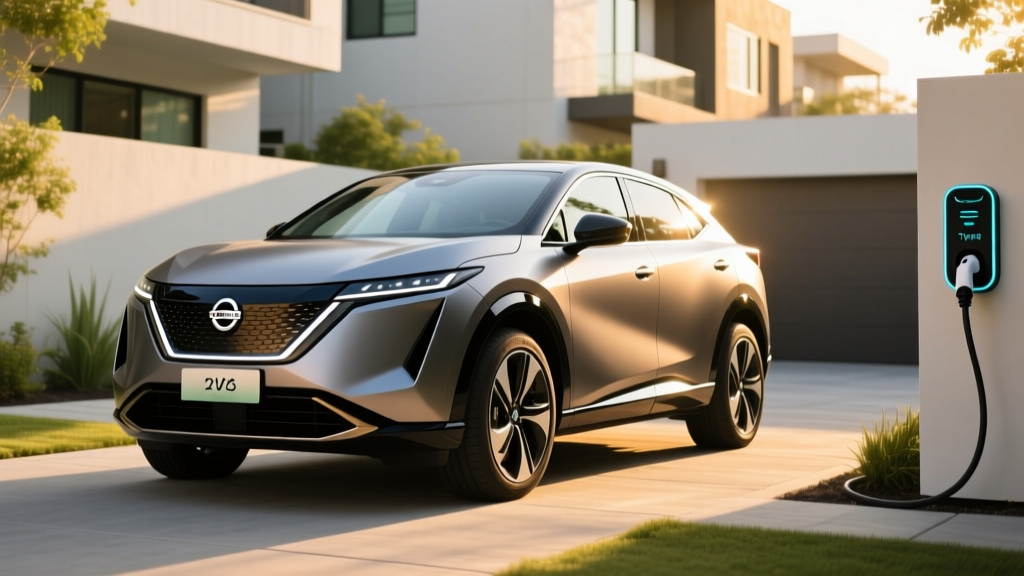
The 2026 Nissan Ariya is a compact electric SUV with an EPA-estimated range of up to 304 miles (FWD Engage trim with the 87 kWh battery), peak DC fast charging at 130 kW, and a starting MSRP around $39,590. It competes directly with the Hyundai Ioniq 5, Tesla Model Y, and Ford Mustang Mach-E. For buyers who want a comfortable, tech-forward electric Nissan SUV without the complexity of Tesla's ecosystem, the Ariya delivers — but its charging speed lags rivals, and real-world highway range drops to roughly 250–270 miles. If you have access to Level 2 home charging and drive under 300 miles daily, the Ariya is a strong candidate. If you road-trip frequently or live in an apartment without charging, consider the trade-offs carefully before committing.
2026 Nissan Ariya: Key Specs at a Glance
Nissan offers the Ariya in multiple trims with two battery sizes and front-wheel or all-wheel drive. Here's what matters for your purchase decision:
| Spec | Engage FWD | Empower+ FWD | Evolve+ e-4ORCE AWD | Platinum+ e-4ORCE AWD |
|---|---|---|---|---|
| Base MSRP (2026 est.) | $39,590 | $45,090 | $51,090 | $57,590 |
| Battery (usable) | 63 kWh (LFP) | 87 kWh (NMC) | 87 kWh (NMC) | 87 kWh (NMC) |
| EPA Range | 216 mi | 304 mi | 272 mi | 267 mi |
| Horsepower | 214 hp | 238 hp | 389 hp | 389 hp |
| 0–60 mph | ~7.2 sec | ~4.8 sec | ~4.8 sec | |
| Peak DC Fast Charge | 130 kW | 130 kW | 130 kW | 130 kW |
| 10–80% DC Charge Time | ~35 min | ~40 min | ~40 min | ~40 min |
| Level 2 Charge Rate | 7.2 kW | 7.2 kW | 7.2 kW | 7.2 kW |
| MPGe (combined) | 109 MPGe | 97 MPGe | 95 MPGe | 93 MPGe |
| Battery Warranty | 8 yr / 100,000 mi | 8 yr / 100,000 mi | 8 yr / 100,000 mi | 8 yr / 100,000 mi |
Real-world range caveat: The EPA 304-mile figure for the Empower+ FWD is achievable in mixed city/suburban driving at moderate temperatures. Expect roughly 250–270 miles on sustained highway runs at 70+ mph, and as low as 210–230 miles in sub-freezing winter conditions. Cold weather reduces battery efficiency and increases cabin heating load — a factor no EPA sticker captures.
Ariya vs. Gas SUV: The Real Cost Comparison
The most common cross-shopping question: how does the Ariya stack up against Nissan's own Rogue (a compact gas SUV) over five years of ownership? Let's run the numbers with concrete data.
| Cost Category (5-Year) | Nissan Ariya Empower+ ($45,090) | Nissan Rogue SV AWD ($33,500) |
|---|---|---|
| Purchase Price (MSRP) | $45,090 | $33,500 |
| Est. Federal Tax Credit (§30D) | Up to $7,500* | $0 |
| Effective Purchase Price | ~$37,590 | $33,500 |
| Fuel / Electricity (60,000 mi) | ~$3,900 (home L2, $0.14/kWh avg) | ~$7,200 (30 MPG, $3.60/gal) |
| Maintenance (5 yr / 60k mi) | ~$1,200 (tire rotation, cabin filter, fluid top-off) | ~$3,800 (oil changes, brakes, transmission fluid) |
| Insurance (5 yr avg) | ~$9,500 | ~$7,800 |
| Estimated Depreciation | ~$18,000 | ~$14,000 |
| Total 5-Year Cost | ~$70,190 | ~$66,300 |
*Federal §30D tax credit eligibility depends on your adjusted gross income (single filers: ≤$150,000; joint: ≤$300,000), vehicle MSRP caps (SUVs: ≤$80,000), and battery critical-mineral/component sourcing requirements that change annually. The Ariya's credit eligibility has varied by model year — always verify current status at irs.gov before purchasing. The credit can now be transferred to the dealer as a point-of-sale discount.
The Ariya closes the gap significantly after the tax credit, and lower fuel and maintenance costs save roughly $5,900 over five years. However, higher insurance premiums and steeper depreciation partially offset those gains. The break-even point versus the Rogue typically arrives around year 4–5, assuming you charge primarily at home.
Charging Cost Reality Check
Home Level 2 charging at the national average of $0.14/kWh costs about $0.045 per mile in the Ariya. Public DC fast charging at $0.35–$0.48/kWh pushes that to $0.12–$0.16 per mile — close to or exceeding what you'd pay in a 30 MPG gas SUV at $3.60/gallon. If you cannot charge at home, the Ariya's cost advantage over gas narrows substantially. Factor in your local utility rates and public charging network access before deciding.
Charging the Ariya: What You Need to Know
The Ariya uses the CCS1 connector for DC fast charging (with the industry transitioning to NACS, Nissan has confirmed future models will adopt the Tesla-style connector, but the 2026 Ariya remains CCS-equipped). Here's a practical breakdown of charging levels:
| Level | Power | Miles Added per Hour | Best For |
|---|---|---|---|
| Level 1 (120V household) | ~1.4 kW | ~4–5 mi/hr | Overnight trickle; emergency top-up |
| Level 2 (240V home/work) | 7.2 kW | ~24–28 mi/hr | Daily home charging; full overnight refill |
| DC Fast Charge | Peak 130 kW | ~170 mi in 30 min (10–80%) | Road trips; quick top-ups |
Charging curve reality: The Ariya peaks at 130 kW at a low state of charge (~10–20%) but tapers significantly above 60% SoC. A 10–80% session takes roughly 40 minutes on a 150+ kW charger. This is noticeably slower than the Hyundai Ioniq 5 (which peaks at ~240 kW and does 10–80% in ~18 minutes) or the Tesla Model Y on V3 Superchargers. If you road-trip often, this 20-minute penalty per stop adds up.
Home Charging Setup Costs
Most Ariya owners will want a Level 2 home charger. Budget for the following:
| Item | Typical Cost Range |
|---|---|
| Level 2 EVSE (ChargePoint, Wallbox, Emporia) | $350–$700 |
| Electrician labor (240V/40A circuit, ~30 ft run) | $600–$1,500 |
| Permit & inspection | $50–$200 |
| Electrical panel upgrade (if needed, 200A service) | $1,500–$3,500 |
| Total (typical install) | $1,000–$2,400 |
If your home has a 200-amp electrical panel with spare capacity, expect to spend $1,000–$1,800 total. Older homes with 100-amp service may require a panel upgrade, pushing costs to $3,000+. Always get a licensed electrician's assessment before purchasing equipment. Some utilities offer rebates of $250–$500 for Level 2 installations — check with your provider.
EV vs. Gas vs. Hybrid: Which Nissan SUV Fits Your Life?
Nissan now offers the compact SUV segment in three flavors: the all-electric Ariya, the gas-powered Rogue, and the Rogue PHEV (available in select markets). Here's how they compare for different driving patterns:
| Factor | Ariya (BEV) | Rogue (Gas) | Rogue PHEV (if available) |
|---|---|---|---|
| EPA Range / MPG | 216–304 mi | 30 MPG combined | ~35 mi electric + 34 MPG gas |
| Refuel/Recharge Time | 30–40 min (DC) / 8 hr (L2 home) | 5 min | 5 min gas / ~3 hr (L2) |
| Best Daily Drive Pattern | <200 mi/day with home charging | Any pattern | <35 mi commute + road trips |
| Cold-Weather Impact | 15–30% range loss | Minimal MPG loss | Reduced electric range |
| Long Road Trip Ease | Requires planning, 30–40 min stops | Trivial | Gas engine covers distance |
| Maintenance Complexity | Low (no oil, fewer brakes) | Moderate (standard ICE) | Higher (two powertrains) |
Decision Framework: Which Powertrain Should You Choose?
- Choose the Ariya (BEV) if: You have Level 2 home charging, drive under 250 miles daily, want minimal maintenance, and your road trips are under 300 miles or along well-served DC fast-charging corridors.
- Choose the Rogue (Gas) if: You lack home charging access, regularly drive 400+ miles between stops, live in an area with sparse public charging infrastructure, or your budget is strictly under $35,000.
- Choose a PHEV if: You want an electric commute (under 35 miles) but need gas-engine flexibility for weekend road trips, or you can't install a home charger but can plug in at work.
Common Misconceptions About the Ariya — and the Facts
| Myth | Fact |
|---|---|
| "The Ariya gets 304 miles no matter how you drive." | The 304-mile EPA rating applies to the Empower+ FWD under mixed conditions. Highway driving at 75 mph yields ~250–270 miles; winter driving can drop to ~210–230 miles. Your results depend on speed, temperature, terrain, and climate control usage. |
| "I don't need home charging — public chargers are everywhere." | Public DC charging costs 2–3× more per mile than home charging and reliability varies. Electrify America, EVgo, and ChargePoint networks have improved, but broken chargers and occupied stalls remain common. Home charging is the economic and convenience backbone of EV ownership. |
| "The battery will need expensive replacement in a few years." | Nissan warranties the Ariya battery for 8 years/100,000 miles against capacity loss below ~70%. Modern NMC and LFP batteries typically degrade 10–15% over 10 years based on fueleconomy.gov data and long-term fleet studies. A full replacement (if ever needed) currently runs $12,000–$18,000, but most owners will never face this cost. |
| "The Ariya charges as fast as other EVs." | At 130 kW peak, the Ariya's DC fast charging is slower than key rivals. The Ioniq 5 peaks at ~240 kW, the Model Y at ~250 kW on V3 Superchargers. Plan for ~40-minute stops (10–80%) versus ~18–25 minutes in those competitors. |
| "Every buyer gets the $7,500 tax credit." | Eligibility requires meeting income caps ($150K single / $300K joint), the vehicle MSRP must be ≤$80,000 (the Ariya qualifies), and the battery must meet critical-mineral and component sourcing thresholds set by the IRS. These thresholds tighten annually. Check the latest rules at irs.gov and consult a tax professional. |
What First-Time EV Buyers Must Know Before Purchasing the Ariya
If this is your first electric vehicle, the ownership experience differs from gas cars in ways that aren't always obvious at the dealership:
1. Home Charging Is Non-Negotiable for Most Owners
Over 80% of EV charging happens at home. Without a Level 2 setup (240V, 40-amp circuit), you'll rely on slow Level 1 charging (~4 miles of range per hour — a full charge takes over 20 hours on the 87 kWh battery) or expensive public charging. Confirm your electrical panel capacity and get an electrician quote before ordering the car.
2. Preconditioning Matters for Fast Charging
The Ariya (like most EVs) charges faster when the battery is warm. Use the navigation system to route to a DC fast charger — this triggers battery preconditioning, warming the pack for optimal charge speed. Showing up to a charger with a cold battery in winter can add 10–15 minutes to your session.
3. Insurance Costs More — Plan for It
EV insurance premiums run 15–25% higher than comparable gas vehicles, driven by higher repair costs and battery replacement risk. Get quotes from your insurer before buying. Some companies (like Geico and Progressive) have narrowed the gap, but expect to pay $150–$250/month depending on your profile.
4. Regenerative Braking Changes How You Drive
The Ariya offers adjustable regen, including a one-pedal driving mode (e-Pedal) that slows the car significantly when you lift off the accelerator. Most EV owners adapt within a week and prefer it, but it takes practice. The brake pads will last far longer than in a gas car — many EV owners report original brake pads at 80,000+ miles.
5. The Ariya's ProPILOT Assist Is Not Self-Driving
Nissan's ProPILOT Assist 2.0 is a SAE Level 2 driver-assistance system. It handles lane centering and adaptive cruise control competently, and on select divided highways it allows hands-off driving (with eye monitoring). However, you must remain attentive and ready to take over at any moment. This is not autonomous driving — it's an advanced cruise control system.
SAE Automation Level Reminder: The Ariya's ProPILOT Assist 2.0 is Level 2 — partial automation that requires continuous driver supervision. True self-driving (Level 4) is currently only available in limited robotaxi services like Waymo in select metro areas. No consumer vehicle sold in 2026 is self-driving.
Ariya vs. Key Competitors: How the Electric Nissan SUV Stacks Up
The Ariya doesn't exist in a vacuum. Here's how it compares to the electric SUVs it competes against most directly:
| Spec | 2026 Nissan Ariya (Empower+ FWD) | 2026 Hyundai Ioniq 5 (SEL RWD) | 2026 Tesla Model Y (Long Range RWD) |
|---|---|---|---|
| MSRP | $45,090 | $46,500 | $44,990 |
| EPA Range | 304 mi | 305 mi | 320 mi |
| Battery (usable) | 87 kWh (NMC) | 77.4 kWh (NMC) | ~75 kWh (NMC) |
| Peak DC Charge | 130 kW | ~240 kW | ~250 kW |
| 10–80% DC Time | ~40 min | ~18 min | ~22 min |
| Connector | CCS1 | NACS (2026) | NACS |
| 0–60 mph | ~7.2 sec | ~7.0 sec | ~5.8 sec |
| Cargo Volume | 22.8 cu ft (behind rear seats) | 27.2 cu ft | 30.2 cu ft |
Where the Ariya wins: Ride comfort and cabin quietness are standout qualities — the Ariya rides more smoothly over rough pavement than either rival. The interior materials and design feel premium for the price. Nissan's dealership network is also larger and more accessible than Tesla's for service.
Where the Ariya loses: The 130 kW charge ceiling is the Ariya's biggest competitive weakness. On a 400-mile road trip requiring two DC stops, you'll spend 30–40 more minutes charging than an Ioniq 5 or Model Y driver. The Ariya also lacks a front trunk (frunk), and its CCS connector means it cannot access Tesla Superchargers without an adapter (Nissan has not confirmed a universal adapter program for 2026 Ariya owners as of this writing).
Ariya Pros
- Comfortable, quiet ride quality
- Up to 304 miles EPA range (Empower+)
- Premium interior with dual 12.3" screens
- ProPILOT Assist 2.0 with hands-off highway capability
- Competitive pricing before incentives
- Strong battery warranty (8 yr / 100k mi)
Ariya Cons
- 130 kW peak charge rate lags rivals significantly
- CCS connector limits Supercharger access
- No frunk (front trunk)
- Real-world highway range ~250–270 mi
- Smaller cargo area than Model Y or Ioniq 5
- e-4ORCE AWD trims push past $50K
FAQ: Your Nissan Ariya Questions Answered
Does the Nissan Ariya qualify for the $7,500 federal tax credit in 2026?
Eligibility varies by model year and battery sourcing. The Ariya's MSRP is well under the $80,000 SUV cap. However, the critical-mineral and battery-component sourcing requirements under §30D have tightened. Some Ariya trims may qualify for the full $7,500, a partial credit, or none at all depending on when Nissan sources materials. Always check the latest qualified vehicle list at irs.gov and confirm with your dealer before signing.
How long does it take to charge the Ariya at home?
On a Level 2 charger (7.2 kW), the 87 kWh battery charges from empty to full in roughly 12 hours. In practice, most owners plug in nightly and top up 20–40% of the battery, which takes 3–5 hours. A standard Level 1 (120V) outlet adds only about 4–5 miles of range per hour — impractical for daily use unless your commute is very short.
Is the Ariya good in snow and cold weather?
The e-4ORCE AWD trims provide confident traction in snow, and the Ariya's weight distribution is favorable. However, expect 15–30% range loss in sustained sub-freezing temperatures due to battery chemistry and cabin heating demands. The available heat pump (standard on most trims) mitigates this somewhat compared to resistance heating. Preconditioning the cabin while plugged in preserves range.
What happens if the battery degrades?
Nissan warranties the battery for 8 years or 100,000 miles against capacity loss below approximately 70% of original. Based on industry data from fueleconomy.gov and fleet studies, modern liquid-cooled EV batteries typically retain 85–90% capacity after 100,000 miles. If a replacement is ever needed out of warranty, current costs range from $12,000–$18,000, though prices are expected to decline as battery manufacturing scales.
Can I tow with the Ariya?
The Ariya is rated to tow up to 1,500 pounds when properly equipped — sufficient for a small utility trailer or a couple of dirt bikes, but not a camper or boat. Towing significantly reduces range (expect a 30–50% drop depending on trailer weight and aerodynamics).
How does the Ariya's maintenance compare to a gas SUV?
There are no oil changes, no spark plugs, no transmission fluid, and no exhaust system. Maintenance is limited to tire rotations (every 7,500 miles), cabin air filter replacement, windshield washer fluid, and brake fluid checks. Regenerative braking dramatically extends pad life. Expect to spend roughly $200–$300 per year on routine maintenance versus $600–$900 for a gas equivalent.
Bottom Line: Who Should Buy the Electric Nissan SUV?
The 2026 Ariya is a refined, comfortable electric SUV that prioritizes ride quality and interior refinement over outright performance or charging speed. It's best suited for buyers who:
- Have reliable Level 2 home charging
- Commute under 200 miles daily
- Take road trips 2–4 times per year (not weekly)
- Value a smooth, quiet driving experience over sporty handling
- Want a mainstream brand with a large dealer service network
If fast charging and maximum cargo space are your top priorities, the Ioniq 5 or Model Y are stronger picks. If you can't charge at home, a PHEV like the Toyota RAV4 Prime may be a more practical electrified choice. But for a comfortable, well-equipped electric Nissan SUV that handles daily life with ease, the Ariya earns its place on your shortlist.