The Bottom Line on the Chevrolet Electric Corvette Concept
As of early 2026, the Chevrolet Electric Corvette concept remains an announced, unreleased vehicle — it is not available for purchase. GM has confirmed an electrified Corvette is in development, likely built on the Ultium platform, with a target launch window of the 2027–2028 model year. Expected specs point toward 600+ horsepower, a 250–300 mile EPA range, and a starting price near $80,000–$100,000. No official battery kWh, charging rate, or pricing has been published. Treat all figures below as preliminary estimates based on GM's Ultium architecture and industry reporting.
What Is the Chevrolet Electric Corvette Concept?
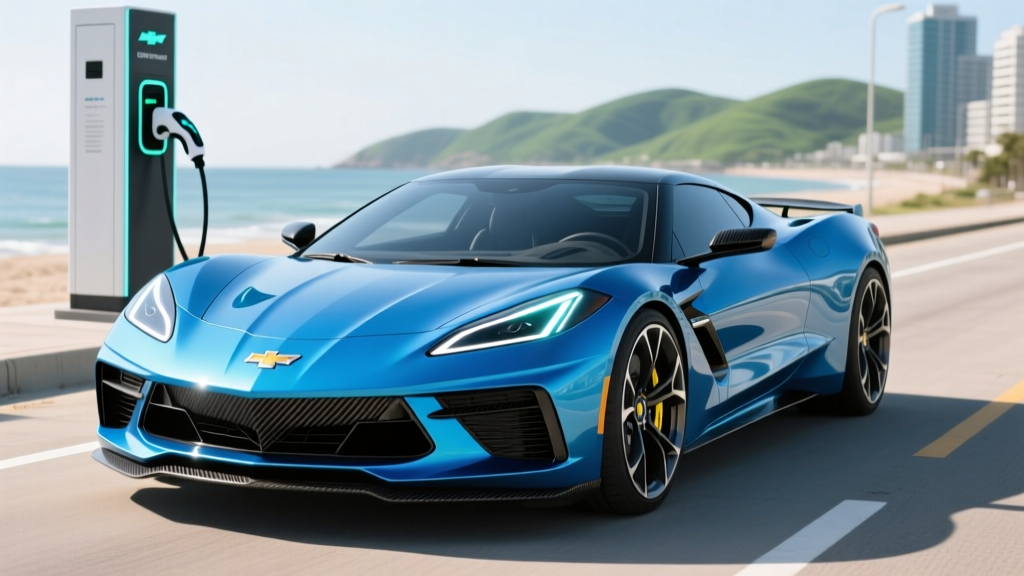
The Chevrolet Electric Corvette concept represents GM's vision for a next-generation, electrified American sports car. First teased through GM executive statements and patent filings, the project signals that the Corvette nameplate — one of the most iconic in automotive history — will eventually adopt battery-electric power. GM CEO Mary Barra has publicly confirmed that an electric Corvette is part of the company's long-term product roadmap, though the exact production timeline and final specifications remain under wraps.
Based on what GM has disclosed about its Ultium battery platform, the electric Corvette is expected to use a dual-motor all-wheel-drive configuration. This is a significant departure from the current mid-engine, rear-wheel-drive C8 Corvette, which runs a 6.2L V8. The shift to electric powertrains opens the door to instant torque delivery, a lower center of gravity (batteries mounted in the floor), and potentially higher total system output — but it also introduces weight, range, and charging considerations that sports car buyers will scrutinize closely.
Estimated Specs: What the Ultium Platform Suggests
While GM has not released official specifications for the electric Corvette, we can make informed estimates based on the Ultium platform vehicles already in production — including the Cadillac Lyriq, GMC Hummer EV, and Chevrolet Silverado EV. Here's what the data suggests:
| Specification | Estimated (Preliminary) | Source / Basis |
|---|---|---|
| Platform | GM Ultium (BEV3 variant) | GM executive statements |
| Drivetrain | Dual-motor AWD | Patent filings, Ultium architecture |
| Battery Chemistry | NCMA (nickel-cobalt-manganese-aluminum) | Ultium standard chemistry |
| Battery Capacity (usable) | ~85–100 kWh (estimated) | Comparable Ultium vehicles |
| Horsepower | 600–800 hp (estimated) | Multi-motor Ultium outputs |
| 0–60 mph | ~2.5–3.5 seconds (estimated) | Comparable dual-motor EVs |
| EPA Range | 250–300 miles (estimated) | Performance EV benchmarks |
| Peak DC Fast Charge | ~200–250 kW (estimated) | Ultium 400V/800V capability |
| 10–80% DC Charge Time | ~20–25 minutes (estimated) | Comparable Ultium charge curves |
| Base MSRP | $80,000–$100,000 (estimated) | Market positioning vs. C8 & competitors |
Important caveat: These are not confirmed figures. GM may choose a bespoke battery pack, a different cell format, or an entirely new performance-oriented Ultium variant. We'll update this article when official specs are released.
Electric Corvette vs. Gas C8 Corvette: By the Numbers
For buyers weighing the current gas-powered C8 Corvette against a future electric variant, here's how the two compare using available data. The C8 Stingray and Z06 are well-documented; the electric Corvette figures are estimates as noted.
| Metric | 2026 Corvette Stingray (C8) | Electric Corvette Concept (Est.) |
|---|---|---|
| Powertrain | 6.2L V8, RWD, 8-speed DCT | Dual-motor AWD, single-speed |
| Horsepower | 495 hp | 600–800 hp |
| 0–60 mph | 2.9 seconds | 2.5–3.5 seconds |
| EPA Range / Tank Range | ~300 miles (19-gal tank) | 250–300 miles |
| Refuel / Recharge Time | ~5 minutes (gas) | 20–25 min (10–80% DC) |
| Starting MSRP | ~$69,995 | $80,000–$100,000 |
| Fuel / Energy Cost per Mile | ~$0.18/mi (premium gas) | ~$0.04–$0.06/mi (home charging) |
| Annual Maintenance (est.) | $600–$900 | $200–$400 |
| Curb Weight | ~3,637 lbs | ~4,200–4,600 lbs (est.) |
| Cargo Space | 12.6 cu ft (rear) | ~8–12 cu ft + possible frunk |
The gas C8 holds advantages in weight, refueling speed, and proven track capability. The electric variant would counter with higher torque output, AWD traction, lower running costs, and a dramatically lower center of gravity. For track-day enthusiasts, the weight penalty of a large battery pack (potentially 500–900 lbs more than the C8) is a legitimate concern that GM's engineers will need to address through chassis tuning and power-to-weight optimization.
Real-World Ownership: What to Expect
If you're considering an electric Corvette when it eventually launches, here are the practical ownership factors that matter beyond the spec sheet:
Home Charging Is Essential
A sports car that sits unused for 30+ minutes at a public charger defeats the purpose. You'll want a Level 2 home charger (240V, 40–48 amps / 9.6–11.5 kW) installed before delivery. Expect to pay $800–$2,500 for the charger hardware and professional installation, depending on whether your electrical panel needs an upgrade. A full overnight charge (0–100%) on Level 2 would take approximately 8–10 hours for a ~100 kWh battery — perfectly adequate for daily use.
Real-World Range vs. EPA Sticker
Performance EVs typically deliver 15–25% less range than their EPA estimates in real-world highway driving at 70+ mph. In cold weather (below 32°F), expect an additional 20–30% reduction. If the electric Corvette achieves a 280-mile EPA rating, plan for roughly 220–240 miles in warm highway conditions and 180–210 miles in freezing temperatures. Aggressive driving — the kind a Corvette invites — will push consumption higher and range lower.
Charging on Road Trips
GM vehicles currently use the CCS1 connector, but GM has announced a transition to the NACS (Tesla-style) connector across its lineup. The production electric Corvette will likely ship with a NACS port, granting access to Tesla's Supercharger network — the most reliable DC fast-charging network in the U.S. with over 25,000 stalls. On a road trip, you'd stop for 20–25 minutes every 180–220 miles to charge from 10–80%.
Cost Breakdown: Purchase, Charging, and 5-Year Ownership
Here's a projected 5-year total cost of ownership (TCO) comparison, assuming 12,000 miles per year and national average electricity/gas prices. The electric Corvette figures are estimates.
| Cost Category (5 Years) | C8 Stingray (Gas) | Electric Corvette (Est.) |
|---|---|---|
| Purchase Price (base) | $69,995 | $90,000 (mid-estimate) |
| Federal Tax Credit (§30D) | $0 | Up to $7,500 (if eligible)* |
| Fuel / Electricity | $10,800 (premium gas) | $2,880 (home charging) |
| Maintenance | $3,750 | $1,500 |
| Insurance (est.) | $12,000 | $14,000–$16,000 |
| Estimated Depreciation | $28,000 | $36,000–$45,000 |
| 5-Year TCO (approx.) | $96,545 | $112,380–$130,620 |
*Tax credit caveat: The §30D federal EV tax credit has MSRP caps ($80,000 for cars, which a Corvette may exceed), buyer income limits ($150K single / $300K joint), and critical-mineral/battery-sourcing requirements that change annually. A sports car priced above $80,000 would not qualify under current IRS rules for the sedan MSRP cap. Check IRS.gov §30D guidelines for current-year eligibility. The point-of-sale transfer option is available if you qualify.
The gas C8 holds a clear TCO advantage at current projected pricing, primarily due to lower purchase price and stronger depreciation resistance (Corvettes hold value well). The electric variant would need to come in below $80,000 to be competitive on cost — or deliver performance figures that justify the premium.
Common Misconceptions, Addressed with Facts
| Myth | Fact |
|---|---|
| "An electric Corvette can't be a real sports car." | EVs deliver instant torque with no turbo lag or rev-build delay. The GMC Hummer EV (also Ultium) hits 0–60 in ~3 seconds at 9,500 lbs. A lighter, performance-tuned electric Corvette would be extremely quick. Weight distribution and chassis tuning — not powertrain type — define handling character. |
| "The battery will need replacing in a few years." | GM's Ultium batteries carry an 8-year/100,000-mile warranty guaranteeing at least 70% capacity retention. Industry degradation data shows modern NMC packs lose roughly 1.5–2.5% capacity per year under normal use. At that rate, you'd still have ~85–90% capacity after 5 years. Full battery replacement costs $15,000–$25,000 but is rarely needed within the warranty period. |
| "It'll get the full $7,500 tax credit." | Under current §30D rules, the MSRP cap for sedans/cars is $80,000. If the electric Corvette starts above that threshold, it would not qualify for the federal credit regardless of battery sourcing. This is a significant factor for buyers budgeting around incentives. |
| "EVs are cheaper to insure." | EVs typically cost 15–25% more to insure than comparable gas vehicles due to higher repair costs, specialized parts, and elevated purchase prices. Budget accordingly. |
| "It will charge as fast as you fill up a gas tank." | Even at a peak 250 kW DC fast charger, a 10–80% charge takes 20–25 minutes. The charging curve tapers significantly above 80% SoC to protect battery health. Plan road trips around 20-minute stops, not 5-minute fill-ups. |
Decision Framework: Should You Wait or Buy Now?
Choose the Current C8 Gas Corvette If:
- You want a proven, track-capable sports car today with decades of aftermarket support
- Your budget is under $80,000 and you want to stay there
- You regularly drive on tracks where weight matters (the C8 is ~3,600 lbs vs. an estimated 4,200+ lbs for the EV)
- You don't have reliable home charging access
- The sound, feel, and tradition of a V8 are central to your ownership experience
Wait for the Electric Corvette If:
- You want maximum straight-line acceleration and AWD traction (instant torque, no traction loss)
- You have home Level 2 charging and primarily drive under 200 miles per day
- Lower running costs (electricity vs. premium gas, less maintenance) matter to you
- You're willing to pay a $10,000–$30,000 premium over the C8 for cutting-edge EV performance
- You want a daily-driver sports car that can also serve as a practical commuter (quiet, smooth, zero tailpipe emissions in urban driving)
Consider an Alternative Performance EV Now If:
- You can't wait 1–2+ years for an unconfirmed product
- Look at the Tesla Model S Plaid (1,020 hp, 396-mile EPA range, ~$89,990), Porsche Taycan Turbo S (750 hp, 246-mile EPA range, ~$190,000), or Lucid Air Sapphire (1,234 hp, 427-mile EPA range, ~$249,000) for proven electric performance today
What First-Time EV Buyers Should Know
If the electric Corvette would be your first EV, here are the essentials:
- kW vs. kWh: kW (kilowatts) measures power — how fast you charge or accelerate. kWh (kilowatt-hours) measures energy — how much the battery holds. A 100 kWh battery charged at 10 kW takes 10 hours. Don't confuse the two.
- Preconditioning matters: Cold batteries charge slowly. The electric Corvette will likely include battery preconditioning — a feature that warms the pack before you arrive at a DC fast charger, enabling peak charge rates. Always use it in cold weather.
- Charge curve taper is real: Peak charge rates (e.g., 250 kW) only apply at low state of charge (10–30%). Above 80%, charging slows dramatically to protect the battery. This is why 10–80% time is the standard metric — not 0–100%.
- Home charging is the backbone: Over 80% of EV charging happens at home. If you live in an apartment or lack a garage with a 240V circuit, EV ownership becomes significantly less convenient. Confirm your charging situation before ordering.
- Tire costs are higher: EVs are heavier and deliver instant torque, which accelerates tire wear. Budget for tire replacement every 25,000–35,000 miles rather than the 40,000–50,000 miles typical of gas sports cars.
Frequently Asked Questions
When will the Chevrolet Electric Corvette be available to buy?
GM has not confirmed a specific launch date. Industry analysts and GM executive comments point to a 2027–2028 model-year debut. It is not currently available for order or purchase. All specifications discussed in this article are preliminary estimates.
Will the electric Corvette use the same Ultium batteries as the Silverado EV?
Likely yes, but potentially in a different configuration. The Ultium platform is modular — GM can use different cell counts, pack shapes, and motor combinations to tailor performance. A sports car application would prioritize energy density and discharge rate over the maximum range tuning used in trucks and SUVs.
Could the electric Corvette be a plug-in hybrid instead of a full EV?
GM has used the term "electrified" rather than exclusively "electric" in some communications, leaving the door open for a hybrid or PHEV variant — similar to the Corvette E-Ray, which pairs a small electric motor with the V8 for AWD capability. A full BEV and a PHEV could potentially coexist in the lineup. Watch for official clarification from Chevrolet.
Will the electric Corvette qualify for the federal EV tax credit?
Under current IRS §30D rules, the MSRP cap for passenger cars is $80,000. If the electric Corvette's base price exceeds that threshold, it would not qualify — regardless of battery sourcing or buyer income. Buyers should also verify income limits ($150,000 single filer / $300,000 joint) and critical-mineral sourcing requirements, which tighten each year. Consult a tax professional for your specific situation.
How does an electric Corvette compare to the Tesla Roadster?
The next-generation Tesla Roadster (announced in 2017, repeatedly delayed) claims 620+ miles of range, a sub-1-second 0–60 time (with SpaceX thruster package), and a $200,000+ price. If the Roadster ever ships, it would occupy a different tier. The electric Corvette is more likely positioned as an attainable performance EV in the $80,000–$100,000 range — closer to a Porsche Taycan or Tesla Model S Plaid competitor.
What about the Corvette E-Ray — isn't that already electrified?
Yes. The 2026 Corvette E-Ray is a mild hybrid with a front-axle electric motor providing AWD and a brief electric-only mode. It's not a plug-in and has minimal electric-only range. Think of it as a performance hybrid, not an EV. The fully electric Corvette concept would be a fundamentally different vehicle with a much larger battery and no internal combustion engine.
Sources: Chevrolet Corvette official page, IRS §30D Clean Vehicle Credits, EPA Fuel Economy. All electric Corvette figures are preliminary estimates and subject to change upon official GM release.