Quick Answer: The Camaro EV Status in 2026
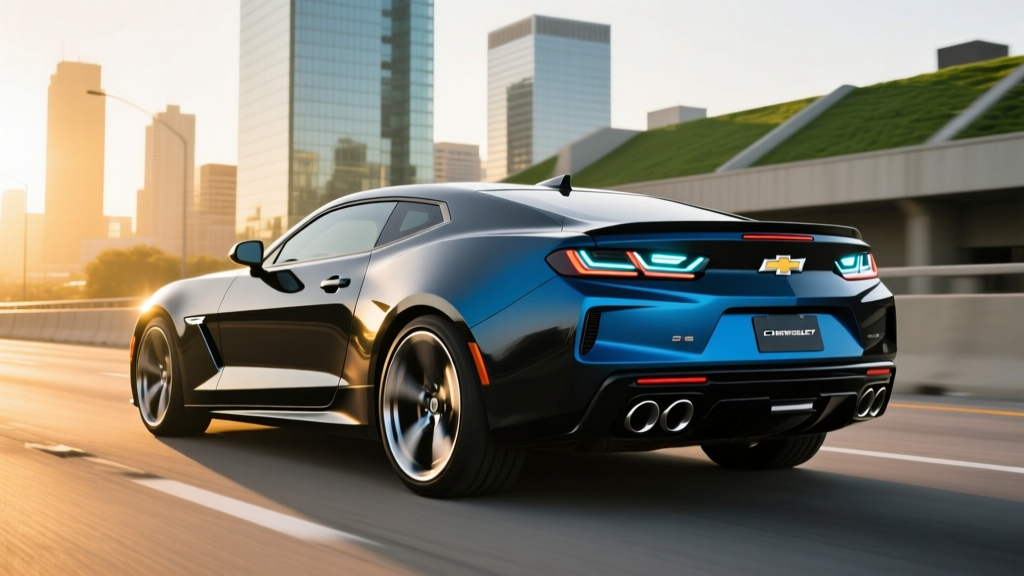
Chevrolet has not officially released a production Camaro EV as of mid-2026. The sixth-generation gas Camaro ended production in January 2024, and while GM has repeatedly signaled an electric successor built on the Ultium platform, no confirmed on-sale date, pricing, or final EPA-certified specifications have been published. What we can do is project likely specs based on the Ultium architecture shared with the Chevrolet Blazer EV and Cadillac Lyriq, compare the economics of an electric muscle car against the last gas Camaro, and help you decide whether to wait, cross-shop, or pivot to an available EV coupe alternative.
Why the Camaro EV Matters to Muscle Car Buyers
The Camaro nameplate carries six decades of performance heritage, and its discontinuation left a gap in Chevy's lineup — and in the hearts of enthusiasts who want a two-door, rear-wheel-drive (or AWD) performance car without burning 18 mpg on premium fuel. An electric Camaro would sit at the intersection of two trends: the decline of the affordable gas coupe and the rise of high-torque, instant-response EV performance.
GM's Ultium battery platform — the same skateboard architecture underpinning the Blazer EV, Silverado EV, and Cadillac Lyriq — is the natural foundation. That platform supports battery packs from roughly 85 kWh to over 200 kWh, peak DC fast-charge rates up to 350 kW on compatible hardware, and motor outputs from 340 hp to well over 600 hp in dual-motor configurations.
Projected Camaro EV Specs: What the Ultium Platform Suggests
Because no official Camaro EV spec sheet exists yet, the table below is a projection based on the closest Ultium-platform siblings. Treat these as educated estimates, not confirmed figures.
| Attribute | Projected Estimate | Basis / Comparable Ultium Vehicle |
|---|---|---|
| Battery Chemistry | NMC (nickel manganese cobalt) | Blazer EV, Lyriq use Ultium NMC pouch cells |
| Battery Capacity (usable) | ~102 kWh | Blazer EV RS AWD uses 102 kWh usable |
| EPA Range (est.) | 290–330 miles | Blazer EV 2LT RWD: EPA 279 mi; a lighter coupe could add 20–50 mi |
| Peak DC Fast Charge | ~190 kW | Blazer EV peaks ~190 kW on 400V Ultium architecture |
| 10–80% DC Charge Time | ~28–32 minutes | Blazer EV 10–80% in approximately 30 min |
| Level 2 AC Charge Rate | 11.5 kW / ~37 mi/hr | Standard Ultium onboard charger |
| Powertrain (base) | RWD single motor, ~340 hp | Blazer EV 2LT RWD output |
| Powertrain (performance) | AWD dual motor, ~550–600+ hp | Blazer EV SS: 615 hp |
| 0–60 mph (performance trim) | ~3.4 seconds (est.) | Blazer EV SS: 3.4 sec |
| Estimated Base MSRP | $55,000–$65,000 | Positioned between Blazer EV and Corvette E-Ray territory |
Camaro EV vs. the Last Gas Camaro: A Cost and Experience Comparison
The 2024 Camaro SS with the 6.2L LT1 V-8 produced 455 hp, returned an EPA 16 city / 24 highway / 19 combined mpg, and started around $44,000. Here's how a projected Camaro EV stacks up across five years of ownership, assuming 12,000 miles per year.
| Cost Factor (5-Year) | 2024 Camaro SS (Gas) | Camaro EV (Projected) |
|---|---|---|
| Purchase Price (MSRP) | ~$44,000 | ~$60,000 (est.) |
| Federal Tax Credit (§30D) | $0 | Up to $7,500 (if eligible — see below) |
| Effective Net Purchase | $44,000 | ~$52,500 |
| Fuel / Electricity (5 yr, 60k mi) | ~$9,500 (premium at $4.00/gal, 19 mpg) | ~$3,600 (home L2 at $0.14/kWh, 3 mi/kWh) |
| Maintenance (5 yr) | ~$3,200 (oil, brakes, fluids) | ~$1,200 (cabin filter, tires, wipers) |
| Insurance (5 yr est.) | ~$9,000 | ~$10,800 (EVs typically 15–20% more) |
| Estimated Depreciation | ~$18,000 | ~$22,000 (EV depreciation historically steeper) |
| 5-Year Total Cost | ~$83,700 | ~$90,100 |
Key takeaway: The Camaro EV would cost more upfront and likely depreciate faster, but it saves roughly $5,900 in fuel and $2,000 in maintenance over five years. The net gap narrows to roughly $6,400 more for the EV over five years — a premium you're paying for instant torque, a lower center of gravity, and zero tailpipe emissions. Whether that's worth it depends on your priorities and whether you qualify for the tax credit.
Federal Tax Credit Eligibility: What You Need to Know
The IRS §30D Clean Vehicle Credit offers up to $7,500, but eligibility is not guaranteed. For a projected Camaro EV, here's what would apply under current rules:
- MSRP cap: Sedans and coupes must have an MSRP at or below $55,000. If the Camaro EV base trim prices above that threshold, it would be ineligible — a significant risk for a performance-oriented vehicle.
- Buyer income limits: Modified adjusted gross income must not exceed $150,000 (single), $225,000 (head of household), or $300,000 (joint filing).
- Battery component sourcing: A percentage of battery components must be manufactured or assembled in North America, and critical minerals must meet sourcing thresholds — requirements that tighten each year.
- Point-of-sale transfer: Eligible buyers can transfer the credit to the dealer at purchase, reducing the out-of-pocket price immediately rather than waiting for a tax refund.
Honest caveat: Given that a performance coupe with a ~102 kWh battery will likely price above $55,000 at base, the Camaro EV may miss the MSRP cap entirely unless Chevy engineers a lower-cost base trim or Congress adjusts the cap. Always verify current-year eligibility at fueleconomy.gov before committing to a purchase.
How a Camaro EV Compares to Available Alternatives
If you're ready to buy an electric performance car now rather than wait for an unconfirmed Camaro EV, here's how the current landscape shapes up:
| Vehicle | Power | EPA Range | Peak DC kW | 10–80% Min | 0–60 mph | Base MSRP |
|---|---|---|---|---|---|---|
| Camaro EV (projected) | ~550–615 hp (AWD) | ~300 mi (est.) | ~190 kW | ~30 min | ~3.4 sec | ~$60,000 (est.) |
| Ford Mustang Mach-E GT | 480 hp | 280 mi | 150 kW | ~38 min | 3.5 sec | $59,995 |
| Tesla Model 3 Performance | 510 hp | 315 mi | 250 kW | ~18 min | 2.9 sec | $54,990 |
| Hyundai Ioniq 5 N | 640 hp (N Grin Boost) | 221 mi | 238 kW | ~18 min | 3.25 sec | $67,500 |
| BMW i4 M50 | 536 hp | 270 mi | 200 kW | ~31 min | 3.7 sec | $68,795 |
The Tesla Model 3 Performance leads in charging speed and acceleration at the lowest price, but it's a sedan, not a coupe. The Ioniq 5 N delivers the most engaging driver experience with simulated shift points and aggressive regen calibration, but its 221-mile range is a compromise. The Mach-E GT is the closest spiritual competitor to a Camaro EV — an American-nameplate performance crossover — though its charging speed lags.
Real-World Ownership: What First-Time EV Buyers Should Plan For
Owning any EV — Camaro or otherwise — requires infrastructure and habit changes that gas car buyers don't think about. Here's what matters:
Home charging access is non-negotiable for most buyers. A Level 2 home charger (240V, 40–48 amps) delivers roughly 35–40 miles of range per hour of charging, easily replenishing a daily commute overnight. Installation typically costs $800–$2,500 if your electrical panel has capacity, or $3,000–$5,000+ if you need a panel upgrade from 100A to 200A service. Without home charging, you'll rely on public DC fast chargers, which cost 2–3× more per kWh and require 25–40 minute stops.
Cold climate buyers: budget for range loss. If you live where winters regularly drop below freezing, expect 20–30% less range. A projected 300-mile Camaro EV becomes a 210–240 mile car in January in Chicago or Minneapolis. Preconditioning the battery while plugged in mitigates this somewhat, and a heat pump (standard on most modern Ultium vehicles) reduces cabin-heating energy draw.
Driving patterns determine whether EV ownership is effortless or frustrating. If 90% of your driving is under 60 miles round-trip with home charging, you'll visit a gas station approximately never. If you regularly drive 300+ miles in a single day, you'll need to plan 25–35 minute DC fast-charge stops — which, on a road trip, means restroom and food breaks that you'd take anyway.
| Common Misconception | Fact |
|---|---|
| "EV batteries need replacing every few years." | GM's Ultium battery warranty covers 8 years / 100,000 miles with a capacity retention threshold (typically 70% minimum). Real-world degradation data from similar platforms shows ~8–12% loss over 100,000 miles — meaning a 300-mile EV still delivers ~265 miles after a decade. |
| "EVs are worse in the cold." | Range drops, yes — but EVs start instantly in cold weather (no cranking a frozen engine), and preconditioning while plugged in means a warm cabin and warm battery before you leave. |
| "Charging takes too long." | At home, charging is overnight and passive — you spend zero minutes actively "fueling." On road trips, a 25–30 minute DC fast-charge stop every 200–250 miles is comparable to a gas-car rest stop. |
| "The Camaro EV is available to order now." | As of mid-2026, Chevrolet has not opened orders or published final specs. Any listing claiming otherwise is speculative. |
Decision Framework: Should You Wait, Cross-Shop, or Pivot?
Wait for the Camaro EV if:
- You're emotionally invested in the Camaro nameplate and want a two-door American EV coupe
- Your current vehicle has 2+ years of life left, so waiting isn't urgent
- You have home charging and a daily commute under 80 miles
- You're willing to pay a likely $60,000+ MSRP with uncertain tax credit eligibility
Cross-shop available alternatives now if:
- You want an EV performance car this year and can't wait for an unconfirmed release
- You prioritize charging speed — the Tesla Model 3 Performance's 250 kW peak and 18-minute 10–80% time is class-leading
- You want the most engaging driver experience — the Hyundai Ioniq 5 N's simulated shifts and N-specific chassis tuning are benchmark-setting
Stick with gas or hybrid if:
- You lack reliable home charging access and public infrastructure in your area is sparse
- You regularly tow, track-drive, or drive in extreme cold where range loss compounds
- Your budget is strictly under $45,000 — no current EV performance car lives there
Frequently Asked Questions
Has Chevrolet officially confirmed a Camaro EV?
GM executives have referenced an electric future for iconic nameplates including the Camaro, but no official production date, pricing, or finalized specifications have been published as of mid-2026. Any specs circulating online are projections based on the Ultium platform.
Will the Camaro EV qualify for the $7,500 federal tax credit?
It's uncertain. The §30D credit imposes a $55,000 MSRP cap on sedans and coupes. If the Camaro EV prices above that — likely, given its performance positioning and large battery — it would not qualify. Always check current eligibility at irs.gov before purchasing.
How does EV muscle car performance compare to a V-8 Camaro SS?
An electric dual-motor Camaro would deliver comparable or greater horsepower (~550–615 hp vs. the SS's 455 hp) with significantly more torque available instantly from zero RPM. The 0–60 time would likely match or beat the SS's ~4.0 seconds. Where the gas SS wins: lighter weight (EVs are 500–1,000 lbs heavier), more visceral exhaust sound, and track-day endurance without thermal management concerns.
What will Camaro EV insurance cost?
EVs typically carry insurance premiums 15–25% higher than comparable gas vehicles due to higher repair costs (specialized body shops, battery safety protocols) and higher replacement values. Budget approximately $2,000–$2,400/year for a performance EV coupe, though rates vary significantly by state, driving record, and insurer.
Is the Mustang Mach-E GT the closest thing to a Camaro EV I can buy today?
In spirit, yes — it's a Ford-badged American performance EV with similar power and pricing. In practice, the Mach-E is a four-door crossover, not a two-door coupe. If the coupe form factor matters, the BMW i4 M50 or Tesla Model 3 Performance are closer in body style, though neither carries American muscle heritage.