The Bottom Line on the Chevrolet Camaro Electric
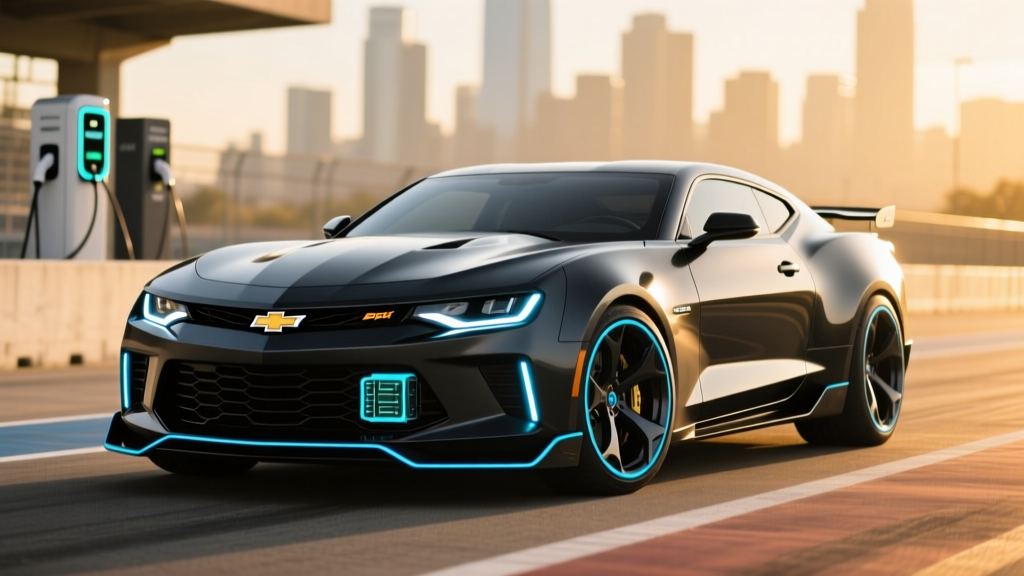
As of early 2026, Chevrolet has not officially released or opened orders for a production Chevrolet Camaro electric. Following the discontinuation of the sixth-generation gas Camaro after the 2024 model year, GM executives — including then-CFO Paul Jacobson — confirmed in late 2023 that the Camaro nameplate would return, strongly implying an electric successor built on the Ultium platform. No official EPA range, battery capacity, pricing, or on-sale date has been published by Chevrolet. Everything below is based on GM's public statements, Ultium platform capabilities seen in existing models (Blazer EV, Silverado EV, Cadillac Lyriq), and industry reporting. Treat all specs as preliminary estimates until Chevrolet publishes official data.
Why the Chevrolet Camaro Electric Matters for the Muscle Car Segment
The sixth-generation Camaro bowed out after 2024 with declining sales — roughly 32,000 units in its final year, down from a peak of over 100,000 in 2016. But the nameplate carries enormous brand equity, and GM made clear it wasn't retiring the Camaro permanently. The transition to electric positions Chevy to compete with the Ford Mustang Mach-E (and the forthcoming next-gen electric Mustang variants) and the Dodge Charger Daytona EV, which Dodge has already begun delivering.
For enthusiasts and EV-curious buyers alike, the central question is whether a battery-electric Camaro can deliver the visceral performance identity the nameplate demands — while offering the daily-driver practicality and lower running costs that EVs provide.
Estimated Specs: What the Ultium Platform Tells Us
While Chevrolet hasn't published official specs, we can build a credible estimate based on the Ultium platform architecture already underpinning the Blazer EV, Silverado EV, Equinox EV, and Cadillac Lyriq. The Ultium system supports battery packs from roughly 85 kWh to over 200 kWh, with front, rear, and dual-motor configurations.
| Spec | Estimated Base (RWD) | Estimated SS/Performance (AWD) |
|---|---|---|
| Battery (usable) | ~100 kWh, NMC | ~100–115 kWh, NMC |
| EPA Range (est.) | ~280–320 mi | ~250–290 mi |
| Horsepower | ~340–400 HP | ~600–700 HP |
| 0–60 mph | ~5.0 sec | ~3.0–3.5 sec |
| Peak DC Fast Charge | ~190–200 kW | ~190–200 kW |
| 10–80% DC Charge | ~25–30 min | ~28–35 min |
| Level 2 AC Charge | ~11.5 kW (19.2 kW optional) | ~11.5 kW (19.2 kW optional) |
| Connector | NACS (native Tesla Supercharger access) | NACS |
| Est. Starting MSRP | ~$50,000–$55,000 | ~$65,000–$75,000 |
Important caveats: These figures are extrapolated from comparable Ultium vehicles. The Blazer EV AWD (dual motor, ~102 kWh usable) produces 288 HP with an EPA range of 279–324 miles depending on trim and wheels. A Camaro, with its lower, more aerodynamic coupe profile, could plausibly exceed those range figures with similar battery capacity. The SS variant would likely adopt a dual-motor AWD setup closer to the Silverado EV's e4WD architecture, scaled for performance rather than towing.
⚡ Real-World Range Reality Check: Whatever EPA figure Chevrolet publishes, expect real-world highway range to run 10–15% lower at sustained 70–80 mph speeds. In cold weather (below 32°F), range typically drops 20–30% due to battery chemistry limitations and cabin heating demands. A Camaro EV with a 300-mile EPA rating may deliver ~240–260 miles on a cold-weather road trip.
How It Compares: Electric Muscle Car vs. Gas Predecessor
For buyers cross-shopping an electric Camaro against the last-generation gas models — or against current EV competitors — the numbers tell a compelling but nuanced story.
| Metric | Camaro EV SS (Est.) | 2024 Camaro SS (6.2L V8) | 2026 Dodge Charger Daytona Scat Pack | Ford Mustang Mach-E GT |
|---|---|---|---|---|
| Horsepower | ~600–700 | 455 | 670 | 480 |
| 0–60 mph | ~3.0–3.5 sec | 4.0 sec | 3.3 sec | 3.8 sec |
| Range / MPG | ~250–290 mi EPA | 19 MPG combined | 260 mi EPA | 292 mi EPA |
| Fuel/Energy Cost per Mile | ~$0.04–$0.06 (home) | ~$0.18–$0.22 | ~$0.04–$0.06 (home) | ~$0.04–$0.06 (home) |
| Est. Starting MSRP | ~$65,000–$75,000 | ~$45,000 (final MSRP) | ~$73,000 | ~$59,995 |
| Annual Maintenance (est.) | ~$400–$600 | ~$800–$1,200 | ~$400–$600 | ~$400–$600 |
The performance gap between electric and gas muscle cars has effectively closed — and in some metrics, reversed. Instant torque delivery means a dual-motor EV Camaro SS would likely hit 60 mph faster than any factory gas Camaro ever produced. The trade-off is weight (expect ~4,800–5,200 lbs for an EV vs. ~3,800 lbs for the gas SS) and the absence of V8 exhaust note, though GM and Dodge are both engineering synthetic sound systems to address this.
The Real Costs: Purchase, Charging, Insurance, and Total Ownership
Understanding the full financial picture requires looking beyond the sticker price. Here's a five-year cost projection comparing an estimated Camaro EV SS against the last-generation gas Camaro SS, assuming 12,000 miles per year.
| Category | Camaro EV SS (Est.) | 2024 Camaro SS (Gas) |
|---|---|---|
| Purchase Price (est.) | $70,000 | $48,000 |
| Federal Tax Credit (§30D) | Up to $7,500* | $0 |
| Home Charger Install (Level 2) | $1,200–$2,500 | $0 |
| Fuel/Energy (5 yr, 60k mi) | $2,400–$3,600 | $9,000–$11,000 |
| Maintenance (5 yr) | $2,000–$3,000 | $4,000–$6,000 |
| Insurance (5 yr, est.) | $12,000–$16,000 | $9,000–$12,000 |
| 5-Year Total (est.) | $80,100–$94,600 | $61,000–$76,000 |
*The IRS §30D federal tax credit offers up to $7,500, but eligibility depends on buyer income caps ($150K single / $300K joint AGI), vehicle MSRP caps ($55,000 for sedans/coupes, $80,000 for SUVs/trucks), battery component and critical-mineral sourcing requirements, and manufacturer compliance. A Camaro EV SS above $55,000 MSRP as a coupe may not qualify — verify with a tax professional and the latest IRS guidance before assuming credit eligibility. Point-of-sale transfer is available for qualifying vehicles.
Key takeaway: The EV saves roughly $7,000–$10,000 in fuel and maintenance over five years, but starts with a $15,000–$22,000 price premium. Breakeven likely takes 7–10+ years at current gas and electricity prices — meaning the Camaro EV, like most performance EVs, is a purchase driven more by driving experience and technology than by pure economics.
Charging at Home and on the Road: What a Camaro EV Owner Needs
Home charging access is the single biggest determinant of EV ownership satisfaction. If you can install a Level 2 (240V) home charger, a Camaro EV with ~100 kWh of usable battery and an 11.5 kW onboard charger would add roughly 30–35 miles of range per hour of charging — enough to fully replenish overnight from a typical daily drive. Upgrading to a 19.2 kW capable charger (if the vehicle supports it and your electrical panel can handle the ~80A circuit) could cut that to 5–6 hours for a full charge.
Home installation costs typically run $1,200–$2,500 for a standard 48A Level 2 setup if your electrical panel has capacity. If a panel upgrade from 100A to 200A service is needed, add $1,500–$3,500. Get a quote from a licensed electrician before committing to a purchase.
On the road, with GM's transition to the NACS (North American Charging Standard) connector across all 2025+ EVs, a Camaro electric would have native access to Tesla's Supercharger network — over 25,000 stalls in North America — without an adapter. At a 200 kW peak DC fast charge rate, you'd add roughly 150–180 miles in a 15-minute stop, though the charge curve tapers significantly above 80% State of Charge (SoC). Plan road-trip stops to charge from 10–80% for the fastest sessions; pushing to 100% at a DC fast charger can take as long as the 10–80% session itself.
⚠️ If You Can't Charge at Home: Public DC fast charging costs $0.30–$0.50/kWh on networks like Electrify America and EVgo, roughly doubling or tripling your per-mile energy cost compared to home charging. If you live in an apartment or lack garage access, a Camaro EV is still viable, but your "fuel" savings shrink dramatically — and the convenience gap vs. gas widens. Assess your charging situation honestly before ordering.
Common Misconceptions About an Electric Camaro
| Misconception | Reality |
|---|---|
| "An EV Camaro won't feel like a real muscle car" | Instant torque delivery means 0–60 times in the low 3-second range (SS est.), faster than any production gas Camaro. The driving feel is different — quieter, smoother — but the acceleration is undeniably muscular. |
| "The battery will need replacing in a few years" | GM's Ultium batteries carry an 8-year/100,000-mile warranty (whichever comes first) guaranteeing at least 70% capacity retention. Real-world degradation data from Bolt EV owners shows ~5–8% loss over 5–6 years. Expect 200,000+ miles of usable battery life. |
| "I'll get the full $7,500 tax credit" | §30D eligibility requires meeting buyer income caps, MSRP caps ($55K for coupes), battery sourcing rules, and more. A high-trim Camaro EV SS may exceed the MSRP cap. Always verify current-year rules on irs.gov. |
| "It will have 400+ miles of range" | Unlikely for a performance coupe. The Ultium platform's energy density currently supports ~250–320 real-world miles for a vehicle in this class. Lucid and Tesla achieve higher range through extreme efficiency focus, not performance tuning. |
| "It's available to order now" | As of early 2026, Chevrolet has not opened orders or published official specs for a Camaro EV. Any pricing or specs you see online are estimates or speculation. |
Decision Framework: Should You Wait for the Camaro EV?
Wait for the Chevrolet Camaro Electric if:
- You want a modern muscle coupe and can wait 12–24+ months for an official reveal, production start, and delivery.
- You have home charging access (garage or driveway with a 240V circuit or panel capacity for one).
- Performance is your priority over range — you'd rather have 600+ HP and a 3-second 0–60 than 350+ miles of EPA range.
- You're loyal to the Chevy brand and want to stay in the GM ecosystem with OnStar, Ultium Charge access, and NACS Supercharger compatibility.
- You're okay paying a premium ($65K–$75K est. for SS) knowing the gas Camaro SS started around $45K.
Look at alternatives now if:
- You need a car this year. The Camaro EV is not yet orderable. Consider the Ford Mustang Mach-E GT ($59,995, 480 HP, 292 mi EPA range), the Dodge Charger Daytona EV (670 HP, 260 mi EPA, ~$73,000), or the Tesla Model 3 Performance ($52,990, 510 HP, 315 mi EPA).
- Budget is a primary concern. The used gas Camaro SS market offers strong value, and you won't pay a $20K+ EV premium.
- You don't have reliable home or workplace charging. Public-only charging erodes the cost advantage and adds friction to daily driving.
- Range is your top priority. A Lucid Air Pure (419 mi EPA, ~$69,900) or Tesla Model S (402 mi EPA, ~$79,990) offers far more distance per charge, though neither carries the muscle-car identity.
Frequently Asked Questions
Has Chevrolet officially announced the Camaro EV?
GM executives have confirmed the Camaro nameplate will return, with strong implications of an Ultium-based electric successor. However, as of early 2026, no official reveal event, spec sheet, pricing, or order date has been published. Chevrolet's EV lineup currently includes the Equinox EV, Blazer EV, Silverado EV, and Bolt EV/EUV (with a next-gen Bolt expected). The Camaro EV would slot in as a performance-focused addition.
Will the electric Camaro use the Ultium platform?
Almost certainly yes. GM has committed to transitioning its performance and mainstream vehicles to Ultium. The platform's flexibility — supporting RWD, AWD, and various battery sizes — makes it the logical foundation. The Cadillac Lyriq and Chevy Blazer EV demonstrate Ultium's capability in vehicles with similar weight and performance targets.
Will it have a manual transmission or simulated gears?
No manual transmission — EVs don't use multi-speed gearboxes in production applications. However, Dodge's Charger Daytona EV features a "Fratzonic" exhaust system and simulated shift feel. GM may develop a similar engagement feature for the Camaro EV, but this is unconfirmed.
What will insurance cost for a Camaro EV?
Performance EVs typically carry insurance premiums 15–30% higher than their gas equivalents, driven by higher repair costs (especially for battery damage), higher purchase prices, and the performance profile of the driver demographic. Expect annual premiums of $2,400–$3,200 for an SS variant, depending on your state, age, driving record, and coverage level. Get quotes from your insurer before committing.
When will the Chevrolet Camaro electric be available to buy?
No official timeline has been announced. Industry analysts estimate a reveal in late 2026 or 2027, with deliveries potentially starting in the 2027 or 2028 model year. This is speculative — GM's product cadence has shifted multiple times, and the Camaro EV could be delayed or accelerated depending on market conditions and Ultium production capacity.