The 2026 Chevrolet Bolt EV: Affordable Electric Range That Actually Works
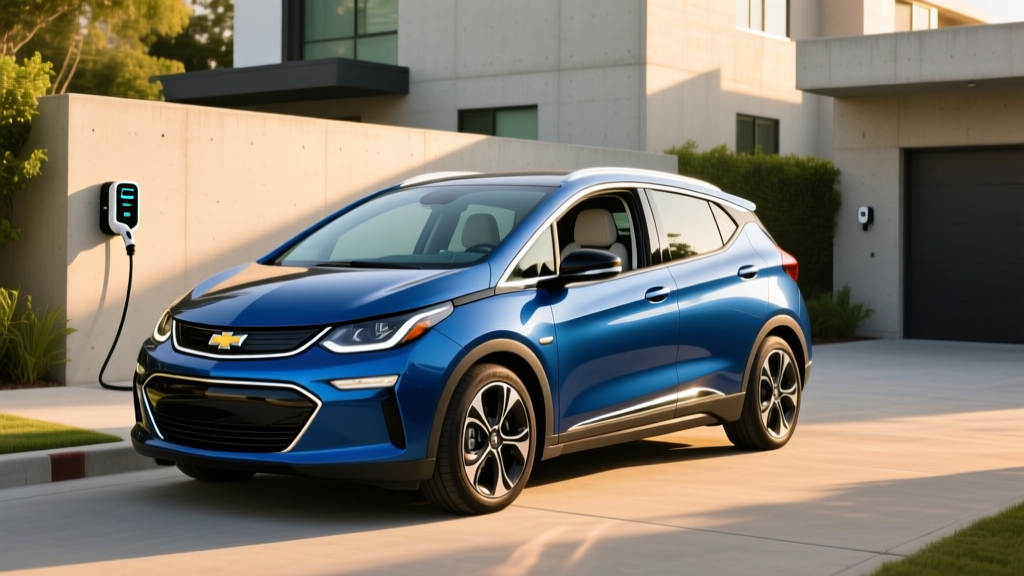
The Chevrolet Bolt EV has returned for 2026 with a revised platform, an LFP (lithium iron phosphate) battery, and a starting price that undercuts nearly every competitor in the sub-$30,000 EV segment. For buyers searching for a practical, no-nonsense commuter EV, the Bolt EV car remains one of the most value-dense options on the market — but its DC fast-charging limitations and compact footprint mean it isn't for everyone.
We've spent time with the 2026 Bolt EV across city commutes, highway runs, and DC fast-charging sessions to deliver a data-driven breakdown of what this EV actually offers in the real world. Here's everything you need to know before you buy.
Spec Table: 2026 Chevrolet Bolt EV at a Glance
| Specification | 2026 Chevrolet Bolt EV |
|---|---|
| EPA Range | 259 miles |
| Battery Capacity | 65 kWh (usable), LFP chemistry |
| Drivetrain | FWD, single front motor |
| Horsepower | 200 hp / 266 lb-ft torque |
| 0–60 mph | 6.5 seconds |
| Max DC Fast Charge | 115 kW peak |
| 10–80% DC Charge Time | ~30 minutes |
| Level 2 Home Charge Rate | 11.5 kW (~39 miles/hour) |
| Efficiency | 120 MPGe combined / 28 kWh/100 mi |
| Cargo Volume | 16.6 cu ft (rear seats up) / 57.0 cu ft (folded) |
| Base MSRP | $26,900 (1LT) |
| As-Tested Price (2LT) | $31,485 |
| Battery Warranty | 8 years / 100,000 miles |
Range: EPA Sticker vs. What You'll Actually Get
The 2026 Bolt EV carries an EPA-estimated range of 259 miles — competitive with the Nissan Leaf SV Plus (212 miles) and trailing the Hyundai Kona Electric (261 miles) by a narrow margin. According to fueleconomy.gov, the Bolt EV achieves 120 MPGe combined, translating to 28 kWh per 100 miles of driving.
EPA Estimate: 259 miles
Highway (70 mph, 75°F): Expect ~215–230 miles. The Bolt's boxy profile and lack of a heat pump reduce highway efficiency noticeably.
City/Commuting (mixed speeds, mild weather): 250–265 miles — regenerative braking recovers meaningful energy in stop-and-go traffic.
Cold Weather (20°F, highway): ~170–195 miles. LFP chemistry holds up better than NMC at low states of charge, but cold temperatures still suppress range by 25–35%. The Bolt EV lacks a heat pump, relying on resistive cabin heating that draws directly from the traction battery.
If your daily round-trip commute is under 80 miles and you can charge at home, the Bolt EV's real-world range is more than sufficient. Road trippers covering 300+ mile stretches between charging stops will need to plan carefully, especially in winter or at sustained highway speeds above 70 mph.
Charging Speeds: DC Fast Charging and Home Setup
Charging remains the most debated aspect of the Bolt EV. The 2026 model improves upon the previous generation's notoriously slow DC charging but still trails segment leaders like the Hyundai Ioniq 5 and Tesla Model 3.
| Charging Level | Power / Rate | Estimated Time / Miles Added |
|---|---|---|
| Level 1 (120V outlet) | 1.2 kW | ~4 miles per hour of charging |
| Level 2 (240V, 48A) | 11.5 kW | ~39 miles per hour; full charge in ~7 hours |
| DC Fast Charge (peak) | 115 kW peak | 10–80% in ~30 minutes |
| DC Fast Charge (sustained avg) | ~85 kW average | ~150 miles added in 30 minutes |
The 115 kW peak is a meaningful step up from the previous Bolt's 55 kW ceiling, but the charge curve tapers early. You'll see peak rates only between roughly 10–30% state of charge, after which the rate drops to 80–90 kW through the mid-range and slows further above 70%. On a road trip, budget 35–40 minutes for a 10–80% session to account for real-world tapering and connector handshake delays at networks like Electrify America or EVgo.
At home, the onboard 11.5 kW charger is excellent for this price class. A Level 2 home installation on a 60A circuit (48A continuous) will fully replenish the 65 kWh battery overnight. Installation costs for a Level 2 home charger typically range from $500 to $2,000 depending on panel proximity and local permit requirements — consult a licensed electrician for your specific setup.
Performance, Drivetrain, and Driving Impressions
The 2026 Bolt EV sends 200 horsepower and 266 lb-ft of torque to the front wheels via a single permanent-magnet motor. The 0–60 mph sprint takes 6.5 seconds — brisk for a subcompact crossover and adequate for highway merging and passing.
There is no AWD or dual-motor option. The FWD layout contributes to the Bolt's efficiency but means traction in snow and ice depends entirely on your tire choice. A set of dedicated winter tires transforms the Bolt EV into a capable cold-weather commuter, but buyers in heavy-snow regions should factor that into the total cost.
Ride quality is firm but compliant. The low center of gravity from the under-floor battery pack keeps body roll in check through corners. One-pedal driving mode is available and strong enough to bring the car to a complete stop in most city scenarios, reducing brake wear significantly.
Battery Chemistry: Why LFP Matters for the Bolt EV
Chevrolet equips the 2026 Bolt EV with a 65 kWh (usable capacity) lithium iron phosphate (LFP) battery pack. This is a deliberate trade-off versus the nickel-manganese-cobalt (NMC) chemistry found in longer-range competitors.
LFP advantages:
- Longer cycle life — typically 2,000–3,000+ full cycles before significant degradation, versus ~1,000–1,500 for NMC
- Can be charged to 100% daily without accelerating degradation (NMC manufacturers recommend 80% daily caps)
- Lower fire risk due to higher thermal stability
- Reduced reliance on cobalt and nickel, easing supply-chain and ethical sourcing concerns
LFP trade-offs:
- Lower energy density — more weight and volume for the same kWh, which limits range in a compact package
- Reduced cold-weather performance at the cell level (though battery thermal management partially mitigates this)
For the Bolt EV's use case — daily commuting with home charging — LFP is arguably the right call. You can charge to 100% every night without battery anxiety, and the pack should outlast the vehicle itself under normal use.
Pricing, Trims, and Federal Tax Credit Eligibility
The 2026 Bolt EV is available in two trims:
| Trim | Base MSRP | Key Features | §30D Credit Eligible? |
|---|---|---|---|
| 1LT | $26,900 | 10.2" infotainment, wireless CarPlay/Android Auto, Super Cruise prep, heated front seats | Yes (see conditions below) |
| 2LT | $30,900 | Adds adaptive cruise, HD surround vision, Bose 7-speaker audio, heated steering wheel, leatherette | Yes (see conditions below) |
The Bolt EV's pricing positions it as one of the most affordable new EVs in the U.S. market for 2026, undercutting the Hyundai Kona Electric (~$33,000) and well below the Tesla Model 3 (~$38,000 base).
The 2026 Bolt EV qualifies for up to $7,500 under the federal EV tax credit, but eligibility depends on several conditions per current IRS rules:
- Buyer income caps: AGI must not exceed $150,000 (single), $225,000 (head of household), or $300,000 (joint filing)
- MSRP cap: The Bolt EV's MSRP is well under the $55,000 vehicle cap — no issue here
- Battery sourcing: A portion of the credit depends on critical minerals and battery components meeting North American sourcing thresholds, which increase annually through 2026. Verify current-year compliance at purchase
- Point-of-sale transfer: Eligible buyers can apply the credit as an upfront price reduction at the dealer, rather than waiting to claim it on their tax return
Effective price after credit: As low as ~$19,400 (1LT) or ~$23,400 (2LT) — assuming full $7,500 eligibility. This makes the Bolt EV one of the cheapest new EVs available in America. Consult a tax professional to confirm your personal eligibility.
Tech, Interior, and Daily Usability
The 2026 Bolt EV's interior is functional rather than luxurious. The 10.2-inch touchscreen runs Chevrolet's latest infotainment software with wireless Apple CarPlay and Android Auto as standard. A digital driver display replaces the traditional gauge cluster, showing real-time energy flow, range estimates, and regen levels.
Driver assistance features (SAE Level 2):
- Lane keep assist with lane departure warning
- Automatic emergency braking with pedestrian detection
- Adaptive cruise control (2LT only)
- Blind-spot monitoring with rear cross-traffic alert
- Super Cruise hardware prep (subscription-based hands-free driving on compatible highways, available on 2LT)
Cargo and passenger space: The Bolt EV offers 16.6 cubic feet behind the rear seats and 57.0 cubic feet with the 60/40 split rear bench folded. Rear legroom is 36.0 inches — adequate for adults on shorter trips but tighter than a compact SUV like the Ioniq 5. The absence of a front trunk (frunk) means all cargo goes in the rear hatch.
Pros, Cons, and Who Should Buy the Bolt EV
- Sub-$27,000 starting price; as low as ~$19,400 after federal credit
- 259-mile EPA range is ample for commuting and errands
- LFP battery allows daily 100% charging with minimal degradation concern
- 11.5 kW Level 2 onboard charger is class-leading at this price
- Strong regenerative braking enables true one-pedal city driving
- Compact footprint makes parking and urban maneuvering effortless
- 115 kW DC fast charging is slow vs. 200+ kW competitors
- No heat pump — cold-weather range loss is significant
- FWD only; no AWD option for snow-belt buyers
- Rear seat and cargo space trail compact SUV EVs
- No frunk for additional storage
- Interior materials feel budget-grade at the 2LT price point
Who the Bolt EV suits best: Solo drivers or couples with daily commutes under 80 miles, home charging access, and a need for maximum value per dollar. It excels as a second car or a first EV for cost-conscious buyers who don't need road-trip charging speed or family-size cargo space.
Who should look elsewhere: Families needing three-across rear seating, frequent road trippers covering 300+ miles between stops, buyers in extreme cold climates without garage parking, and anyone who prioritizes premium interior finishes.
Bolt EV vs. Key Competitors
The Bolt EV competes in a tight field of affordable EVs. Here's how it stacks up against the most relevant alternatives:
- vs. Hyundai Kona Electric (261 mi, ~$33,000): The Kona edges out the Bolt on range by 2 miles and offers faster DC charging (~150 kW) but costs $6,000+ more before credits.
- vs. Nissan Leaf SV Plus (212 mi, ~$31,000): The Bolt's range advantage is decisive (47 more miles). The Leaf uses CHAdeMO, a connector being phased out in favor of NACS/CCS.
- vs. Tesla Model 3 (341 mi, ~$38,000): The Model 3 dominates on range, charging speed (250 kW), and Supercharger access but costs $11,000+ more and may not qualify for the full credit depending on trim.
Choose the Bolt EV if: Budget is your top priority, you charge at home nightly, your commute is under 80 miles, and you value LFP battery longevity over fast-charging speed.
Choose the Kona Electric if: You need slightly more cargo space and faster DC charging for occasional road trips, and can absorb the higher price.
Choose the Model 3 if: Range, charging speed, and access to the Supercharger network are non-negotiable, and budget allows the premium.
Warranty Coverage
Chevrolet backs the 2026 Bolt EV with:
- Battery pack: 8 years / 100,000 miles (capacity retention threshold: 70% of original capacity)
- Powertrain (motor, reduction gear): 5 years / 60,000 miles
- Bumper-to-bumper: 3 years / 36,000 miles
The battery warranty is standard for the segment. LFP chemistry's inherent longevity means most owners will likely never approach the 70% degradation threshold within the warranty period under normal charging patterns.
Frequently Asked Questions
What is the real-world range of the 2026 Chevrolet Bolt EV?
The EPA rates the Bolt EV at 259 miles. In real-world highway driving at 70 mph in mild temperatures, expect 215–230 miles. City commuting with regenerative braking can yield 250–265 miles. In cold weather (20°F), plan for 170–195 miles due to resistive cabin heating and reduced battery efficiency.
How fast does the Bolt EV charge at home and on the road?
At home on a 240V Level 2 charger (48A), the Bolt EV adds ~39 miles per hour and fully charges in about 7 hours. On DC fast chargers, it peaks at 115 kW and charges from 10–80% in approximately 30 minutes, though the sustained average is closer to 85 kW due to charge-curve tapering.
How much does the Bolt EV cost after the federal tax credit?
The 1LT starts at $26,900 and the 2LT at $30,900. Eligible buyers who qualify for the full $7,500 §30D federal credit can bring the 1LT down to approximately $19,400. Eligibility depends on income caps, battery sourcing compliance, and MSRP limits. Verify your eligibility at irs.gov or with a tax professional.
Does the 2026 Bolt EV qualify for the $7,500 federal EV tax credit?
Yes, the 2026 Bolt EV is eligible for up to $7,500 under §30D, provided the buyer meets income thresholds ($150K single / $300K joint), the vehicle's battery sourcing meets current-year critical mineral and component requirements, and the credit is applied at point of sale or claimed on your tax return. The Bolt's MSRP is well under the $55,000 cap.
Is the Bolt EV worth buying over competitors?
If your priority is the lowest cost per mile of EV range, the Bolt EV is exceptionally hard to beat — especially after the federal credit. Its main compromises are DC charging speed (115 kW peak vs. 150–250 kW for rivals) and cold-weather range loss due to the lack of a heat pump. For home-charging commuters, these trade-offs are manageable. For road-trip-heavy buyers, the Hyundai Kona Electric or Tesla Model 3 may justify their premiums.
What are the biggest pros and cons of the Bolt EV?
The top pros are price (from ~$19,400 after credit), 259-mile range, LFP battery durability, and strong Level 2 home charging. The biggest cons are slow DC fast charging relative to competitors, no heat pump, FWD-only drivetrain, and tight rear-seat space compared to compact SUV EVs.