Quick Verdict: Where the 2026 Mustang Mach-E Stands
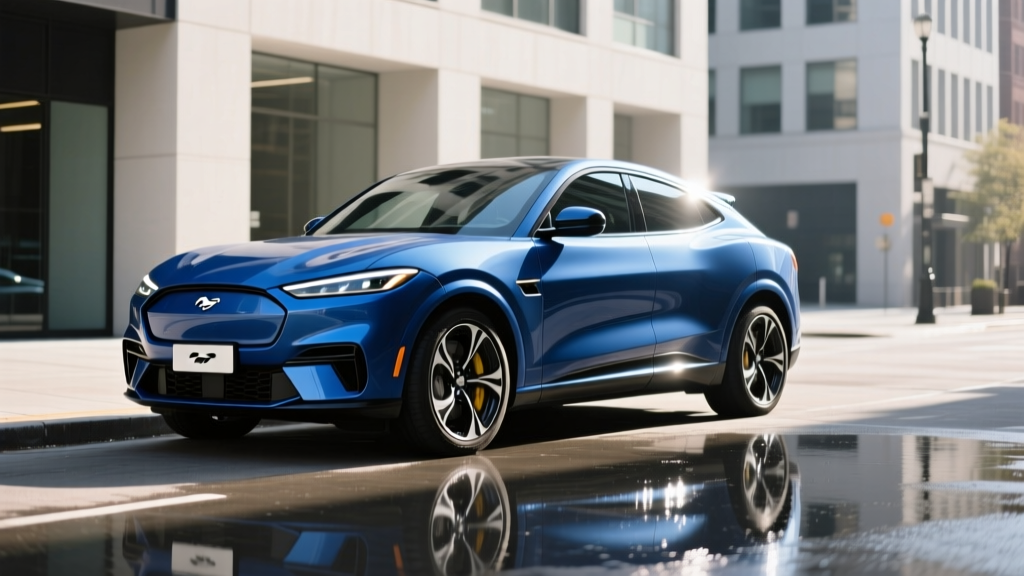
The Ford Mustang Mach-E enters the 2026 model year as one of the most well-rounded electric crossovers in the $40,000–$60,000 segment. With EPA-estimated ranges stretching to 320 miles, DC fast-charging speeds peaking at 150 kW, and a starting MSRP that undercuts several rivals, it remains a compelling option for buyers transitioning from gas-powered SUVs. But the Mustang Mach-E MSRP varies significantly across its five trims, and real-world range doesn't always match the sticker. This guide breaks down every number you need before signing a purchase agreement.
| Specification | Select (Base) | Premium | California Route 1 | GT | Rally |
|---|---|---|---|---|---|
| Base MSRP | $42,995 | $48,995 | $51,995 | $59,995 | $61,995 |
| Drivetrain | RWD / eAWD | RWD / eAWD | RWD | eAWD (Dual-Motor) | eAWD (Dual-Motor) |
| Horsepower | 266 hp (RWD) / 312 hp (eAWD) | 266 hp / 312 hp | 290 hp | 480 hp | 480 hp |
| 0–60 mph | 5.8s (RWD) / 5.1s (eAWD) | 5.8s / 5.1s | 5.5s | 3.5s | 3.7s |
| Battery (usable) | 72 kWh (LFP) | 72 kWh (LFP) / 91 kWh (NMC) | 91 kWh (NMC) | 91 kWh (NMC) | 91 kWh (NMC) |
| EPA Range | 250 mi (eAWD) | 250–320 mi | 320 mi | 270 mi | 260 mi |
| MPGe (combined) | 101 MPGe | 101–105 MPGe | 105 MPGe | 86 MPGe | 84 MPGe |
| Max DC Fast Charge | 150 kW | 150 kW | 150 kW | 150 kW | 150 kW |
| 10–80% DC Time | ~36 min | ~36–45 min | ~45 min | ~45 min | ~45 min |
Mustang Mach-E MSRP: Trim-by-Trim Pricing for 2026
The 2026 Mustang Mach-E lineup starts at $42,995 for the Select trim with rear-wheel drive and the standard-range 72 kWh LFP battery. Adding eAWD pushes the Select to approximately $45,995. The volume-selling Premium trim begins at $48,995 and offers the most configuration flexibility — you can pair it with either the standard-range LFP pack or the extended-range 91 kWh NMC battery, and choose RWD or eAWD.
The California Route 1 remains the range champion at $51,995, pairing the 91 kWh NMC pack exclusively with RWD to achieve its 320-mile EPA rating. Performance-oriented buyers look to the GT at $59,995 (480 hp, 3.5-second 0–60) or the Rally at $61,995, which adds raised suspension, underbody protection, and rally-tuned damping for light off-pavement use.
Destination charges add approximately $1,395 across all trims. Popular option packages — such as the Ford BlueCruise hands-free driving subscription and panoramic roof — can add $2,000–$4,000 to an as-tested price.
Real-World Range vs. EPA Estimates
EPA Sticker vs. Reality: The California Route 1's 320-mile EPA rating assumes a mix of 55% city and 45% highway driving at moderate temperatures. In real-world highway testing at 70–75 mph, expect approximately 270–285 miles from the extended-range RWD configuration. In cold weather (below 32°F), range drops an additional 15–25%, meaning a winter highway road trip could yield 210–240 miles before needing a charge.
The standard-range LFP models (Select and Premium with the 72 kWh pack) carry EPA ratings of 250 miles with eAWD. Real-world mixed driving typically returns 220–235 miles, while cold-weather highway use can dip to 175–195 miles. LFP chemistry holds an advantage here: it tolerates repeated 100% charging without accelerated degradation, so owners can charge to full daily without the long-term health concerns associated with NMC packs, which Ford recommends keeping at 80–90% for routine use.
For the GT and Rally trims, the performance-tuned dual-motor setup and stickier tires reduce efficiency. The GT's 270-mile EPA rating translates to roughly 230–245 miles in mixed real-world conditions and 185–210 miles in cold-weather highway driving.
Charging Speeds: DC Fast, Level 2, and Level 1
The 2026 Mach-E uses the NACS (North American Charging Standard) port natively, giving it direct access to Tesla's Supercharger network — the most extensive and reliable DC fast-charging infrastructure in the US. This eliminates the adapter-dependency that plagued earlier CCS-equipped EVs.
| Charging Level | Power / Voltage | Speed (miles of range per hour) | Full Charge Time (approx.) |
|---|---|---|---|
| Level 1 (120V household) | 1.4 kW | ~3–4 mi/hr | 3–4 days (91 kWh) |
| Level 2 (240V home, 48A) | 11.5 kW | ~30–35 mi/hr | ~8–10 hours (91 kWh) |
| DC Fast Charge (peak) | 150 kW (max) | ~250–300 mi/hr (at peak) | 10–80% in ~36–45 min |
Charging curve reality: The 150 kW peak rate applies only between approximately 10–50% state of charge on the extended-range NMC pack. Above 50%, the rate tapers progressively — dropping to roughly 90 kW by 70% and 40 kW by 85%. This is standard behavior for NMC lithium-ion packs managed by thermal preconditioning. The LFP standard-range pack charges at a similar peak but sustains slightly higher rates deeper into the curve because of LFP's different internal resistance profile.
At home on a Level 2 charger (the Ford Mobile Power Cord with a 240V NEMA 14-50 outlet, or the optional Ford Connected Charge Station), the onboard 11.5 kW charger replenishes the 91 kWh pack in about 9 hours from near-empty — easily enough for overnight charging. The 72 kWh LFP pack fills in roughly 6.5 hours.
Federal Tax Credit: Does the Mach-E Qualify?
The 2026 Mustang Mach-E is assembled at Ford's Cuautitlán plant in Mexico, which has been a point of contention under IRS §30D rules. However, as of the 2026 model year, the Mach-E with the extended-range battery has been confirmed eligible for up to $3,750 of the federal tax credit (the critical minerals portion), while the standard-range LFP variant may qualify for a different partial amount depending on supply-chain sourcing adjustments Ford has made.
| Trim | MSRP | Est. §30D Credit | Effective Price |
|---|---|---|---|
| Select (RWD, Std Range) | $42,995 | Up to $3,750 | ~$39,245 |
| Premium (RWD, Ext Range) | $52,495 | Up to $3,750 | ~$48,745 |
| California Route 1 (RWD) | $51,995 | Up to $3,750 | ~$48,245 |
| GT (eAWD) | $59,995 | Up to $3,750 | ~$56,245 |
| Rally (eAWD) | $61,995 | Up to $3,750 | ~$58,245 |
Eligibility requirements to verify before purchasing:
- MSRP cap: SUVs/crossovers must have an MSRP at or below $80,000 — all Mach-E trims comply.
- Buyer income cap: Adjusted gross income must not exceed $150,000 (single), $225,000 (head of household), or $300,000 (joint filers).
- Battery sourcing: A percentage of critical minerals and battery components must be sourced from the US or free-trade-agreement countries. This determines whether you receive the full $7,500, a partial $3,750, or nothing. Ford's supply chain has been evolving — confirm current-year eligibility on the IRS clean vehicle credits page or with your dealer at point of sale.
- Point-of-sale transfer: As of 2024, the credit can be transferred to the dealer at purchase, reducing your out-of-pocket cost immediately rather than waiting for a tax refund. This applies in 2026.
Important: Tax credit rules change frequently. Consult a tax professional and verify on IRS.gov before finalizing your purchase.
Performance, Efficiency, and Daily Driving
The Mach-E's driving dynamics remain a highlight. Even the base RWD model delivers 266 hp and a 5.8-second 0–60 time — brisk for a family crossover. The GT's 480 hp and 3.5-second sprint rival sports sedans, with the dual-motor eAWD system providing confident traction in rain and light snow.
Efficiency varies meaningfully across trims. According to fueleconomy.gov, the RWD extended-range models achieve 105 MPGe combined (approximately 32 kWh/100 mi), while the GT drops to 86 MPGe (approximately 39 kWh/100 mi) due to its performance-oriented powertrain calibration, wider tires, and heavier dual-motor setup.
Regenerative braking offers two modes: a traditional coasting feel and a one-pedal driving mode that provides aggressive regen, allowing most city driving without touching the brake pedal. The Mach-E's brake-by-wire system blends regenerative and friction braking seamlessly — a refinement area where earlier model years received criticism but the current generation has improved.
Interior Space, Cargo, and Technology
The Mach-E provides 29.7 cubic feet of cargo space behind the rear seats and 59.7 cubic feet with the rear seats folded — competitive with the Hyundai Ioniq 5 (27.2 / 59.3 cu ft) and slightly less than the Tesla Model Y (30.2 / 76.2 cu ft). Front legroom measures 43.3 inches; rear legroom is 38.9 inches, which accommodates most adults comfortably on longer trips.
A small front trunk (frunk) adds 4.7 cubic feet of drainable storage — useful for wet items, charging cables, or groceries. This is a practical advantage the Model Y's sealed frunk doesn't match.
The 15.5-inch vertically oriented SYNC 4A touchscreen dominates the dashboard, running Ford's latest software with wireless Apple CarPlay and Android Auto, over-the-air updates, and integrated navigation that factors in charging stops. The available Ford BlueCruise system provides SAE Level 2 hands-free driving on pre-mapped divided highways — but the driver must remain attentive, with a camera monitoring eye gaze at all times.
SAE Level 2 — Not Self-Driving: Ford BlueCruise is a Level 2 driver-assistance system. It handles steering, acceleration, and braking on qualified highway sections, but you must remain alert and ready to take over at any moment. It does not navigate city streets, construction zones, or unmapped roads autonomously.
Warranty Coverage and Battery Longevity
Ford backs the 2026 Mach-E with:
- Bumper-to-bumper: 3 years / 36,000 miles
- Powertrain: 5 years / 60,000 miles
- High-voltage battery: 8 years / 100,000 miles (capacity retention threshold: 70% of original)
The 8-year/100,000-mile battery warranty is standard across the industry. Ford's 70% retention threshold means the warranty triggers if your battery degrades below 70% of its original capacity within the coverage period. Real-world data from earlier Mach-E model years suggests most NMC packs retain 88–93% capacity after 100,000 miles under normal use. LFP packs historically show even slower degradation, often retaining 92–96% capacity over similar mileage, making the standard-range models an attractive option for high-mileage commuters.
Pros and Cons
Pros
- Native NACS port — direct Tesla Supercharger access
- LFP battery option for daily 100% charging without degradation worry
- Competitive starting MSRP in the electric crossover segment
- Strong driving dynamics, especially GT trim
- Drainable frunk adds practical storage
- BlueCruise hands-free highway driving (Level 2)
- Over-the-air updates keep software current
Cons
- 150 kW peak DC charge rate trails rivals (Ioniq 5: 240 kW, Model Y: 250 kW)
- Real-world highway range falls 10–15% below EPA estimates
- Federal tax credit limited to partial $3,750 due to sourcing rules
- Cargo space slightly less than Tesla Model Y
- Rear visibility limited by thick C-pillars
- BlueCruise requires ongoing subscription after trial period
How the Mach-E Compares to Key Rivals
The Mach-E competes most directly with the Tesla Model Y, Hyundai Ioniq 5, and Kia EV6. Here's how they stack up on the metrics buyers care about most:
| Metric | Ford Mach-E (Premium Ext.) | Tesla Model Y LR | Hyundai Ioniq 5 (Long Range) |
|---|---|---|---|
| Starting MSRP | $52,495 | $47,990 | $52,600 |
| EPA Range | 320 mi (RWD) | 330 mi (AWD) | 305 mi (RWD) |
| Max DC Charge | 150 kW | 250 kW | 240 kW |
| 10–80% Time | ~45 min | ~25 min | ~18 min |
| Charging Port | NACS (native) | NACS (native) | NACS (2026) |
| Cargo (rear seats up) | 29.7 cu ft | 30.2 cu ft | 27.2 cu ft |
| 0–60 mph | 5.8s (RWD) | 4.8s (AWD) | 5.1s (RWD) |
The Mach-E's biggest competitive disadvantage is its 150 kW DC fast-charge rate. On a road trip, the Ioniq 5's 800V architecture and 240 kW peak rate can save 15–25 minutes per charging stop. However, the Mach-E's native NACS access to Superchargers offsets this somewhat — Supercharger reliability consistently outperforms Electrify America and other CCS networks.
Who Should Buy the Mustang Mach-E?
Choose the Mach-E if: You want a well-built, engaging-driving electric crossover with native Supercharger access, you value the option of an LFP battery for daily commuting, and your road trips are occasional rather than frequent.
Consider the Ioniq 5 or EV6 if: You take regular long road trips and want the fastest possible DC charging, or you prioritize maximum interior space in a slightly more angular package.
Consider the Model Y if: You want the best combination of range, charging speed, and cargo space, and you're comfortable with Tesla's minimalist interior and service-center model.
Frequently Asked Questions
What is the real-world range of the 2026 Mustang Mach-E?
The California Route 1 (RWD, extended range) delivers approximately 270–285 miles on the highway and 290–310 miles in city-heavy driving, versus its 320-mile EPA sticker. In cold weather below freezing, expect 210–240 miles on highway trips. Standard-range LFP models return 220–235 miles in mixed conditions.
How fast does the Mach-E charge at home and on DC fast chargers?
On a 240V Level 2 home charger (48 amps), the Mach-E adds approximately 30–35 miles of range per hour, fully replenishing the 91 kWh pack overnight in about 9 hours. On DC fast chargers, it peaks at 150 kW and charges from 10–80% in approximately 36–45 minutes depending on the battery pack size.
How much does the 2026 Mach-E cost after tax credits?
With the estimated $3,750 partial federal tax credit, the Select RWD starts at approximately $39,245 and the California Route 1 drops to around $48,245. State and local incentives may reduce this further — check your state energy office or AFDC state incentive database for details.
Does the 2026 Mustang Mach-E qualify for the federal EV tax credit?
Yes, partially. Under current IRS §30D rules, the Mach-E qualifies for up to $3,750 (the critical minerals portion) as of the 2026 model year. Eligibility depends on your income (must not exceed $150K single / $300K joint), and the credit can be transferred to the dealer at point of sale. Always verify current sourcing requirements on IRS.gov before purchasing.
Is the Mach-E GT worth the premium over the Premium trim?
If performance is a priority, the GT's 480 hp and 3.5-second 0–60 time deliver genuinely thrilling acceleration. However, you sacrifice 50 miles of EPA range (270 vs. 320), accept lower efficiency (86 vs. 105 MPGe), and pay approximately $11,000 more. For most daily commuters and families, the Premium or California Route 1 offers a better balance of range, comfort, and value.
What battery chemistry does the Mach-E use?
The standard-range 72 kWh pack uses LFP (lithium iron phosphate) chemistry, which offers slower degradation, tolerance for daily 100% charging, and lower cost — but with less energy density and reduced cold-weather performance. The extended-range 91 kWh pack uses NMC (nickel manganese cobalt) chemistry, providing higher energy density and better cold-weather range, but Ford recommends limiting routine charges to 80–90% to preserve long-term battery health.