Quick Verdict: The Performance EV SUV That Almost Gets It Right
The 2026 Chevrolet Blazer EV SS is Chevy's answer to buyers who want a midsize electric crossover with genuine performance credentials but don't want to pay Tesla Model X or BMW iX money. With 557 horsepower, a dual-motor AWD layout, and an EPA-estimated 290 miles of range, it slots into a competitive space occupied by the Ford Mustang Mach-E GT, Hyundai Ioniq 5 N, and Tesla Model Y Performance. But the Blazer EV SS differentiates itself with a more traditional SUV silhouette, generous cargo space, and access to the Tesla Supercharger network via its native NACS port.
After spending time with the Blazer EV SS in mixed driving conditions, our take is that it delivers on straight-line performance and daily usability but falls slightly short of the best-in-class for charging speed and efficiency. It's a compelling package if you value space and comfort over razor-sharp dynamics — and if the tax-credit math works in your favor.
| Spec | 2026 Blazer EV SS |
|---|---|
| Base MSRP | $56,595 (incl. destination) |
| As-Tested Price (SS fully loaded) | $61,440 |
| EPA Range | 290 miles |
| Battery (usable) | 102 kWh, NMC chemistry |
| Drivetrain | Dual-motor AWD |
| Horsepower | 557 hp (648 lb-ft torque) |
| 0–60 mph | 3.4 seconds |
| Max DC Fast Charge | 190 kW (peak) |
| 10–80% DC Charge Time | ~28 minutes |
| Level 2 Home Charge Rate | 11.5 kW (~34 mi/hr) |
| MPGe (combined) | 88 MPGe (2.9 kWh/mi) |
| Cargo (rear seats up / down) | 30.2 / 62.0 cu ft |
| Battery Warranty | 8 years / 100,000 miles |
Range and Efficiency: EPA Meets Reality
The Blazer EV SS uses GM's Ultium platform with a 102 kWh usable NMC (nickel manganese cobalt) battery pack. The EPA rates it at 290 miles on a full charge, with a combined efficiency of 88 MPGe — translating to roughly 2.9 kWh per mile driven. That efficiency figure places it behind the Tesla Model Y Performance (~3.5 kWh/mi is worse, so the Blazer is actually more efficient than some rivals here) but slightly behind the Ioniq 5 N, which achieves around 2.7 kWh/mi despite similar power output.
EPA estimate: 290 miles. In our mixed highway/city testing at 70–75 mph with climate control active, expect 245–265 miles on a full charge. In cold weather (below 32°F), plan for 210–230 miles due to battery heating demands and cabin HVAC load. The Blazer EV SS does include a heat pump, which helps mitigate winter range loss compared to resistive-heating EVs, but a 102 kWh pack pushing 5,700+ lbs of SUV through cold air has physics working against it.
For context, most Blazer EV SS owners who charge at home nightly will rarely notice the gap between EPA and real-world numbers on daily commutes. The shortfall matters primarily on road trips where you're calculating charging stops — and there, the 290-mile sticker can create false confidence if you're not accounting for highway speeds and elevation changes.
Charging Speed: Native NACS, but Not Class-Leading
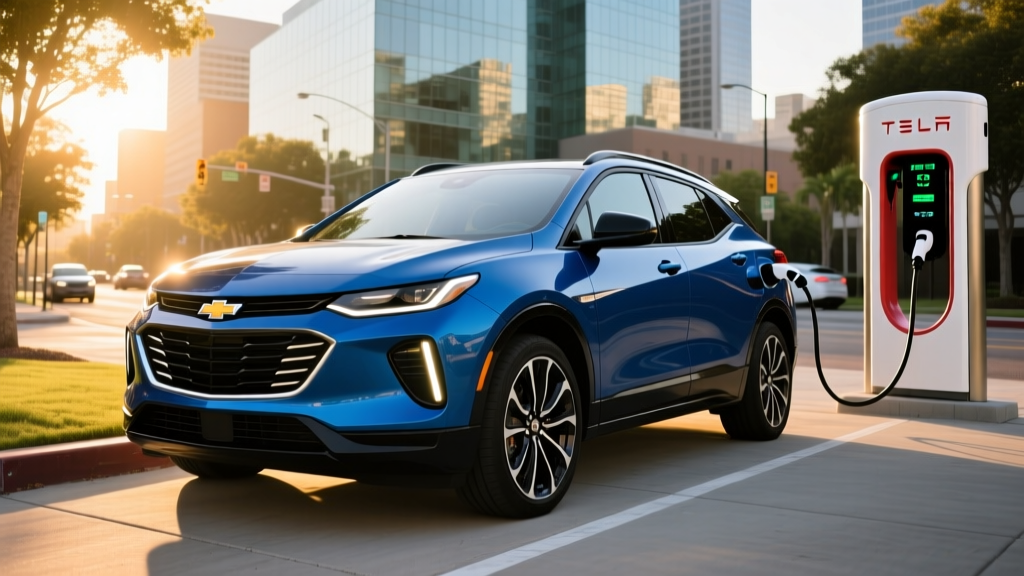
One of the Blazer EV SS's most practical advantages is its native NACS (North American Charging Standard) port. That means direct access to Tesla's Supercharger network — over 25,000 stalls in North America — without an adapter. For buyers in areas where Electrify America or EVgo reliability has been inconsistent, this is a meaningful ownership advantage.
| Charging Level | Power | Speed (approx.) |
|---|---|---|
| Level 1 (120V household) | 1.4 kW | ~4 miles per hour |
| Level 2 (240V home/public) | 11.5 kW | ~34 miles per hour (full charge in ~9 hrs) |
| DC Fast Charge (peak) | 190 kW | 10–80% in ~28 minutes |
The 190 kW peak DC fast-charge rate is adequate but not exceptional for 2026. The Hyundai Ioniq 5 N peaks at 240 kW on an 800V architecture and hits 10–80% in about 18 minutes. The Tesla Model Y Performance, on V3 Superchargers, peaks around 250 kW. The Blazer EV SS runs on GM's 400V architecture, which limits its charge-curve ceiling.
Charging-curve reality: The Blazer EV SS sustains close to its 190 kW peak from roughly 10% to 45% State of Charge, then tapers progressively. From 80% to 100%, charging slows dramatically — as it does with all NMC packs to protect battery longevity. On a road trip, plan your stops around 10–80% windows to minimize time at the charger. A typical 20-minute stop adds approximately 140–160 miles of real-world range.
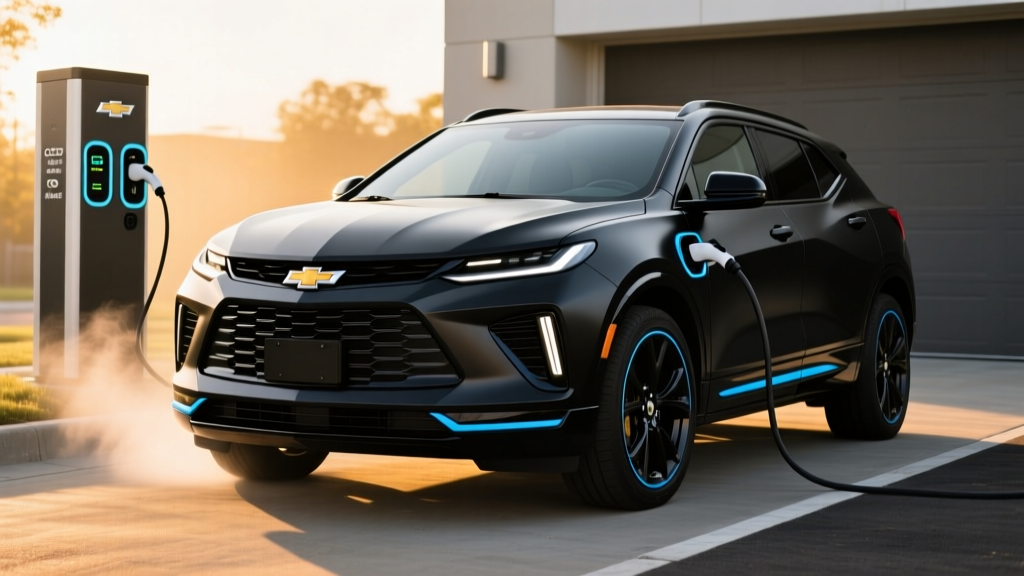
For home charging, the 11.5 kW onboard charger is competitive. On a 48-amp Level 2 circuit (the most common home installation), you'll recover a full battery overnight in roughly 9 hours. We recommend a dedicated 60-amp circuit with a hardwired Level 2 station — budget $800–$1,500 for equipment and licensed electrician installation, depending on your panel capacity and run length.
Performance: 557 HP in a Family SUV
The SS badge isn't just cosmetic. The dual-motor AWD powertrain produces 557 horsepower and 648 lb-ft of torque, launching the Blazer EV SS to 60 mph in 3.4 seconds in what Chevy calls "Wide Open Watts" mode (their branded launch-control feature). That puts it in the same bracket as the Mustang Mach-E GT (3.5 sec) and slightly behind the Ioniq 5 N (3.25 sec) and Model Y Performance (3.3 sec).
Where the Blazer EV SS distinguishes itself is in its ride quality. GM tuned the suspension for a compliant, comfortable demeanor that absorbs highway imperfections better than the firmer Mach-E GT or the aggressively sporty Ioniq 5 N. It's a performance SUV that doesn't punish you on a 400-mile road trip. The trade-off is that it feels less eager in tight corners — body roll is more noticeable, and the steering lacks the precision of the Hyundai or Tesla.
Regenerative braking offers multiple levels via steering-wheel paddles, including a one-pedal driving mode that brings the vehicle to a complete stop. The transition between regen and friction braking is smooth — a common pain point in some competitors that GM has clearly addressed.
Interior, Cargo, and Technology
The Blazer EV SS cabin is spacious and practical. Front-seat passengers get 43.1 inches of legroom, with 38.4 inches in the rear — enough for adults on long trips. Cargo volume stands at 30.2 cubic feet behind the second row and 62.0 cubic feet with the rear seats folded flat. There is no front trunk (frunk) — the space is occupied by HVAC and power-electronics hardware — which is a minor miss compared to the Model Y's generous frunk.
The infotainment system centers on a 17.7-inch diagonal touchscreen running GM's Google Built-in platform, which integrates Google Maps navigation, Google Assistant, and access to the Play Store. Wireless Apple CarPlay and Android Auto are standard. The system is responsive, but we've noted that some users find the reliance on touchscreen controls for climate and seat functions distracting while driving — physical buttons remain superior for high-frequency adjustments.
On the driver-assistance front, the Blazer EV SS comes equipped with Super Cruise capability on compatible mapped highways (over 750,000 miles of roads in the US and Canada as of 2026). Super Cruise is an SAE Level 2 system — it handles steering, acceleration, and braking on divided highways, but the driver must remain attentive and keep eyes on the road, monitored by a steering-column camera. It is not autonomous driving. Where available, Super Cruise is one of the most polished hands-free highway systems on the market, rivaling Ford's BlueCruise.
Super Cruise is an SAE Level 2 driver-assistance system. It does NOT make the Blazer EV SS self-driving. The driver must remain engaged, monitor traffic, and be prepared to take over immediately. Hands-free operation is permitted only on pre-mapped divided highways. City streets, construction zones, and unmapped roads require full manual control.
Pricing, Tax Credits, and Ownership Cost
The 2026 Blazer EV SS starts at $56,595 including destination. Our fully loaded test vehicle — with the SS Confidence Package (enhanced Super Cruise), panoramic sunroof, and premium paint — came to $61,440.
| Trim / Configuration | MSRP | Est. After §30D Credit |
|---|---|---|
| Blazer EV SS (base) | $56,595 | $49,095* |
| Blazer EV SS (loaded, as tested) | $61,440 | $53,940* |
*Assumes full $7,500 federal tax credit eligibility. Actual credit depends on buyer income, battery sourcing, and MSRP caps. See IRS rules below.
Federal tax credit eligibility (§30D): The Blazer EV SS qualifies as an SUV under IRS vehicle-classification rules, meaning the MSRP cap is $80,000 (well above its price). However, the full $7,500 credit requires meeting two separate sourcing requirements — critical minerals and battery component manufacturing — both of which have been tightening annually. As of the 2026 tax year, buyers must also meet income caps: $150,000 single / $225,000 head of household / $300,000 joint filers. The credit can now be transferred to the dealer at point of sale as an immediate price reduction, rather than waiting for a tax refund. Always verify current eligibility on IRS.gov and confirm with your tax professional before purchase, as battery-sourcing compliance can shift model year to model year.
Ownership economics: At an average US electricity rate of $0.17/kWh, fully charging the 102 kWh pack costs roughly $17.34 — giving you around 250 real-world miles. That's approximately $0.07 per mile, compared to $0.13–$0.15 per mile for a comparable gas-powered midsize SUV at $3.50/gallon and 22 MPG combined. Over 5 years and 75,000 miles, fuel savings alone can reach $4,500–$6,000. Factor in reduced maintenance (no oil changes, fewer brake replacements thanks to regen), and the total-cost-of-ownership gap narrows further — though insurance premiums for the Blazer EV SS tend to run 10–15% higher than its gas counterpart, according to industry averages.
The battery and powertrain are covered by GM's 8-year/100,000-mile warranty, with a capacity-retention threshold of 60% — meaning GM will repair or replace the pack if it degrades below 60% of original capacity within that period. This is consistent with industry standards, though some competitors offer a 70% threshold. Based on current NMC degradation data, most Ultium packs are projected to retain 85–90% capacity at 100,000 miles under normal use.
Pros, Cons, and Who Should Buy It
- Native NACS port — direct Tesla Supercharger access without adapter
- 557 hp / 3.4-sec 0–60 with composed, comfortable ride quality
- Spacious cabin and 62 cu ft cargo volume — practical family hauler
- Super Cruise hands-free highway driving on 750K+ mapped miles
- Heat pump standard — better cold-weather range retention
- Qualifies for up to $7,500 federal tax credit (if sourcing/income rules met)
- 190 kW peak DC charge rate trails rivals (Ioniq 5 N: 240 kW, Model Y: 250 kW)
- No frunk — cargo space is rear-only
- Heavy at 5,700+ lbs — efficiency suffers on highway and in cold weather
- Real-world range closer to 245–265 mi, not the 290-mi EPA sticker
- Touchscreen-heavy climate/seat controls can distract while driving
- Battery warranty threshold at 60% (some rivals guarantee 70%)
Who the Blazer EV SS is best for: This is the right EV for a family or professional who needs a spacious, comfortable daily driver with serious passing power and the ability to road-trip on the Supercharger network. If your typical week includes a 40-mile commute, weekend activities that demand cargo space, and a few 300-mile highway drives per year, the Blazer EV SS fits well. It's less ideal for buyers who prioritize maximum charging speed for frequent long-distance travel, or enthusiasts who want the sharpest handling in the segment — the Ioniq 5 N and Model Y Performance are more engaging on a back road.
Frequently Asked Questions
What is the real-world range of the Chevrolet Blazer EV SS?
The EPA rates the Blazer EV SS at 290 miles. In real-world highway driving at 70–75 mph, expect 245–265 miles. In cold weather below freezing, plan for 210–230 miles. The heat pump helps, but the vehicle's 5,700-lb weight and large frontal area work against efficiency.
How fast does the Blazer EV SS charge at home and on the road?
On a DC fast charger, it peaks at 190 kW and charges from 10–80% in approximately 28 minutes. At home on a Level 2 (240V, 48-amp) charger, it adds about 34 miles of range per hour, with a full charge taking roughly 9 hours. The native NACS port gives direct access to Tesla Superchargers.
Does the 2026 Blazer EV SS qualify for the $7,500 federal EV tax credit?
It can, but eligibility depends on several factors. The MSRP is under the $80,000 SUV cap. The buyer must meet income limits ($300K joint / $150K single). The battery must meet critical-mineral and component-sourcing thresholds set by the IRS for the 2026 tax year. The credit can be applied at point of sale. Verify current rules at IRS.gov and consult a tax professional.
How does the Blazer EV SS compare to the Tesla Model Y Performance?
The Model Y Performance offers more range (EPA ~303 mi), faster DC charging (~250 kW peak), and sharper handling, plus a frunk. The Blazer EV SS counters with a more comfortable ride, a more traditional SUV interior layout, greater rear cargo volume behind the second row, and a more intuitive Super Cruise system for hands-free highway driving. Both access the Supercharger network, though the Tesla does so natively as well. Pricing is similar after credits.
Is the Blazer EV SS good for towing?
The Blazer EV SS is rated to tow up to 1,500 pounds when properly equipped — adequate for a small utility trailer or a pair of dirt bikes, but not enough for a boat or camper. If towing is a priority, look at the Silverado EV or Rivian R1S instead. Keep in mind that towing will reduce range by 30–50% depending on trailer weight and aerodynamics.
What is the battery warranty on the Blazer EV SS?
GM covers the Ultium battery pack and electric powertrain for 8 years or 100,000 miles, whichever comes first. The warranty guarantees at least 60% of original capacity retention. Based on NMC degradation curves and Ultium thermal-management performance, most owners should expect 85–90% capacity at the 100,000-mile mark under normal charging habits (avoiding frequent 100% charges and DC fast-charging exclusively).