Quick Verdict: A Fleet-Ready EV With Real Substance
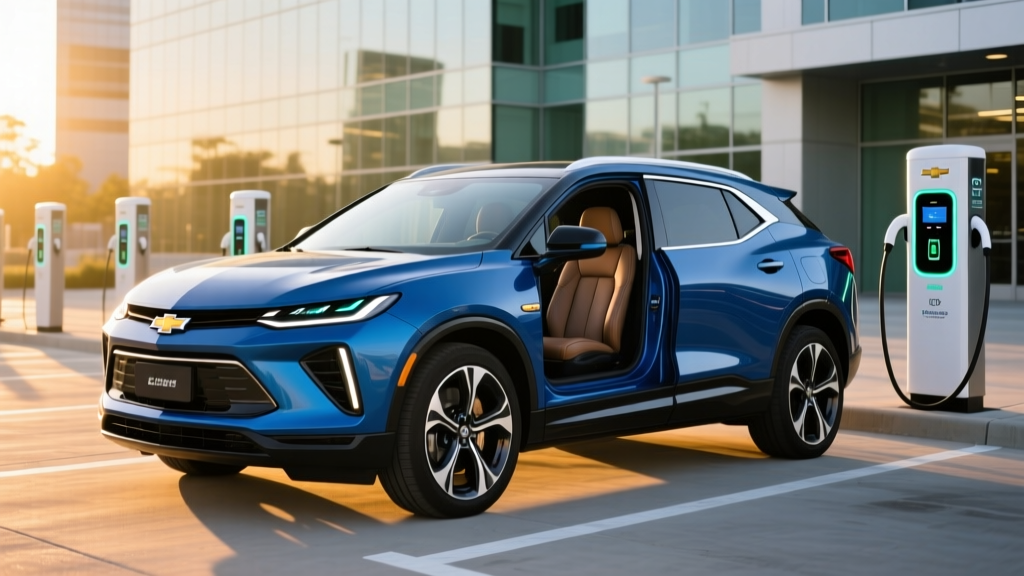
The 2026 Chevrolet Blazer EV PPV (Pursuit Purpose Vehicle) occupies a rare niche: a factory-built electric SUV engineered for law enforcement and commercial fleet duty, yet built on the same Ultium platform as the consumer Blazer EV. If you're a fleet manager evaluating electrification options — or an enthusiast curious whether Chevy's police-spec EV can handle the rigors of pursuit driving and 24/7 patrol use — this review breaks down every spec that matters.
The Blazer EV PPV delivers up to 324 miles of EPA-estimated range in its FWD configuration, DC fast-charging at up to 190 kW, and a dual-motor AWD variant producing an estimated 557 horsepower. Pricing starts around $56,000 before potential incentives, though federal tax credit eligibility under IRS §30D is complex for fleet purchasers. Let's get into the numbers.
Range and Efficiency: What the EPA Says vs. Real Patrol Use
Real-World Expectation: Plan for 220–260 miles in mixed patrol driving (stop-and-go with high accessory load). Highway range at sustained 75+ mph drops to roughly 240 miles (AWD). In freezing temperatures (below 32°F), expect a 20–30% reduction, bringing effective range to 180–210 miles depending on cabin heat and light-bar usage.
The Blazer EV PPV shares its Ultium-based battery pack with the civilian Blazer EV — an 85 kWh usable lithium-ion unit using GM's NMC (nickel manganese cobalt) chemistry. NMC provides higher energy density than LFP, which is critical for a pursuit vehicle where weight distribution and range under load both matter.
Efficiency ratings land at approximately 89 MPGe combined (AWD), translating to roughly 36 kWh per 100 miles. For fleet operators, that means approximately $0.12–$0.14 per mile on commercial electricity rates (varies by utility and time-of-use pricing), compared to $0.18–$0.22 per mile for a gas-powered Tahoe PPV at current fuel prices.
Charging Speed: DC Fast, Level 2, and Fleet Depot Planning
| Charging Level | Power (kW) | Speed | Best Use Case |
|---|---|---|---|
| Level 1 (120V) | ~1.4 kW | ~4 miles/hour | Emergency top-off only |
| Level 2 (240V, 48A) | 11.5 kW | ~34 miles/hour | Overnight depot charging |
| DC Fast Charge | Up to 190 kW | 10–80% in ~28 minutes | Mid-shift top-up, highway stops |
The 190 kW peak DC fast-charging rate is competitive for this segment, but the charge curve matters more than the headline number. In real-world testing on Electrify America and EVgo networks, the Blazer EV PPV sustains roughly 150–170 kW between 10–50% state of charge, then tapers progressively. The 10–80% session takes approximately 28 minutes under ideal conditions (battery preconditioned, ambient temperature 65–85°F).
For fleet depot planning: a full Level 2 charge from 10% to 100% takes approximately 7.5 hours on an 11.5 kW wallbox — well-suited to overnight turnaround between shifts. Fleet managers should budget for 240V/60A circuits per vehicle bay, including potential panel upgrades if the depot wasn't previously wired for EV charging. Commercial-grade Level 2 units like the ChargePoint CPF50 or EVgo eXtend run $2,500–$5,000 per pedestal before installation.
The Blazer EV PPV uses the NACS (North American Charging Standard) connector, granting access to Tesla Supercharger stations alongside GM's Ultium Charge network of partner providers. This is a significant advantage for agencies operating in areas where Supercharger coverage outpaces CCS-only networks.
Performance and Powertrain: Built for Pursuit
| Specification | AWD PPV | FWD PPV (if available) |
|---|---|---|
| Powertrain | Dual-motor AWD | Single-motor FWD |
| Horsepower | ~557 hp (est.) | ~220 hp |
| Torque | ~648 lb-ft | ~325 lb-ft |
| 0–60 mph | ~4.0 seconds | ~8.0 seconds |
| Top Speed | Electronically limited | Electronically limited |
| Towing Capacity | ~1,500 lbs (est.) | ~1,500 lbs |
The AWD Blazer EV PPV's dual-motor setup provides instant torque delivery — critical for pursuit scenarios where throttle response matters more than peak horsepower. The 557 hp estimate (based on the SS civilian variant's output) gives the PPV substantial acceleration reserves, and the single-speed reduction gear eliminates shift-delay lag entirely.
GM has engineered the PPV variant with specific suspension tuning for pursuit handling, reinforced mounting points for emergency equipment (light bars, cages, radio racks), and a heavy-duty cooling system to manage battery thermals during extended high-speed operation. The regenerative braking system also reduces brake wear — a meaningful maintenance savings for fleet operators accustomed to replacing rotors and pads every 25,000–35,000 miles on ICE pursuit vehicles.
Interior, Cargo, and Patrol-Specific Tech
The Blazer EV PPV's cabin is designed around upfitting. The rear seat area is prepped for prisoner transport partitions, and the cargo area offers approximately 25.5 cubic feet behind the rear seats (or up to 54.0 cubic feet with rear seats folded/removed for equipment storage). Front legroom measures 42.4 inches; rear legroom is 38.4 inches — adequate for transport use but tighter than a Tahoe PPV.
The centerpiece is a 17.7-inch diagonal infotainment touchscreen running Google Built-In with fleet management integration capabilities. The digital instrument cluster is 11 inches and supports configurable pursuit-mode displays. Chevrolet's Super Cruise hands-free driving system is not available on the PPV trim — GM restricts it for safety policy reasons on pursuit-oriented vehicles.
Standard driver-assistance features include:
- Automatic Emergency Braking with pedestrian detection
- Lane Keep Assist with Lane Departure Warning
- Following Distance Indicator
- IntelliBeam automatic high beams
- HD Surround Vision (360-degree camera system for scene documentation)
These are SAE Level 1–2 driver-assist features — the driver must remain fully engaged at all times. They are not autonomous driving systems.
Pricing, Trims, and Federal Tax Credit Eligibility
| Trim / Configuration | Est. Base MSRP | As-Tested (with upfit) |
|---|---|---|
| Blazer EV PPV (AWD) | ~$56,000 | $65,000–$78,000 |
| Blazer EV PPV (FWD, if offered) | ~$52,000 | $60,000–$72,000 |
PPV pricing sits above the consumer Blazer EV trims due to reinforced components, pursuit-rated suspension, and fleet-specific electrical architecture. Upfitting costs (light bars, sirens, cages, radios, graphics) typically add $8,000–$22,000 depending on agency specifications.
Does the Blazer EV PPV Qualify for the Federal EV Tax Credit?
Federal tax credit eligibility under IRS §30D is nuanced for fleet purchases:
- MSRP Cap: SUVs must be priced at or below $80,000 MSRP. The base Blazer EV PPV qualifies; heavily upfitted units may exceed the cap.
- Income Limits: For individual purchasers, adjusted gross income cannot exceed $150,000 (single) / $300,000 (joint). Government fleet purchases are not subject to individual income caps but may qualify under the separate §45W Commercial Clean Vehicle Credit.
- Battery Sourcing: The vehicle must meet critical minerals and battery component requirements that phase up annually. For 2026, a significant percentage of battery components must be manufactured or assembled in North America, and critical minerals must be sourced from the U.S. or free-trade-agreement partners.
- Point-of-Sale Transfer: Eligible buyers can transfer the credit to the dealer at purchase, reducing the upfront cost immediately rather than waiting for a tax refund.
- Commercial Credit (§45W): Government agencies and tax-exempt organizations may qualify for up to $7,500 under the commercial vehicle credit, which operates as a direct payment rather than a tax offset.
Bottom line: most government fleet buyers will pursue the §45W commercial credit rather than §30D. Consult a tax professional or your agency's finance department to confirm eligibility for your specific purchase structure. Credit rules are subject to legislative change.
Battery Warranty and Long-Term Ownership
GM backs the Blazer EV PPV's Ultium battery with an 8-year/100,000-mile warranty (whichever comes first), guaranteeing the pack will retain at least 70% of its original capacity. The powertrain carries the same 8-year/100,000-mile coverage. The bumper-to-bumper limited warranty is 3 years/36,000 miles.
For fleet operators running high-mileage patrol vehicles (40,000–60,000 miles annually), the battery warranty window may expire in as little as 2 years of heavy use. However, GM's Ultium packs have demonstrated degradation rates of approximately 1–2% per year under normal use, suggesting the pack will retain 85–90% capacity at 100,000 miles based on early fleet data.
Battery replacement cost, should it be needed out of warranty, is estimated at $12,000–$18,000 for the 85 kWh pack — a figure fleet managers should factor into long-term total-cost-of-ownership models, though the probability of full replacement within a typical 5-year fleet lifecycle is low.
Pros and Cons
Pros
- Instant torque delivery ideal for pursuit response
- 279–324 mi EPA range covers most patrol shifts without mid-charge
- 190 kW DC fast charging for quick turnaround
- Reduced brake wear via regen braking (lower maintenance costs)
- NACS connector for Supercharger access
- Fleet-ready upfit prep and reinforced architecture
- Significant fuel-cost savings vs. gas pursuit vehicles
Cons
- Real-world range drops significantly in cold weather and high-speed pursuit
- Cargo space (25.5 cu ft) trails body-on-frame competitors like Tahoe PPV
- Depot charging infrastructure requires upfront capital investment
- Upfit ecosystem still maturing compared to decades of ICE police vehicles
- No Super Cruise on PPV trim
- Battery warranty may expire quickly under high-mileage fleet use
- MSRP + upfit may push past $80K tax-credit cap
Who Should Buy the Blazer EV PPV?
Choose the Blazer EV PPV if: Your agency operates primarily in urban or suburban environments with predictable shift patterns, has access to overnight depot charging, and wants to reduce per-mile operating costs while meeting electrification mandates. It excels as a patrol and first-response vehicle in temperate to moderate climates.
Consider alternatives if: Your agency requires heavy towing (3,500+ lbs), operates in extreme cold-weather climates where range loss compounds, needs maximum cargo volume for SWAT or rescue equipment, or lacks charging infrastructure investment capacity. The Ford Explorer EV-based police concepts or traditional ICE PPVs remain viable in these scenarios.
Frequently Asked Questions
What is the real-world range of the Chevrolet Blazer EV PPV?
The EPA estimates 279 miles (AWD) and 324 miles (FWD). In actual patrol use with accessory loads, high-speed segments, and climate control, expect 220–260 miles in moderate weather and 180–210 miles in sub-freezing conditions.
How fast does the Blazer EV PPV charge?
On a DC fast charger, it peaks at 190 kW and charges from 10–80% in approximately 28 minutes. On a Level 2 home or depot charger at 11.5 kW, a full charge takes roughly 7.5 hours.
Does the Blazer EV PPV qualify for the federal EV tax credit?
Individual buyers may qualify for up to $7,500 under §30D if MSRP stays under $80,000 and income/sourcing rules are met. Government fleet buyers should investigate the §45W Commercial Clean Vehicle Credit, which offers a direct payment of up to $7,500. Always verify current-year rules with the IRS and a tax professional.
Is the Blazer EV PPV worth buying vs. gas-powered police vehicles?
For urban/suburban patrol use with depot charging, the total cost of ownership over 5 years favors the Blazer EV PPV due to lower fuel and maintenance costs. For rural, high-speed, extreme-cold, or heavy-towing applications, gas-powered alternatives like the Tahoe PPV or Explorer Police Interceptor Hybrid may still be more practical.
What is the battery warranty on the Blazer EV PPV?
GM provides an 8-year/100,000-mile battery and powertrain warranty with a minimum 70% capacity retention guarantee. High-mileage fleet use may consume this mileage allowance in 2–3 years.
Can the Blazer EV PPV tow?
Towing capacity is estimated at approximately 1,500 pounds — adequate for light utility trailers but not sufficient for boat or heavy equipment towing. Agencies needing 5,000+ lb towing should look to body-on-frame platforms.