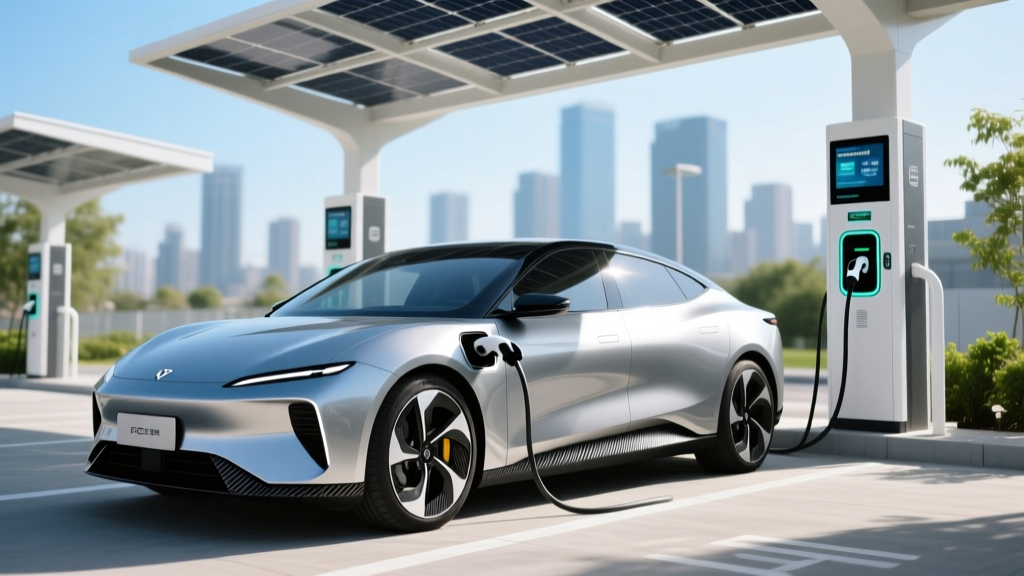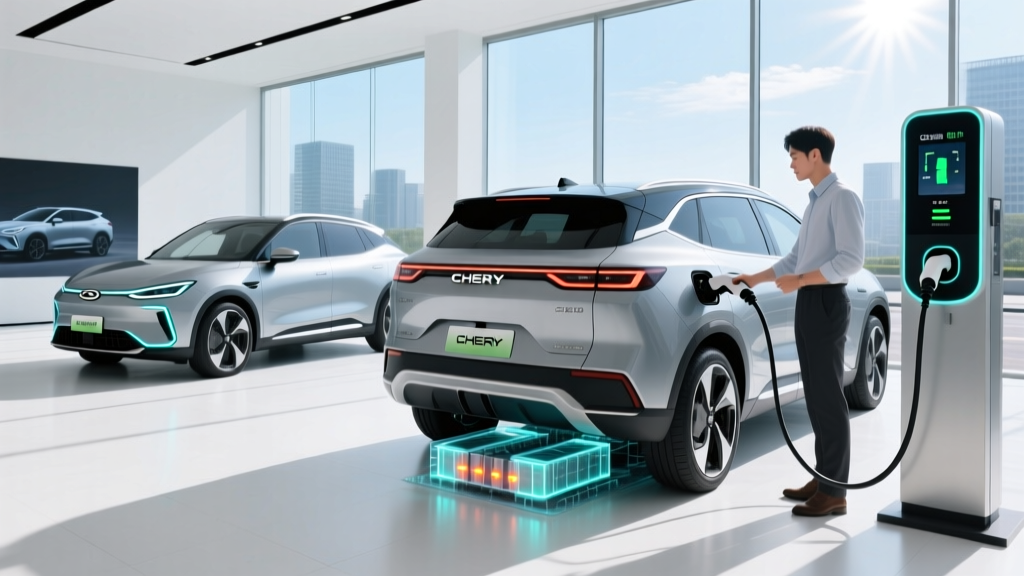
Quick Answer: Chery's EV lineup in 2026 centers on the Omoda E5 (also sold as the Jaecoo J6 in some markets), a compact crossover with an EPA-estimated 260–280 miles of range, a 61 kWh LFP battery, and a starting price around $32,000–$38,000 depending on market. Chery EVs are not currently sold in the United States or Canada; they are available in Australia, Southeast Asia, parts of Europe, the Middle East, and Latin America. If you're in a market where Chery sells EVs, the Omoda E5 offers competitive range and pricing against rivals like the BYD Atto 3 and MG4, but DC fast-charging speeds lag at a peak of roughly 80 kW. U.S. buyers should look at alternatives from Hyundai, Kia, Tesla, or Chevrolet, as Chery has no confirmed North American launch date.
Where Chery EVs Are Actually Sold in 2026
Chery Automobile, headquartered in Wuhu, Anhui, China, is one of China's largest vehicle exporters. However, the brand's EV availability varies dramatically by region:
- Available now: Australia, New Zealand, Thailand, Indonesia, Malaysia, Philippines, South Africa, Mexico, Chile, Spain, Italy, Israel, UAE, Russia
- Not available: United States, Canada, United Kingdom (limited ICE presence, no EV sales as of 2026)
- Under evaluation: Brazil (local assembly discussions ongoing), broader EU expansion
If you're reading this from the U.S., the practical answer is that you cannot currently purchase a new Chery EV domestically, and no federal §30D tax credit applies because these vehicles are not certified for U.S. sale. For American EV shoppers, fueleconomy.gov remains the best resource for EPA-rated EVs available in your market.
Chery EV Lineup: Specs at a Glance
Chery markets EVs under several sub-brands: Omoda (youth-oriented crossovers), Jaecoo (rugged-premium SUVs), and iCar (boxy lifestyle EVs). Here's what the core lineup looks like for the 2025–2026 model years:
| Model | Battery (kWh) | Chemistry | WLTP Range | Est. EPA Range | Peak DC Charge | 10–80% Time | 0–100 km/h | Approx. Price (AUD/USD equiv.) |
|---|---|---|---|---|---|---|---|---|
| Omoda E5 (Comfort) | 61 kWh | LFP | 430 km (267 mi) | ~260 mi | 80 kW | ~35 min | 7.7 sec | AUD $42,000 / ~$27,000 USD |
| Omoda E5 (Premium) | 61 kWh | LFP | 430 km (267 mi) | ~260 mi | 80 kW | ~35 min | 7.7 sec | AUD $48,000 / ~$31,000 USD |
| iCar 03 | 69 kWh | LFP | 472 km (293 mi) | ~280 mi | 90 kW | ~32 min | 6.5 sec (AWD) | ~$28,000–$35,000 USD (market-dependent) |
| Jaecoo J6 EV (Announced) | ~70 kWh (est.) | LFP | ~500 km (est.) | ~300 mi (est.) | ~100 kW (est.) | TBD | TBD | TBD |
Key caveat on range: Chery publishes WLTP range figures, which tend to run 10–15% higher than EPA estimates. The Omoda E5's 430 km WLTP rating translates to roughly 260 miles under the more stringent EPA cycle. In real-world highway driving at 70 mph, expect closer to 220–240 miles from the Omoda E5, and 200–215 miles in cold weather (below 32°F / 0°C) due to LFP chemistry's cold sensitivity and cabin heating loads.
Charging Speeds: The Honest Picture
The Omoda E5's 80 kW peak DC fast-charge rate is the single biggest limitation in the Chery EV lineup. For context, competitors in the same price bracket achieve significantly faster charging:
| Vehicle | Peak DC kW | 10–80% Time | Architecture |
|---|---|---|---|
| Chery Omoda E5 | 80 kW | ~35 min | 400V |
| BYD Atto 3 | 88 kW | ~29 min | 400V |
| Hyundai Kona Electric (2025+) | 100+ kW | ~27 min | 400V |
| Hyundai Ioniq 5 | 240 kW | ~18 min | 800V |
| Tesla Model Y (2026) | 250 kW | ~15 min | 400V (optimized) |
What this means in practice: On a road trip, the Omoda E5 will add roughly 80–90 miles of range in a 20-minute stop at a DC fast charger. The Hyundai Ioniq 5, by contrast, adds roughly 180+ miles in the same window. If you primarily charge at home overnight and rarely road-trip, this gap matters less. If you drive long distances regularly, the slower charge curve is a genuine inconvenience.
On Level 2 AC charging (home or destination), the Omoda E5 accepts up to 7 kW single-phase or 11 kW three-phase. A full 0–100% charge at 7 kW takes approximately 8.5–9 hours — perfectly manageable with overnight home charging.
Ownership Costs: Chery EV vs. Gas Equivalent
Let's compare the Omoda E5 against a similarly priced gas compact SUV (e.g., Toyota RAV2 or Mazda CX-5) in a market where both are available, using Australian pricing as a representative example:
| Cost Factor | Chery Omoda E5 | Gas Compact SUV (e.g., CX-5) |
|---|---|---|
| Purchase Price | AUD $42,000–$48,000 | AUD $36,000–$45,000 |
| Fuel/Energy (5 yr, 75,000 km) | AUD $2,800–$3,500 (home charging) | AUD $9,000–$11,000 |
| Maintenance (5 yr) | AUD $800–$1,200 | AUD $2,500–$3,500 |
| Insurance (annual avg.) | AUD $1,400–$1,800 | AUD $1,100–$1,500 |
| Registration/Stamp Duty | Varies — some states offer EV discounts | Standard rates |
| Estimated 5-Year Total | ~AUD $54,000–$60,000 | ~AUD $55,000–$65,000 |
The EV breaks even or saves money over five years primarily through fuel and maintenance savings. The LFP battery also carries a 8-year/160,000 km warranty with a typical 70% capacity-retention threshold — meaning Chery guarantees the battery will hold at least 70% of its original capacity during that period. LFP chemistry generally shows slower degradation than NMC, with real-world data suggesting 85–90% state of health after 5 years of typical use.
Battery Chemistry: Why LFP Matters for Chery
Chery uses lithium iron phosphate (LFP) cells across its EV lineup. Here's how LFP compares to the NMC chemistry used in many premium EVs:
| Factor | LFP (Chery) | NMC (Tesla, Hyundai, etc.) |
|---|---|---|
| Energy Density | Lower — heavier pack for same kWh | Higher — lighter, more compact |
| Cycle Life | 3,000–5,000+ cycles | 1,000–2,000 cycles |
| Cold-Weather Performance | Weaker — 20–30% range loss below freezing | Better — 15–25% range loss below freezing |
| Charging to 100% | Safe to charge to 100% regularly | Best kept at 80% daily for longevity |
| Thermal Runaway Risk | Very low | Low but higher than LFP |
| Cost | Lower — no cobalt or nickel | Higher |
Practical takeaway: LFP is an excellent choice for daily commuting and city driving where you charge at home. The ability to charge to 100% without degradation concerns means you get the full 61 kWh usable regularly. The trade-off is colder-climate range loss and the lower energy density that keeps the Omoda E5's range in the 260-mile bracket rather than 300+.
Common Misconceptions About Chery EVs
| Myth | Fact |
|---|---|
| "Chery EVs are available in the U.S." | Chery has no U.S. sales network as of 2026. No models are EPA-certified or eligible for the §30D federal tax credit. |
| "WLTP 430 km means I'll get 430 km in real driving" | WLTP is an optimistic test cycle. Real-world highway range is typically 80–85% of WLTP — expect ~350–370 km (220–230 mi) at highway speeds. |
| "80 kW charging is fast enough" | For daily use, yes. For road trips, it means 35-minute stops for a 10–80% charge — roughly double the time of 150+ kW competitors. |
| "LFP batteries don't last as long" | The opposite is true. LFP cells typically endure 3,000+ full charge cycles before significant degradation — roughly double NMC cycle life. |
| "Chinese EVs have no safety ratings" | The Omoda E5 has achieved a 5-star ANCAP rating in Australia. Euro NCAP testing results vary by model. Always check your local safety authority. |
Decision Framework: Is a Chery EV Right for You?
Choose the Chery Omoda E5 if:
- You live in a market where Chery sells EVs (Australia, SE Asia, select EU/LATAM countries)
- Your daily commute is under 80 miles round-trip and you can charge at home
- You prioritize low purchase price and low running costs over fast DC charging
- You prefer LFP chemistry for its longevity and ability to charge to 100% daily
- You rarely take road trips longer than 200 miles without an overnight stop
Look at competitors instead if:
- You live in the U.S. or Canada (Chery is not available)
- You frequently drive 300+ miles in a day and need 15–20 minute DC fast-charge stops
- You live in a very cold climate (LFP's cold-weather range loss is significant)
- You need AWD — the Omoda E5 is front-wheel drive only (the iCar 03 offers AWD in some trims)
- You want access to the Tesla Supercharger network (Chery uses CCS2 in most markets)
What First-Time Chery EV Buyers Should Know
Home charging is essential. Without access to Level 2 home charging (a 7 kW wallbox), EV ownership becomes significantly less convenient. Public charging on an 80 kW-capable vehicle means longer stops. Budget AUD $1,000–$2,000 (or local equivalent) for a quality Level 2 home charger installation if your home doesn't already have one.
Software and OTA updates are still maturing. Chery's infotainment and connected-car ecosystem lag behind Tesla, Hyundai, and even BYD in terms of polish and over-the-air update frequency. Expect functional but not class-leading tech.
Service network depth varies by country. In Australia, Chery has rapidly expanded its dealer footprint. In newer markets, service availability and parts supply may be thinner. Confirm your nearest authorized EV service center before purchasing.
Resale value is uncertain. As a relatively new EV brand in most export markets, Chery's long-term depreciation curves are unproven. Established brands like Tesla, Hyundai, and Toyota have more predictable resale trajectories.
Frequently Asked Questions
Can I buy a Chery EV in the United States?
No. As of 2026, Chery does not sell vehicles in the U.S. market. There is no confirmed timeline for a North American launch. U.S. buyers should consider the Hyundai Kona Electric, Chevrolet Equinox EV, Tesla Model Y, or Nissan Ariana as alternatives in the $30,000–$45,000 range.
Does the Chery Omoda E5 qualify for any tax credits?
In the U.S., no — the vehicle is not sold there. In Australia, the federal government's FBT exemption for eligible EVs (under the Electric Car Discount policy) can reduce salary-packaging costs. In some European markets, local purchase incentives may apply. Always check your country's current EV incentive program directly through official government sources.
How does the Omoda E5 compare to the BYD Atto 3?
Both are compact EV crossovers with LFP batteries in the 60 kWh range and similar WLTP range (~420–430 km). The BYD Atto 3 charges slightly faster (88 kW peak vs. 80 kW) and has a more established global service network. The Omoda E5 counters with competitive pricing and a 5-star ANCAP rating. The choice often comes down to dealer proximity and local pricing in your specific market.
What connector does the Chery Omoda E5 use?
In most markets, the Omoda E5 uses CCS2 (Combined Charging System Type 2) for DC fast charging and Type 2 for AC charging. In China, it uses the GB/T standard. Chery EVs do not currently support NACS (Tesla's connector standard adopted in North America).
How long will the Chery EV battery last?
The LFP battery is warranted for 8 years or 160,000 km (whichever comes first) with a 70% capacity-retention guarantee. Based on LFP chemistry characteristics, owners can reasonably expect 85–92% state of health after 5 years of typical mixed use. Full battery replacement costs are not widely published by Chery but are estimated at $8,000–$12,000 USD equivalent based on comparable LFP pack pricing.