The Short Answer on Chery Electric Vehicles in 2026
Chery does not sell electric vehicles in the United States as of 2026. The Chinese automaker offers several EVs globally — including the Omoda E5, Chery eQ1, and iCAR 03 — but US market entry has been blocked by a combination of 100%+ tariffs on Chinese-built EVs, the absence of a US dealer network, and lack of NHTSA/EPA certification. If you are searching for a Chery electric vehicle because you saw one online or abroad, you cannot currently buy, register, or insure one in the US. Below, we break down what Chery offers globally, why it isn't here, and which comparable EVs you can buy right now — with exact range, pricing, and charging data.
Chery's Global EV Lineup: What Exists Today
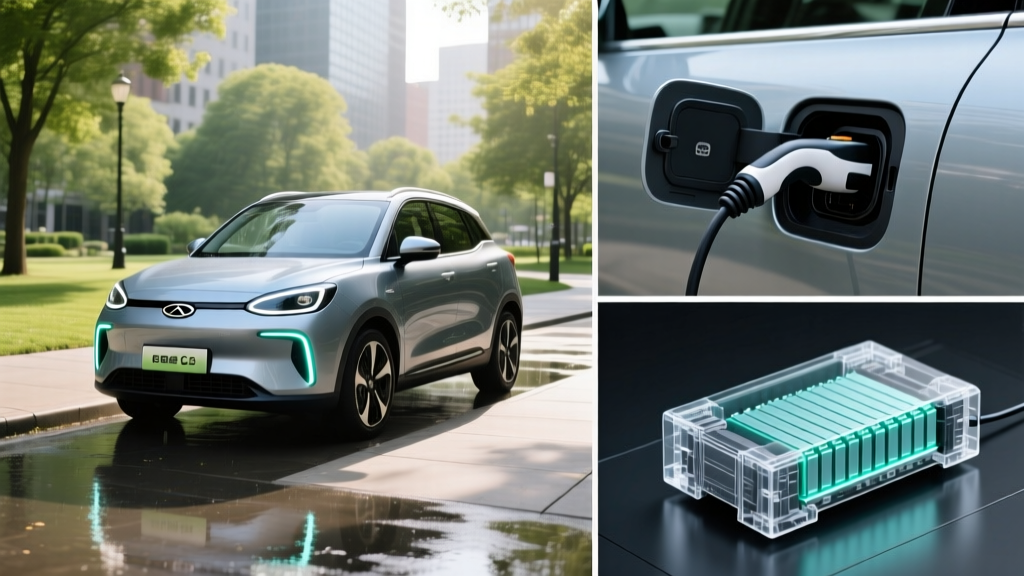
Chery Automobile, headquartered in Wuhu, Anhui, China, has expanded its electrified portfolio significantly through sub-brands. Here is what the company sells in international markets as of the 2026 model year:
| Model | Sub-Brand | Battery (kWh) | WLTP Range | Peak DC Charge | Approx. Global Price |
|---|---|---|---|---|---|
| Omoda E5 | Omoda | 61 kWh (NMC) | ~267 mi (430 km) | ~90 kW | ~$33,000 USD equiv. |
| Chery eQ1 | Chery | ~29 kWh (LFP) | ~124 mi (200 km) | ~40 kW | ~$15,000 USD equiv. |
| iCAR 03 | iCAR | ~69 kWh (NMC) | ~292 mi (470 km) | ~100 kW | ~$25,000 USD equiv. |
| Sterera E07 (EREV) | Sterera | ~39 kWh (LFP) + 1.5T range extender | ~112 mi EV-only | ~60 kW | ~$35,000 USD equiv. |
Key terminology note: WLTP range figures (used in Europe and China) are typically 10–20% higher than EPA estimates used in the US. The Omoda E5's 267-mile WLTP rating would likely translate to roughly 215–235 miles under the stricter EPA testing cycle — comparable to a base Hyundai Kona Electric but below the Chevrolet Equinox EV.
Chery also sells plug-in hybrid (PHEV) variants of the Tiggo and Arrizo lines with electric-only ranges of 40–65 miles, primarily in China, Southeast Asia, the Middle East, and Latin America.
Why Chery EVs Aren't Sold in the United States
Three structural barriers prevent Chery from entering the US market:
1. Tariffs Make Pricing Non-Competitive
Under Section 301 tariffs expanded in 2024 and maintained through 2026, Chinese-manufactured EVs face a 100% import duty when entering the US. A $33,000 Omoda E5 would effectively cost $66,000+ before shipping, compliance modifications, and dealer markup — placing it in direct competition with the Tesla Model Y Long Range ($48,990 MSRP, EPA 320 mi) and Ford Mustang Mach-E Extended Range ($52,995, EPA 320 mi), both of which have established US service networks and qualify for incentives.
2. No Dealer or Service Network
Chery has no franchise dealerships, certified service centers, or parts distribution in the US. Even if you imported a Chery EV privately (which faces separate homologation hurdles), you would have no warranty coverage, no recall support, and no source for collision or high-voltage battery replacement parts. For context, the average EV battery replacement costs $8,000–$16,000 out of warranty — a significant risk with no domestic support infrastructure.
3. Federal Certification Requirements
Every vehicle sold in the US must meet NHTSA Federal Motor Vehicle Safety Standards (FMVSS) and carry an EPA certification label. Chery has not submitted any models for this homologation process. Retrofitting a Chinese-market vehicle to meet FMVSS crash, lighting, and emissions standards is cost-prohibitive for individual importers.
Comparable EVs You Can Actually Buy in the US
If Chery's global pricing and specs caught your attention, here are the closest US-market alternatives with real EPA data, verified via fueleconomy.gov:
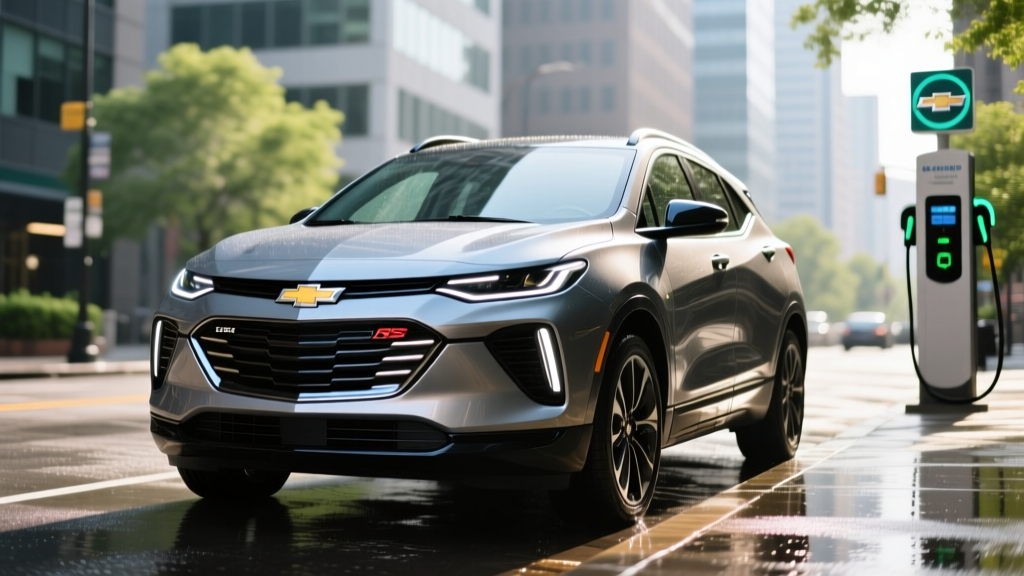
| Spec | Chevrolet Equinox EV 2LT (2026) | Hyundai Kona Electric SEL (2026) | Tesla Model Y Long Range (2026) | Omoda E5 (Global, for reference) |
|---|---|---|---|---|
| EPA Range | 319 mi | 261 mi | 320 mi | ~235 mi (EPA est.) |
| Battery | 85 kWh (NMC) | 64.8 kWh (NMC) | 78.1 kWh (NMC) | 61 kWh (NMC) |
| Peak DC Fast Charge | 150 kW | 100 kW | 250 kW | ~90 kW |
| 10–80% Charge Time | ~33 min | ~43 min | ~25 min | ~40 min |
| 0–60 mph | 7.9 sec | 7.6 sec | 4.8 sec | ~7.5 sec |
| Horsepower | 213 hp | 201 hp | 384 hp | 204 hp |
| Base MSRP | $43,900 | $34,975 | $48,990 | N/A (not sold in US) |
| Federal Tax Credit (§30D) | Up to $7,500 | Up to $7,500 | Up to $7,500 | None |
| Battery Warranty | 8 yr / 100,000 mi | 10 yr / 100,000 mi | 8 yr / 120,000 mi | 8 yr / 100,000 mi (global) |
Real-world range note: EPA estimates assume mixed driving at moderate temperatures. Expect 15–25% range reduction at sustained highway speeds above 70 mph, and 20–40% loss in sub-freezing temperatures without preconditioning. The Equinox EV's 319-mile EPA rating realistically delivers 250–275 miles on a cold-weather highway trip.
Total Cost of Ownership: US EVs vs. What Chery Would Cost
Let's compare the 5-year ownership cost of the most value-oriented US option — the Hyundai Kona Electric — against what an imported Omoda E5 would theoretically cost if tariff barriers didn't exist:
| Cost Category (5 Years) | Hyundai Kona Electric SEL | Theoretical Omoda E5 Import | Toyota RAV4 Gas (Baseline) |
|---|---|---|---|
| Purchase Price (after credit) | ~$27,475 | ~$66,000+ (with tariffs) | ~$32,000 |
| Fuel/Energy (60,000 mi) | ~$3,600 (home L2 avg) | ~$3,600 | ~$7,500 (gas at $3.50/gal, 30 MPG) |
| Maintenance | ~$1,800 | Unknown (no US parts) | ~$3,200 |
| Insurance (avg) | ~$9,000 | Uninsurable in US | ~$7,500 |
| Estimated Depreciation | ~$11,000 | Extreme (no market) | ~$12,000 |
| 5-Year Total | ~$52,875 | Not viable | ~$62,200 |
The Kona Electric costs roughly $9,300 less over five years than the equivalent gas RAV4, driven primarily by fuel savings (~$3,900) and reduced maintenance (~$1,400). Insurance runs ~$300/year higher for the EV — a common pattern reflecting higher repair costs for battery-adjacent collision damage.
For the federal §30D tax credit, eligibility depends on your taxable income (single filers ≤ $150,000; joint ≤ $300,000), vehicle MSRP caps ($55,000 for cars, $80,000 for SUVs/trucks), and battery critical-mineral and component sourcing requirements that change annually. The credit can now be transferred to the dealer at point of sale, reducing your out-of-pocket cost immediately. Always verify current-year rules with a tax professional.
Real-World Ownership Considerations for First-Time EV Buyers
Whether you were drawn to Chery's pricing or are evaluating any EV, these practical factors determine whether electric ownership works for your situation:
Home Charging Access Is the Biggest Variable
Level 2 home charging (240V, typically 7.7–11.5 kW) adds 25–44 miles of range per hour and costs roughly $0.12–$0.18/kWh depending on your utility — translating to $0.04–$0.06 per mile for a typical EV. A professional Level 2 installation runs $800–$2,500 depending on panel capacity and wiring distance. If your electrical panel is at capacity (common in homes with 100-amp service), a panel upgrade adds $1,500–$3,500.
Without home charging, you will rely on public DC fast charging, which costs $0.30–$0.50/kWh (or $0.12–$0.18/mile) — erasing much of the fuel-cost advantage over gasoline.
Cold Climate Range Loss Is Real
Lithium-ion batteries lose efficiency below 40°F. In sustained 20°F weather, expect 20–30% range reduction even with a heat pump. In extreme cold (below 0°F), losses can reach 40% without battery preconditioning. If you live in the northern US and your daily commute approaches the vehicle's rated range, size up your battery by 30% over your actual needs.
Charging Speed: Peak kW vs. Sustained Reality
A vehicle advertising "150 kW peak charging" does not sustain 150 kW for the entire session. Charging follows a curve: peak rate holds from roughly 10–50% state of charge (SoC), then tapers progressively. A 150 kW-rated vehicle might average 90–100 kW over a 10–80% session. This is why 10–80% charge time (not peak kW) is the most useful comparison metric.
Common Misconceptions About Chinese EV Brands
| Myth | Fact |
|---|---|
| "Chinese EVs are low quality" | Brands like BYD, NIO, and Zeekr score well in C-NCAP and Euro NCAP testing. Quality has improved dramatically since 2020, though long-term durability data (10+ years) remains limited. |
| "I can import a Chery EV privately" | Importing a non-FMVSS-compliant vehicle for road use requires a Registered Importer (RI) and extensive crash/lighting modifications — typically costing $20,000–$50,000+ with no guarantee of approval. |
| "Chery will enter the US soon" | Chery has explored US entry since 2007 but has never confirmed a timeline. The 100% tariff and geopolitical friction make near-term entry extremely unlikely. Chery's current export strategy focuses on Europe, South America, and Southeast Asia. |
| "All EV batteries degrade quickly" | Modern NMC and LFP batteries retain 85–95% capacity after 100,000 miles based on fleet data from Tesla, Hyundai, and GM. Federal warranty mandates require 8 years/100,000 miles minimum coverage at 70% capacity retention. |
Decision Framework: What Should You Do?
Choose the Hyundai Kona Electric if: You want the lowest-cost new EV with strong range (261 mi EPA), a 10-year battery warranty, and full §30D credit eligibility. Best for budget-conscious buyers with home charging.
Choose the Chevrolet Equinox EV if: You need 300+ miles of range, a larger cabin, and are willing to pay ~$9,000 more than the Kona. Its 150 kW DC fast charging and 85 kWh battery make it better suited for road trips.
Choose the Tesla Model Y Long Range if: You prioritize Supercharger network access, the fastest charging (250 kW peak, ~25 min 10–80%), and strong resale value. The trade-off is higher insurance costs and Tesla's polarizing build-quality reputation.
Consider a PHEV (Toyota RAV4 Prime, Hyundai Tucson PHEV) if: You lack reliable home charging, regularly drive 300+ miles in a day, or live in an area with sparse public charging infrastructure. PHEVs give you 30–42 miles of electric commuting with a gas backup.
Wait on Chery if: You are specifically interested in the brand for its global value pricing. There is no viable path to owning one in the US in the foreseeable future. Monitor Chery's European expansion — if they establish EU homologation, US entry could follow in the 2028–2030 timeframe, but this remains speculative.
Frequently Asked Questions
Can I buy a Chery EV in the US in 2026?
No. Chery has no US dealer network, no NHTSA/EPA-certified models, and Chinese-built EVs face 100% import tariffs. There is no legal, practical path to purchasing and registering a Chery electric vehicle in the United States.
Will Chery ever sell cars in America?
Chery has discussed US market entry intermittently since 2007 but has never launched. Current 100% tariffs on Chinese EVs, battery-sourcing regulations, and geopolitical tensions make entry before 2028–2030 highly unlikely. The company is currently prioritizing European, Southeast Asian, and Latin American expansion.
What's the cheapest EV I can buy in the US with good range?
The 2026 Hyundai Kona Electric SEL starts at $34,975 MSRP (potentially ~$27,475 after the §30D credit) with 261 miles EPA range. The Chevrolet Equinox EV 2LT at $43,900 offers 319 miles — the most range per dollar among mainstream crossovers.
Are Chinese EVs safe?
Major Chinese brands (BYD, NIO, Zeekr) have achieved 5-star Euro NCAP ratings. However, Chery specifically has limited third-party crash-test data for its newer EV models. Without NHTSA or IIHS testing, safety performance in US crash scenarios remains unverified.
How does kW differ from kWh?
kW (kilowatts) measures power — the rate of energy delivery, like water flow from a hose. kWh (kilowatt-hours) measures energy — the total amount stored or consumed, like the volume of a tank. A 64 kWh battery charged at 100 kW would theoretically fill in ~38 minutes (real-world sessions take longer due to charging-curve taper).
What happens if I buy an EV and the battery fails?
Federal law mandates EV battery warranties of at least 8 years/100,000 miles, covering capacity loss below 70% of original. Hyundai covers 10 years/100,000 miles. Out-of-warranty replacement for a 60–85 kWh pack currently runs $8,000–$16,000 depending on the model, though prices are declining as battery costs fall.