Quick Verdict: The 2022 Nissan Leaf SV Plus at a Glance
The 2022 Nissan Leaf SV Plus occupies a specific niche in the used EV market: it's a practical, comfortable commuter hatchback with genuinely usable range, but its CHAdeMO charging connector and passive battery thermal management place it a generation behind rivals like the Chevrolet Bolt EUV, Hyundai Kona Electric, and Volkswagen ID.4. If you're shopping the used EV market in 2026 and can charge at home reliably, the Leaf SV Plus remains a compelling value — especially with its 214 horsepower and spacious cargo area. But road-trippers and those in extreme climates should weigh its limitations carefully.
| Specification | 2022 Nissan Leaf SV Plus |
|---|---|
| EPA Range | 226 miles |
| Battery Capacity | 62 kWh (usable) |
| Battery Chemistry | NMC (Nickel Manganese Cobalt) |
| Motor Output | 214 hp / 250 lb-ft torque |
| Drivetrain | FWD (single motor) |
| 0–60 mph | ~6.9 seconds |
| Max DC Fast Charge | 100 kW (CHAdeMO) |
| Level 2 Charge Rate | 6.6 kW (25 miles/hr) |
| EPA Efficiency | 108 MPGe combined / 31 kWh/100mi |
| Cargo Volume | 23.6 cu ft (rear seats up) / 38.5 cu ft (folded) |
| Original Base MSRP | $35,420 (before incentives) |
| Battery Warranty | 8 years / 100,000 miles |
Range and Efficiency: EPA vs. the Real World
The 2022 Leaf SV Plus carries Nissan's larger 62 kWh battery pack (the base Leaf S uses a 40 kWh pack rated for 149 miles). The EPA rates the SV Plus at 226 miles of combined range, with a combined efficiency of 108 MPGe (31 kWh per 100 miles). That's competitive with other compact EVs from its era, though newer platforms like the Hyundai Ioniq 5 and Chevrolet Equinox EV have since eclipsed these figures.
Real-World Range Expectations
EPA sticker: 226 miles
Mixed driving (city/suburban): Expect 210–230 miles — the Leaf's regenerative braking and e-Pedal mode shine in stop-and-go traffic, often returning range close to or slightly above the EPA estimate.
Sustained highway (70+ mph): Expect 175–195 miles. The Leaf's boxy hatchback shape and lack of an active thermal management system mean efficiency drops noticeably at higher speeds.
Cold weather (below 32°F): Expect 150–175 miles. The passive air-cooled battery and resistive cabin heater (no heat pump) hit range hard in winter. Preconditioning while plugged in helps, but the Leaf loses a larger percentage of range in cold conditions than liquid-cooled competitors.
This cold-weather penalty is the Leaf's most significant real-world limitation. Nissan's decision to use passive air cooling rather than a liquid thermal management system means the battery cannot actively warm itself in winter or cool itself during sustained fast charging in summer. For buyers in the Sun Belt or northern-tier states, this matters — both for daily range and long-term battery health.
According to fueleconomy.gov, the 2022 Leaf SV Plus achieves 114 MPGe city and 101 MPGe highway. The city-biased rating reflects the EV advantage in regenerative stop-and-go driving, but the highway figure is where real-world owners notice the gap.
Charging Speed: CHAdeMO in a CCS and NACS World
Charging is where the 2022 Leaf SV Plus shows its age most clearly. The vehicle uses the CHAdeMO DC fast-charging standard, which has been steadily losing ground to CCS1 and, increasingly, the Tesla NACS connector (now adopted by Ford, GM, Rivian, Hyundai, and others for 2025+ models).
| Charging Level | Power / Rate | Speed | Notes |
|---|---|---|---|
| Level 1 (120V household) | ~1.4 kW | ~4–5 miles/hr | Emergency/trickle only |
| Level 2 (240V home/public) | 6.6 kW (onboard charger) | ~25 miles/hr | Full charge in ~9.5 hours |
| DC Fast (CHAdeMO) | Peak 100 kW | 10–80% in ~40–45 min | Tapers significantly above 80%; CHAdeMO stations increasingly rare |
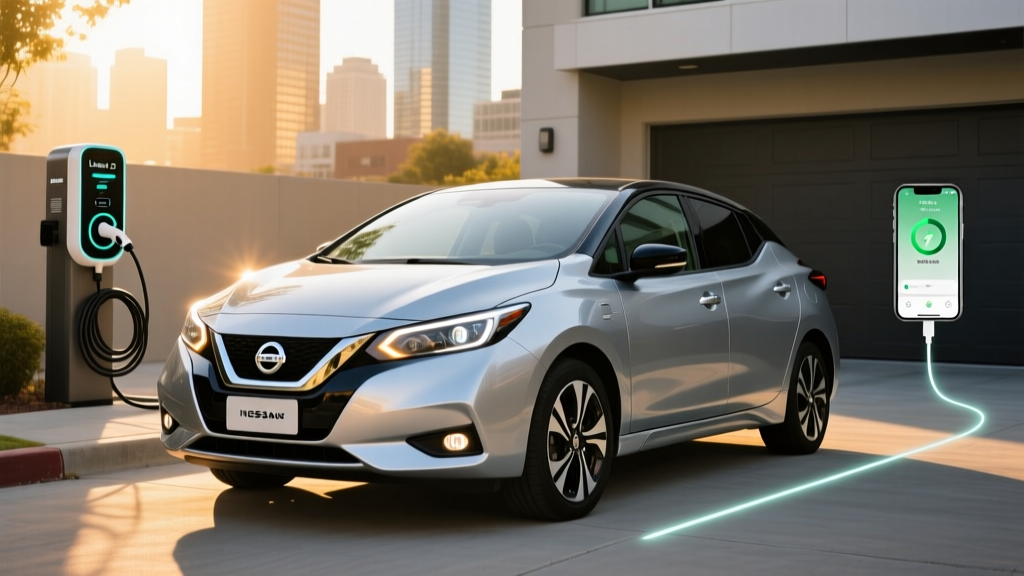
The onboard Level 2 charger maxes out at 6.6 kW, which is adequate for overnight home charging — you'll add roughly 25 miles of range per hour, enough to fully replenish the 62 kWh pack in about 9.5 hours on a 240V circuit. Most owners charging overnight on a Level 2 home station will wake up to a full battery.
DC fast charging peaks at 100 kW, but don't expect that rate to sustain. The passive air-cooled battery means the Leaf's charging curve tapers aggressively as the pack warms up during a session. In practice, you'll see 90–100 kW only at a low state of charge (below 30%), with rates dropping to 40–50 kW by the time you hit 60–70%. A 10–80% charge typically takes 40–45 minutes at a capable CHAdeMO station. In hot weather, consecutive fast charges will trigger further throttling as the battery management system protects cell temperatures.
The bigger structural concern is connector availability. As of 2026, Electrify America, EVgo, and most major networks have standardized on CCS1 or NACS. CHAdeMO connectors are still present at many older stations, but new installations almost exclusively feature CCS/NACS. If you rely on public DC fast charging, verify that CHAdeMO-equipped stations exist along your common routes before committing to the Leaf.
Performance and Driving Impressions
The SV Plus trim gets Nissan's larger 160 kW (214 horsepower) front-mounted electric motor, producing 250 lb-ft of instant torque. That's a meaningful upgrade over the base Leaf's 110 kW (147 hp) motor. The 0–60 mph sprint takes approximately 6.9 seconds — quick enough for confident highway merging and genuinely fun around town, where the instant torque delivery makes the Leaf feel punchier than the numbers suggest.
The front-wheel-drive layout and 3,500-pound curb weight give the Leaf predictable, if unexciting, handling. Body roll is moderate through corners, and the steering is light and numb — this is a commuter appliance, not a sports sedan. Ride quality is a strength: the Leaf absorbs potholes and expansion joints with a maturity that belies its price point, and cabin isolation from road and wind noise is above average for the compact hatchback segment.
Nissan's e-Pedal mode enables one-pedal driving by increasing regenerative braking force when you lift off the accelerator. It's well-calibrated and can bring the car to a complete stop without touching the brake pedal, though it doesn't hold the car stationary indefinitely on inclines — you'll still need the brake pedal at stoplights on hills. The ProPILOT Assist system (standard on SV Plus) provides competent SAE Level 2 driver assistance with adaptive cruise control and lane centering. It works well on divided highways but requires hands-on-wheel engagement and is not a substitute for an attentive driver.
Interior, Cargo, and Technology
The Leaf's interior is functional and comfortable rather than premium. Cloth seating is standard on SV Plus (leather is reserved for the SL Plus trim), and the seats are well-bolstered for long commutes. Rear legroom measures 33.5 inches — adequate for adults on shorter trips but tight for taller passengers. Headroom is generous front and rear thanks to the hatchback roofline.
Cargo capacity is a genuine strong point: 23.6 cubic feet behind the rear seats and 38.5 cubic feet with the 60/40 split rear seats folded. That's more usable space than a Mazda CX-5 and makes the Leaf a legitimate grocery-getter, airport-runner, and weekend-trip hauler. Unlike many newer EVs, the Leaf has no front trunk (frunk) — the space under the hood is occupied by power electronics and the onboard charger.
The infotainment system uses an 8-inch touchscreen with Apple CarPlay (wireless) and Android Auto (wired). It's responsive enough, though the interface feels dated compared to the tablet-style screens in a Tesla Model 3 or Hyundai Ioniq 5. A Bose premium audio system is available on higher trims. The digital instrument cluster provides essential driving data including range, efficiency, and charge rate, but lacks the configurability of competitors.
Standard safety technology includes Nissan Safety Shield 360: automatic emergency braking with pedestrian detection, blind-spot warning, rear cross-traffic alert, lane departure warning, and rear automatic braking. The Leaf earned a 5-star overall safety rating from NHTSA, and the NHTSA crash test results show strong performance across frontal, side, and rollover categories.
Pricing, Tax Credits, and Used Market Value
When new, the 2022 Leaf SV Plus carried an MSRP of $35,420 (including destination), with the SL Plus trim stepping up to approximately $38,420. The base Leaf S started at $28,370 with the smaller 40 kWh battery.
On the used EV market in 2026, the 2022 Leaf SV Plus typically trades between $15,000 and $20,000 depending on mileage, condition, and battery state of health. Depreciation has been steep — a common pattern for older-architecture EVs as newer models with faster charging and longer range flood the market.
| Cost Factor | Amount |
|---|---|
| Original MSRP (SV Plus) | $35,420 |
| Used Market Range (2026) | $15,000 – $20,000 |
| Federal Used EV Credit (§25E) | Up to $4,000 (30% of sale price, max $4,000) |
| Estimated Out-of-Pocket After Credit | $11,000 – $16,000 |
Tax credit eligibility note: The original $7,500 federal new-EV tax credit (§30D) is no longer applicable to a 2022 model purchased in 2026. However, the IRS §25E Used Clean Vehicle Credit may apply. This credit provides 30% of the sale price, up to a maximum of $4,000, for qualifying used EVs. Eligibility requirements include:
- Sale price must be $25,000 or less
- Buyer income caps: $75,000 (single), $112,500 (head of household), $150,000 (joint)
- Vehicle must be at least two model years old (2022 qualifies in 2026)
- Must be purchased from a licensed dealer (private-party sales don't qualify)
- Credit can be transferred to the dealer as a point-of-sale discount
At typical 2026 used prices, most Leaf SV Plus purchases should fall under the $25,000 sale-price cap, making the full $4,000 credit available to income-eligible buyers. Always confirm eligibility with a tax professional before relying on credit assumptions.
Battery Health, Warranty, and Longevity
The 2022 Leaf SV Plus uses a 62 kWh NMC (nickel manganese cobalt) lithium-ion battery pack. Nissan provides a battery capacity warranty of 8 years or 100,000 miles (whichever comes first), guaranteeing the pack will retain at least 66% of its original capacity (8 bars out of 12 on the battery health gauge) during the warranty period. The broader powertrain warranty covers 5 years / 60,000 miles.
The passive air-cooling system is the primary concern for long-term battery health. Data aggregated from Leaf owner communities shows that vehicles in hot climates (Arizona, Texas, Southern California) tend to experience faster capacity loss than those in temperate regions. Early-generation Leafs (2011–2017) were notorious for battery degradation, and while the 62 kWh pack in the 2022 model uses improved cell chemistry, the fundamental thermal management limitation remains.
For a 2022 model purchased in 2026, approximately 4 years of factory battery warranty remains. Before buying used, check the battery health bars on the instrument cluster (12 bars is ideal; anything below 11 on a 4-year-old Leaf warrants caution). A third-party battery diagnostic can provide a more precise state-of-health percentage.
Battery replacement costs, if needed out of warranty, currently range from $6,500 to $9,000 for the 62 kWh pack including labor — a significant expense relative to the vehicle's used market value. This replacement-cost-to-vehicle-value ratio is worth factoring into your purchase decision, particularly for high-mileage examples.
Pros, Cons, and Who Should Buy
Pros
- Strong value on the used market, especially with the $4,000 §25E credit
- Comfortable ride quality and low cabin noise
- Generous cargo space (23.6 cu ft / 38.5 cu ft folded)
- 214 hp provides confident acceleration for a compact hatch
- ProPILOT Assist and Safety Shield 360 are well-executed
- Wireless Apple CarPlay standard
- 5-star NHTSA safety rating
Cons
- CHAdeMO connector — shrinking public charging infrastructure
- Passive air-cooled battery — worse cold-weather range loss and fast-charge throttling
- No heat pump — cabin heating is energy-intensive in winter
- 100 kW peak DC charge rate with aggressive taper
- No frunk (front trunk)
- Dated infotainment interface
- Higher long-term degradation risk in hot climates
Best for: Budget-conscious commuters who can charge at home (Level 2), primarily drive in moderate climates, and take road trips infrequently. The Leaf SV Plus excels as a daily driver with 200+ miles of comfortable, quiet, zero-tailpipe-emission commuting. At $11,000–$16,000 after the used EV credit, it's one of the most affordable ways to access 200+ miles of real-world EV range.
Look elsewhere if: You regularly drive in extreme heat or cold, rely on public DC fast charging, take frequent road trips over 200 miles, or plan to keep the vehicle for 8+ years in a hot climate. The Chevrolet Bolt EUV (CCS charging, liquid-cooled battery, similar used pricing) or a used Hyundai Kona Electric are stronger all-around choices for those use cases.
Frequently Asked Questions
What is the real-world range of the 2022 Nissan Leaf SV Plus?
The EPA rates it at 226 miles combined. In real-world mixed driving, expect 210–230 miles in moderate temperatures. Highway-only driving at 70+ mph drops that to 175–195 miles, and cold weather (below freezing) can reduce range to 150–175 miles due to the lack of a heat pump and passive battery cooling.
How fast does the 2022 Leaf SV Plus charge?
On a Level 2 home charger (240V), the 6.6 kW onboard charger adds about 25 miles per hour, fully recharging in roughly 9.5 hours. DC fast charging peaks at 100 kW via CHAdeMO, but a 10–80% session typically takes 40–45 minutes due to aggressive tapering as the air-cooled battery warms.
Does the 2022 Nissan Leaf SV Plus qualify for any tax credit in 2026?
It no longer qualifies for the new-vehicle §30D credit, but it may qualify for the IRS §25E Used Clean Vehicle Credit — up to $4,000 (30% of the sale price). Requirements include a sale price of $25,000 or less, buyer income below $75K/$112.5K/$150K thresholds, and purchase from a licensed dealer. Confirm with a tax professional.
Is the 2022 Leaf SV Plus worth buying vs. competitors?
It's a strong value for home-charging commuters in moderate climates. However, the Chevrolet Bolt EUV offers CCS fast charging and a liquid-cooled battery at similar used prices, the Hyundai Kona Electric provides comparable range with better thermal management, and newer models like the Equinox EV and Ioniq 5 offer faster charging and longer range. The Leaf's advantages are its ride comfort, cargo space, and low used-market pricing.
How long will the Leaf SV Plus battery last?
Nissan warrants the battery for 8 years / 100,000 miles at 66% capacity retention. Real-world data suggests the 62 kWh pack degrades more slowly than earlier Leaf batteries, but the passive cooling system means hot-climate vehicles will degrade faster than liquid-cooled competitors. Expect 85–92% state of health at 100,000 miles in moderate climates.
Can I road-trip in the 2022 Leaf SV Plus?
It's possible but requires planning. The 175–195 mile highway range and CHAdeMO-only fast charging mean you'll need to locate compatible stations along your route and budget 40+ minutes per stop. For frequent road trippers, a CCS or NACS-equipped vehicle with faster charging and liquid cooling is a better choice.