The Entry Point to Tesla Ownership: 2026 Model 3 Rear-Wheel Drive
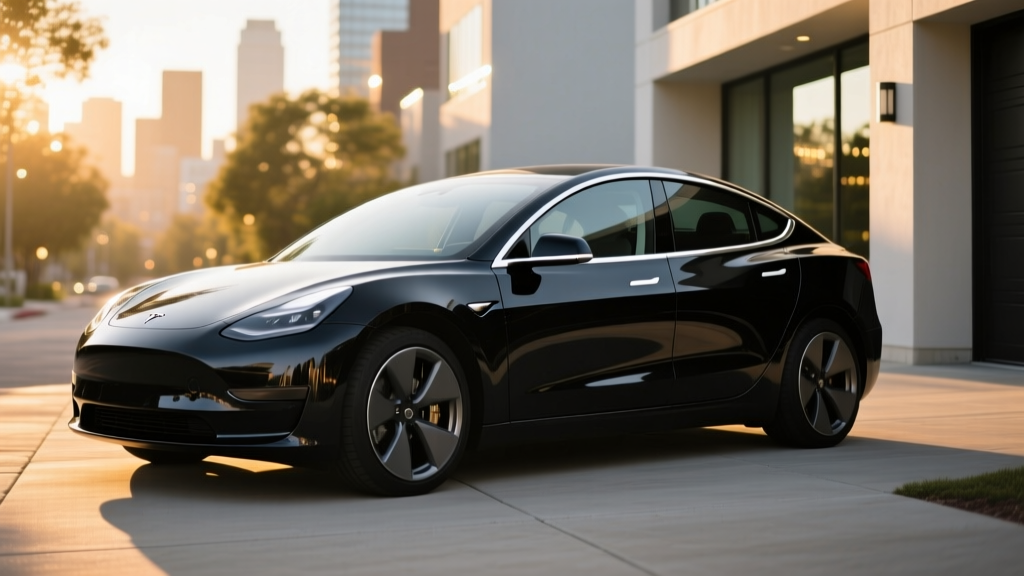
If you're searching for the cheapest Tesla for sale today, the answer is the 2026 Tesla Model 3 Rear-Wheel Drive (RWD). Starting at $38,990 (including destination), the base Model 3 undercuts every other vehicle in Tesla's lineup by a wide margin and competes directly with the Hyundai Ioniq 6, BMW i4 eDrive35, and Chevrolet Equinox EV on price. But "cheapest Tesla" doesn't mean bare-bones — the Model 3 RWD still delivers 272 miles of EPA-estimated range, a 170 kW DC fast-charging peak, and Tesla's industry-leading Supercharger network access.
This review breaks down every number that matters: real-world range expectations, the LFP battery chemistry trade-offs, exact charging speeds, total cost after federal tax credits, and whether the base Model 3 is the smartest EV buy in its price bracket for 2026.
| Spec | Value |
|---|---|
| Base MSRP (incl. destination) | $38,990 |
| EPA Range | 272 miles |
| Battery (usable) | ~57.5 kWh, LFP (lithium iron phosphate) |
| Drivetrain | Rear-Wheel Drive (single motor) |
| Horsepower | 271 hp |
| 0–60 mph | 5.8 seconds |
| Top Speed | 125 mph |
| MPGe (combined) | 132 MPGe |
| Efficiency | 25 kWh / 100 mi |
| Max DC Fast Charge | 170 kW peak |
| 10–80% DC Charge Time | ~25 minutes |
| Level 2 Home Charge Rate | 11.5 kW (~44 mi/hr) |
| Cargo Volume | 23 cu ft (rear trunk + frunk) |
| Rear Legroom | 35.2 inches |
| Battery Warranty | 8 years / 100,000 miles |
| Vehicle Warranty | 4 years / 50,000 miles (bumper-to-bumper) |
Real-World Range: What 272 EPA Miles Actually Means
EPA Sticker: 272 miles
Real-World Highway (70–75 mph): ~230–250 miles
Cold Weather (below 32°F, highway): ~190–220 miles
City / Moderate Climate: 260–275 miles (regen braking recovers energy)
The EPA's 272-mile figure for the Model 3 RWD is achievable in mixed suburban driving at moderate temperatures. However, Tesla's efficiency advantage shows up most clearly in city driving, where regenerative braking recaptures energy that gas cars waste as heat. Expect to match or slightly exceed the EPA number in stop-and-go commuting.
Highway driving is where every EV loses range, and the Model 3 is no exception. At sustained 70–75 mph speeds, aerodynamic drag dominates, and you'll see roughly 230–250 miles before needing to plug in. In freezing temperatures, the LFP battery's internal resistance increases, and cabin heating draws significant power — plan for 190–220 miles of usable range on a winter road trip.
One advantage the RWD model has over the Long Range AWD: its single motor and lighter weight contribute to slightly better per-mile efficiency in city conditions, partially offsetting the smaller battery. According to fueleconomy.gov, the Model 3 RWD achieves 132 MPGe combined — among the most efficient EVs sold in the U.S.
LFP Battery Chemistry: What You Need to Know
The Model 3 RWD uses a lithium iron phosphate (LFP) battery pack, while the Long Range and Performance trims use nickel-manganese-cobalt (NMC) chemistry. This is a deliberate trade-off, and understanding it is critical before you buy.
| Factor | LFP (Model 3 RWD) | NMC (Model 3 Long Range / Performance) |
|---|---|---|
| Energy Density | Lower (smaller range per kg) | Higher (more range in same space) |
| Charging to 100% | Tesla recommends regular 100% charges | Recommended daily limit: 80% |
| Cold-Weather Performance | More range loss in freezing temps | Better cold-weather retention |
| Cycle Life / Longevity | Longer cycle life (3,000+ cycles) | Shorter cycle life (~1,500–2,000 cycles) |
| Cobalt / Ethical Sourcing | No cobalt | Contains cobalt |
| Cost | Cheaper to produce | More expensive |
The practical takeaway: LFP batteries are more durable over time and tolerate being charged to 100% regularly — Tesla actually recommends it for LFP packs to help with battery management system (BMS) calibration. The trade-off is reduced cold-weather range and a slightly lower total range due to lower energy density. For daily commuters in moderate climates, LFP is arguably the superior choice for long-term ownership.
Tesla warrants the battery for 8 years or 100,000 miles, whichever comes first, with a guaranteed retention threshold of 70% capacity. Real-world degradation data from Tesla's fleet suggests LFP packs hold up well — most owners report 5–8% loss after 100,000 miles, well within the warranty buffer.
Charging Speed: DC Fast, Level 2, and the Supercharger Advantage
| Charging Level | Power | Speed | Notes |
|---|---|---|---|
| Level 1 (120V household) | ~1.4 kW | ~5 mi/hr | Emergency/trickle only; ~55 hrs for full charge |
| Level 2 (240V home / public) | 11.5 kW max | ~44 mi/hr | Full charge in ~6 hrs; requires 48A circuit (60A breaker) |
| DC Fast (Supercharger / CCS) | 170 kW peak | 10–80% in ~25 min | Peak rate tapers significantly above 60% SoC |
The Model 3 RWD peaks at 170 kW on DC fast chargers — lower than the Long Range's 250 kW peak, but still competitive for its price segment. On a Tesla Supercharger V3 or V4 stall, you'll add roughly 140 miles in 15 minutes under ideal conditions (low state of charge, preconditioned battery).
Charging curve reality: The 170 kW peak is sustained only between roughly 10–35% state of charge. From 35–60%, expect 100–130 kW. Above 60%, the rate drops sharply to protect the LFP cells — 80–100% can take as long as 10–80%. This is standard behavior for all lithium batteries, but LFP chemistry makes the taper slightly more pronounced. For road trips, plan stops around the 20–70% window for the fastest charging.
At home on a Level 2 Wall Connector (11.5 kW / 48 amps), a full charge takes about 6 hours — easily accomplished overnight. Most owners charge from 20% to 100% (Tesla recommends 100% for LFP) while sleeping. If your home electrical panel supports a 60-amp dedicated circuit, installation typically runs $800–$1,500 depending on panel proximity and local permitting. Always consult a licensed electrician for your specific setup.
The Model 3 uses Tesla's proprietary NACS connector natively. With the broader industry adopting NACS as the standard through 2025–2026, the Model 3 has full compatibility with Tesla Superchargers and a growing number of third-party networks that now support NACS natively — no adapter required.
Performance and Driving Dynamics
The single rear-mounted motor produces 271 horsepower and delivers a 5.8-second 0–60 mph time. That's quick enough to merge confidently onto any freeway and overtake without hesitation. For context, the BMW i4 eDrive35 (the closest German competitor) runs 0–60 in 5.8 seconds as well, but starts at $52,200 — over $13,000 more than the Model 3 RWD.
The RWD Model 3 trades the dual-motor all-wheel-drive grip of the Long Range for slightly sharper turn-in and a more connected steering feel. The 2026 refresh (internally dubbed "Highland") added improved suspension tuning, acoustic glass, ventilated front seats, and ambient lighting — addressing the most common complaints about the pre-refresh Model 3.
One limitation: the RWD model is not rated for towing. If you need to tow, you'll need the Long Range AWD (rated at 2,000 lbs). For most sedan buyers, this is a non-issue, but it's worth flagging.
Pricing, Trims, and Federal Tax Credit Eligibility
| Trim | Base MSRP | §30D Credit (max) | Effective Price |
|---|---|---|---|
| RWD (base) | $38,990 | Up to $7,500* | As low as ~$31,490* |
| Long Range AWD | $47,740 | Up to $7,500* | As low as ~$40,240* |
| Performance | $54,990 | Up to $7,500* | As low as ~$47,490* |
*Credit eligibility depends on buyer income, battery sourcing, and MSRP caps. See IRS rules below.
The Model 3 RWD's $38,990 MSRP sits well below the $55,000 MSRP cap for sedans under the federal §30D clean vehicle credit. However, qualifying for the full $7,500 is not guaranteed. Under current IRS rules (irs.gov), you must meet all of the following:
- Income cap: Modified adjusted gross income (MAGI) must not exceed $150,000 (single), $225,000 (head of household), or $300,000 (joint filing).
- MSRP cap: Vehicle MSRP must not exceed $55,000 for sedans (all Model 3 trims qualify).
- Battery sourcing: A percentage of critical minerals and battery components must be sourced from the U.S. or free-trade-agreement countries. These thresholds increase annually. Tesla's U.S.-built battery packs have historically met these requirements, but exact eligibility can change mid-year as sourcing rules tighten.
- Point-of-sale transfer: As of 2024, you can transfer the credit to the dealer (Tesla) at purchase, reducing your out-of-pocket cost immediately rather than waiting for a tax refund.
Important: Tax credit eligibility rules for critical minerals and battery components change annually. Always verify current eligibility on fueleconomy.gov or consult a tax professional before relying on the credit in your purchase decision.
Interior, Tech, and Cargo
The 2026 Model 3 "Highland" interior is a substantial upgrade over earlier years. The minimalist cabin now includes:
- 15.4-inch center touchscreen (all controls route through this — no physical instrument cluster)
- Ventilated front seats (previously unavailable on base trim)
- Acoustic laminated glass on all windows (dramatically reduced cabin noise)
- Ambient lighting strip across the dashboard
- Rear 8-inch touchscreen for rear passengers (climate, media)
- Tesla Premium Audio (17 speakers)
Cargo space totals 23 cubic feet between the rear trunk (19.8 cu ft) and the front trunk, or "frunk" (3.1 cu ft). Rear legroom measures 35.2 inches — adequate for average-height adults but tighter than a Toyota Camry or Hyundai Ioniq 6. The glass roof creates an airy feel but does reduce headroom slightly for taller passengers.
Tesla Autopilot comes standard and includes adaptive cruise control, lane-keeping assist, and automatic emergency braking. This is a SAE Level 2 driver-assistance system — you must remain fully engaged with hands on the wheel and eyes on the road at all times. Full Self-Driving (Supervised) is a $8,000 add-on that adds automated lane changes, traffic light recognition, and city street navigation, but it remains a Level 2 system requiring active supervision. It does not make the car autonomous.
How the Cheapest Tesla Compares to Key Competitors
| Vehicle | MSRP | EPA Range | Max DC kW | 0–60 | MPGe |
|---|---|---|---|---|---|
| Tesla Model 3 RWD | $38,990 | 272 mi | 170 kW | 5.8s | 132 |
| Hyundai Ioniq 6 SE Std Range | $37,500 | 240 mi | 150 kW | 5.3s | 128 |
| Chevrolet Equinox EV 2LT | $33,600 | 319 mi | 150 kW | 7.9s | 114 |
| BMW i4 eDrive35 | $52,200 | 256 mi | 180 kW | 5.8s | 107 |
The Model 3 RWD occupies a compelling middle ground. The Chevy Equinox EV offers more range for less money, but it's a crossover with significantly slower acceleration and less engaging driving dynamics. The Ioniq 6 is slightly cheaper and quicker, but its charging speed is slower, and it lacks Tesla's Supercharger network advantage. The BMW i4 is a more premium experience but costs $13,000+ more.
Tesla's biggest competitive moat remains the Supercharger network — over 20,000 stalls across North America with industry-leading uptime and seamless plug-and-charge billing. For road-trippers, this reliability is worth quantifying: a typical cross-country trip involves 4–6 charging stops, and Tesla's network consistency eliminates the "will this charger work?" anxiety that still plagues some third-party CCS networks.
Pros, Cons, and the Verdict
Pros
- Best efficiency in class (132 MPGe / 25 kWh/100mi)
- LFP battery longevity and 100% charge tolerance
- Supercharger network reliability for road trips
- 170 kW DC fast charging competitive for price
- Highland refresh: quieter cabin, ventilated seats, better ride
- Lowest MSRP in Tesla lineup; strong resale value
- Over-the-air updates continuously add features
Cons
- 272-mile range limits road-trip flexibility vs Long Range
- Noticeable cold-weather range loss with LFP chemistry
- No physical controls — everything routes through touchscreen
- Rear seat legroom tighter than midsize competitors
- Not rated for towing
- Insurance premiums run 15–25% higher than gas equivalents
- FSD ($8,000) remains Level 2 — expensive for what it delivers
Who Should Buy the Cheapest Tesla?
Buy the Model 3 RWD if:
- You commute 30–80 miles round-trip and can charge at home overnight
- You live in a moderate climate (LFP cold-weather loss is less impactful)
- You value long-term battery durability and plan to keep the car 8+ years
- You road-trip 2–4 times per year and want Supercharger reliability
- You want Tesla's tech ecosystem at the lowest possible entry price
Look elsewhere if:
- You regularly drive 250+ miles in a single day (consider Long Range or Ioniq 6 Long Range)
- You live in a consistently cold climate and need maximum winter range
- You need AWD for snow/ice traction
- You need to tow anything (the RWD is unrated for towing)
- You prefer physical buttons and a traditional instrument cluster
Frequently Asked Questions
What is the real-world range of the Tesla Model 3 RWD?
The EPA rates it at 272 miles. In real-world highway driving at 70–75 mph, expect 230–250 miles. In freezing weather with highway speeds, plan for 190–220 miles. City driving with regenerative braking can match or slightly exceed the EPA number.
How fast does the Model 3 RWD charge?
On DC fast chargers, it peaks at 170 kW and charges from 10–80% in approximately 25 minutes. At home on a Level 2 Wall Connector (11.5 kW), it adds about 44 miles of range per hour, with a full charge taking roughly 6 hours.
Does the Model 3 RWD qualify for the $7,500 federal EV tax credit?
It can, but eligibility depends on your income (MAGI caps: $150K single / $300K joint), the vehicle's battery component and critical mineral sourcing (which can change mid-year), and the $55,000 MSRP cap for sedans (which all Model 3 trims meet). The credit can be transferred at point of sale to reduce your purchase price immediately. Verify current eligibility at irs.gov before purchasing.
How much does the Model 3 RWD cost after tax credits?
If you qualify for the full $7,500 §30D credit and transfer it at point of sale, your effective price drops from $38,990 to approximately $31,490 — before any state or local incentives, which vary by jurisdiction. Check your state's energy office for additional rebates.
Is the Model 3 RWD worth buying vs the Long Range?
For daily commuters who charge at home and take 2–3 road trips per year, the RWD saves $8,750 over the Long Range while sacrificing 63 miles of EPA range. If you regularly drive 250+ miles between charges, live in extreme cold, or need AWD, the Long Range is worth the premium.
Is Tesla Autopilot self-driving?
No. Tesla Autopilot and Full Self-Driving (Supervised) are both SAE Level 2 driver-assistance systems. You must keep your hands on the wheel, eyes on the road, and remain fully responsible for the vehicle at all times. No consumer Tesla is autonomous.
How long will the LFP battery last?
Tesla warranties the battery for 8 years or 100,000 miles with a 70% capacity retention guarantee. LFP chemistry typically supports 3,000+ charge cycles before significant degradation — that's well over 300,000 miles in theory. Real-world fleet data shows most LFP packs lose 5–8% capacity in the first 100,000 miles.