The Reality Behind Every "Cheap BYD Car US" Search
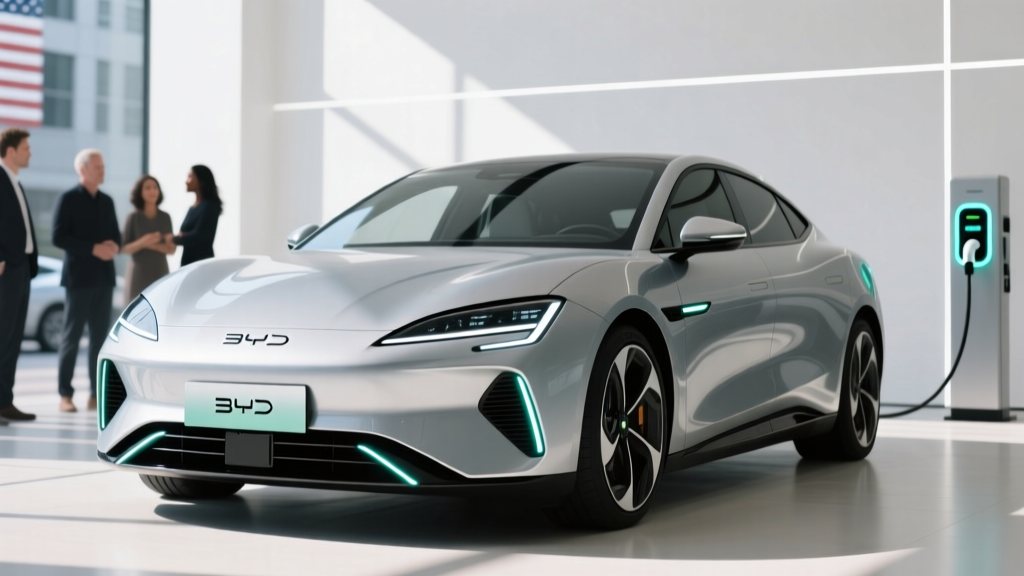
If you've been searching for a cheap BYD car in the US, you've likely seen the headlines: BYD sells a $10,000 electric hatchback in China, undercuts Tesla globally, and is now the world's largest EV manufacturer by volume. Naturally, American buyers want in. But here's the unvarnished truth as of early 2026: BYD does not sell passenger electric vehicles in the United States, and a near-term US launch faces steep regulatory and tariff barriers that make even their cheapest models far less affordable once they reach American soil.
That doesn't mean the story ends there. BYD's global lineup reveals exactly what a budget EV could look like in the US market, and understanding their specs, pricing, and technology helps you evaluate the budget EVs that are available stateside right now. This guide breaks down BYD's most talked-about models, explains why they aren't on US dealer lots, and maps out the closest alternatives you can actually buy today — complete with EPA range, charging speeds, and tax-credit math.
Why BYD Passenger EVs Aren't Sold in the US (Yet)
BYD has a presence in the United States — but it's limited to commercial electric buses and trucks, not consumer cars. Several structural barriers keep their passenger lineup out of American showrooms:
- 100% tariff on Chinese EVs: In 2024, the Biden administration raised tariffs on Chinese-made electric vehicles from 25% to 100% under Section 301 trade provisions. This effectively doubles the landed cost of any BYD imported from China, wiping out the price advantage that makes them "cheap" abroad.
- Connected-vehicle ban: The US Department of Commerce has proposed rules (effective by 2027 for hardware, 2029 for software) that would ban Chinese- and Russian-made connected-vehicle hardware and software in US cars. BYD's entire infotainment and telematics stack would need replacement.
- Federal tax credit exclusion: Under IRS §30D rules, vehicles containing battery components from a "foreign entity of concern" (FEOC) — which includes Chinese manufacturers — are ineligible for the $7,500 federal credit. Even if BYD built a US factory, battery-sourcing rules would likely disqualify their cars.
- No US dealer network: BYD has made no public announcement of a US passenger-vehicle dealership or direct-sales infrastructure.
BYD's Global Lineup: Specs That Set the Budget Bar
Even though you can't buy them stateside, BYD's most popular global models define what the world considers a "cheap EV." Here's how their key models stack up on paper, using manufacturer-published specs and WLTP figures (note: WLTP range estimates run 10–15% higher than US EPA estimates for the same vehicle).
| Model | Battery (kWh) | Chemistry | WLTP Range | Est. EPA Range | Peak DC Charge | 0-60 mph | China MSRP |
|---|---|---|---|---|---|---|---|
| Seagull (Dolphin Mini) | 38.9 kWh | LFP (Blade) | ~252 mi (CLTC) | ~170–185 mi | ~40 kW | ~11.0 sec | ~$9,700 |
| Dolphin | 60.4 kWh | LFP (Blade) | ~264 mi | ~210–230 mi | ~88 kW | ~7.0 sec | ~$14,500 |
| Atto 3 (Yuan Plus) | 60.5 kWh | LFP (Blade) | ~260 mi | ~210–225 mi | ~88 kW | ~7.3 sec | ~$18,000 |
| Seal | 82.5 kWh | LFP (Blade) | ~354 mi | ~280–300 mi | ~150 kW | ~5.9 sec (RWD) | ~$26,000 |
Key takeaway: BYD's "Blade Battery" — a cell-to-pack lithium iron phosphate (LFP) design — is the company's core technology advantage. LFP chemistry offers excellent thermal stability, long cycle life (3,000+ charge cycles before significant degradation), and lower cost per kWh than the nickel-manganese-cobalt (NMC) packs used in most long-range Western EVs. The trade-off: lower energy density, meaning heavier packs for the same range, and reduced performance in extreme cold.
The Real-World Range Question: What BYD's Numbers Mean for US Drivers
Real-world range further depends on driving conditions:
- Highway driving (70+ mph): Expect 15–20% below EPA due to aerodynamic drag. A 220-mile EPA Dolphin might deliver ~175–185 miles at sustained interstate speeds.
- Cold weather (below 32°F): LFP batteries suffer more capacity loss in freezing temperatures than NMC — typically 25–35% range reduction without a heat pump. BYD's global models include varying thermal management; cold-climate performance remains a concern for northern US buyers.
- City/regenerative driving: This is where LFP shines. Stop-and-go traffic with regen braking can push real-world range above EPA estimates by 5–10%.
Charging Speed: BYD's Weak Point vs. US Competitors
One area where BYD's budget models lag behind US-market EVs is DC fast-charging speed. While Hyundai/Kia's E-GMP platform peaks at 240 kW and Tesla's V4 Superchargers deliver 250+ kW, most BYD models top out between 40 and 88 kW on DC fast chargers. The BYD Seal is the exception at ~150 kW.
| Vehicle | Peak DC kW | 10–80% Time | Level 2 (kW) | Connector |
|---|---|---|---|---|
| BYD Seagull | ~40 kW | ~50 min | 6.6 kW | GB/T (China) |
| BYD Dolphin | ~88 kW | ~35 min | 7 kW | CCS2 / GB/T |
| BYD Seal | ~150 kW | ~26 min | 11 kW | CCS2 |
| Chevy Equinox EV (US) | 150 kW | ~24 min | 11.5 kW | NACS |
| Hyundai Ioniq 5 (US) | 240 kW | ~18 min | 10.9 kW | NACS |
Even if BYD entered the US market, their budget models would need CCS-to-NACS adapter compatibility (now standard across most US networks as of 2025–2026) and significantly faster charging architectures to compete on road trips. A 40 kW peak on the Seagull means a 30-minute highway stop adds only about 80 miles of range — a tough sell when an Ioniq 5 adds over 200 miles in the same time.
What You Can Actually Buy: US Alternatives to a Cheap BYD
If the appeal of BYD is affordability, here are the cheapest new EVs available in the US for 2026 — vehicles you can test-drive, charge on American networks, and potentially offset with federal or state incentives.
| Model | Base MSRP | EPA Range | Battery (kWh) | Peak DC kW | §30D Credit |
|---|---|---|---|---|---|
| Nissan LEAF S | ~$28,140 | 149 mi | 40 kWh | 50 kW | Not eligible (Japan sourcing) |
| Chevy Equinox EV LT | ~$33,600 | 319 mi | 85 kWh (NMC) | 150 kW | Up to $7,500* |
| Hyundai Ioniq 5 SE Std Range | ~$42,600 | 245 mi | 58 kWh | 150 kW (Std) | Up to $7,500* |
| Tesla Model 3 RWD | ~$38,990 | 272 mi | 60 kWh (LFP) | 170 kW | Up to $7,500* |
| Volvo EX30 Core | ~$36,350 | 261 mi | 69 kWh (NMC) | 153 kW | Check sourcing* |
*Federal §30D tax credit eligibility depends on MSRP caps ($55,000 for sedans, $80,000 for SUVs/trucks), buyer income limits ($150K single / $300K joint AGI), and battery-component/critical-mineral sourcing requirements that change annually. Verify current eligibility at IRS.gov and fueleconomy.gov before purchasing. Point-of-sale transfer is available at participating dealers.
Battery Tech Deep Dive: BYD's Blade vs. US-Market Packs
BYD's signature technology is the Blade Battery — a structural LFP cell design that passes nail-penetration tests without thermal runaway. Here's how it compares to what you'll find in US-market EVs:
| Feature | BYD Blade (LFP) | Typical US NMC Pack | Tesla/CATL LFP (US) |
|---|---|---|---|
| Chemistry | Lithium Iron Phosphate | Nickel Manganese Cobalt | Lithium Iron Phosphate |
| Cycle Life | 3,000–5,000 cycles | 1,000–2,000 cycles | 3,000+ cycles |
| Energy Density | ~150 Wh/kg | ~250 Wh/kg | ~160 Wh/kg |
| Cold Performance | Poor (25–35% loss at 20°F) | Moderate (15–25% loss) | Poor (similar to BYD) |
| Thermal Runaway Risk | Very Low | Moderate | Very Low |
| Recommended SoC | Can charge to 100% daily | 80% daily, 100% for trips | Can charge to 100% daily |
| Cost per kWh | ~$80–100 | ~$130–160 | ~$90–110 |
LFP's biggest ownership advantage: you can (and should) charge to 100% regularly, which means a 60 kWh LFP pack gives you 60 kWh of usable daily range. An NMC pack of the same size typically recommends stopping at 80% for daily use, giving you only 48 usable kWh. This is why the Tesla Model 3 RWD with its ~60 kWh LFP pack delivers surprisingly competitive real-world range despite a smaller battery than many NMC competitors.
Tax Credits, Tariffs, and the True Cost of a "Cheap" Chinese EV
Understanding why a cheap BYD car in the US isn't actually cheap requires unpacking three layers of cost:
1. The 100% tariff. A BYD Atto 3 with a China MSRP of ~$18,000 would face a $18,000 tariff upon US import. Add shipping, compliance modifications, and dealer margin, and you're looking at a $40,000+ sticker price — firmly in Chevy Equinox EV and Tesla Model 3 territory.
2. No federal tax credit. Under current IRS §30D rules, any vehicle with battery components manufactured by a foreign entity of concern (FEOC) — which includes all Chinese battery makers — is disqualified from the $7,500 credit. BYD manufactures its own Blade Batteries, making this exclusion ironclad.
3. State incentives vary. Some state-level rebates (California's CVRP, Colorado's innovative motor vehicle credit) have separate eligibility rules that might not exclude Chinese-made vehicles, but these are typically $1,000–$5,000 — not enough to overcome the tariff gap. Always check your state-specific incentive database for current rules.
Who Should Care About BYD — And Who Should Just Buy American
BYD Makes Sense If...
- You live outside the US (Europe, Southeast Asia, Latin America, Australia) where BYD is actively expanding
- You're tracking global EV pricing trends to time your next US purchase
- You want to understand LFP battery technology before buying a Tesla Model 3 RWD or Ford Mustang Mach-E Select
Skip the BYD Wait and Buy US If...
- You need an EV within the next 12 months — BYD has no announced US passenger timeline
- You want federal tax credit eligibility ($7,500 point-of-sale reduction)
- You rely on DC fast charging for road trips (US networks are optimized for NACS/CCS at 150+ kW)
- You live in a cold climate where LFP range loss and limited preconditioning are concerns
Frequently Asked Questions
Can I import a BYD from another country to the US?
Technically, you could attempt a grey-market import, but the vehicle would need to meet all Federal Motor Vehicle Safety Standards (FMVSS), EPA emissions certification (yes, even for EVs — it covers onboard systems), and DOT importation rules. The cost of federalization typically runs $10,000–$30,000+ and there's no guarantee of approval. It's not a practical path for a budget vehicle.
Will BYD ever sell cars in the US?
BYD executives have stated they are "studying" the US market, but no timeline has been announced. A realistic scenario would involve building a manufacturing plant in Mexico or the US to circumvent tariffs — but USMCA trade rules and the FEOC battery-sourcing exclusion would still complicate tax-credit eligibility. Don't expect BYD passenger EVs in American showrooms before 2028 at the earliest, and likely not at "Chinese pricing."
What's the cheapest EV I can buy in the US right now?
As of early 2026, the Nissan LEAF S starts around $28,140 (149-mile EPA range, CHAdeMO connector — a dying standard). For a more future-proof pick with NACS charging and longer range, the Chevy Equinox EV LT at ~$33,600 (319 miles EPA) is the value leader, especially if you qualify for the $7,500 federal credit, bringing the effective price to ~$26,100.
Does BYD's Blade Battery technology exist in any US-sold vehicle?
Not directly. However, the LFP chemistry that makes the Blade Battery special is available in the US-market Tesla Model 3 RWD (CATL-supplied LFP), Tesla Model Y RWD, and the base Ford Mustang Mach-E. These offer similar longevity and daily-100%-charging benefits, though in different structural pack designs.
How does BYD's warranty compare to US brands?
In markets where BYD sells passenger cars, they typically offer a 6-year/150,000 km (~93,000 mile) vehicle warranty and an 8-year/160,000 km (~100,000 mile) battery warranty — broadly comparable to the US industry standard of 8 years/100,000 miles for battery and powertrain. Hyundai/Kia leads the US market with a 10-year/100,000-mile powertrain warranty on the Ioniq 5 and EV6.
Is it worth waiting for BYD to enter the US market?
For most buyers, no. The budget EV segment in the US is improving rapidly — the Equinox EV, upcoming next-gen Nissan LEAF, and Tesla's more affordable trims are closing the gap. By the time BYD clears regulatory hurdles, builds supply chains, and establishes dealers, US competitors will have moved further down the cost curve. If you need an affordable EV, the best time to buy is when current incentives are still active.