If you own or are shopping for a Tesla, you've likely seen conflicting advice: "Never charge past 80%" wars with "Tesla recommends 100% weekly." The truth depends entirely on which battery chemistry sits under your car's floor. In this guide, we'll answer whether you can charge your Tesla to 100%, explain the 2026 Model 3 and Model Y battery lineup (LFP vs. NMC/NCA), and give you exact range, charging, and ownership data to protect your investment.
The Short Answer: It Depends on Your Battery Chemistry
Tesla currently sells vehicles with two fundamentally different battery chemistries, and each has a different recommended State of Charge (SoC) ceiling:
| Attribute | LFP (Lithium Iron Phosphate) | NMC/NCA (Nickel-based) |
|---|---|---|
| Found in (2026) | Model 3 RWD, Model Y RWD | Model 3 Long Range/Performance, Model Y Long Range/Performance |
| Recommended daily limit | 100% (charge to full at least weekly) | 80% for daily; 100% only for trips |
| Energy density | Lower (heavier pack for same kWh) | Higher (more range in same volume) |
| Cold-weather performance | More range loss in freezing temps | Better cold retention |
| Cycle life | 3,000+ cycles typical | 1,500–2,000 cycles typical |
| Cobalt/nickel content | None (lower supply-chain risk) | Contains nickel and cobalt |
The reason is electrochemistry, not marketing. LFP cells have a very flat voltage curve, which makes it difficult for the Battery Management System (BMS) to estimate remaining capacity unless the pack is periodically charged to 100%. Tesla's own in-car guidance for LFP vehicles explicitly states: "Set your charge limit to 100% and charge to 100% at least once per week." Failing to do so causes range-estimate drift and can strand you with less usable energy than expected.
NMC and NCA cells, on the other hand, experience accelerated electrolyte oxidation and cathode micro-cracking when held at high SoC for extended periods. Charging to 80% daily and reserving 100% for road trips meaningfully slows degradation over a 5- to 10-year ownership span.
2026 Tesla Model 3: Range, Battery, and Charging Specs
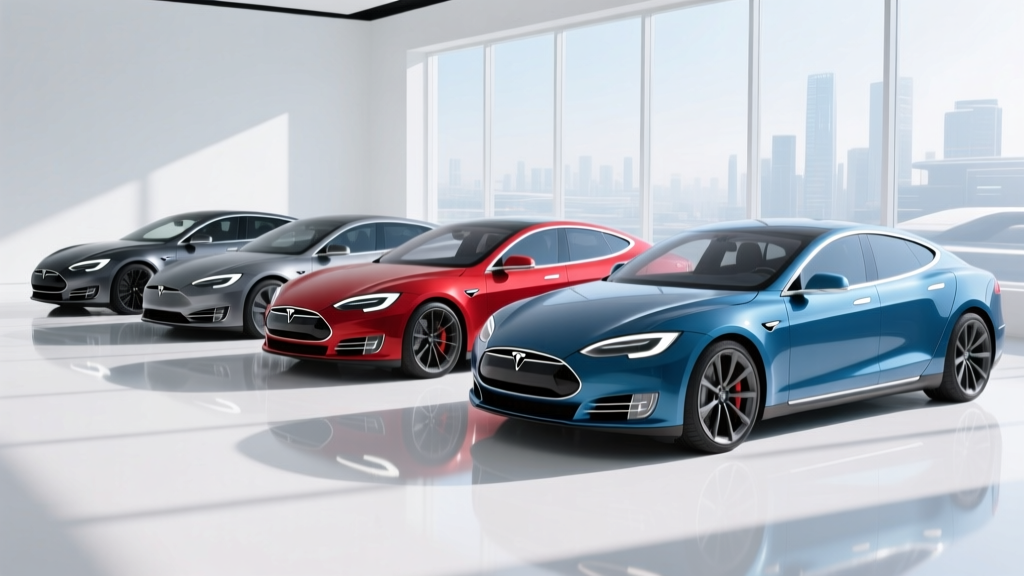
The refreshed Model 3 (internally called "Highland" and updated through 2025–2026) is offered in three trims. Here are the exact numbers:
| Spec | RWD (Standard) | Long Range AWD | Performance |
|---|---|---|---|
| Battery chemistry | LFP | NMC/NCA | NMC/NCA |
| Battery capacity (usable) | ~57.5 kWh | ~75 kWh | ~75 kWh |
| EPA-estimated range | 272 mi | 363 mi | 315 mi |
| Efficiency | 25 kWh/100 mi (135 MPGe) | 24 kWh/100 mi (140 MPGe) | 27 kWh/100 mi (125 MPGe) |
| 0–60 mph | 5.8 sec | 4.2 sec | 2.9 sec |
| Horsepower | 271 hp | 384 hp | 510 hp |
| Drivetrain | RWD (single motor) | AWD (dual motor) | AWD (dual motor) |
| Peak DC fast charge | 170 kW | 250 kW | 250 kW |
| 10–80% DCFC time | ~25 min | ~22 min | ~22 min |
| Level 2 home charge (11.5 kW) | ~30 mi/hr | ~44 mi/hr | ~44 mi/hr |
| Base MSRP | $38,990 | $45,740 | $52,990 |
2026 Tesla Model Y: What Changes for Battery Owners
The redesigned "Juniper" Model Y launched in 2025 and carries into 2026 with a similar battery split. The RWD variant uses an LFP pack, while Long Range and Performance trims use NMC/NCA. Key specs:
- Model Y RWD (LFP): ~60 kWh usable, 260 mi EPA, 170 kW peak DCFC, 0–60 in 6.6 sec, starting at $44,990
- Model Y Long Range AWD (NMC/NCA): ~75 kWh usable, 320 mi EPA, 250 kW peak DCFC, 0–60 in 4.8 sec, starting at $49,990
- Model Y Performance (NMC/NCA): ~75 kWh usable, 285 mi EPA, 250 kW peak DCFC, 0–60 in 3.5 sec, starting at $54,490
The same 100% rule applies: if you're driving an RWD Model Y with LFP, charge to full at least weekly. Long Range and Performance owners should stick with an 80% daily limit.
Charging Speed Deep Dive: What You Actually Get at the Plug
Tesla's Supercharger network remains the gold standard for reliability, but peak kW numbers don't tell the full story. Here's a real-world charging breakdown:
| Charging Level | Power (kW) | Approx. Miles Added per Hour | Notes |
|---|---|---|---|
| Level 1 (120V household) | ~1.2 kW | 3–5 mi/hr | Emergency/trickle only |
| Level 2 (240V, 32A mobile connector) | 7.7 kW | 22–30 mi/hr | Standard NEMA 14-50 outlet |
| Level 2 (240V, 48A Wall Connector) | 11.5 kW | 30–44 mi/hr | Requires hardwired 60A circuit |
| DC Fast (V3 Supercharger) | Up to 250 kW | ~200 mi in 15 min (peak) | Peak only at low SoC; tapers sharply above 60% |
| DC Fast (V4 Supercharger) | Up to 350 kW (cabinet) | Vehicle-limited to 250 kW | 2026 Teslas still cap at 250 kW intake |
Charging curve reality: A Long Range Model 3 arriving at a V3 Supercharger at 10% SoC will peak near 250 kW for roughly 5–8 minutes, then taper to ~150 kW through 50%, ~75 kW through 80%, and drop to under 40 kW from 80–100%. The published "10–80% in 22 minutes" is accurate under ideal conditions with a preconditioned battery. The final 80–100% can take another 20–25 minutes. This is why Tesla's navigation system preconditions the battery when you route to a Supercharger — skipping this step in cold weather can double your charge time.
Federal Tax Credit Eligibility: §30D Rules for 2026
The IRS §30D Clean Vehicle Credit remains available for qualifying new EVs, but eligibility is narrow and model-specific. Here's the framework for Tesla buyers:
- MSRP cap: Sedans (Model 3) must be under $55,000; SUVs/trucks/vans (Model Y) must be under $80,000
- Buyer income cap (MAGI): $150,000 single / $225,000 head of household / $300,000 joint
- Battery sourcing: Critical minerals and battery components must meet escalating domestic-content thresholds (increasing annually through 2029)
- Credit amount: Up to $7,500 ($3,750 for critical minerals + $3,750 for battery components — each half has separate sourcing requirements)
- Point-of-sale transfer: Eligible buyers can transfer the credit to the dealer at purchase, reducing the purchase price directly
| Trim | Base MSRP | Est. After $7,500 Credit* | Credit Eligibility |
|---|---|---|---|
| Model 3 RWD | $38,990 | ~$31,490 | Likely eligible (verify sourcing on window sticker) |
| Model 3 Long Range AWD | $45,740 | ~$38,240 | Likely eligible (under $55K MSRP cap) |
| Model 3 Performance | $52,990 | ~$45,490 | Likely eligible (under $55K cap) |
| Model Y RWD | $44,990 | ~$37,490 | Likely eligible (SUV $80K cap) |
| Model Y Long Range AWD | $49,990 | ~$42,490 | Likely eligible |
| Model Y Performance | $54,490 | ~$46,990 | Likely eligible |
*Credit eligibility depends on battery-sourcing compliance at time of purchase, buyer income, and MSRP. Tesla's eligibility can change as supply chains shift. Always verify the specific VIN on the IRS's official qualifying vehicle list and consult a tax professional before relying on the credit. Rules current for 2026 under the Inflation Reduction Act; subject to legislative change.
Battery Degradation: What Happens When You Follow (or Ignore) the Rules
Tesla's battery warranty covers 8 years / 100,000 miles for RWD models and 8 years / 120,000 miles for Long Range and Performance trims, guaranteeing at least 70% capacity retention over that period. According to Tesla's 2024 Impact Report (the latest published data), Model 3 and Model Y packs retain approximately 85% of original capacity after 200,000 miles — well within the warranty threshold.
But those fleet averages assume proper charging habits. Here's what the data shows about misuse:
- NMC held at 100% daily: Studies from battery analytics firm Geotab show that frequently charging nickel-based packs to 100% and leaving them at full SoC for hours can add 1–2% extra annual degradation compared to an 80% daily limit.
- LFP never charged to 100%: The BMS loses calibration, leading to phantom range loss. Owners report sudden range drops of 10–15% on the display — the energy is there, but the car can't accurately report it.
- Deep discharges (below 10%): Harmful to both chemistries. Avoid regularly running the pack below 10%; if you do, recharge promptly rather than letting it sit depleted.
Practical takeaway: Set your LFP Tesla to 100% and plug in nightly — it's designed for this. Set your NMC/NCA Tesla to 80% daily, and manually bump to 90–100% the night before a road trip, timing it so the car doesn't sit at full charge for more than a few hours.
Interior, Cargo, Tech, and Driver Assistance
The 2026 Model 3 and Model Y share Tesla's minimalist interior with a 15.4-inch center touchscreen, ventilated front seats, ambient lighting, and a rear passenger screen (Model 3). Cargo volume is generous:
- Model 3: 23 cu ft trunk + 3.1 cu ft frunk; 105.4 cu ft passenger volume
- Model Y: 34 cu ft behind rear seats (76 cu ft with seats folded) + 4.1 cu ft frunk; up to 7 passenger seats available
Autopilot and FSD (Supervised): All 2026 Teslas include basic Autopilot (Traffic-Aware Cruise Control and Autosteer). Full Self-Driving (Supervised) remains a $8,000 option or $99/month subscription. FSD is a SAE Level 2 driver-assistance system — it does not make the car self-driving. You must keep your hands on the wheel and eyes on the road at all times. True driverless operation (Level 4) is limited to commercial robotaxi services like Waymo in select metro areas.
Pros, Cons, and Who Should Buy a 2026 Tesla
- Supercharger network remains the most reliable DC fast-charging ecosystem in North America
- LFP RWD models can (and should) be charged to 100% daily — no range-limiting anxiety
- Class-leading efficiency (kWh/100 mi) means lower electricity cost per mile
- Strong over-the-air update cadence adds features post-purchase
- Excellent resale value relative to most EV competitors
- LFP range suffers significantly in freezing temperatures (20–30% loss)
- Minimalist interior lacks physical controls; turn signals on steering wheel frustrate some drivers
- No Apple CarPlay or Android Auto — Tesla's native infotainment only
- FSD (Supervised) costs extra and still requires full driver attention
- NMC trims require discipline to avoid 100% daily charging for longevity
- Choose the Model 3 RWD (LFP) if: You commute under 50 miles daily, can charge at home nightly, live in a moderate climate, and want the lowest total cost of ownership. Charge to 100% without worry.
- Choose the Model 3 Long Range (NMC) if: You take regular road trips over 250 miles, live in a cold climate, or need AWD. Commit to 80% daily charging.
- Choose the Model Y (any trim) if: You need SUV cargo space, have a family, or want the optional third row. Same LFP/NMC charging rules apply by trim.
- Look elsewhere if: You want physical buttons, CarPlay, or a more traditional dealership/service experience.
Frequently Asked Questions
Can I charge my Tesla to 100% every day?
If your Tesla has an LFP battery (2026 Model 3 RWD, Model Y RWD), yes — Tesla explicitly recommends charging to 100% at least once per week, and daily 100% charging is fine. If your Tesla has an NMC/NCA battery (Long Range, Performance), daily 100% charging accelerates degradation; set the limit to 80% for daily use and only charge to 100% before long trips.
How do I know which battery my Tesla has?
Check the Tesla app under your vehicle's specifications, or look at your charging screen — Tesla displays a recommendation: "For best results, charge to 100%" indicates LFP, while "For daily use, limit to 80%" indicates NMC/NCA. The RWD trim is almost always LFP in 2026.
Does charging to 100% void the battery warranty?
No. Following Tesla's in-car charging recommendations (100% for LFP, 80% for NMC daily) keeps you well within warranty terms. The 8-year/100,000–120,000-mile warranty covers defects and capacity loss below 70%, regardless of your charging habits within manufacturer guidelines.
What is the real-world range of a 2026 Tesla Model 3?
The EPA rates the Long Range AWD at 363 miles, but expect 300–320 miles on a highway trip at 70 mph in mild weather and 250–290 miles in freezing conditions. The LFP RWD at 272 miles EPA delivers roughly 220–240 real-world highway miles in moderate temps and 190–215 in cold weather.
How fast does a Tesla charge at home?
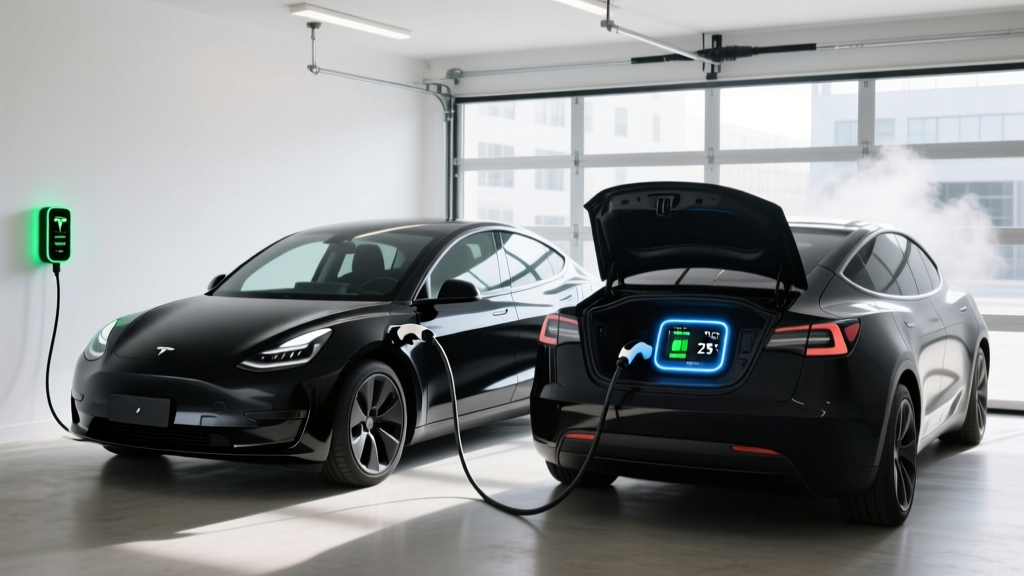
With a Tesla Wall Connector on a 60-amp circuit (11.5 kW), you'll add approximately 30–44 miles of range per hour depending on the trim. A full overnight charge (8–10 hours) easily replenishes any daily driving. Level 2 home charging is the most cost-effective and battery-friendly method — typically $0.12–$0.18 per kWh depending on your utility, equating to roughly $0.03–$0.05 per mile.
Does the 2026 Tesla Model 3 or Model Y qualify for the $7,500 federal tax credit?
Most 2026 Model 3 and Model Y trims are expected to qualify for up to $7,500 under IRS §30D, subject to buyer income limits ($150K single / $300K joint), MSRP caps ($55K for sedans, $80K for SUVs), and battery-sourcing compliance. The credit can be transferred at the point of sale to reduce your purchase price. Always verify eligibility for your specific VIN on fueleconomy.gov and consult a tax professional.
Is a Tesla worth buying versus competitors in 2026?
The Model 3 and Model Y remain the benchmark for efficiency, Supercharger access, and software integration. The Hyundai Ioniq 6 offers comparable range (361 mi EPA) with a more traditional interior; the Ford Mustang Mach-E provides SUV space but trails in efficiency; the BMW i4 is more premium but pricier. If Supercharger reliability and LFP daily-100% simplicity matter to you, Tesla retains a strong ownership advantage.