The Quick Answer: How Home EV Charging Actually Works
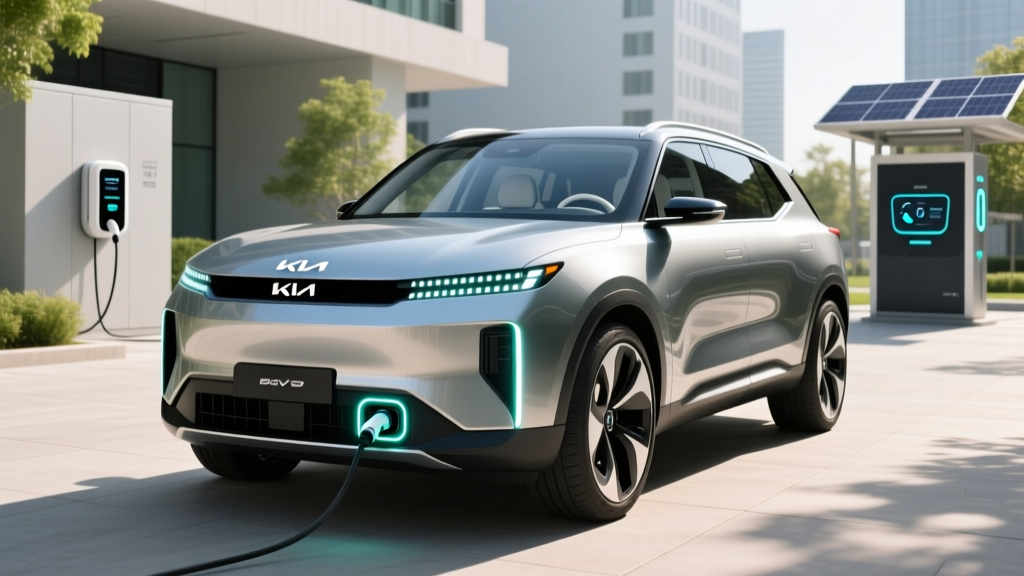
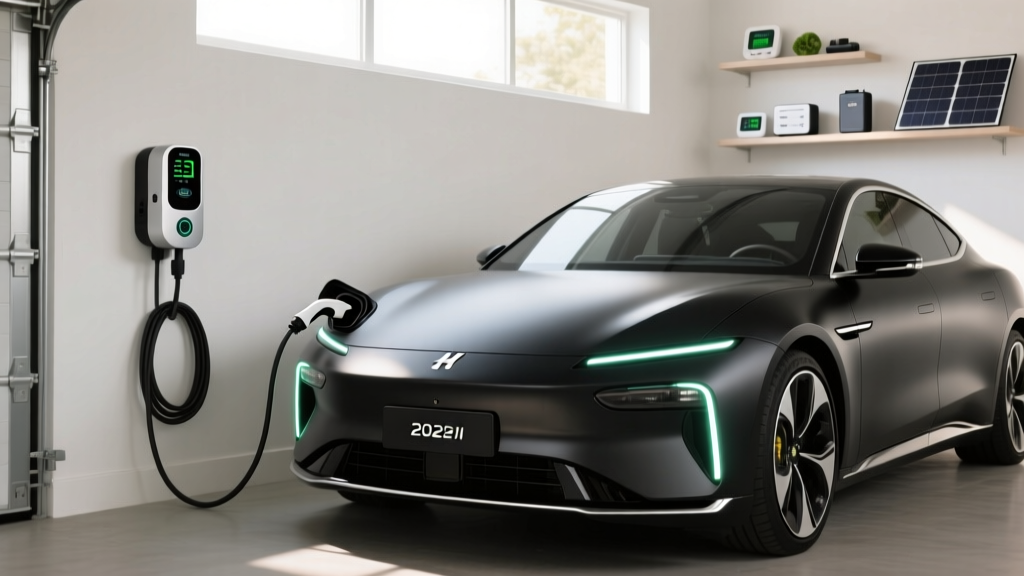
You can charge an electric car at home in two ways:
- Level 1 (120V): Plug into any standard household outlet using the cord that came with your EV. Adds 3–5 miles of range per hour — slow but functional for low-mileage drivers.
- Level 2 (240V): Install a dedicated 240V circuit (like a dryer outlet) with a wall-mounted or plug-in charger. Adds 25–44 miles of range per hour — the practical choice for most owners.
Most EV owners who charge at home install a Level 2 unit. The total cost — equipment plus professional electrical work — typically runs $1,200 to $3,500 depending on your panel capacity and wiring distance. A full overnight charge on Level 2 costs roughly $8–$15 depending on your local electricity rate and battery size.
Home charging is the single biggest ownership advantage an EV has over a gas car. According to the U.S. Department of Energy, over 80% of EV charging happens at home. You wake up to a full battery every morning, skip gas stations entirely for daily driving, and pay roughly the equivalent of $1.20 per gallon for the energy you use. But the path from "I want to charge at home" to actually doing it involves real decisions about electrical capacity, equipment selection, and cost trade-offs. Here's the full breakdown.
Level 1 vs. Level 2: Charging Speeds, Costs, and Which You Need
The first misconception to clear up: kW (kilowatts) is power — how fast energy flows. kWh (kilowatt-hours) is energy — how much your battery holds. Think of kW as the width of a hose and kWh as the size of the bucket. A wider hose fills the bucket faster, but the bucket size stays the same.
| Level | Voltage | Power (kW) | Miles of Range/Hour | Full Charge Time (75 kWh Battery) | Typical Use Case |
|---|---|---|---|---|---|
| Level 1 | 120V (standard outlet) | 1.0–1.4 kW | 3–5 mi/hr | 53–75 hours | Under 30 mi/day driving, overnight top-off |
| Level 2 (24A) | 240V | 5.8 kW | 18–22 mi/hr | ~13 hours | Moderate daily driving, budget install |
| Level 2 (32A) | 240V | 7.7 kW | 25–30 mi/hr | ~10 hours | Most popular setup, covers 300+ mi overnight |
| Level 2 (48A) | 240V | 11.5 kW | 37–44 mi/hr | ~6.5 hours | Large batteries (F-150 Lightning, Hummer EV) |
Real-world context: If your daily commute is 40 miles round-trip, a Level 1 plug-in recovers that in about 10 hours of overnight charging — technically enough. But add a grocery run, detour, or cold-weather range loss (typically 20–30% below 30°F due to battery chemistry and cabin heating), and Level 1 falls short. A 32-amp Level 2 unit recovers 250+ miles overnight, giving you margin for real life.
The onboard charger in your EV also matters. The Hyundai Ioniq 5 accepts up to 10.9 kW on Level 2, meaning a 48A charger maximizes its speed. The base Tesla Model 3 accepts 11.5 kW. But some PHEVs like the Toyota RAV4 Prime max out at 6.6 kW — a 48A charger won't speed them up any further. Always check your vehicle's onboard charger rating before overspending on a higher-amperage unit.
Home Charger Installation: What It Actually Costs
This is where most buyers get surprised. The charger hardware itself is the cheap part. The electrical work — new circuit, wiring run, potential panel upgrade — is where costs escalate.
| Component | Low Estimate | High Estimate | Notes |
|---|---|---|---|
| Level 2 charger (hardwired or NEMA 14-50 plug) | $350 | $700 | ChargePoint Home Flex, Emporia Level 2, Tesla Wall Connector |
| Electrician: new 240V circuit (up to 50 ft run) | $500 | $1,500 | Depends on distance from panel, wall/floor penetrations |
| Permit and inspection | $50 | $300 | Required in most jurisdictions; varies by municipality |
| Electrical panel upgrade (100A → 200A) | $1,500 | $4,000 | Only needed if your panel lacks capacity; older homes common |
| Total (no panel upgrade) | $900 | $2,500 | Most common scenario for homes built after 2000 |
| Total (with panel upgrade) | $2,400 | $6,500 | Common in homes built before 1990 with 100A service |
Key gotcha: A 48-amp charger requires a 60-amp breaker (National Electrical Code requires circuits to be rated at 125% of continuous load). If your panel has limited spare slots or is near capacity, you may need a load-management device ($200–$400) or a panel upgrade. Always get a licensed electrician to assess your panel before buying equipment.
Some utilities offer rebates of $250–$1,000 for Level 2 installations, particularly if you agree to time-of-use rates or smart-charging programs. Check your local utility's EV program page before scheduling work.
EV Home Charging vs. Gas: The Real Cost Comparison
The financial case for home charging hinges on your local electricity rate. The U.S. average residential rate in 2026 is approximately $0.17 per kWh, though this ranges from $0.10/kWh in parts of the Pacific Northwest to $0.30+/kWh in California and the Northeast. Here's what that means in practice.
| Vehicle | Energy/Fuel | Efficiency | Cost per Mile | Annual Cost |
|---|---|---|---|---|
| Tesla Model Y (AWD) | Electricity @ $0.17/kWh | 28 kWh/100 mi (120 MPGe) | $0.048 | $571 |
| Hyundai Ioniq 5 (RWD) | Electricity @ $0.17/kWh | 30 kWh/100 mi (114 MPGe) | $0.051 | $612 |
| Toyota RAV4 (AWD, gas) | Gasoline @ $3.40/gal | 30 MPG combined | $0.113 | $1,360 |
| Toyota RAV4 Hybrid (AWD) | Gasoline @ $3.40/gal | 39 MPG combined | $0.087 | $1,046 |
| Ford F-150 (4WD, gas V6) | Gasoline @ $3.40/gal | 22 MPG combined | $0.155 | $1,855 |
| Ford F-150 Lightning | Electricity @ $0.17/kWh | 48 kWh/100 mi (70 MPGe) | $0.082 | $979 |
The takeaway: A home-charged EV saves $400–$1,200 per year on fuel compared to a comparable gas vehicle. Against a hybrid like the RAV4 Hybrid, the savings narrow to $400–$500 annually. If you have access to free workplace charging or time-of-use rates with off-peak electricity below $0.10/kWh, the savings widen considerably. Data sourced from fueleconomy.gov EPA estimates.
However, public DC fast charging changes this equation. Electrify America and EVgo typically charge $0.35–$0.55/kWh — sometimes more than the per-mile cost of a fuel-efficient hybrid. Home charging is where the economics work best. If you can't charge at home and must rely entirely on public fast charging, a hybrid may be the more economical choice.
Common EV Home Charging Myths — Busted With Data
| Myth | Fact |
|---|---|
| "I need to upgrade my entire electrical system" | Most homes built after 1990 with 200A service can support a 32A–48A Level 2 circuit with no panel upgrade. Only older 100A panels commonly need replacement. |
| "Home charging damages the battery" | Level 2 charging is actually better for long-term battery health than frequent DC fast charging. NMC batteries degrade fastest from repeated high-power DC sessions and sustained 100% SoC. Level 2 at 80% daily limit is ideal. |
| "I can't charge in the rain or in a garage with a wet floor" | All EVSE (Electric Vehicle Supply Equipment) connectors and inlets are weather-sealed to IP55 or higher. Charging in rain, snow, or a damp garage is safe by design. |
| "A standard outlet is useless for EV charging" | Level 1 adds 3–5 miles per hour. Over a 14-hour overnight window, that's 42–70 miles — sufficient for many commuters. It's slow but functional as a fallback or primary for low-mileage drivers. |
| "Home charging will spike my electric bill dramatically" | Driving 12,000 miles/year in a Model Y adds roughly $570 to your annual electric bill — about $48/month. Most owners notice a modest increase, not a spike. |
| "I need a Tesla-specific charger for a Tesla" | Tesla's Wall Connector works great with Teslas, but any J1772 Level 2 charger works with a Tesla using the included J1772 adapter. And with NACS becoming the standard across Ford, GM, Rivian, and others in 2025–2026, connector compatibility is converging. |
Equipment Picks: Choosing the Right Home Charger
Not all Level 2 chargers are equal. Here's what matters in 2026:
Hardwired vs. plug-in (NEMA 14-50): Hardwired units can deliver up to 48A (11.5 kW) and don't require a GFCI breaker (saving $100–$150 on the electrical side). Plug-in units on a 14-50 outlet max out at 40A and offer portability if you move. Both are valid — your electrician can advise based on your panel.
Connector type: The industry is transitioning from CCS1/J1772 to NACS (Tesla's connector, now the North American standard). Most 2026 EVs from Ford, GM, Rivian, and Hyundai ship with NACS. Older CCS vehicles can use adapters. Buy a charger matching your vehicle's native connector, or invest in a universal unit with swappable connectors.
Smart features: Wi-Fi-connected chargers (ChargePoint Home Flex, Emporia Vue, Tesla Wall Connector) enable scheduling for off-peak electricity rates, energy monitoring, and utility demand-response programs. A smart charger can save $100–$300/year if your utility offers time-of-use pricing.
Cable length: 18–25 feet covers most garage setups. If your charge port and charger are on opposite sides, opt for 25 feet.
What First-Time EV Buyers Should Know Before Installing
Decision Framework: What Level of Home Charging Do You Need?
- Drive under 30 miles/day + have a standard outlet near parking? → Start with Level 1. It's free (use the included cord). Upgrade later if your driving increases.
- Drive 30–80 miles/day + have a 200A panel? → Install a 32A Level 2 unit. Budget $1,200–$2,200 installed. This covers 95% of daily needs with overnight margin.
- Drive 80+ miles/day or own a large-battery EV (F-150 Lightning, Hummer EV)? → Install a 48A Level 2 unit on a 60A breaker. Budget $1,800–$3,000 installed. Ensures full overnight recovery even for 130+ kWh batteries.
- Have a 100A panel and want 48A charging? → Get a panel assessment first. You may need a $1,500–$4,000 upgrade, or opt for a 24A Level 2 unit that works within existing capacity.
- Live in an apartment or lack dedicated parking? → Home charging may not be viable. Evaluate workplace charging, public Level 2 networks (ChargePoint, EVgo), and DC fast charging access before committing to a BEV. A PHEV with 30–40 miles of electric range may be a better fit — you can charge on Level 1 overnight and use gas for longer trips.
Cold-weather reality check: If you live in the upper Midwest or Northeast, expect 20–30% range loss in winter (below 30°F). An EV rated at 300 miles EPA may deliver 210–240 miles in January. This makes Level 2 home charging even more critical — you need to start every morning at full charge to compensate. Preconditioning your battery while plugged in (a feature on most modern EVs) also preserves range by warming the battery using grid power rather than battery power.
Federal tax credit note: As of 2026, the Alternative Fuel Vehicle Refueling Property Credit (IRS Form 8911) offers up to $1,000 for home charger installation, but only if you live in a qualifying census tract (generally non-urban or low-income areas). Check the IRS eligibility tool before counting on this credit. The separate §30D new EV credit (up to $7,500) applies to the vehicle, not the charger, and carries its own MSRP caps, income limits, and battery-sourcing requirements — details at irs.gov.
5-Year Cost of Ownership: EV With Home Charging vs. Gas Car
Here's what a realistic 5-year ownership comparison looks like for a Tesla Model Y (AWD, ~$46,000 MSRP) versus a Toyota RAV4 (AWD LE, ~$33,000 MSRP), assuming 12,000 miles/year and home Level 2 charging at $0.17/kWh.
| Cost Category | Tesla Model Y (EV) | Toyota RAV4 (Gas) |
|---|---|---|
| Purchase price (MSRP) | $46,000 | $33,000 |
| Federal tax credit (§30D, if eligible) | -$7,500 | $0 |
| Effective purchase price | $38,500 | $33,000 |
| Home charger installation | $1,800 | $0 |
| Fuel/energy (5 years) | $2,855 | $6,800 |
| Maintenance (5 years) | $1,200 | $3,500 |
| Insurance (5-year avg. premium) | $9,500 | $6,800 |
| Estimated depreciation (5 years) | $20,000 | $14,500 |
| 5-Year Total Cost | $73,855 | $64,600 |
Honest assessment: The Model Y still costs roughly $9,000 more over 5 years in this scenario, primarily due to higher depreciation and insurance. But this gap narrows if gas prices rise, if you qualify for the full tax credit, or if you drive more than 12,000 miles/year (fuel savings scale linearly). For higher-mileage drivers doing 18,000+ miles/year, the breakeven point can arrive within 4 years. And the daily convenience of home charging — never visiting a gas station — is a quality-of-life benefit that doesn't show up in a spreadsheet.
Frequently Asked Questions
Can I install a Level 2 charger myself?
Only if you're a licensed electrician. A 240V circuit involves your home's main panel and carries serious shock and fire risk if done incorrectly. Most jurisdictions require a permit and inspection for new circuits. Hiring a licensed electrician costs $500–$1,500 for the labor portion and ensures your installation passes code and your homeowner's insurance remains valid.
How much does it cost to fully charge an EV at home?
At the U.S. average rate of $0.17/kWh, fully charging a 75 kWh battery (Tesla Model Y, Hyundai Ioniq 5) costs about $12.75. A larger 131 kWh battery (Ford F-150 Lightning Extended Range) costs about $22.27. Compare this to $55–$75 for a tank of gas in a comparable vehicle.
Does charging to 100% every night damage my battery?
For NMC/NCA batteries (most EVs except standard-range Teslas and some Chinese-market models), daily charging to 100% accelerates long-term degradation. Set your charge limit to 80% for daily use and reserve 100% for road trips. LFP (lithium iron phosphate) batteries — used in the Tesla Model 3 RWD and some other models — tolerate and even benefit from regular 100% charges. Check your owner's manual for chemistry-specific guidance.
What if I rent or live in a condo and can't install a charger?
This is a legitimate barrier. Options include: (1) asking your landlord or HOA about shared charging installations — some states have "right to charge" laws that prevent HOAs from blocking installations; (2) relying on workplace Level 2 charging; (3) using public Level 2 and DC fast charging networks; or (4) choosing a PHEV instead, which can charge fully on a standard 120V outlet overnight (PHEV batteries are typically 10–20 kWh, requiring only 3–6 hours on Level 1).
Will charging an EV trip my circuit breaker?
Not if the circuit is properly sized. A 32A charger on a 40A breaker, or a 48A charger on a 60A breaker, operates within code and won't overload a correctly installed circuit. Problems arise only from DIY installations or undersized wiring — another reason to use a licensed electrician.
Can I use a dryer outlet to charge my EV?
Yes — a NEMA 14-50 outlet (the same type used by electric dryers and ranges) is the most common plug-in option for Level 2 charging, delivering up to 40A (9.6 kW). However, you should not share a 14-50 outlet between a dryer and an EV charger simultaneously. If your dryer and EV are in the same room, install a dedicated 14-50 outlet for the charger or use a smart splitter device ($300–$500) that automatically pauses EV charging when the dryer runs.
Bottom line: Home charging is straightforward once you understand the basics. Level 1 works for low-mileage drivers with zero upfront cost. Level 2 is the practical standard for most EV owners, with installed costs of $1,200–$3,000 in most homes, and it transforms daily driving into a gas-station-free experience. Get an electrical assessment, choose a charger matched to your vehicle's onboard charger capacity, and factor in your local electricity rate and driving patterns. The math works for most — but not all — buyers, and knowing the exact numbers before you buy is the difference between a smooth EV ownership experience and an expensive lesson.