Quick Answer: Can You Charge an Electric Car at Home?
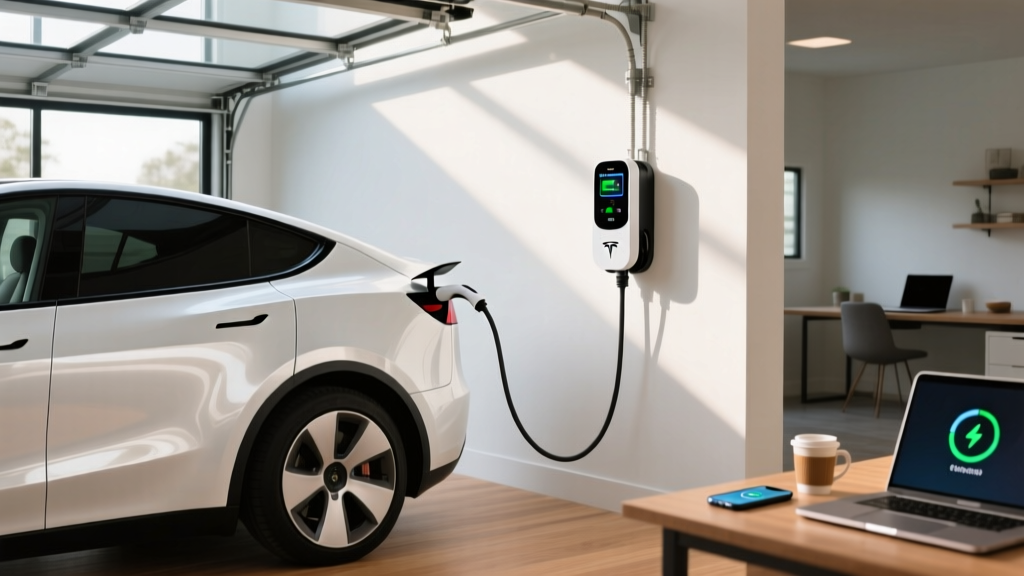
Yes, you can charge any electric car at home. Every EV sold in the US ships with a charging cable that plugs into a standard 120-volt household outlet (Level 1), adding roughly 3–5 miles of range per hour. For faster daily charging, most EV owners install a 240-volt Level 2 wallbox — the same outlet type as an electric dryer — which adds 25–44 miles of range per hour and fully recharges most EVs overnight. Expect to spend $500–$1,800 on Level 2 equipment plus $800–$3,000 for professional electrical installation, depending on your panel capacity and wiring distance.
Level 1 vs. Level 2 Home Charging: Speed, Cost, and What You Actually Need
Home charging falls into two categories, and the right choice depends on your daily mileage, commute length, and budget. Here's how they compare in real-world use:
| Charging Level | Voltage | Power (kW) | Miles of Range Added/Hour | Full Charge Time (80 kWh battery) | Typical Equipment Cost |
|---|---|---|---|---|---|
| Level 1 (standard outlet) | 120V | 1.0–1.4 kW | 3–5 miles | 55–80 hours | $0 (included with EV) |
| Level 2 (240V wallbox) | 240V | 7.2–11.5 kW | 25–44 miles | 7–11 hours | $300–$700 (hardwired or plug-in) |
| Level 2 (high-power, 48A+) | 240V | 11.5–19.2 kW | 44–70+ miles | 4–7 hours | $500–$1,200 |
Level 1 is viable if you drive fewer than 40 miles per day and can leave the car plugged in for 10+ hours overnight. A 2026 Tesla Model 3 Long Range (363 miles EPA) driven 30 miles daily would recover its daily use in about 7–8 hours on Level 1 — enough for many commuters.
Level 2 is the practical standard for most EV owners. A 48-amp Level 2 charger delivers roughly 11.5 kW, adding about 44 miles of range per hour. That means an 80 kWh battery (like the Ford Mustang Mach-E Extended Range) charges from 10% to 80% in roughly 5–6 hours — perfect for overnight replenishment.
The critical distinction: kW (kilowatts) measures charging power — how fast energy flows into the battery. kWh (kilowatt-hours) measures battery capacity — how much energy the battery stores. Think of kW as the flow rate of a hose and kWh as the size of the bucket.
Real Costs: Home Charging Installation, Electricity, and Long-Term Savings
The upfront cost of home Level 2 charging breaks down into equipment, electrical labor, permits, and — potentially — a panel upgrade. Here's what to budget for:
| Cost Component | Low-End Estimate | High-End Estimate | Notes |
|---|---|---|---|
| Level 2 charger (hardware) | $300 | $700 | Brands: ChargePoint Home Flex, Emporia Vue, Wallbox Pulsar Plus |
| Electrician labor (standard install) | $600 | $1,500 | Depends on run length from panel to garage/driveway |
| Permit & inspection | $50 | $300 | Varies by municipality; some areas waive for EV circuits |
| Electrical panel upgrade (if needed) | $1,500 | $4,000 | Required if your panel is 100A or maxed out on breaker slots |
| Total (no panel upgrade) | $950 | $2,500 | Most homes with 200A service fall in this range |
| Total (with panel upgrade) | $2,450 | $6,500 | Older homes with 100A panels often need this |
Important caveat: Always get a quote from a licensed electrician before purchasing equipment. Your panel's available amperage, the distance from the panel to your parking spot, and whether you need a new 240V circuit all affect the final price. A 50-amp circuit (supporting 40A continuous charging) is the most common residential setup; a 60-amp circuit enables 48A continuous for faster charging.
Monthly Electricity Cost vs. Gas
Once installed, home charging is where EVs deliver their biggest ongoing savings. The national average residential electricity rate in 2026 hovers around $0.17 per kWh (per EIA data). Here's how that translates into fueling cost compared to gasoline:
| Vehicle Type | Example Model | Energy Use | Cost per 1,000 Miles | Annual Cost (12,000 mi) |
|---|---|---|---|---|
| EV (home charging) | 2026 Hyundai Ioniq 6 SE | 26 kWh/100 mi | $44.20 | $530 |
| EV (home charging, larger) | 2026 Ford F-150 Lightning | 48 kWh/100 mi | $81.60 | $979 |
| Gas car (30 MPG combined) | 2026 Toyota Camry LE | 3.33 gal/100 mi | $116.55 ($3.50/gal) | $1,399 |
| Gas truck (20 MPG combined) | 2026 Ford F-150 (gas) | 5.0 gal/100 mi | $175.00 ($3.50/gal) | $2,100 |
Charging an efficient EV like the Ioniq 6 at home saves roughly $870 per year compared to fueling a 30 MPG gas car, and over $1,570 per year compared to a gas truck. Over 5 years, that's $4,350–$7,850 in fuel savings alone — often enough to offset the home charger installation cost within the first two years.
Time-of-use (TOU) utility rates can push savings even higher. Many utilities offer off-peak rates of $0.08–$0.12/kWh for overnight charging, which would drop the Ioniq 6's annual fuel cost to $250–$375.
EV vs. Gas vs. Hybrid: Which Setup Makes Sense for Your Home?
Not every driver needs a full battery electric vehicle (BEV). Your home charging situation and driving pattern determine whether a BEV, plug-in hybrid (PHEV), or conventional hybrid (HEV) makes the most financial sense.
| Factor | Battery EV (BEV) | Plug-in Hybrid (PHEV) | Hybrid (HEV) | Gas Car |
|---|---|---|---|---|
| Home charging needed? | Strongly recommended | Recommended for max savings | No | No |
| Electric-only range | 220–400+ miles EPA | 25–50 miles EPA | 0 miles | 0 miles |
| Annual fuel cost (12k mi) | $400–$1,000 | $600–$1,200 | $1,000–$1,400 | $1,200–$2,100 |
| Maintenance (annual avg) | $300–$500 | $500–$800 | $600–$900 | $700–$1,200 |
| Federal tax credit (§30D) | Up to $7,500 | Up to $7,500 (if eligible) | None | None |
| Best for | Home chargers, daily commutes | Limited charging access, mixed driving | No charging access, high mileage | Low mileage, no charging |
Key insight: A PHEV like the 2026 Toyota RAV4 Prime (42 miles electric-only range, 94 MPGe combined, 38 MPG on gas) is an excellent bridge if you can't install a Level 2 charger but have access to a standard 120V outlet. Level 1 charging adds roughly 3–4 miles of range per hour — enough to recover the RAV4 Prime's 42-mile electric range in about 11 hours overnight.
Do You Qualify for the Federal Tax Credit? And What About State Rebates?
The IRS §30D clean vehicle credit can reduce the effective cost of a new EV by up to $7,500, and as of 2026, buyers can transfer the credit to the dealer at the point of sale — making it an instant discount rather than a tax-time refund. However, eligibility depends on several factors:
- MSRP cap: Vans, SUVs, and pickups must have an MSRP under $80,000; sedans and other vehicles under $55,000.
- Buyer income cap: Modified adjusted gross income must not exceed $150,000 (single), $225,000 (head of household), or $300,000 (married filing jointly).
- Battery sourcing: A percentage of critical minerals and battery components must be sourced from the US or free-trade-agreement partners. This requirement has tightened annually and disqualifies some models.
- Final assembly: Vehicle must be assembled in North America.
- Used EVs: A separate credit of up to $4,000 (or 30% of sale price) applies to qualifying used EVs under $25,000.
Additionally, many states and utilities offer charger installation rebates. Check your local utility's website — rebates of $250–$1,000 for Level 2 equipment and installation are common in states like California, Colorado, New York, and Massachusetts. The Alternative Fuels Data Center maintains a state-by-state incentive database.
Common Home Charging Myths — Debunked With Data
| Myth | Fact |
|---|---|
| "I need a special outlet to charge at home." | Level 1 uses a standard 120V outlet — no modification needed. Level 2 uses a 240V outlet (NEMA 14-50), the same type as an electric dryer or oven. |
| "Home charging will massively increase my electric bill." | Adding an EV increases the average household electric bill by $40–$80/month — but eliminates $100–$175/month in gas, resulting in a net savings of $30–$100/month. |
| "Charging overnight will overload my electrical panel." | A Level 2 charger on a dedicated 50A circuit draws less continuous load than an electric oven. A licensed electrician will verify your panel has capacity before installation. |
| "I can't charge at home if I live in an apartment or rent." | Many apartment complexes now install shared Level 2 chargers. Right-to-charge laws in states like CA, CO, FL, HI, and OR require landlords to permit reasonable EV charger installations. |
| "Level 1 charging is too slow to be useful." | If you drive 30–40 miles/day and park for 10+ hours overnight, Level 1 recovers your daily use. It's a viable no-cost starting point. |
What First-Time EV Buyers Should Know Before Installing a Home Charger
Before you order a wallbox or call an electrician, run through this practical checklist based on real ownership experience:
- Check your electrical panel. Locate your main breaker — is it rated 100A, 150A, or 200A? A 200A panel with open breaker slots can almost always accommodate a Level 2 circuit. A 100A panel may need an upgrade or a load-management device that throttles charger amperage when other high-draw appliances are running.
- Measure the distance from panel to parking spot. Longer wire runs (over 50 feet) increase material costs and may require thicker gauge wire, pushing labor costs toward the high end of the estimate.
- Choose plug-in vs. hardwired. A NEMA 14-50 plug-in setup lets you take the charger when you move, but the outlet itself adds $100–$200 to installation. Hardwired units are slightly cheaper to install and can support higher amperages (48A+).
- Check your EV's onboard charger capacity. The car's internal charger limits Level 2 speed regardless of the wallbox. For example, a 2026 Chevrolet Equinox EV accepts up to 11.5 kW on Level 2, while the Tesla Model 3 accepts up to 11.5 kW (48A). Buying a 19.2 kW wallbox won't speed up charging if the car maxes out at 11.5 kW.
- Preconditioning matters. Most EVs let you schedule charging and preconditioning via an app. Warming or cooling the battery while still plugged in preserves range and avoids drawing energy from the battery at startup — especially important in cold climates where range loss can reach 20–30% below freezing.
- Don't forget the utility notification. Some utilities require you to notify them before adding a 240V EV circuit, and many offer discounted TOU rates specifically for EV charging. Enrolling in a TOU plan can cut your per-kWh cost by 40–50% during off-peak hours.
Decision Framework: Should You Install a Home Charger?
Use this guide to determine your best charging setup:
- Choose Level 1 (120V, no installation) if: You drive under 40 miles/day, park for 10+ hours overnight, rent and can't modify the property, or want zero upfront cost while you evaluate EV ownership.
- Choose Level 2 (240V, professional install) if: You drive 40+ miles/day, want a full overnight charge regardless of battery size, live in a cold climate where preconditioning matters, own your home, and have a 150A+ electrical panel with available breaker slots.
- Choose a PHEV instead of a full BEV if: You can't install any home charger (street parking, landlord restrictions), regularly drive 200+ miles in a single trip, or want EV-like daily commuting with gas-engine flexibility for road trips.
- Rely on public charging only if: You have reliable access to a DC fast charger or workplace Level 2 charger within 5 minutes of home — but understand that public DC fast charging costs $0.30–$0.50/kWh (roughly 2–3× home rates), which erodes fuel-cost savings significantly.
Frequently Asked Questions
Can I charge my EV from a regular household outlet?
Yes. Every EV comes with a Level 1 charging cable that plugs into a standard 120V outlet. It delivers about 1.0–1.4 kW, adding 3–5 miles of range per hour. It's slow but sufficient for drivers covering fewer than 40 miles daily who can charge overnight.
How much does it cost to install a Level 2 charger at home?
Total installed cost typically ranges from $950 to $2,500 for homes with adequate electrical panel capacity (150A–200A). If a panel upgrade is needed, total costs can reach $2,500–$6,500. Utility rebates and state incentives can reduce this by $250–$1,000 in many areas.
Will charging an EV at home raise my electric bill significantly?
Adding an EV typically increases your monthly electric bill by $40–$80 depending on mileage and local rates. However, you'll eliminate $100–$175/month in gasoline costs, resulting in a net monthly savings of $30–$100 in most scenarios.
Do I need to upgrade my electrical panel for an EV charger?
Not always. Homes with 200A service and available breaker slots usually don't need an upgrade. Homes with 100A panels or panels near capacity may require an upgrade or a smart load-management device. An electrician can assess this during a site visit — many offer free or low-cost estimates.
Can renters or apartment dwellers charge an EV at home?
It depends. Many newer apartment complexes offer shared Level 2 chargers. Several states have "right-to-charge" laws requiring landlords to allow reasonable charger installations. Level 1 charging from a standard outlet is possible if your parking spot is near an accessible outlet — check with your property manager.
Is it safe to leave my EV plugged in overnight?
Yes. Modern EVs and Level 2 chargers have built-in charge management systems that stop drawing power once the battery reaches your set limit (typically 80% for daily use to preserve long-term battery health). Leaving the car plugged in also enables battery preconditioning and cabin preheating/cooling without draining the battery.