Quick Answer: Can I Charge My Electric Car at Home?
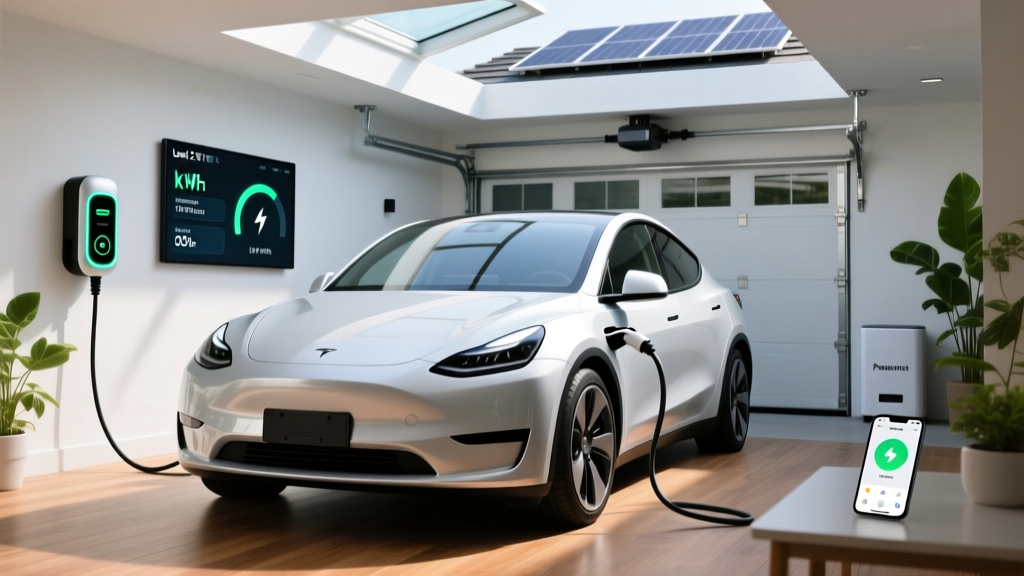
Yes, you can charge any electric car at home. Every EV sold in the U.S. ships with a cord that plugs into a standard 120V household outlet (Level 1), adding roughly 3–5 miles of range per hour. For faster daily charging, a 240V Level 2 wallbox adds 25–44 miles per hour and typically costs $1,200–$3,500 fully installed. If you drive under 40 miles per day, Level 1 alone may be enough. Most EV owners who install Level 2 report spending $3–$5 per full "tank" equivalent at average U.S. electricity rates of $0.17/kWh.
Home charging is the single biggest quality-of-life advantage an electric vehicle has over a gas car. Instead of detouring to a station, you plug in when you get home and wake up to a full battery — the equivalent of starting every morning with a full tank. But whether home charging is practical for you depends on your parking situation, your electrical panel, and your daily driving needs. Let's break down exactly what's involved, what it costs, and how the math compares to gasoline.
Level 1 vs. Level 2 Home Charging: What's the Difference?
The first decision is whether a standard outlet is enough or whether you need a dedicated 240V circuit. Here's how the two levels compare in real-world terms:
| Level | Outlet / Circuit | Power (kW) | Miles Added per Hour | Full Charge Time (75 kWh Battery) | Typical Equipment Cost |
|---|---|---|---|---|---|
| Level 1 | Standard 120V / 15A | 1.4 kW | 3–5 mi/hr | ~50–55 hours | $0 (included with EV) |
| Level 2 | 240V / 40–60A | 7.7–11.5 kW | 25–44 mi/hr | ~7–10 hours | $350–$750 (hardware) |
Level 1 is viable if: you drive under 40 miles per day, park in a garage or near an exterior outlet, and can leave the car plugged in for 10+ hours overnight. A Hyundai Ioniq 6 (EPA 361 miles, 77.4 kWh battery) driven 30 miles daily would replenish its daily use in about 7–8 hours on Level 1.
Level 2 is the right choice if: you drive 50+ miles daily, want the flexibility to recover from a road trip or a depleted battery overnight, or own a larger-battery EV like the Ford F-150 Lightning (extended-range 131 kWh, EPA 320 miles) where Level 1 would take over 90 hours for a full charge.
How Much Does a Level 2 Home Charger Actually Cost to Install?
The hardware (the wallbox itself) is only part of the equation. Electrical labor, permits, and potential panel upgrades often dominate the final bill. Here's a realistic breakdown based on 2025–2026 national averages:
| Component | Simple Install (Panel Adjacent) | Complex Install (Long Run / Panel Upgrade) |
|---|---|---|
| Level 2 EVSE Hardware (40A–48A) | $350–$500 | $500–$750 |
| Electrician Labor (240V Circuit) | $400–$800 | $1,200–$2,500 |
| Electrical Permit | $50–$150 | $50–$200 |
| Panel Upgrade (100A → 200A, if needed) | $0 | $1,500–$3,000 |
| Conduit / Trenching (if detached garage) | $0 | $500–$2,000 |
| Total Estimated Cost | $800–$1,450 | $3,750–$8,450 |
The biggest variable is your home's electrical panel. Most homes built after 1990 have a 200-amp panel with spare capacity for a 40A or 50A EV circuit. Older homes with 100-amp service may need an upgrade, which a licensed electrician can assess with a load calculation. According to the U.S. Department of Energy, some utilities offer rebates of $250–$1,000 for Level 2 installation, and the federal Residential Clean Energy Credit (IRS Form 5695) covers 30% of EVSE equipment and installation costs up to $1,000 through 2032.
EV Home Charging vs. Gas: The Real Cost Comparison
This is where EV ownership economics shift dramatically. Let's compare the annual fueling cost of a popular EV against its closest gas-powered rival, using national averages:
| Vehicle | Efficiency | Fuel Cost per Unit | Annual Fuel Cost |
|---|---|---|---|
| Tesla Model Y (AWD, 2026) | 28 kWh/100 mi (EPA 120 MPGe) | $0.17/kWh (home avg) | $714 |
| Toyota RAV4 (AWD, gas, 2026) | 30 MPG combined | $3.40/gallon | $1,700 |
| Toyota RAV4 Hybrid (AWD, 2026) | 39 MPG combined | $3.40/gallon | $1,308 |
| Chevrolet Equinox EV (FWD, 2026) | 31 kWh/100 mi (EPA 109 MPGe) | $0.17/kWh (home avg) | $791 |
| Honda CR-V (AWD, gas, 2026) | 29 MPG combined | $3.40/gallon | $1,759 |
At these rates, the Tesla Model Y saves roughly $986 per year over the gas RAV4 and about $594 per year over the hybrid RAV4 — purely on fuel. Over five years, that's $3,000–$4,900 in fuel savings, which often covers the cost of a Level 2 installation and then some.
But the math changes if you rely primarily on public DC fast charging. Electrify America and Tesla Supercharger rates average $0.35–$0.48/kWh in 2026, which would push the Model Y's annual fuel cost to $1,470–$2,016 — erasing much or all of the gas-car savings. Home charging access is the linchpin of EV economics.
What If I Can't Install a Home Charger?
Not everyone has a garage, driveway, or landlord who'll approve an installation. Here are realistic scenarios and what to do:
Home Charging Decision Framework
- You own a home with a garage or carport: Install Level 2. It's the highest-ROI upgrade for EV ownership. Budget $1,200–$2,500 for a standard install.
- You own a home but park on the street: Check if your municipality offers curbside charging programs (cities like Los Angeles, Seattle, and Portland have deployed public Level 2 poles in residential areas). A long extension cord to a street-side outlet is a code violation and fire hazard — don't do it.
- You rent an apartment with a garage: Ask your landlord about installing a smart EVSE with load management. Some states (CA, CO, NJ, NY) have "right to charge" laws that prevent landlords from unreasonably denying installation.
- You rent and park on the street: An EV is still viable if you have reliable workplace charging or a public Level 2 station within a few blocks. Factor in public charging costs ($0.35–$0.48/kWh) into your ownership math. A plug-in hybrid (PHEV) like the Toyota RAV4 Prime (42 miles electric, 38 MPG gas) may be a better fit.
- Your electrical panel is maxed out: Ask your electrician about a load-management device (e.g., Emporia V2H or a panel-level smart breaker). These throttle the charger when household demand is high, avoiding a costly panel upgrade.
Common Home Charging Myths — Fact-Checked
| Myth | Fact |
|---|---|
| "You need a special outlet to charge an EV" | Every EV includes a Level 1 cord that plugs into any standard 120V outlet. Level 2 requires a 240V circuit (like a dryer outlet), installed by an electrician. |
| "Home charging will destroy my battery" | Slow Level 1 and Level 2 charging is actually better for battery longevity than frequent DC fast charging. Modern EVs manage thermal conditioning automatically. |
| "Charging at home costs more than gas" | At the U.S. average of $0.17/kWh, home charging costs roughly $0.04–$0.05 per mile vs. $0.11–$0.13 per mile for a 30 MPG gas car. |
| "I need to charge to 100% every night" | Most automakers recommend setting a daily charge limit of 80% for NMC/NCA batteries to reduce degradation. LFP batteries (found in base Tesla Model 3/Y and some Ford models) tolerate 100% daily charging without significant wear. |
| "My house will catch fire from EV charging" | EV charging fires are extremely rare. A properly installed, UL-listed Level 2 EVSE on a dedicated circuit with a GFCI breaker meets the same safety standards as any major appliance. |
What First-Time EV Buyers Should Know About Home Charging
Beyond the hardware, there are practical ownership details that don't show up in spec sheets:
Preconditioning Saves Time and Energy
Most EVs let you schedule departure times via the app. The car then preconditions the battery and cabin while still plugged in, using grid power instead of battery power. In cold weather, preconditioning can recover 15–30% of the range you'd otherwise lose to battery heating and cabin climate. The EPA's fueleconomy.gov notes that EVs can lose 20–40% of range in freezing temperatures without preconditioning.
Time-of-Use Rates Can Cut Your Bill in Half
Many utilities offer time-of-use (TOU) plans that drop electricity rates to $0.07–$0.10/kWh between 10 PM and 6 AM. Charging overnight on a TOU plan, a Tesla Model Y owner driving 15,000 miles/year could spend as little as $300–$420 annually — versus $1,700 for gas. Check with your local utility before installing your charger; some require a separate metered circuit for TOU EV rates.
Your Charger Doesn't Have to Match Your Car's Max AC Rate
A 48A Level 2 charger delivers up to 11.5 kW. But if your EV's onboard charger is rated for only 7.7 kW (like the Chevrolet Equinox EV), the car will only draw what it can accept. Oversizing the charger slightly is still worthwhile for future-proofing — your next EV may accept higher AC rates.
Maintain Your Charging Cord
Level 1 cords are not designed for continuous outdoor exposure. If your outlet is outside, invest in a weather-rated (NEMA 4) Level 2 wallbox rather than leaving a portable cord exposed to rain and UV. Inspect plugs periodically for discoloration or warmth — signs of a loose connection that an electrician should address.
Frequently Asked Questions
How fast does a standard 120V outlet charge an electric car?
A standard 120V outlet delivers about 1.4 kW, adding 3–5 miles of range per hour depending on the vehicle's efficiency. That's roughly 35–50 miles of range after a 10-hour overnight session — enough for most commutes under 40 miles round-trip.
Do I need an electrician to install a home EV charger?
For Level 1 (120V), no — just plug it in. For Level 2 (240V), yes. A licensed electrician must run a dedicated circuit, install the correct breaker, and pull a permit. This ensures your installation meets National Electrical Code (NEC) requirements and keeps your homeowner's insurance valid.
Will charging my EV at home significantly increase my electric bill?
Driving 15,000 miles per year in an efficient EV (3–3.5 miles/kWh) at the U.S. average rate of $0.17/kWh adds roughly $700–$875 to your annual electricity cost. That's about $60–$73 per month — typically less than half what you'd spend on gasoline for the same mileage.
Can I use a dryer outlet to charge my EV?
Some EVSE cords come with a NEMA 14-50 plug, which is the same as a modern dryer outlet. However, you should not share a circuit between a dryer and an EV charger — both draw heavy current and running them simultaneously can trip the breaker. If your dryer outlet is in the garage and the dryer is elsewhere, a dedicated 50A circuit is the proper solution.
Is it safe to leave my EV plugged in overnight every night?
Yes. EVs and UL-listed chargers have built-in communication that stops charging once the battery reaches its target state of charge. Leaving the car plugged in also allows the battery thermal management system to maintain optimal temperature, which is especially beneficial in extreme heat or cold.
What's the best Level 2 home charger to buy in 2026?
Top-rated options include the ChargePoint Home Flex (up to 50A, adjustable amperage, ~$550), the Emporia Level 2 (48A, integrated energy monitoring, ~$400), and the Tesla Wall Connector (48A, ~$470, NACS connector native). All are UL-listed, Wi-Fi-enabled for scheduling, and compatible with utility demand-response programs. Choose based on your circuit amperage, connector needs (NACS vs. CCS/J1772), and whether you want energy monitoring.
Home charging transforms EV ownership from a logistics challenge into a convenience. The key is matching your setup to your actual driving patterns: if you commute 30 miles and can plug into a 120V outlet overnight, you may not need to spend anything beyond the cord in the trunk. If you need faster turnaround or drive longer distances, a Level 2 installation in the $1,200–$2,500 range pays for itself in fuel savings within 2–3 years for most drivers. Get a quote from a licensed electrician, check your utility for rebates and TOU rates, and start every morning with a full battery.