The Quick Answer on the Changan 932-Mile EV
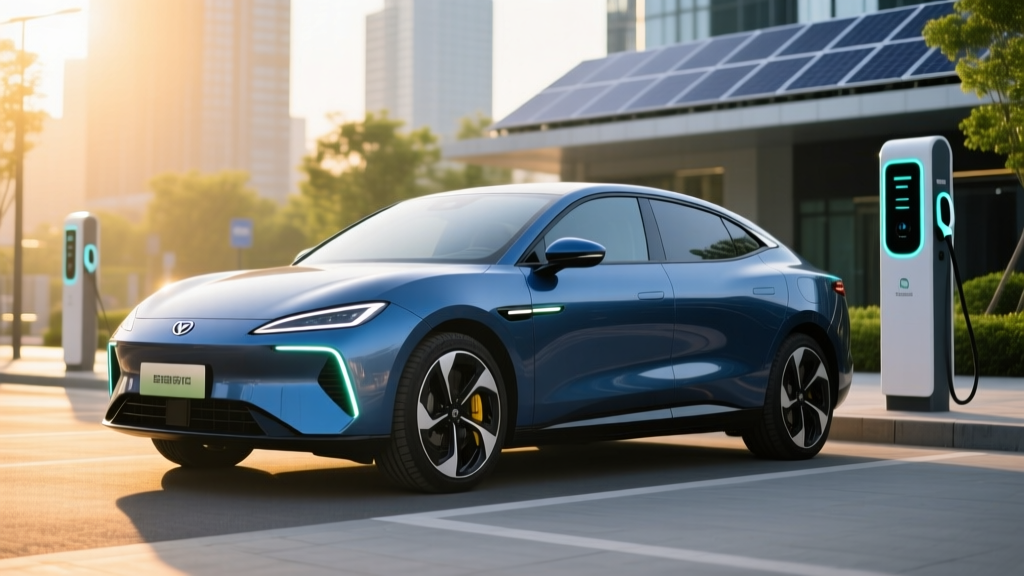
The Changan 932-mile electric vehicle refers to the Changan Qiyuan A07 (also branded under Changan's EV sub-labels), which has been marketed in China with a CLTC range claim of approximately 1,500 km (932 miles) in its extended-range electric vehicle (EREV) configuration. This is not a pure battery-electric vehicle (BEV) achieving 932 miles on battery alone — it pairs a modest battery pack with a gasoline range-extender generator. In real-world driving, expect roughly 150–200 miles of pure electric range before the onboard engine kicks in to recharge the battery, with the combined system delivering the headline distance. As of early 2026, this vehicle is sold primarily in the Chinese market and is not available for purchase in the United States.
What the "932-Mile" Claim Actually Means
Headline range numbers from Chinese automakers almost always use the CLTC (China Light-Duty Vehicle Test Cycle) standard, which is significantly more generous than the EPA cycle used in the U.S. The CLTC test assumes lower average speeds, gentler acceleration, and more stop-and-go urban driving — conditions that favor EV efficiency. A CLTC range of 1,500 km (932 miles) typically translates to roughly 65–75% of that figure under EPA-equivalent testing, and even less in real-world highway driving.
More critically, the Changan vehicles claiming four-digit range figures are extended-range EVs (EREVs), not pure battery-electric vehicles. The powertrain works like this:
- A battery pack (typically 28–40 kWh usable, often LFP chemistry) powers the electric drive motor for daily commuting.
- When the battery depletes to a set threshold, a small-displacement gasoline engine (usually a 1.5L naturally aspirated or turbocharged unit) starts and acts solely as a generator — it never drives the wheels directly.
- The combined fuel tank (roughly 45–52 liters / 12–14 gallons) plus the battery delivers the headline range number.
Real-World Range Expectation: CLTC claims 932 miles combined. Expect roughly 150–200 miles on battery-only (electric mode), then the gasoline range-extender adds another 500–650 miles depending on driving style and conditions. On a long highway trip at 70 mph, total range may drop to 600–750 miles. This is still exceptional — but it requires gasoline.
Specs, Battery, and Charging at a Glance
| Specification | Changan Qiyuan A07 EREV (Typical Config) |
|---|---|
| Powertrain Type | Extended-Range EV (EREV) |
| Battery Capacity (Usable) | ~28–40 kWh (LFP chemistry) |
| CLTC Range (Combined) | ~1,500 km / 932 miles (EV + range extender) |
| Electric-Only Range (CLTC) | ~200–300 km / 125–185 miles |
| Estimated EPA-Equivalent EV Range | ~100–150 miles |
| Range-Extender Engine | 1.5L gasoline generator |
| Fuel Tank Capacity | ~45–52 liters (12–14 gallons) |
| DC Fast Charge (Peak) | ~60–90 kW (est.) |
| 10–80% DC Charge Time | ~30–40 minutes (est.) |
| Level 2 AC Charge Rate | ~7 kW onboard charger |
| Drive Motor Output | ~160–190 kW (215–255 hp) |
| 0–100 km/h (0–62 mph) | ~6.5–7.5 seconds (est.) |
| Base Price (China) | ~¥150,000–200,000 (~$21,000–$28,000 USD) |
| U.S. Availability | Not available; no U.S. homologation |
Note: Exact specs vary by trim and model year. Changan has not published full EPA-cycle data because the vehicle is not sold in North America. Figures above are compiled from Chinese-market press materials and independent Chinese automotive media testing.
How It Compares: EREV vs. Gas vs. Pure EV
If you're researching the Changan 932-mile electric vehicle, you're likely weighing whether an EREV, a conventional hybrid, or a pure BEV makes more sense. Here's how these powertrains stack up in practical terms:
| Factor | EREV (e.g., Changan A07) | Pure BEV (e.g., Tesla Model 3 LR) | Gas/Hybrid (e.g., Toyota Camry Hybrid) |
|---|---|---|---|
| Total Range | 600–932 mi (combined) | 341 mi (EPA) | 550–680 mi |
| Electric-Only Daily Driving | 100–150 mi | 341 mi | 0 mi (HEV) / 25–44 mi (PHEV) |
| Home Charging Needed? | Recommended, not mandatory | Essential for cost savings | No (HEV) / Recommended (PHEV) |
| Fuel Cost per Mile | ~$0.04/mi (electric) / ~$0.10/mi (gas mode) | ~$0.04/mi (home charging) | ~$0.11/mi (gasoline) |
| Long Road-Trip Refueling | Gas station, 5 minutes | DC fast charge, 20–40 min | Gas station, 5 minutes |
| Maintenance Burden | Moderate (engine + EV systems) | Low (no engine) | Moderate (engine, oil, filters) |
| Cold-Weather Range Loss | EV range drops ~20–30%; gas engine compensates | Range drops ~20–40% | Minimal impact |
| U.S. Federal Tax Credit (§30D) | Not eligible (not sold in U.S.) | Up to $7,500 (if eligible) | None (HEV) / Up to $7,500 (PHEV) |
The EREV's core advantage is eliminating range anxiety entirely — you get electric commuting with gasoline backup. The trade-off is carrying two powertrains, which adds weight, complexity, and requires both electricity and gasoline for optimal cost savings.
Real Ownership Costs: What the Numbers Look Like
Even though the Changan A07 EREV is not available in the U.S., understanding its cost structure is valuable if you're comparing EREV concepts against vehicles you can buy stateside. Here's a projected 5-year cost breakdown compared against a pure BEV and a conventional hybrid, assuming 15,000 miles per year:
| Cost Category (5-Year) | EREV Concept (~$28K) | Pure BEV (~$42K U.S.) | Hybrid (~$32K U.S.) |
|---|---|---|---|
| Purchase Price | $28,000 (est.) | $42,000 | $32,000 |
| Federal Tax Credit | $0 (not U.S. available) | Up to $7,500 | $0–$7,500 (PHEV) |
| Fuel/Energy (75K mi) | $3,200 (mixed EV/gas) | $3,000 (home charging) | $5,500 (gasoline) |
| Maintenance | $2,800 | $1,500 | $3,000 |
| Insurance (avg.) | $6,500 (est.) | $8,500 | $6,000 |
| Estimated Depreciation | $12,000 (est., Chinese market) | $18,000 | $10,000 |
| Total 5-Year Cost | ~$52,500 | ~$67,500 (net of credit) | ~$56,500 |
Sources: U.S. fuel/energy costs based on fueleconomy.gov averages; tax credit rules per IRS §30D guidelines. EREV figures are estimates based on Chinese-market pricing and are illustrative only.
The EREV's low purchase price is compelling, but U.S. buyers cannot access it. The closest U.S.-available equivalents are the BMW i3 REx (discontinued) and upcoming EREV models from startups. For now, PHEVs like the Toyota RAV4 Prime or Jeep Wrangler 4xe offer a similar "electric daily + gas road trip" formula with full U.S. support, warranties, and dealer networks.
Common Misconceptions About the 932-Mile Claim
| Myth | Fact |
|---|---|
| "It's a pure electric car that goes 932 miles on one charge." | It's an EREV. The 932-mile figure includes gasoline burned by the range-extender engine. Pure battery-only range is approximately 100–150 miles (EPA-equivalent). |
| "CLTC range is the same as EPA range." | CLTC is roughly 25–35% more optimistic than EPA. A 932-mile CLTC claim would likely certify at 600–700 miles under EPA testing, and real-world highway driving reduces it further. |
| "I can buy this car in the U.S." | Changan does not sell vehicles in the United States as of 2026. There is no U.S. dealer network, no EPA certification, and no NHTSA compliance. Importing one privately is extremely difficult and likely not street-legal. |
| "EREVs don't need charging at all." | You can drive solely on gasoline, but you'll pay $0.10–$0.14/mile instead of $0.03–$0.05/mile on electricity. The economic case for an EREV depends on regular home charging for daily use. |
| "The range-extender engine drives the wheels." | In a true EREV (series hybrid), the engine only generates electricity. The wheels are always driven by the electric motor. This is different from a parallel hybrid like the Toyota Prius. |
What First-Time EV Buyers Should Know
If the Changan 932-mile claim sparked your interest in electrified vehicles, here's what matters when you shift to vehicles actually available in the U.S. market:
Home Charging Is the Foundation
Regardless of powertrain — BEV, PHEV, or EREV — the economics and convenience of electrification depend heavily on home charging. A Level 2 home charger (240V, 32–48A, delivering 7.7–11.5 kW) adds roughly 25–44 miles of range per hour of charging and costs $500–$2,000 installed, depending on your electrical panel. Without home charging, you'll rely on public DC fast chargers at $0.30–$0.50/kWh, which erases most fuel-cost savings versus gasoline.
Cold Weather Cuts Electric Range
All EVs and EREVs lose electric range in cold temperatures. At 20°F, expect a 20–35% reduction in battery-only range compared to mild-weather EPA estimates. Vehicles with heat pumps (increasingly standard on 2025–2026 models) mitigate this somewhat, but the physics of lithium-ion chemistry and cabin heating demands are unavoidable. EREVs have an advantage here: the range-extender engine generates waste heat that can warm the cabin without draining the battery.
Federal Tax Credits Have Strings Attached
The §30D clean vehicle credit offers up to $7,500, but eligibility in 2026 depends on multiple factors: vehicle MSRP caps ($80,000 for SUVs/pickups, $55,000 for sedans), buyer income limits ($300,000 joint / $150,000 single AGI), battery component and critical-mineral sourcing requirements, and North American final assembly. The credit can now be transferred to the dealer at point of sale, reducing your purchase price directly. Always verify eligibility at fueleconomy.gov before committing.
Decision Framework: Should You Buy an EREV, BEV, or Hybrid?
Choose a pure BEV if:
- You have reliable home Level 2 charging.
- Your daily commute is under 250 miles round-trip.
- You take road trips fewer than 5–6 times per year (and can plan DC fast-charging stops).
- You want the lowest per-mile energy cost and minimal maintenance.
- Example: Tesla Model 3 Long Range (341 mi EPA, ~$42,490), Hyundai Ioniq 6 (361 mi EPA, ~$42,000).
Choose a PHEV if:
- You want electric commuting (25–44 miles) but frequently drive longer distances.
- You don't want to plan charging stops on road trips.
- You have home charging but also need gasoline flexibility.
- Example: Toyota RAV4 Prime (42 mi electric, 38 mpg gas, ~$44,500), Chrysler Pacifica Hybrid (32 mi electric, ~$50,000).
Choose an EREV (when U.S.-available) if:
- You want more electric-only range than a PHEV (100–150 miles) without range anxiety.
- You live in a cold climate where pure EV range loss is a concern.
- You want an electric driving feel with gasoline backup.
- U.S. examples are limited currently — watch for announcements from brands like Mazda (MX-30 REx concept) and startups.
Stick with a conventional hybrid (HEV) if:
- You cannot install home charging (apartment, street parking).
- You want zero behavioral change — just fill up with gas and go.
- Upfront cost is a primary concern.
- Example: Toyota Camry Hybrid (51 mpg combined, ~$30,000).
Frequently Asked Questions
Is the Changan 932-mile EV available in the United States?
No. Changan Automobile does not currently sell vehicles in the U.S. market. The vehicle lacks EPA certification, NHTSA compliance, and a U.S. dealer/service network. There are no announced plans for U.S. market entry as of early 2026.
Is 932 miles of range real, or is it exaggerated?
The 932-mile (1,500 km) figure is a CLTC-cycle combined range that includes both battery-electric driving and gasoline burned by the range-extender engine. It is achievable under ideal conditions, but real-world highway driving at 70+ mph, cold weather, and mountain terrain will reduce total range to roughly 600–750 miles. The pure-electric portion is approximately 100–150 miles.
What's the difference between an EREV and a plug-in hybrid (PHEV)?
In an EREV (extended-range EV), the gasoline engine never drives the wheels — it only generates electricity to recharge the battery or power the electric motor. The car always feels like an EV. In most PHEVs, the engine can drive the wheels directly at highway speeds (parallel hybrid mode), which is more efficient at sustained high speeds but less smooth. EREVs typically have larger batteries and more electric-only range than PHEVs.
How much would an EREV like this cost to operate vs. a gas car?
If you charge at home and drive within the battery's range most days, an EREV can achieve fuel costs of roughly $0.04–$0.06 per mile for daily driving. On gasoline alone (long road trips), expect $0.10–$0.14 per mile. A comparable gas-only car at 30 mpg with $3.50/gallon fuel costs about $0.12 per mile. The savings are meaningful but depend on how much of your driving stays within battery range.
Will EREVs become available in the U.S.?
Several automakers have signaled interest in bringing EREV powertrains to North America. The concept saw limited U.S. exposure through the BMW i3 REx (discontinued in 2021) and the Fisker Karma (defunct). Chinese brands including Changan, BYD, and Li Auto dominate the EREV segment globally. Whether they enter the U.S. depends on trade policy, tariff structures, and homologation investment. For 2026, PHEVs remain the closest widely available alternative.
What U.S.-available EV has the longest range?
As of 2026, the Lucid Air Grand Touring holds the EPA range record at 516 miles on a single charge, followed by the Chevrolet Silverado EV 4WT at approximately 450 miles. Among more affordable options, the Tesla Model S Long Range achieves 402 miles EPA, and the Hyundai Ioniq 6 SE Long Range achieves 361 miles EPA. None of these approach 932 miles — but they are pure BEVs requiring no gasoline.