Quick Answer: Can You Buy a Canoo EV in 2026?
No. Canoo Inc. filed for Chapter 11 bankruptcy in January 2025 and ceased operations after burning through over $1.5 billion without delivering meaningful production volumes. The company's promised Lifestyle Vehicle, Multi-Purpose Delivery Vehicle (MPDV), and Pickup Truck never reached retail consumers at scale. If you were researching the Canoo EV as a potential purchase, you'll need to look at alternatives. This guide covers what happened, what Canoo's technology actually delivered, and which production EVs fill the roles Canoo targeted.
What Was the Canoo EV, and Why Did It Generate Hype?
Canoo emerged in 2017 (originally as VDLA) with a genuinely novel premise: a flat, modular "skateboard" chassis housing the battery, motors, and suspension, topped with interchangeable body modules. The idea was that one platform could underpin a passenger van, a cargo delivery vehicle, and a pickup truck — cutting development cost and time.
The Canoo Lifestyle Vehicle was the headline product — a pod-like, 7-seat minivan with a panoramic glass dome, steer-by-wire controls, and a claimed EPA-estimated range of 250 miles from an 80 kWh battery pack (NMC chemistry). Canoo projected 300 horsepower from a rear-mounted motor and a 0–60 mph time around 6.3 seconds.
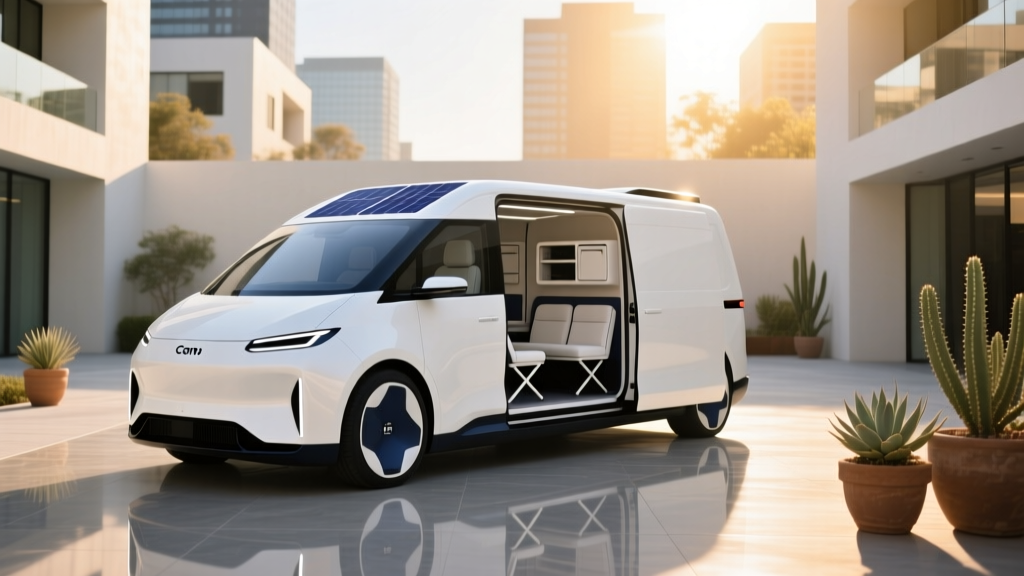
The MPDV targeted last-mile delivery fleets (think Amazon, Walmart), with two sizes offering 500 and 780 cubic feet of cargo volume. The Canoo Pickup Truck was announced with dual-motor AWD, up to 500 HP, and a modular bed system.
For a time, the hype was real. Canoo secured a contract with NASA for crew transportation at Johnson Space Center, drew interest from Hyundai (which invested and partnered), and briefly attracted a SPAC merger that valued the company at $2.4 billion in 2022.
Why Canoo Failed: The Numbers Behind the Collapse
EV startups live or die by their ability to reach production — and Canoo never did. Here's what the financial and operational record shows:
- Total capital raised: Over $1.5 billion (venture, SPAC, and debt)
- Vehicles delivered to customers: Fewer than 200 units across all models, mostly pre-production prototypes and limited NASA/DoD units
- Revenue in 2023: Approximately $1.1 million — essentially negligible for an automaker
- Peak headcount: ~1,300 (2023); reduced to under 400 by mid-2024
- Bentonville, Arkansas factory: Announced but never reached meaningful production capacity
- Bankruptcy filing: January 17, 2025, Chapter 11 in Delaware; assets auctioned
The core problem was a persistent gap between engineering concepts and manufacturing reality. Canoo repeatedly delayed production timelines, missed SPAC-era revenue projections by orders of magnitude, and struggled to secure the supply-chain partnerships that scale production requires. The SEC filings tell a story of escalating losses and shrinking cash reserves quarter after quarter.
Canoo EV vs. Production Alternatives: What to Buy Instead
Canoo targeted three distinct buyer segments. Here's what each segment can actually purchase in 2026, with real specs:
| Spec | Canoo Lifestyle (Announced) | Kia EV9 (2026) | Hyundai Ioniq 9 (2026) | Chrysler Pacifica PHEV |
|---|---|---|---|---|
| EPA Range / EV Range | ~250 mi (never EPA-certified) | 304 mi (AWD Long Range) | 311 mi (Long Range RWD) | 32 mi electric + ~520 mi total |
| Battery / Fuel | 80 kWh NMC (claimed) | 100.4 kWh NMC | 110.3 kWh NMC | 16 kWh + 3.6L V6 |
| Peak DC Charge Rate | ~150 kW (claimed) | 239 kW | 240 kW | N/A (Level 2 only, 7.2 kW) |
| 10–80% Charge Time | ~30 min (est.) | ~20 min | ~24 min | ~2 hours (Level 2) |
| Seating | 7 | 6 or 7 | 6 or 7 | 7 |
| 0–60 mph | ~6.3 sec (claimed) | 5.0 sec (GT AWD) | 5.1 sec (Performance) | 7.1 sec |
| Starting MSRP | $34,750 (announced, never sold) | $54,900 | $51,500 | $47,645 |
| Availability | Not available — company defunct | On sale now | On sale now | On sale now |
For last-mile delivery fleets that were Canoo MPDV's target market, the alternatives are also well-established:
- Ford E-Transit: 126 mi EPA range, 68 kWh battery, 120 kW peak DC charging, starting ~$47,895. Widely deployed by fleets including Walmart and DHL.
- Rivian EDV (Electric Delivery Van): Built for Amazon (exclusive through 2025, now expanding), ~150 mi range, 149 kWh battery.
- BrightDrop Zevo 600: GM-backed, 250 mi range, 165 kW peak charging, targeting large fleet operators.
For the pickup truck buyer Canoo's truck concept courted:
- Ford F-150 Lightning: 320 mi (extended range), 131 kWh, 150 kW peak DC, from ~$54,995.
- Rivian R1T: 352 mi (Max Pack), 141 kWh, 200+ kW peak, from ~$69,900.
- Chevrolet Silverado EV: 440 mi (4WT), 200+ kWh, 350 kW peak, from ~$57,900.
The Real Cost of EV Ownership vs. Gas: What Canoo Buyers Missed
Even though Canoo never delivered, the financial case its marketing leaned on — lower total cost of ownership — is real with production EVs. Here's a five-year cost breakdown comparing a typical electric crossover (represented by the 2026 Hyundai Ioniq 5) against a comparable gas vehicle (2026 Toyota RAV4 AWD):
| Cost Category | 2026 Ioniq 5 SEL AWD (EV) | 2026 RAV4 AWD XLE (Gas) |
|---|---|---|
| Purchase Price (MSRP) | $47,400 | $34,550 |
| Federal Tax Credit (§30D) | –$3,750 (partial; varies by battery sourcing) | $0 |
| Effective Purchase Price | $43,650 | $34,550 |
| Fuel/Energy (5 years, 75,000 mi) | $4,200 (home charging at $0.14/kWh) | $9,375 (gas at $3.50/gal, 28 MPG avg) |
| Maintenance (5 years) | $1,500 | $3,750 |
| Insurance (5 years avg) | $9,500 | $7,250 |
| Estimated Depreciation | $21,800 | $15,500 |
| Total 5-Year Cost | $80,650 | $70,425 |
| Cost Per Mile | $1.08 | $0.94 |
Key takeaway: The EV still carries a higher upfront cost, and depreciation remains steeper for many EV models. But the fuel and maintenance savings are substantial — $5,175 and $2,250 respectively over five years. For fleet buyers (Canoo's primary target), those per-mile savings compound dramatically across dozens of vehicles. For individual buyers, the break-even point typically comes around year 6–7, depending on local electricity rates and driving volume.
Source: Cost estimates synthesized from fueleconomy.gov data and AAA's Your Driving Costs methodology.
Common Canoo and EV Startup Misconceptions
| Myth | Fact |
|---|---|
| "Canoo's skateboard platform was bought by a major automaker and is still in production." | While Hyundai invested early and explored the platform, no major OEM acquired Canoo's IP at scale. The bankruptcy auction sold assets piecemeal. |
| "EV startups fail because EVs don't work." | EV startups fail because manufacturing at scale is extraordinarily capital-intensive. Tesla survived by the thinnest of margins in 2018. Production — not technology — is the graveyard. |
| "I can still order a Canoo EV and get on the waitlist." | Canoo's website is offline and no orders are being accepted. The company is in liquidation. |
| "EVs don't work in cold climates." | Modern EVs with heat pumps (Ioniq 5, EV9, F-150 Lightning) lose 20–30% range in sub-freezing temps. That's real, but a 300-mi EPA vehicle still delivers 210–240 mi in winter — sufficient for most daily driving. |
| "All EVs qualify for the full $7,500 federal tax credit." | Under current IRS §30D rules, credits range from $0 to $7,500 depending on battery component sourcing, critical minerals origin, buyer income caps ($150K single / $300K joint), and vehicle MSRP caps ($55K cars / $80K SUVs and trucks). |
First-Time EV Buyer Decision Framework
If the Canoo search brought you to EVs for the first time, here's a practical framework for choosing what to actually buy:
Choose a Battery Electric Vehicle (BEV) If:
- You have access to home Level 2 charging (240V, 32–48A circuit) — this covers 80%+ of your charging needs
- Your daily commute is under 80 miles round-trip
- You take fewer than 4 road trips over 300 miles per year
- You want the lowest per-mile energy cost (~$0.04–0.06/mi with home charging)
- Recommended 2026 models: Hyundai Ioniq 5 ($42,450), Tesla Model Y ($44,990), Chevrolet Equinox EV ($33,000)
Choose a Plug-In Hybrid (PHEV) If:
- You lack reliable home charging access (apartment, street parking)
- You regularly drive 200+ miles in a day and don't want to plan around DC fast chargers
- You want electric-only commuting (25–45 mi) with gas-engine backup for longer trips
- Recommended 2026 models: Toyota RAV4 Prime (42 mi EV, 94 MPGe), Chrysler Pacifica PHEV (32 mi EV, 82 MPGe), Hyundai Tucson PHEV (33 mi EV, 80 MPGe)
Choose a Hybrid (HEV) If:
- You have no charging access at all
- You want maximum MPG without any plug-in behavior change
- Budget is a primary constraint (HEVs start $5K–$10K less than BEV equivalents)
- Recommended 2026 models: Toyota Camry Hybrid (51 MPG combined), Honda Accord Hybrid (48 MPG combined)
What About Canoo's Remaining Assets and Technology?
Canoo's bankruptcy auction in early 2025 dispersed assets to various buyers. The proprietary skateboard chassis design, steer-by-wire system, and battery-pack engineering were sold in lots. As of 2026, no successor company has announced plans to resume vehicle production using Canoo's platform. The NASA vehicles delivered remain in limited use, but no support infrastructure exists for expansion.
For fleet operators who had placed pre-orders (Canoo claimed over 22,000 reservations at peak), those orders are void. Deposits were largely unsecured, and bankruptcy proceedings prioritize secured creditors.
Frequently Asked Questions
Is there any way to buy a used Canoo EV?
Effectively no. Fewer than 200 units were ever produced, most are prototypes or institutional vehicles (NASA, DoD), and there is no dealer network, no parts supply chain, and no warranty support. Purchasing one would be an extreme risk with no service infrastructure.
What was Canoo's actual range and charging speed?
Canoo claimed 250 miles of range from an 80 kWh pack and ~150 kW peak DC fast charging. However, these figures were never EPA-certified and were based on pre-production testing. For comparison, production vehicles like the Kia EV9 deliver 304 EPA-rated miles from a 100.4 kWh pack with 239 kW peak charging — significantly better real-world performance from an established manufacturer.
Why did Canoo fail when Tesla survived similar early struggles?
Tesla survived its 2017–2018 "production hell" by having the Model 3 in active production with paying customers generating revenue, Elon Musk personally investing capital, and a direct-to-consumer sales model that reduced overhead. Canoo never achieved meaningful production volume, had no revenue-generating product on the market, and burned through its SPAC capital on factory buildout and headcount before proving manufacturing viability.
Should I be worried about other EV startups failing too?
It's a real risk. Fisker Inc. filed for bankruptcy in late 2024. Lordstown Motors collapsed in 2023. The pattern is consistent: concept-stage companies that go public via SPAC before achieving production face extreme dilution and credibility risk. Stick with established manufacturers (Tesla, Hyundai, Kia, Ford, GM, BMW, Rivian) that have proven production lines, dealer or service networks, and ongoing warranty support.
What's the best EV for a family that wanted the Canoo Lifestyle Vehicle?
The Kia EV9 (3-row, 7-seat, 304 mi range, $54,900) and Hyundai Ioniq 9 (3-row, 311 mi range, $51,500) are the closest production equivalents — spacious, modern, fast-charging electric family haulers with real EPA ratings, dealer service networks, and available federal tax credits (check current IRS eligibility before purchasing).