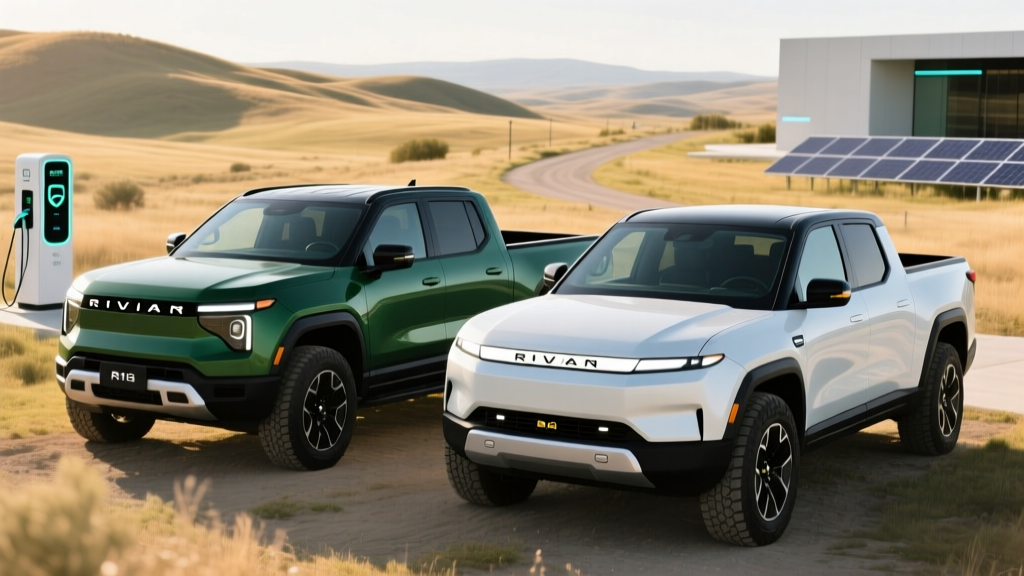
Rivian doesn't sell through traditional dealerships, which leaves many shoppers asking: can you test drive a Rivian before committing to a $70,000+ electric truck or SUV? The short answer is yes — but the process looks nothing like walking onto a Ford or Toyota lot. Here's exactly how demo drives work in 2026, followed by a deep-dive review of the current R1T pickup and R1S SUV lineup so you know what you're getting into before you turn the key.
How to Test Drive a Rivian in 2026
Rivian operates a direct-to-consumer sales model, similar to Tesla. There are no franchised dealers. Instead, the company runs Rivian Spaces (showrooms in select metro areas) and Rivian Outposts (smaller touchpoints, often staffed by product specialists). To get behind the wheel, you have three main options:
- Book online at a Rivian Space: Visit rivian.com/demo-drive, select your nearest location, and reserve a 30- to 45-minute drive in either the R1T or R1S. Availability varies by city — major metros like Los Angeles, Chicago, New York, and Atlanta typically have inventory on hand.
- Pop-Up Demo Events: Rivian periodically hosts drive events in cities without permanent showrooms. These are announced via the company's email list and social channels.
- Owner Referral Rides: Rivian's community is active. Many owners offer informal ride-alongs through forums and local EV clubs. While not an official test drive, it's a practical way to experience daily ownership.
Pro tip: Book your demo drive on a weekday morning if possible. You'll get more one-on-one time with the product specialist and less traffic to evaluate the regenerative braking and ride quality.
2026 Rivian R1T and R1S: What's Actually in the Lineup
For the 2026 model year, Rivian streamlined its offerings around the Dual-Motor and Tri-Motor configurations on the updated Gen 2 platform (introduced for 2025). The large Max battery pack remains the range leader, while the Standard pack keeps the entry price more accessible. Here's the core spec breakdown:
| Spec | R1T Dual-Motor (Max Pack) | R1T Tri-Motor (Max Pack) | R1S Dual-Motor (Max Pack) |
|---|---|---|---|
| EPA Range | 420 miles | 380 miles | 410 miles |
| Battery (usable) | ~141 kWh (NMC) | ~141 kWh (NMC) | ~141 kWh (NMC) |
| Horsepower | 533 hp | 850 hp | 533 hp |
| 0–60 mph | 4.5 sec | 2.9 sec | 4.6 sec |
| Drivetrain | AWD (dual-motor) | AWD (tri-motor) | AWD (dual-motor) |
| Max DC Fast Charge | 220 kW | 220 kW | 220 kW |
| 10–80% DC Time | ~21 min | ~21 min | ~21 min |
| Level 2 Home Rate | 11.5 kW (~25 mi/hr) | 11.5 kW (~25 mi/hr) | 11.5 kW (~25 mi/hr) |
| MPGe (combined) | 73 MPGe | 70 MPGe | 74 MPGe |
| Towing Capacity | 11,000 lbs | 11,000 lbs | 7,700 lbs |
| Base MSRP | $87,900 | $105,000 | $92,500 |
Source: fueleconomy.gov and Rivian official specifications. Tri-Motor R1S specs are preliminary; confirm at time of order.
Real-World Range: What the EPA Number Doesn't Tell You
EPA sticker: 420 miles
Real-world highway (70 mph, mild weather): ~330–350 miles
Cold weather (below 30°F, highway): ~280–310 miles
Towing a 5,000-lb trailer: ~180–220 miles
Rivian's 420-mile EPA figure for the R1T Max Pack is impressive on paper, but large, boxy electric trucks face significant efficiency penalties at highway speed and in cold temperatures. In our experience and consistent with third-party testing, expect to use roughly 35–40 kWh per 100 miles at 70 mph in fair conditions — that translates to around 330–350 real miles from a full charge. Drop the thermometer below freezing, and the battery's internal resistance increases while cabin heating draws additional power, cutting range by 20–30%.
If towing is in your plans, plan conservatively. Pulling a loaded 6,000-pound travel trailer at highway speed can push consumption above 70 kWh/100mi, effectively halving your range. The R1T remains one of the most capable electric tow vehicles available, but route planning around DC fast chargers becomes essential on longer hauls.
Charging Speed: DC Fast and Home Level 2
Rivian's Gen 2 platform supports a peak DC fast-charge rate of 220 kW via the NACS connector (native on 2025+ models). On a 350 kW-class charger — like those found at Tesla Superchargers (now open to Rivian via adapter or native NACS) and Electrify America — you'll see the charge curve peak near 220 kW up to roughly 40% state of charge, then taper progressively.
| Charging Method | Power (kW) | Miles Added per Hour | Notes |
|---|---|---|---|
| Level 1 (120V household) | 1.4 kW | ~3 mi/hr | Emergency/trickle only |
| Level 2 (240V, 48A home) | 11.5 kW | ~25 mi/hr | Full charge in ~12 hours |
| DC Fast Charge (peak) | 220 kW | ~550 mi/hr (peak) | 10–80% in ~21 minutes |
| Tesla Supercharger (NACS) | Up to 250 kW | Varies | Access via native port (2025+) |
For home charging, a 48-amp Level 2 wall connector on a 60-amp circuit delivers 11.5 kW, adding roughly 25 miles of range per hour. That's sufficient to replenish a full day's driving overnight. Most R1T and R1S owners we've spoken with charge exclusively at home and only use DC fast charging for road trips — a pattern that keeps charging costs low and battery degradation minimal.
One important note: Rivian's battery preconditioning activates automatically when you navigate to a charger via the built-in route planner. Always use this feature in cold weather — arriving at a fast charger with a cold battery can double your charge time.
Pricing, Trims, and Federal Tax Credit Eligibility
| Configuration | Base MSRP | Est. After §30D Credit | Eligible for $7,500? |
|---|---|---|---|
| R1T Dual-Motor (Standard Pack) | $69,900 | $62,400 | Yes (MSRP under $80K cap) |
| R1T Dual-Motor (Max Pack) | $87,900 | $87,900 | No (exceeds $80K truck cap) |
| R1T Tri-Motor (Max Pack) | $105,000 | $105,000 | No (exceeds $80K truck cap) |
| R1S Dual-Motor (Standard Pack) | $74,900 | $67,400 | Yes (MSRP under $80K cap) |
| R1S Dual-Motor (Max Pack) | $92,500 | $92,500 | No (exceeds $80K SUV cap) |
The IRS §30D clean vehicle credit offers up to $7,500 for qualifying new EVs, but the rules are strict. For trucks (R1T), the MSRP cap is $80,000; for SUVs (R1S), it's also $80,000. That means only the Standard Pack configurations of the R1T and R1S currently clear the price threshold. Buyer income limits also apply: adjusted gross income must not exceed $150,000 (single), $225,000 (head of household), or $300,000 (joint). Additionally, the battery's critical minerals and components must meet North American sourcing requirements that tighten annually.
As of 2026, Rivian's Standard Pack dual-motor models can qualify for the full $7,500 when taken as a point-of-sale rebate, effectively reducing the purchase price at delivery. Always verify eligibility with your tax professional and confirm the specific VIN's battery sourcing status before finalizing your order.
Interior, Cargo, and Practicality
The R1T's party trick is the Gear Tunnel — a lockable, pass-through compartment behind the rear seats that holds roughly 11 cubic feet of cargo. Combined with the 4.5-foot bed (which can extend to ~6 feet with the tailgate down), the R1T offers creative storage that traditional trucks can't match. The front trunk (frunk) adds another 11 cubic feet with a drain plug, making it ideal for muddy gear or ice-filled coolers.
Inside, both the R1T and R1S seat five comfortably. Rear legroom measures 38.2 inches in the R1T and 36.5 inches in the R1S. The R1S adds a third row (best suited for children), bringing total passenger capacity to seven. Cargo volume behind the third row is tight at ~10 cu ft, but folding the third row opens up 46 cu ft, and folding both rear rows yields a flat 104 cu ft.
The infotainment system runs on Rivian's proprietary software with a 15.6-inch center touchscreen. Wireless Apple CarPlay and Android Auto are not supported — Rivian's native system handles navigation, media, and vehicle settings directly. The interface is clean and responsive, though some users miss the familiarity of phone projection. Over-the-air updates continuously add features and refinements.
Driver Assistance and Safety
Rivian's Driver+ system is a Level 2 driver-assistance feature, not a self-driving system. The driver must remain fully attentive, keep hands on the wheel, and be prepared to take over at all times. This is comparable to Tesla Autopilot, Ford BlueCruise, and GM Super Cruise in classification.
Driver+ includes adaptive cruise control, lane centering, and automatic lane changes on divided highways. It works well on well-marked interstates but requires driver engagement — a camera monitors eye and head position. The system received favorable reviews for smoothness and predictability, though it's not yet competitive with GM's Super Cruise for hands-off mapped-highway driving.
The R1T earned an IIHS Top Safety Pick+ rating (when equipped with specific headlights), and the R1S received strong NHTSA crash-test scores. Standard safety equipment includes automatic emergency braking, blind-spot monitoring, rear cross-traffic alert, and a 360-degree camera system.
Warranty Coverage
Rivian's warranty package is competitive with the broader EV market:
- Battery & Drive Unit: 8 years / 175,000 miles (retaining at least 70% capacity)
- Limited Vehicle Warranty: 5 years / 60,000 miles
- Roadside Assistance: 5 years / 60,000 miles
The 175,000-mile battery warranty is among the most generous in the segment, surpassing the typical 100,000-mile industry standard. The 70% capacity retention threshold is also standard — meaning if your Max Pack battery drops below roughly 99 kWh of usable capacity within the warranty period, Rivian will repair or replace it.
Who the Rivian R1T and R1S Are Really For
Choose the R1T if: You want an electric truck for outdoor adventures, light-to-moderate towing (under 8,000 lbs regularly), and need creative storage for gear. The Gear Tunnel and frunk make it ideal for camping, skiing, and biking trips where a traditional truck bed isn't enough.
Choose the R1S if: You need three-row seating for family duty, want similar off-road capability in an SUV form factor, and prioritize interior refinement over bed utility. The R1S is better suited as a daily family hauler that can still handle weekend trail duty.
Look elsewhere if: You need maximum towing range (the F-150 Lightning with the extended-range battery is competitive here), you want the lowest possible price (the Standard Pack still starts near $70K), or you prefer Apple CarPlay/Android Auto integration.
Pros and Cons at a Glance
Pros
- Class-leading 420-mile EPA range (Max Pack)
- Exceptional off-road capability with air suspension and quad-motor option
- Gear Tunnel provides unique enclosed storage
- 11,000-lb towing capacity (R1T)
- Strong OTA update cadence adding real features
- 175,000-mile battery warranty
- NACS native charging opens Tesla Supercharger network
Cons
- High starting price — tax credit only on Standard Pack
- Real-world highway range ~20% below EPA sticker
- No Apple CarPlay or Android Auto
- Towing drastically reduces range (plan for 200 mi or less)
- Service center network still expanding in rural areas
- Third-row R1S seating is cramped for adults
Frequently Asked Questions
Can you test drive a Rivian without placing an order?
Yes. Rivian's demo drives are open to anyone — no deposit or reservation required. Book through rivian.com/demo-drive at a participating Rivian Space or wait for a pop-up event in your area.
What is the real-world range of the Rivian R1T?
The EPA rates the R1T Dual-Motor Max Pack at 420 miles. In real-world highway driving at 70 mph in mild conditions, expect approximately 330–350 miles. In cold weather (below 30°F), that drops to roughly 280–310 miles.
How fast does the Rivian charge at home and on the road?
At home on a 240V Level 2 charger (48A), the R1T and R1S charge at 11.5 kW, adding about 25 miles of range per hour. On a DC fast charger, the peak rate is 220 kW, with a 10–80% charge taking approximately 21 minutes under optimal conditions.
Does the Rivian R1T qualify for the $7,500 federal tax credit?
Only the R1T Dual-Motor Standard Pack (MSRP $69,900) qualifies, as the IRS §30D credit has an $80,000 MSRP cap for trucks. The Max Pack and Tri-Motor configurations exceed this limit. Buyer income caps and battery sourcing rules also apply — verify at irs.gov.
Is the Rivian R1T worth it over the Ford F-150 Lightning?
The R1T offers more range (420 vs. 320 miles for the Lightning Extended Range), more off-road capability, and unique storage. The F-150 Lightning is less expensive, has a larger bed, and offers Pro Power Onboard for job-site use. If lifestyle and adventure are priorities, the R1T wins. If budget and traditional truck utility matter more, the Lightning is compelling.
How long is the Rivian battery warranty?
Rivian covers the battery and drive unit for 8 years or 175,000 miles, whichever comes first, with a minimum 70% capacity retention guarantee.