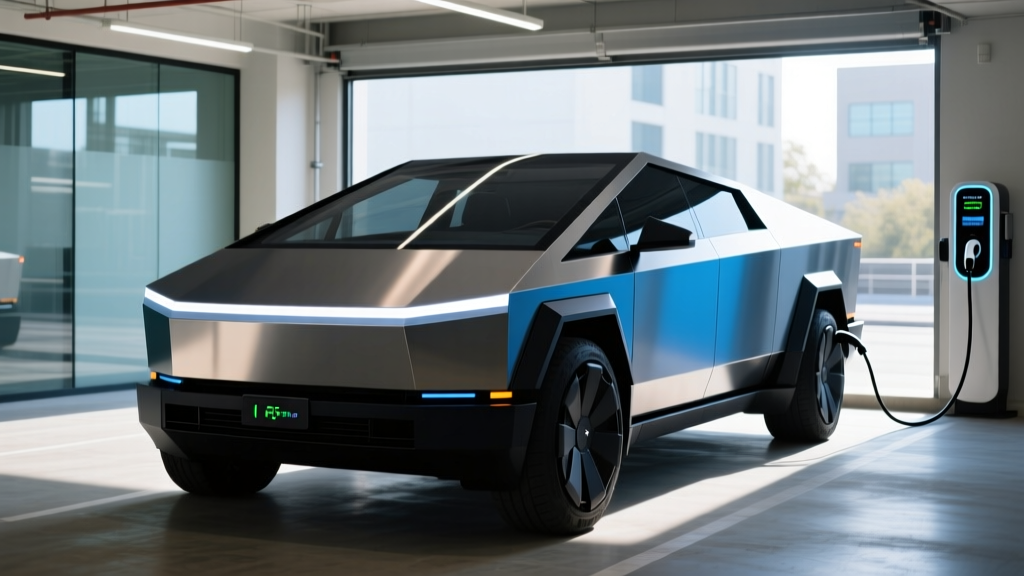
If you have been scrolling through social media and wondering, can you rent a Cybertruck before committing to a six-figure purchase? The short answer is yes — but availability is far more limited than renting a Model Y from Hertz. Tesla never launched a mainstream fleet partnership for the Cybertruck the way it did for the Model 3 and Model Y in 2022–2023, so finding one requires knowing which platforms actually list them and what to expect when you get behind the yoke.
This guide covers every practical angle: where Cybertruck rentals exist in 2026, what daily rates look like, and a full spec-and-ownership breakdown so you can decide whether a weekend rental is worth it — or whether the numbers justify buying one outright.
Where Can You Actually Rent a Cybertruck in 2026?
Unlike the Model 3 and Model Y, which appeared on Hertz and Sixt lots by the thousands, the Cybertruck has never been a fleet-volume vehicle. Tesla's production constraints through 2024 and 2025 meant most units went directly to retail buyers. As of early 2026, here is where rentals surface:
- Turo (peer-to-peer): The most reliable source. Individual owners in metro areas like Los Angeles, Miami, Austin, and Phoenix list Cybertrucks at $250–$500 per day. Availability is spotty and highly location-dependent.
- Specialty exotic rental agencies: Shops like Royalty Exotic Cars (NYC), Dream Car Rentals (LA), and similar outfits occasionally stock Cybertrucks as novelty/attention vehicles, typically at $400–$700/day with strict mileage caps (100–150 mi/day).
- Hertz / Enterprise / Sixt: As of 2026, no major national chain has added Cybertruck to its fleet. Hertz's Tesla inventory remains Model 3 and Model Y only.
- Tesla demo drives: Tesla stores offer 15–30 minute supervised test drives by appointment — not a rental, but a free way to experience the truck before deciding.
Pro tip: If you are renting via Turo, filter by "Instant Book" and read the host's EV-charging instructions carefully. Many Cybertruck hosts require you to return the vehicle at the same state of charge (SoC) or charge a per-kWh fee for shortfalls — typically $0.35–$0.50/kWh.
Cybertruck Specs at a Glance: Range, Battery, and Efficiency
Before you rent — or buy — you need the hard numbers. The Cybertruck is available in three trims for the 2026 model year: Long Range AWD, Dual Motor AWD, and the tri-motor Cyberbeast. Here is what the spec sheet looks like:
| Spec | Long Range AWD | Dual Motor AWD | Cyberbeast (Tri-Motor) |
|---|---|---|---|
| EPA Range | ~340 mi | ~340 mi | ~320 mi |
| Battery (usable) | ~123 kWh (NMC) | ~123 kWh (NMC) | ~123 kWh (NMC) |
| Horsepower | ~600 hp | ~600 hp | 845 hp |
| 0–60 mph | ~4.1 sec | ~3.9 sec | 2.6 sec |
| Drivetrain | Dual-Motor AWD | Dual-Motor AWD | Tri-Motor AWD |
| MPGe (combined) | ~68 MPGe | ~68 MPGe | ~65 MPGe |
| Efficiency | ~48 kWh/100 mi | ~48 kWh/100 mi | ~51 kWh/100 mi |
| Towing Capacity | 11,000 lbs | 11,000 lbs | 11,000 lbs |
| Base MSRP | $79,990 | $99,990 | $119,990 |
Sources: EPA fueleconomy.gov, Tesla Cybertruck specs. Figures reflect 2025–2026 model-year data. Tesla adjusts pricing periodically; verify current MSRP before purchase.
The EPA rates the Dual Motor AWD at approximately 340 miles. In real-world highway driving at 70–75 mph, expect 270–290 miles before needing to charge. In cold weather (below 32°F), that drops further to roughly 230–260 miles due to cabin heating demands and reduced battery chemistry efficiency. The Cybertruck's large frontal area and stainless-steel exoskeleton create significant aerodynamic drag, which hits efficiency hard at highway speeds. City driving with regenerative braking recovers some of that — you may see 310+ miles in stop-and-go traffic.
Charging Speed: DC Fast Charging and Home Level 2
Charging speed is the number-one concern for any EV renter or buyer who plans to road-trip. The Cybertruck uses a 400-volt architecture (not 800V like the Hyundai Ioniq 5 or Porsche Taycan), which limits its peak DC fast-charge rate relative to some competitors.
| Charging Level | Power (kW) | Speed (miles added/hr) | Notes |
|---|---|---|---|
| Level 1 (120V household) | ~1.4 kW | ~3–4 mi/hr | Emergency/trickle only |
| Level 2 (240V, 48A) | ~11.5 kW | ~30–34 mi/hr | Full charge overnight (~10–12 hrs) |
| DC Fast Charge (peak) | ~250 kW | ~1,000+ mi/hr (peak) | 10–80% in ~28 min; tapers above 80% |
| Tesla Supercharger V4 | ~250 kW | ~1,000+ mi/hr (peak) | NACS native; no adapter needed |
Charging curve reality: The Cybertruck peaks near 250 kW only between roughly 10–30% SoC. From 30–60%, expect sustained rates around 150–180 kW. Above 80%, the rate drops sharply to under 50 kW to protect the NMC cells. This means a 10–80% session takes approximately 28 minutes at a V3 or V4 Supercharger, but a 10–95% session stretches to 50+ minutes. Plan your road-trip stops accordingly.
Preconditioning matters. If you navigate to a Supercharger using the Tesla touchscreen, the vehicle automatically preconditions (warms) the battery to optimize charge speed. Arriving at a charger without preconditioning — especially in cold weather — can cut peak charge rates by 30–50%.
How Much Does a Cybertruck Cost After Tax Credits?
This is where the Cybertruck story gets complicated for buyers. Under current IRS §30D rules, the federal EV tax credit offers up to $7,500 — but the Cybertruck faces multiple eligibility hurdles:
- MSRP cap: The §30D credit caps eligible trucks at $80,000 MSRP. The Long Range AWD at ~$79,990 barely squeezes under this threshold (before destination fees). The Dual Motor AWD ($99,990) and Cyberbeast ($119,990) exceed the cap and do not qualify.
- Buyer income limits: Adjusted gross income must not exceed $300,000 (married filing jointly), $225,000 (head of household), or $150,000 (single).
- Battery sourcing: The credit splits into two halves — $3,750 for critical-minerals sourcing and $3,750 for battery-component manufacturing. Tesla's battery supply chain has been evolving; the exact credit amount for the Long Range trim varies by production batch and model year. Verify current eligibility on IRS.gov before purchasing.
- Point-of-sale transfer: As of 2024, buyers can transfer the credit to the dealer at purchase, reducing the out-of-pocket price immediately rather than waiting for a tax refund.
| Trim | Base MSRP | §30D Eligible? | Est. After Max Credit |
|---|---|---|---|
| Long Range AWD | ~$79,990 | Possibly (under cap)* | ~$72,490 |
| Dual Motor AWD | ~$99,990 | No (over MSRP cap) | $99,990 |
| Cyberbeast | ~$119,990 | No (over MSRP cap) | $119,990 |
*Eligibility depends on destination charges pushing MSRP above $80,000, battery-sourcing compliance, and buyer income. Confirm with your tax professional and the IRS §30D guidance.
Interior, Cargo, and Daily Livability
The Cybertruck is a full-size pickup, but its angular design creates unusual interior trade-offs:
- Seating: 6-passenger capacity (3 front, 3 rear bench). Rear legroom is approximately 38.4 inches — adequate but not generous for a vehicle this size, due to the sloping roofline.
- Bed: 6-foot bed with a motorized retractable tonneau cover. Cargo volume is approximately 74 cu ft (bed) plus a front trunk (frunk) offering roughly 7 cu ft of lockable storage.
- Towing: 11,000-lb rated capacity across all trims. However, towing at max capacity cuts range by roughly 40–50%, meaning expect 160–190 miles per charge when pulling a heavy trailer.
- Infotainment: 18.5-inch center touchscreen running Tesla's proprietary OS. No Apple CarPlay or Android Auto — all navigation, media, and vehicle controls are Tesla-native. Rear passengers get a 9.4-inch touchscreen for climate and media.
- Steering: Steer-by-wire with a yoke-style wheel standard (no traditional round wheel option as of 2026). This takes genuine adaptation — budget at least 30 minutes of low-stakes driving to build muscle memory.
Driver Assistance: Autopilot and FSD (Supervised)
Tesla's Autopilot (standard) and Full Self-Driving Supervised ($8,000 option or $99/mo subscription) are SAE Level 2 driver-assistance systems. The driver must remain fully attentive, keep hands on the yoke, and be prepared to take over at any moment. These are not Level 4 autonomous systems like Waymo's robotaxi service. Misuse of FSD has resulted in NHTSA investigations — always supervise the system actively.
Autopilot includes adaptive cruise control, lane-centering, and automatic emergency braking. FSD (Supervised) adds automatic lane changes, traffic-light and stop-sign recognition, and navigation-guided on/off-ramp maneuvers. On a rental, FSD can be an interesting experience on highway stretches, but do not treat it as a hands-off system.
Is Renting a Cybertruck Worth It vs. Buying?
✅ Rent a Cybertruck If…
- You want a weekend experience or content-creation opportunity without a $100K commitment
- You need a truck for a single tow job or move and want electric torque
- You are cross-shopping and want 200+ miles of real-world seat time before buying
- You live in an apartment and cannot install home charging — a rental lets you test public-charging logistics
❌ Buy a Cybertruck If…
- You need a daily-driver truck for job-site work (rental mileage caps and insurance deductibles make daily rental uneconomical)
- You want to customize (wraps, racks, bed accessories — most rental hosts prohibit modifications)
- You plan to keep it 5+ years and can absorb the depreciation curve
- You qualify for the §30D credit on the Long Range trim, reducing effective cost
Cybertruck vs. Key Competitors: Quick Comparison
| Attribute | Tesla Cybertruck (Dual Motor) | Rivian R1T (Dual Max) | Ford F-150 Lightning (Ext. Range) |
|---|---|---|---|
| EPA Range | ~340 mi | ~410 mi | ~320 mi |
| Max DC Charge | ~250 kW | ~220 kW | ~150 kW |
| 0–60 mph | ~3.9 sec | ~3.5 sec | ~3.8 sec |
| Towing | 11,000 lbs | 11,000 lbs | 10,000 lbs |
| Base MSRP | ~$99,990 | ~$99,900 | ~$69,995 |
| §30D Eligible | No (over cap) | No (over cap) | Yes (under cap)* |
| Rental Availability | Limited (Turo/exotics) | Limited (Turo) | Moderate (Hertz, Turo) |
*F-150 Lightning XLT and some Lariat trims fall under the $80,000 truck cap; verify per-trim on fueleconomy.gov.
The F-150 Lightning is the most rental-friendly and tax-credit-eligible option. The Rivian R1T offers the best real-world range and a more conventional driving experience. The Cybertruck wins on charge speed and sheer attention factor — which, let's be honest, is why most people want to rent one.
Warranty and Battery Longevity
Tesla covers the Cybertruck with:
- Basic vehicle warranty: 4 years / 50,000 miles
- Battery and drive unit warranty: 8 years / 120,000 miles (minimum 70% capacity retention)
The NMC battery pack is expected to retain 85–90% of its original capacity after 100,000 miles based on Tesla's historical degradation data from Model S/X packs. For renters, this is a non-issue. For buyers, the 8-year warranty provides meaningful protection against premature degradation. A full pack replacement, if ever needed out of warranty, is estimated at $15,000–$20,000+ based on current Tesla service pricing for large packs.
Frequently Asked Questions
Can you rent a Cybertruck from Hertz or Enterprise?
No. As of 2026, neither Hertz, Enterprise, nor Sixt has added the Cybertruck to their fleets. Your best options are Turo (peer-to-peer) and specialty exotic-car rental agencies in major metro areas.
How much does it cost to rent a Cybertruck for a day?
Expect $250–$500/day on Turo depending on location, trim, and host. Exotic rental agencies may charge $400–$700/day with mileage restrictions of 100–150 miles per day.
What is the real-world range of the Cybertruck?
The EPA rates the Dual Motor at ~340 miles. Real-world highway driving at 70 mph yields approximately 270–290 miles. Cold weather (below freezing) reduces that to 230–260 miles. Towing at max capacity cuts range roughly in half.
Does the Cybertruck qualify for the $7,500 federal tax credit?
Only the Long Range AWD trim, at ~$79,990, potentially qualifies — and only if the buyer meets income limits ($150K single / $300K joint), the battery-sourcing requirements are met, and destination charges do not push MSRP above $80,000. The Dual Motor and Cyberbeast exceed the cap and are ineligible. Always verify on IRS.gov.
How fast does the Cybertruck charge at a Supercharger?
Peak rate is approximately 250 kW, achieving a 10–80% charge in roughly 28 minutes. However, the charge curve tapers significantly above 60% SoC, and cold-weather charging without preconditioning can be substantially slower.
Is the Cybertruck good for towing?
It's rated for 11,000 lbs, and the instant electric torque makes it feel capable off the line. However, towing near max capacity reduces range by 40–50%, meaning you may need to charge every 160–190 miles on a long tow. Plan Supercharger stops carefully — not all Supercharger stalls are pull-through capable for trailers.
Should I rent a Cybertruck or just buy one?
Rent if you want a short-term experience, need a truck for a specific task, or are evaluating EV truck ownership without commitment. Buy if you need daily utility, can install Level 2 home charging, and plan to keep the vehicle for several years to offset the high entry price and steeper-than-average EV depreciation.