Can Tesla Change Colors? The Short Answer
If you're shopping for a Tesla and wondering whether you can customize its exterior, the answer is layered. Tesla does not offer a traditional custom paint program like Porsche or BMW. Instead, buyers choose from a fixed palette of five to six factory colors at the time of order, with one color (typically Solid Black or Pearl White) included at no extra cost and premium colors adding $1,000–$2,500 to the purchase price. After delivery, owners frequently turn to vinyl wraps or color paint protection film (PPF) to achieve hues Tesla doesn't offer — from matte military green to satin chrome.
This guide focuses on the 2026 Tesla Model Y Long Range AWD — the brand's best-selling vehicle and the canvas most owners modify. We'll break down the color options, then deliver the full EV profile: EPA range, charging speeds, battery chemistry, pricing, and tax credit eligibility.
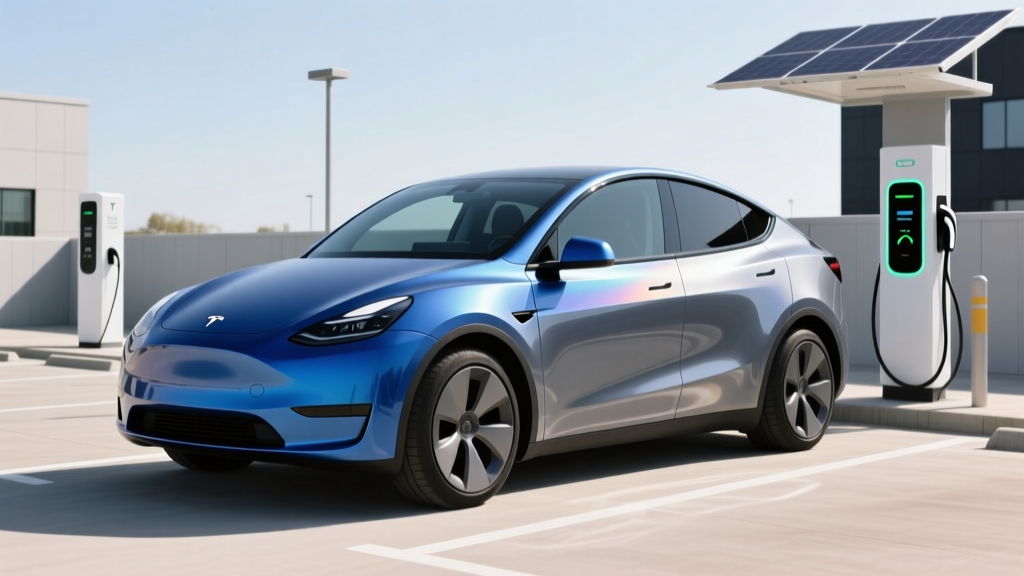
2026 Tesla Model Y Factory Paint Options
Tesla's Juniper-refreshed Model Y (introduced for the 2025 model year and carried into 2026) offers these factory paint choices:
- Pearl White Multi-Coat — No-cost standard
- Solid Black — $1,000 upgrade
- Deep Blue Metallic — $1,000 upgrade
- Ultra Red — $2,500 upgrade (multi-coat, high depth)
- Quicksilver — $2,500 upgrade (metallic, Juniper-exclusive)
- Starlight Gray — $1,000 (market-dependent)
Tesla's paint is applied at Gigafactory Texas (for North American units) and Giga Berlin (for European units). Berlin-produced cars generally receive thicker, more durable multi-coat finishes. North American buyers should note that Tesla's paint has historically drawn criticism for thin clear coats and orange-peel texture — a key reason owners invest in PPF or wraps immediately after delivery.
Aftermarket Color Changes: Wraps, PPF, and Ceramic
Because Tesla's palette is limited, the aftermarket color-change industry has built a significant business around Tesla owners. Here's what each option delivers:
Vinyl Wraps
A full-body vinyl wrap costs between $2,500 and $5,000 depending on material (3M, Avery Dennison, KPMF) and installer quality. Wraps last 5–7 years, are fully removable without damaging OEM paint, and offer finishes Tesla doesn't provide: matte, satin, brushed metal, color-shift, and chrome-delete combinations. A wrap also preserves resale value by protecting the factory paint underneath.
Color Paint Protection Film (PPF)
Color PPF is the premium alternative, running $4,000–$8,000 for a full-body application. Unlike vinyl, PPF is self-healing against minor scratches and rock chips while simultaneously changing the car's color. Brands like STEK and XPEL now offer color-infused PPF that combines protection with a custom hue. For a vehicle like the Model Y, which sees highway commuting and road-trip use, color PPF is arguably the best functional upgrade.
Ceramic Coating Over Factory Paint
If you're satisfied with your Tesla's factory color but want deeper gloss and easier maintenance, a professional ceramic coating ($800–$1,500) bonds to the clear coat for 3–5 years of hydrophobic protection. It does not change the color, but it significantly enhances depth and reduces wash-induced swirl marks.
| Spec | Value |
|---|---|
| EPA Est. Range | 320 miles |
| Battery Capacity | ~78 kWh usable (NMC chemistry) |
| Drivetrain | Dual-Motor AWD |
| Horsepower | 384 hp combined |
| 0–60 mph | 4.8 seconds |
| Max DC Fast Charge | 250 kW (peak) |
| 10–80% DC Charge Time | ~25 minutes |
| Level 2 Home Charge Rate | 11.5 kW (~44 mi/hr) |
| MPGe (Combined) | 111 MPGe |
| Efficiency | 30 kWh/100 mi |
| Cargo Volume (rear seats up) | 30.2 cu ft |
| Cargo Volume (rear seats folded) | 72.1 cu ft |
| Rear Legroom | 40.5 inches |
| Battery Warranty | 8 years / 120,000 miles |
| Base MSRP | $44,990 |
Real-World Range: What the EPA Number Doesn't Tell You
EPA Sticker: 320 miles
Real-World Highway (70 mph, 75°F): ~270–285 miles
Cold Weather (30°F, mixed driving): ~220–250 miles
City / Stop-and-Go with Regen: ~300–315 miles
The Model Y Long Range's 320-mile EPA figure is achievable in mild conditions with moderate speeds and frequent regenerative braking. However, sustained highway driving at 75+ mph reduces efficiency to roughly 280 Wh/mi, cutting range to around 275 miles. In sub-freezing temperatures, the battery's thermal management system consumes energy for preconditioning, and cabin heating (even with the Juniper heat pump) draws additional power. Expect a 20–30% range reduction in winter conditions below 32°F.
For road trips, Tesla's Supercharger network remains the most reliable DC fast-charging ecosystem in North America, with over 6,500 stalls at 250+ kW across the U.S. as of early 2026, according to Tesla's Supercharger page.
Charging Speed and Home Setup
| Charging Level | Power | Miles Added per Hour | Typical Use Case |
|---|---|---|---|
| Level 1 (120V outlet) | ~1.4 kW | ~4–5 mi/hr | Emergency / overnight trickle |
| Level 2 (240V, 48A) | 11.5 kW | ~44 mi/hr | Home daily charging |
| DC Fast Charge (V3 Supercharger) | 250 kW peak | ~200 mi in 15 min | Road trips |
| DC Fast Charge (CCS adapter, 350 kW station) | ~170 kW sustained | ~130 mi in 15 min | Non-Tesla networks |
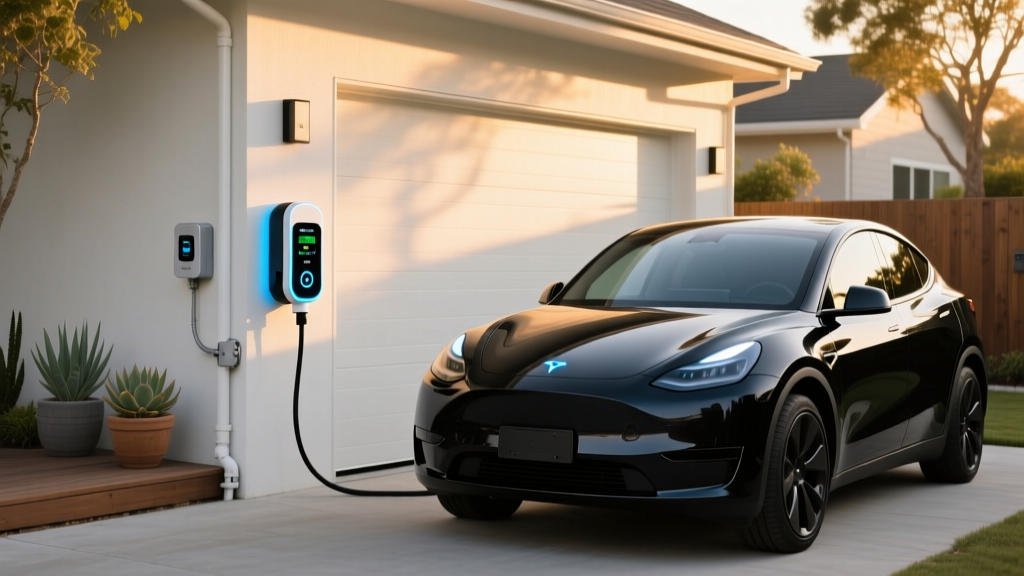
The Model Y's onboard charger accepts up to 11.5 kW on Level 2, meaning a full charge from 10% to 100% takes roughly 7 hours on a 48-amp home circuit. Most owners install a Tesla Wall Connector ($420 for the hardware) on a 60-amp breaker, with total installation running $800–$2,000 depending on panel proximity and local permitting.
On DC fast charging, the Model Y peaks at 250 kW but sustains that rate only between roughly 10–30% state of charge. The charge curve tapers progressively: by 60% SoC, you're typically seeing 100–120 kW, and above 80%, speeds drop below 50 kW. This is why the 10–80% time of ~25 minutes is the most practical metric — charging above 80% on a road trip is rarely worth the time penalty.
Since 2025, Tesla has opened its Supercharger network to non-Tesla EVs via the NACS connector standard, but Tesla owners retain full plug-and-charge convenience with no adapter needed.
Pricing, Trims, and Federal Tax Credit Eligibility
| Trim | MSRP | Est. Price After §30D Credit |
|---|---|---|
| Long Range AWD | $44,990 | $37,490* |
| Long Range AWD (w/ Premium Paint + FSD) | $54,490 | $46,990* |
| Performance AWD | $48,990 | $41,490* |
*Assumes full $7,500 federal tax credit eligibility. See caveats below.
The IRS §30D Clean Vehicle Credit provides up to $7,500 for qualifying new EVs, but eligibility hinges on three requirements that change periodically:
- MSRP Cap: SUVs (including Model Y) must have an MSRP at or below $80,000. All 2026 Model Y trims qualify.
- Buyer Income Cap: Modified adjusted gross income must not exceed $150,000 (single), $225,000 (head of household), or $300,000 (joint filers).
- Battery Sourcing: A percentage of critical minerals and battery components must be sourced from the U.S. or free-trade-agreement countries. Tesla has progressively shifted supply chains to meet these thresholds, but the exact qualifying amount ($3,750 vs. $7,500) can change based on annual sourcing percentages. Verify current eligibility on the IRS website or with a tax professional before purchase.
As of 2026, buyers can transfer the credit to the dealer at point of sale, reducing the purchase price directly rather than waiting for a tax refund.
Tech, Driver Assistance, and Interior
The Juniper-refreshed Model Y brings a noticeably quieter cabin (acoustic glass, improved insulation), a ventilated front seat upgrade, ambient lighting, and a rear-seat touchscreen for passengers. The 15.4-inch front display runs Tesla's latest software with wireless Apple CarPlay integration (added in late 2025), navigation, and over-the-air updates.
Driver Assistance Note: Tesla Autopilot and Full Self-Driving (Supervised) are SAE Level 2 systems. The driver must remain attentive, keep hands on the wheel (or demonstrate engagement via cabin camera), and be prepared to take over at any moment. These are not autonomous driving systems. FSD Supervised costs $8,000 upfront or $99/month and adds features like city-street autosteer and traffic-light recognition, but it does not replace the driver.
Standard Autopilot includes Traffic-Aware Cruise Control and Autosteer (lane-centering on highways). It's competent for daily commuting but requires the same vigilance as any Level 2 system from Ford BlueCruise or GM Super Cruise.
Pros and Cons
Pros
- Access to Tesla Supercharger network — most reliable DC charging in North America
- Class-leading efficiency (30 kWh/100 mi) keeps per-mile cost low
- 320-mile EPA range covers most road-trip segments with one stop
- Strong resale value relative to non-Tesla EVs
- OTA updates add features post-purchase
- Spacious cargo area (72.1 cu ft with seats folded)
Cons
- Limited factory paint palette — must wrap or PPF for custom colors
- Paint quality inconsistency (thin clear coat, orange peel on some panels)
- No Apple CarPlay/Android Auto on pre-2025 models; late-2025+ adds CarPlay but not Android Auto
- Ride quality is firm on 20-inch wheels
- FSD Supervised is expensive and still requires full driver engagement
- Insurance premiums run 15–30% higher than comparable ICE SUVs
Who Should Buy the 2026 Model Y?
The Model Y Long Range AWD is best suited for:
- Daily commuters with home Level 2 charging who want minimal fuel cost and zero maintenance stops.
- Small families needing car-seat-friendly rear space and 72+ cu ft of cargo for gear and strollers.
- Road-trip-capable EV adopters who value Supercharger network coverage across all 48 contiguous states.
It's less ideal for buyers who want a plush ride (consider the Hyundai Ioniq 5 or Genesis GV70 Electrified), traditional physical controls, or a wide factory color selection. If custom color expression is a priority, budget an additional $3,000–$6,000 for a quality wrap or PPF installation at delivery.
Frequently Asked Questions
Can Tesla change colors after delivery?
Tesla does not offer a post-delivery repaint service. However, owners can change their vehicle's color through a professional vinyl wrap ($2,500–$5,000) or color paint protection film ($4,000–$8,000). Both are reversible and protect the factory paint. Tesla service centers will not perform paint work beyond touch-up and panel replacement.
Does wrapping a Tesla void the warranty?
No. A professionally installed vinyl wrap or PPF does not void Tesla's 8-year/120,000-mile battery and drivetrain warranty. However, if wrap removal damages factory paint, that specific damage would not be covered. Choose an experienced installer and document the paint condition before application.
What is the real-world range of the 2026 Model Y Long Range?
The EPA rates it at 320 miles. In real-world highway driving at 70–75 mph in mild weather, expect 270–285 miles. In freezing temperatures, range drops to approximately 220–250 miles depending on cabin heat usage and whether the battery is preconditioned.
How fast does the Model Y charge at home?
On a 48-amp Level 2 home charger (240V), the Model Y adds approximately 44 miles of range per hour at 11.5 kW. A full 10–100% charge takes roughly 7 hours. Most owners charge overnight and wake to a full battery daily.
Does the 2026 Model Y qualify for the $7,500 federal tax credit?
The Model Y qualifies for up to $7,500 under IRS §30D, provided the buyer meets income caps ($150K single / $300K joint), the MSRP is under $80,000 (all trims qualify), and battery sourcing requirements are met at time of purchase. The credit can be transferred to the dealer at point of sale. Verify current sourcing eligibility on IRS.gov before ordering.
Is the Model Y worth buying over the Ford Mustang Mach-E or Hyundai Ioniq 5?
The Model Y wins on efficiency, Supercharger access, and cargo space. The Mach-E offers a more engaging driving feel and a traditional instrument cluster. The Ioniq 5 charges faster on 350 kW CCS stations (10–80% in ~18 minutes vs. the Model Y's ~25 minutes) and has a more distinctive design. If Supercharger reliability and software ecosystem are your top priorities, the Model Y remains the default. If you prefer faster peak charging, a more comfortable ride, or a broader color palette from the factory, the Ioniq 5 is a strong alternative.