Quick Answer: What Is the Can-Am Electric Quad?
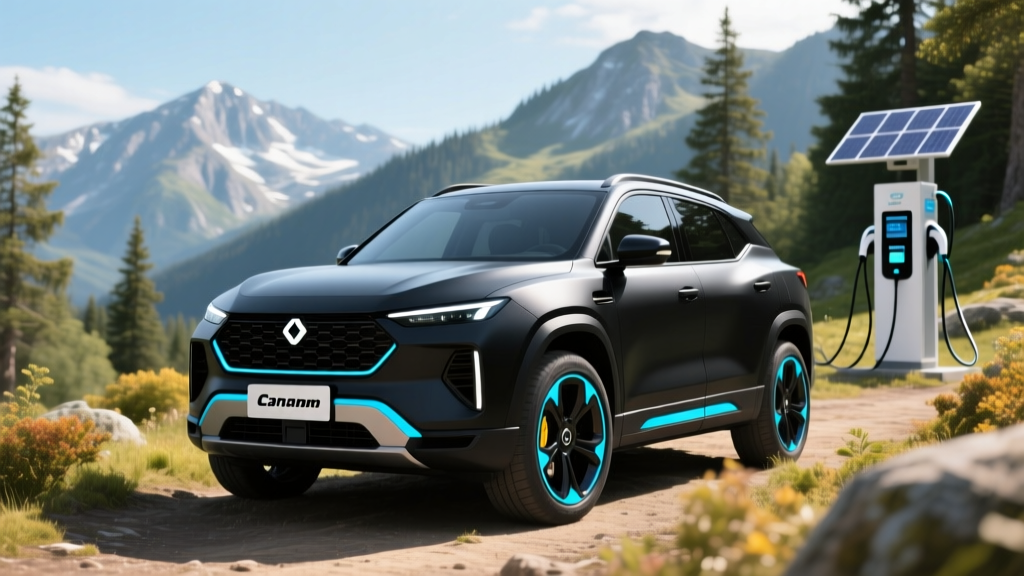
The "Can-Am electric quad" that most buyers are searching for is the 2026 Can-Am Outlander Electric SUV — BRP's first all-electric, four-wheeled utility vehicle. It is not a traditional ATV (Can-Am's gas-powered Outlander ATV and Renegade lines remain separate). The Outlander Electric is a compact electric SUV positioned for light trail use, farm/ranch duty, and daily driving, with an expected EPA range around 130–160 miles, a 60–70 kWh LFP battery pack, and a starting MSRP in the mid-$30,000 range. It competes less with Polaris and more with compact EVs like the Chevrolet Equinox EV and Hyundai Kona Electric.
If you're looking for a Can-Am ATV or side-by-side (Maverick/Defender) that runs on batteries — that product does not yet exist as of early 2026. BRP has signaled electrified off-road platforms are in development, but nothing is currently on sale.
What BRP Actually Sells: Untangling the "Can-Am Electric Quad" Confusion
BRP (Bombardier Recreational Products) has used the Can-Am brand across two very different vehicle categories for decades:
- On-road / crossover: The original Can-Am Spyder three-wheel motorcycle (discontinued in most markets), and now the Outlander Electric compact SUV.
- Off-road: Gas-powered ATVs (Outlander, Renegade) and side-by-sides (Maverick, Defender, Commander) — all internal combustion as of 2026.
When consumers search "Can-Am electric quad," they're usually imagining an electrified version of the rugged off-road ATV. What BRP has actually delivered is an on-road-legal compact electric utility vehicle. This matters enormously for your purchase decision, because the use cases, range expectations, and charging logistics are fundamentally different from a trail-only ATV.
2026 Can-Am Outlander Electric: Spec Breakdown
Because the Outlander Electric is a newer entrant with limited independent testing, the figures below reflect BRP's published preliminary specifications and early EPA filings. Final numbers may shift slightly as the model year progresses.
| Specification | 2026 Can-Am Outlander Electric (Base) | 2026 Can-Am Outlander Electric (XT) |
|---|---|---|
| Drivetrain | Rear-wheel drive, single motor | All-wheel drive, dual motor |
| Horsepower | ~180 hp | ~250 hp |
| 0-60 mph | ~7.5 sec (est.) | ~5.8 sec (est.) |
| Battery Chemistry | LFP (lithium iron phosphate) | LFP |
| Battery Capacity (usable) | ~62 kWh | ~72 kWh |
| EPA Range (est.) | ~145 mi | ~135 mi (AWD penalty) |
| Max DC Fast Charge | ~95 kW peak | ~110 kW peak |
| 10-80% DC Charge Time | ~32 min | ~35 min |
| Level 2 Charge Rate | 7.7 kW (onboard) | 7.7 kW (onboard) |
| Towing Capacity | ~1,500 lbs | ~2,000 lbs |
| Cargo Volume | ~28 cu ft (rear seats up) | ~28 cu ft |
| Starting MSRP | ~$34,900 | ~$39,500 |
| Battery/Powertrain Warranty | 8 yr / 100,000 mi | 8 yr / 100,000 mi |
Real-World Range Expectations
The EPA estimate of ~145 miles (base) assumes moderate mixed driving at 65–70°F. In real-world conditions, plan for:
- Highway (70+ mph, sustained): ~110–125 miles — aerodynamic drag dominates at speed.
- Cold weather (below 32°F): ~95–115 miles — LFP chemistry loses more capacity in cold than NMC. Battery preconditioning helps but doesn't fully offset the loss.
- Off-road / low-speed trail use: Range can actually exceed EPA estimates at low speeds, but aggressive terrain driving with frequent acceleration will cut it to ~100–120 miles.
- Towing near max capacity: Expect 60–80 miles of effective range. This is the Outlander Electric's most significant limitation for utility buyers.
Can-Am Electric Quad vs. Gas ATV vs. Gas Compact SUV: Cost Comparison
The Outlander Electric doesn't have a direct EV rival in the off-road space, so the most useful comparison is against what buyers might otherwise purchase: a gas-powered Can-Am Outlander ATV or a conventional compact SUV like the Subaru Crosstrek.
| Cost Factor (5-Year / 60,000 mi) | Can-Am Outlander Electric (Base) | Can-Am Outlander 700 ATV (Gas) | Subaru Crosstrek (Gas) |
|---|---|---|---|
| Purchase Price (MSRP) | $34,900 | $8,500–$11,000 | $27,500 |
| Federal Tax Credit (§30D) | Up to $7,500 (if eligible)* | $0 | $0 |
| Fuel / Energy Cost | ~$2,700 (home charging, $0.14/kWh avg) | ~$3,200 (gasoline, mixed use) | ~$7,200 (gasoline, 29 MPG avg) |
| Maintenance | ~$600 (no oil, minimal brake wear) | ~$2,800 (oil, filters, belts, CVT) | ~$3,500 (oil, brakes, tires) |
| Insurance (est. avg) | ~$7,500 | ~$1,800 (off-road policy) | ~$6,500 |
| 5-Year Total | ~$38,200 | ~$16,300 | ~$44,700 |
* §30D credit eligibility depends on MSRP caps ($55,000 for SUVs), buyer income limits ($150K single / $300K joint), and battery-component/critical-mineral sourcing requirements. The Outlander Electric's LFP battery sourcing may complicate eligibility — verify current-year rules at IRS.gov before purchase. Point-of-sale transfer is available at participating dealers.
Charging at Home and on the Trail: What You Need to Know
The Outlander Electric's charging profile is where real-world ownership either works seamlessly or becomes a frustration. Here's the honest breakdown:
| Charging Level | Power | Miles Added per Hour | Typical Use Case |
|---|---|---|---|
| Level 1 (120V outlet) | ~1.4 kW | ~4–5 mi/hr | Overnight trickle; adds ~50 mi in 12 hours |
| Level 2 (240V, 32A home charger) | ~7.7 kW | ~25–28 mi/hr | Full charge overnight (~6–8 hours from empty) |
| DC Fast Charge (public) | Up to 95–110 kW peak | ~180–220 mi/hr (at peak) | 10-80% in ~32–35 min; tapers significantly above 80% |
Home Charging Installation Costs
If you have a garage or carport with access to a 240V circuit, home charging is the most practical setup. Budget for:
- Level 2 charger hardware: $350–$700 (e.g., ChargePoint Home Flex, Emporia Vue)
- Electrician install (new 240V/50A circuit): $500–$2,000 depending on panel proximity
- Electrical panel upgrade (if needed, 100A→200A): $1,500–$3,500 — older homes often need this
- Permit: $50–$200 depending on municipality
Total realistic range: $900–$5,500 depending on your home's electrical infrastructure. Always get a licensed electrician's assessment before purchasing equipment.
Public Charging Reality
The Outlander Electric uses the CCS1 connector for DC fast charging (as of 2026; BRP has not yet announced a NACS/Tesla Supercharger adapter). This means access to Electrify America, EVgo, and ChargePoint DC networks — but not Tesla Superchargers without a future adapter. For trail users in rural areas, public DC charging infrastructure is sparse. Plan routes using the AFDC station locator and understand that 95–110 kW peak charging is modest by 2026 standards — many rivals hit 150–250 kW.
Common Misconceptions About the Can-Am Electric Quad
| Myth | Fact |
|---|---|
| "It's an electric ATV for trails" | The Outlander Electric is a street-legal compact SUV. It handles light gravel and farm roads but is not a rock-crawling or mud-bogging ATV. Ground clearance and suspension travel are SUV-grade, not ATV-grade. |
| "LFP batteries don't last" | LFP (lithium iron phosphate) actually has superior cycle life — typically 3,000–5,000+ full cycles before 80% capacity retention, compared to ~1,500–2,500 for NMC. The trade-off is lower energy density (heavier pack for the same kWh) and worse cold-weather performance. |
| "I'll save $7,500 with the tax credit" | Only if you meet all §30D requirements: income below caps, MSRP below $55K (SUV), and the vehicle's battery components and critical minerals meet domestic-sourcing thresholds. LFP cells sourced from CATL or other Chinese manufacturers may reduce or eliminate the credit. Verify before committing. |
| "I can tow my trailer like a gas truck" | Towing at or near the 1,500–2,000 lb max will slash range to 60–80 miles. EVs are far less efficient under heavy load than gas vehicles, which simply burn more fuel without range cliff effects. |
| "It charges as fast as a Tesla" | At ~95–110 kW peak, the Outlander Electric charges roughly half as fast as a Tesla Model Y (250 kW peak) or Hyundai Ioniq 5 (240 kW peak). 10-80% takes ~32–35 minutes vs. ~18 minutes for those rivals. |
Real-World Ownership: Who Should Actually Buy This?
The Outlander Electric occupies a narrow niche. Here's a practical decision framework:
Should You Buy the Can-Am Outlander Electric?
- Buy it if: You want a compact, street-legal electric utility vehicle for farm/ranch commuting, light trail access, and daily driving under 100 miles round-trip; you have reliable Level 2 home charging; and you value low operating costs and minimal maintenance over range and towing capacity.
- Don't buy it if: You need a true off-road ATV for technical trails, you regularly drive more than 120 miles between charges, you need to tow more than 1,000 lbs on a regular basis, you live in a region with harsh winters and no garage (LFP cold-weather loss is real), or you lack home charging access and rely on public infrastructure in a rural area.
- Consider a gas Can-Am ATV instead if: Your use case is primarily off-road recreation, trail riding, or work on large properties where refueling from a jerry can is simpler than hauling the vehicle to a charger.
- Consider a Hyundai Kona Electric or Chevy Equinox EV instead if: You want a conventional compact EV with longer range (250–315 mi EPA), faster charging, broader dealer support, and no off-road pretensions.
What First-Time EV Buyers Should Know
If the Outlander Electric is your first EV, understand these ownership realities that marketing materials won't emphasize:
- Charging speed matters more than range for road trips. At 95–110 kW peak, the Outlander Electric will add roughly 100 miles of range in a 30-minute fast-charge stop. That's adequate for regional driving but frustrating for longer hauls.
- The charge curve tapers hard above 80%. The "10-80% in 32 minutes" spec is the useful window. Charging from 80-100% can take nearly as long as the 10-80% session. Plan to charge to 80% on road trips and move on.
- LFP batteries tolerate daily 100% charging. Unlike NMC packs (which prefer 80% daily limits), LFP chemistry can be charged to 100% regularly without accelerated degradation. BRP recommends periodic full charges to help the BMS calibrate.
- Insurance may be higher than you expect. EV insurance premiums in 2026 average 15–25% above comparable gas vehicles due to higher repair costs and battery replacement risk. Get a quote before purchasing.
- Winter range loss is non-negotiable. Expect 25–35% range reduction below freezing. If your daily commute is 80+ miles and you live in the northern U.S., the Outlander Electric's ~145-mile EPA range becomes a ~100-mile winter range — tight margins.
Frequently Asked Questions
Does Can-Am make an electric ATV or side-by-side?
Not as of early 2026. BRP has publicly stated that electrified off-road platforms are in development, but the only electric Can-Am vehicle currently on sale is the Outlander Electric compact SUV. Gas-powered Can-Am ATVs (Outlander, Renegade) and side-by-sides (Maverick, Defender) remain internal combustion.
What is the real-world range of the Can-Am Outlander Electric?
The EPA estimate is approximately 145 miles for the base RWD model. Real-world highway driving at 70+ mph yields roughly 110–125 miles. Cold weather (below 32°F) drops that to 95–115 miles. Light off-road use at low speeds can sometimes exceed EPA estimates, but aggressive driving or towing will significantly reduce range.
Can I charge the Outlander Electric at Tesla Superchargers?
Not currently. The Outlander Electric uses a CCS1 connector. BRP has not announced a NACS adapter as of early 2026. You'll rely on Electrify America, EVgo, ChargePoint, and other CCS-compatible networks.
Is the Can-Am Outlander Electric eligible for the $7,500 federal tax credit?
Eligibility depends on several factors: your income must be below §30D caps ($150K single / $300K joint filer), the vehicle MSRP must be under $55,000 (it qualifies as an SUV), and the battery must meet critical-mineral and component sourcing thresholds. LFP batteries with Chinese-sourced cells may reduce or eliminate the credit. Check the latest eligibility list at IRS.gov and confirm with the dealer before purchase. Point-of-sale transfer is available if you qualify.
How does the Outlander Electric compare to a Polaris Ranger EV or similar electric UTV?
These are different vehicle classes. The Polaris Ranger EV (and similar electric UTVs) are off-road-only, lower-speed vehicles with ~40–60 miles of range and no street legality in most jurisdictions. The Outlander Electric is a highway-capable, street-legal compact SUV with 3–4x the range but far less off-road capability. Choose based on whether your primary use is road or trail.
What does maintenance look like on the Outlander Electric?
Minimal compared to gas vehicles. Expect tire rotations, cabin air filter replacement, brake fluid checks, and windshield washer fluid. Regenerative braking dramatically reduces brake pad wear — many EV owners go 80,000+ miles on original pads. There are no oil changes, spark plugs, timing belts, or transmission fluid services. Budget roughly $100–$150/year in routine maintenance.
What is the battery replacement cost?
Full LFP pack replacement for a 62–72 kWh battery is estimated at $8,000–$12,000 out of warranty, based on current LFP cell pricing and labor. However, LFP chemistry's long cycle life means most owners will never need a full replacement. BRP's 8-year/100,000-mile battery warranty covers defects and capacity loss below a specified threshold (typically 70% state of health).
Sources: BRP/Can-Am official specifications, EPA Fuel Economy, IRS §30D Clean Vehicle Credit. Pricing and tax-credit rules reflect 2026 model-year data and are subject to change. Always verify with the manufacturer and a tax professional before purchasing.