The Tesla Motorhome Question: Does One Actually Exist?
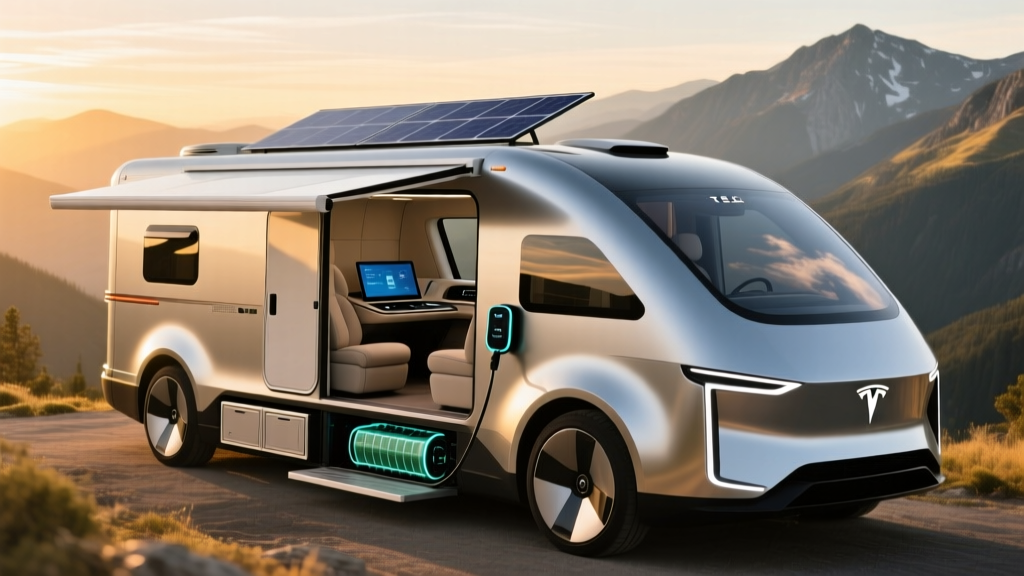
If you've searched "Tesla motorhome" lately, you've likely seen renderings, YouTube concepts, and forum speculation about a Tesla-branded recreational vehicle. Here's the unambiguous reality as of 2026: Tesla does not manufacture, sell, or officially endorse any motorhome, Class A/B/C RV, or camper van. There is no Tesla RV configurator, no Tesla motorhome MSRP, and no Tesla motorhome on any dealer lot.
What does exist are third-party conversions and custom builds that use Tesla components — most notably salvaged Tesla battery packs and drive units — grafted onto RV chassis. Companies like Thor Industries (which owns Airstream and has invested in EV platform development) and independent EV conversion shops have produced one-off electric RV prototypes. But a factory-built Tesla motorhome remains purely speculative.
Given the 9,900 monthly searches for this term, the demand is clearly real. So let's do what the renderings won't: engineer a realistic profile of what a Tesla-based motorhome would actually require in terms of battery, range, charging, and cost — using current Tesla powertrain data and real-world EV physics.
Speculative Spec Table: What a Tesla Motorhome Would Need
Below is an estimated specification profile based on Tesla's current largest battery platform (the Model X and Cybertruck architecture) scaled to the weight and aerodynamic demands of a Class B or small Class C motorhome (roughly 8,000–12,000 lbs GVWR).
| Specification | Estimated Value |
|---|---|
| Battery Capacity | ~150–200 kWh (NMC chemistry) |
| EPA Estimated Range | ~200–280 miles (highly weight/aero dependent) |
| Real-World Highway Range | ~150–220 miles (75 mph, level terrain, moderate temps) |
| Peak DC Fast Charge | ~250 kW (V3 Supercharger compatible) |
| 10–80% DC Charge Time | ~40–55 minutes (large pack, taper above 80%) |
| Level 2 Home Charging | 11.5 kW (48A) / ~12–18 mi/hr |
| 0–60 mph | ~6.5–9.0 seconds (dual-motor AWD) |
| Drivetrain | Dual-motor AWD (estimated) |
| Horsepower | ~500–700 hp (combined) |
| Estimated Base MSRP | $180,000–$250,000+ |
| Federal Tax Credit (§30D) | Not eligible (MSRP and weight exceed caps) |
| Battery Warranty (if Tesla-sourced) | 8 years / 150,000 miles (based on current Tesla terms) |
| Efficiency | ~55–75 kWh/100 mi (estimated, poor aero) |
Note: These figures are analytical estimates based on current Tesla powertrain capabilities applied to RV-class vehicle weights and drag coefficients. No manufacturer has confirmed a production Tesla motorhome.
Range Reality: Why an Electric RV Is a Physics Problem
Real-World Highway Range: ~150–220 miles at 70–75 mph
Cold-Weather Range (30°F): ~120–175 miles (LFP not viable at this capacity; NMC loses ~20–30% in freezing temps)
Range in an electric motorhome is governed by three punishing factors: weight, frontal area, and speed. A typical Class C motorhome weighs 10,000–12,000 lbs loaded and has the aerodynamic profile of a box truck (drag coefficient ~0.55–0.65, compared to the Tesla Model X at ~0.24).
Energy consumption scales roughly linearly with weight and with the square of speed. A Tesla Model X (5,100 lbs, Cd 0.24) achieves about 33–35 kWh/100 mi. A motorhome at double the weight and double the drag would consume 60–80 kWh/100 mi — meaning even a massive 200 kWh battery delivers only 250–330 miles in ideal conditions, and significantly less at highway speeds or in cold weather.
For context, the Tesla Model X Long Range achieves an EPA-rated 326 miles with a ~100 kWh pack at 34 kWh/100 mi. An RV would need roughly double the battery for fewer miles.
Charging a Tesla Motorhome: Infrastructure Gaps
Charging is where the Tesla motorhome concept faces its steepest real-world barrier.
| Charging Level | Power (kW) | Miles Added per Hour | Notes |
|---|---|---|---|
| Level 1 (120V / 12A) | 1.4 kW | ~1–2 mi/hr | Impractical; full charge in 6+ days |
| Level 2 (240V / 48A) | 11.5 kW | ~12–18 mi/hr | Full charge in ~14–18 hours |
| Level 2 (240V / 80A) | 19.2 kW | ~20–28 mi/hr | Requires 100A circuit; full charge ~10–12 hrs |
| DC Fast (V3 Supercharger) | 250 kW peak | ~150–200 mi in 30 min | Peak rate; tapers significantly above 60% SoC |
| DC Fast (V4 / Megacharger) | 350+ kW peak | ~200+ mi in 25 min | Limited availability; may require NACS adapter |
The critical constraint: most RV parks offer 30-amp or 50-amp shore power (3.6–12 kW), which is Level 2 at best. Overnight charging at a campground might add 100–150 miles — enough for a day trip but insufficient for a full pack replenishment. DC fast charging at 250 kW could recover 150+ miles in 30 minutes, but Tesla Supercharger stalls are not designed for vehicles towing trailers or exceeding 30 feet in length. Pull-through Supercharger stations exist but remain limited.
The charge curve on a 200 kWh pack would also be brutal above 60% state of charge. Expect the back half of the charge to take as long as the first 60%, a reality every large-battery EV owner knows well.
Battery Chemistry and Cost: The $40,000 Elephant
At 150–200 kWh, the battery pack alone would represent a staggering cost. Current NMC (nickel manganese cobalt) battery cells cost roughly $110–$130 per kWh at the pack level in 2026. That means the battery in a Tesla motorhome would cost $16,500–$26,000 at wholesale — and significantly more at retail markup with thermal management, BMS, and structural integration.
LFP (lithium iron phosphate) chemistry, which Tesla uses in standard-range Model 3/Y vehicles, offers better cycle life and lower cost per kWh (~$80–$100/kWh). However, LFP's lower energy density (~160 Wh/kg vs. ~250 Wh/kg for NMC) means a 200 kWh LFP pack would weigh roughly 2,750 lbs — an unacceptable penalty in a vehicle already fighting weight constraints. For a Tesla motorhome, NMC is the only viable chemistry at this capacity.
Tesla's current battery warranty covers 8 years or 150,000 miles (whichever comes first) with a minimum 70% capacity retention threshold, per their official warranty documentation. This would presumably extend to any Tesla-sourced drivetrain in a third-party build, though warranty enforcement on modified vehicles is historically complicated.
Tax Credit Eligibility: Don't Count on It
A Tesla motorhome would almost certainly not qualify for the federal §30D clean vehicle tax credit. Here's why:
- MSRP Cap: §30D limits eligibility to vans, SUVs, and pickup trucks with an MSRP under $80,000. A motorhome would far exceed this.
- Vehicle Classification: The IRS defines eligible vehicles under specific weight and class criteria. Class A/B/C motorhomes typically fall outside qualifying categories or exceed the 14,000-lb GVWR threshold for the commercial clean vehicle credit (§45W), which operates under different rules.
- Battery Sourcing: Even if a path to eligibility existed, the critical minerals and battery component sourcing requirements under current IRS §30D rules would need to be met — a challenge for any large-format custom pack.
- Income Caps: Buyer adjusted gross income must not exceed $300,000 (joint) / $150,000 (single) for §30D eligibility.
The commercial clean vehicle credit (§45W) could potentially apply if the motorhome were registered as a commercial vehicle, offering up to $40,000 for vehicles over 14,000 lbs — but this requires business use and is subject to separate qualification rules. Consult a tax professional before planning around any credit.
What Currently Exists: Electric RV Alternatives in 2026
While a Tesla motorhome remains hypothetical, the electric RV space is not entirely empty:
- Winnebago e-RV: Based on the Ford E-Transit chassis with a ~68 kWh battery and ~108-mile range. Limited production; aimed at short-trip campers.
- Thor Industries / Airstream e-stream concepts: Prototypes with ~80–125 kWh packs and tow-assist motors. Not yet in volume production.
- Grounded G1 (formerly founded as a startup): A Class B electric camper van built on a Stellantis EV platform with ~150-mile range.
- DIY Tesla-swapped conversions: Independent builders have mated salvaged Tesla Model S/X drive units to Sprinter and Transit chassis. These are one-offs with no factory warranty, typically costing $150,000–$300,000+.
None of these offer the range, Supercharger network access, or over-the-air update ecosystem that a true Tesla motorhome would promise. But they demonstrate that the demand is real — the physics and economics just haven't caught up.
Who Would a Tesla Motorhome Actually Suit?
If such a vehicle existed at the estimated $180,000–$250,000 price point, the ideal buyer would be:
- Remote workers who boondock near towns with Supercharger access and don't drive more than 150 miles between stops
- Retirees with home solar who can offset Level 2 charging costs and travel in mild climates (less range degradation)
- Full-time van-lifers who prioritize quiet, emission-free campground operation over long interstate hauls
It would be a poor fit for anyone who regularly tows, drives in extreme cold, or needs 400+ mile travel days without multi-hour charging stops. The RV lifestyle already demands patience; an electric RV demands more of it.
- Zero tailpipe emissions at campgrounds and national parks
- Silent operation — no generator noise disturbing neighbors
- Tesla Supercharger network access (17,000+ stalls in North America)
- Instant torque for mountain passes and merging
- Over-the-air updates and Tesla infotainment/app ecosystem
- Potential vehicle-to-load (V2L) to power camp appliances from the pack
- Range of 150–220 real-world miles is limiting for RV travel patterns
- $180,000–$250,000+ estimated cost with no federal tax credit
- Most RV parks lack adequate charging infrastructure
- Supercharger stalls not designed for 30-foot vehicles
- 200 kWh NMC battery adds ~1,100 lbs of weight
- No manufacturer has committed to production
Frequently Asked Questions
Does Tesla make a motorhome or RV in 2026?
No. Tesla does not manufacture or sell any motorhome, camper van, or recreational vehicle. All "Tesla motorhome" content online consists of renderings, concepts, or third-party conversions using salvaged Tesla components.
What would the range of a Tesla motorhome actually be?
Based on current Tesla battery technology applied to an RV-class vehicle (10,000+ lbs, poor aerodynamics), realistic highway range would be approximately 150–220 miles with a 150–200 kWh NMC battery pack. Cold weather could reduce this to 120–175 miles.
How fast would a Tesla motorhome charge?
At a V3 Supercharger (250 kW peak), a 200 kWh pack could recover roughly 150 miles in 30 minutes, with a 10–80% charge taking approximately 40–55 minutes due to charge-curve tapering. Level 2 charging at a campground (50A shore power) would add roughly 12–18 miles per hour.
Would a Tesla motorhome qualify for the $7,500 federal EV tax credit?
Almost certainly not. The §30D credit has an $80,000 MSRP cap for vans/SUVs/pickups, income limits, and battery sourcing requirements. A motorhome would far exceed the price cap. The commercial vehicle credit (§45W) may offer up to $40,000 for qualifying commercial-use vehicles over 14,000 lbs, but eligibility is complex — consult a tax professional.
Can I buy an electric RV right now?
Limited options exist. The Winnebago e-RV (108-mile range, Ford E-Transit chassis) has seen small production runs. Several startups have announced electric Class B vans. None offer range or charging infrastructure comparable to Tesla's ecosystem, and most cost $120,000–$200,000+.
Why hasn't Tesla built a motorhome?
The economics don't align. A 200 kWh battery pack costs $16,500–$26,000+ at wholesale, the market for $200,000+ electric RVs is extremely small, and the charging infrastructure at RV parks is inadequate. Tesla's manufacturing scale favors high-volume vehicles (Model Y, Cybertruck) over low-volume specialty platforms.
What's the biggest obstacle to an electric motorhome?
Physics. The combination of heavy weight (10,000+ lbs) and poor aerodynamics (Cd ~0.60) means energy consumption of 60–80 kWh/100 miles — nearly double a Tesla Model X. This demands an enormous, heavy, expensive battery for modest range, creating a vicious weight spiral that current battery chemistry can't fully solve.