The Short Answer on Can-Am Electric Motorcycles
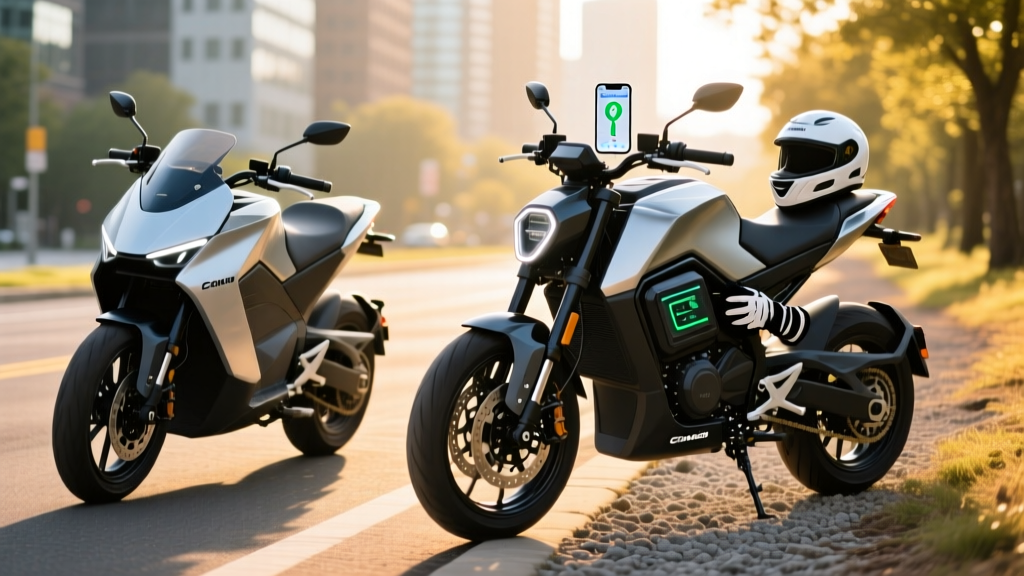
BRP's revived Can-Am brand launched its first electric motorcycles for the 2026 model year: the Pulse (street naked, ~$13,999) and the Origin (dual-sport, ~$14,499). Both are classified as electric motorcycles — not scooters or e-bikes — requiring a motorcycle endorsement. They use a liquid-cooled Rotax E-POWER motor, a roughly 8.9 kWh usable battery, and deliver an estimated 100 miles of city range (less on the highway). DC fast charging from 20–80% takes approximately 1.5 hours via CCS; Level 2 (240V) fills the pack in about 4–5 hours. If you're a commuter with home charging and a sub-60-mile daily ride, the Pulse is a compelling gas-motorcycle replacement. If you need highway range, long-distance touring, or lack home charging access, the math gets harder.
What Are the Can-Am Pulse and Origin?
Can-Am is best known for side-by-sides, Sea-Doo watercraft, and the three-wheeled Spyder/Ryker. The brand originally produced motorcycles in the 1970s before exiting the market. For 2026, parent company BRP has re-entered with two fully electric models built on a shared platform:
- Can-Am Pulse: A street-oriented naked bike with upright ergonomics, 17-inch wheels, and a focus on urban commuting.
- Can-Am Origin: A dual-sport styled model with longer suspension travel, a 19-inch front wheel, and light off-road capability on fire roads and gravel.
Both share the same Rotax E-POWER drivetrain: a liquid-cooled permanent-magnet motor producing roughly 47 hp (35 kW) and 53 lb-ft of torque, paired with a single-speed gearbox. The battery pack is rated at approximately 8.9 kWh usable (NMC chemistry). Neither model qualifies for the federal §30D EV tax credit, which applies to four-wheeled vehicles only — a key cost consideration we'll address below.
Range, Efficiency, and Real-World Expectations
Electric motorcycles face the same physics as electric cars, but with tighter packaging constraints. Can-Am estimates the following range figures:
| Spec | Can-Am Pulse | Can-Am Origin |
|---|---|---|
| Battery (usable) | ~8.9 kWh (NMC) | ~8.9 kWh (NMC) |
| Estimated City Range | ~100 mi | ~85 mi |
| Estimated Highway Range (65 mph) | ~60 mi | ~50 mi |
| Combined / Realistic Mixed | ~75–80 mi | ~65–70 mi |
| Motor Output | 47 hp / 53 lb-ft | 47 hp / 53 lb-ft |
| Top Speed | ~75 mph | ~75 mph |
| 0–60 mph (claimed) | ~3.8 sec | ~4.0 sec |
| Curb Weight | ~440 lb | ~460 lb |
| Seat Height | ~31.5 in | ~34.3 in |
| Base MSRP (2026) | $13,999 | $14,499 |
Real-World Range Reality: The ~100-mile city estimate assumes stop-and-go riding where regenerative braking recovers significant energy. At sustained highway speeds (65–70 mph), aerodynamic drag dominates, and expect range to drop to roughly 50–60 miles. Cold weather (below 40°F) can reduce range an additional 15–25%. If your commute is 30 miles each way with highway segments, you'll need to charge daily.
Charging: Speeds, Connectors, and Home Setup
Charging an electric motorcycle is fundamentally different from charging an EV — smaller batteries mean faster full charges, but also fewer DC fast-charging options in practice.
| Level | Power | 0–100% Time | Notes |
|---|---|---|---|
| Level 1 (120V household) | ~1.4 kW | ~8–9 hours | Emergency/overnight only |
| Level 2 (240V, J1772) | ~3.3 kW | ~4–5 hours | Standard home garage charging |
| DC Fast (CCS) | Up to ~20 kW | 20–80% in ~1.5 hr | Limited public motorcycle compatibility |
Home charging is the practical path. Most owners will plug into a standard 120V outlet overnight (Level 1) or install a 240V Level 2 outlet. Because the battery is only ~8.9 kWh, even Level 1 can add roughly 20 miles of range per hour of charging — adequate for many commuters. A Level 2 setup (like a standard J1772 EV charger) fills the pack in a single evening session.
DC fast charging caveat: While the Pulse and Origin support CCS DC fast charging, the small battery limits peak charge rates to roughly 20 kW. More importantly, many public DC fast chargers are designed for cars — the cable weight, connector height, and parking layout can make plugging in a motorcycle awkward or impractical. Plan your charging around home Level 2 rather than relying on public DC infrastructure.
Home install cost: If you already have a 240V outlet (dryer, EV charger), you're set — just buy a compatible J1772 cable or adapter (~$100–$200). A new 240V/20A circuit installed by a licensed electrician typically runs $500–$1,500 depending on panel proximity. No panel upgrade is usually needed for motorcycle charging loads.
Can-Am Electric Motorcycles vs. Gas Motorcycles: Cost Breakdown
The natural comparison for the Pulse is a mid-displacement gas naked bike (300–500cc) like the Kawasaki Z400, Honda CB500F, or Yamaha MT-03. For the Origin, think Honda CRF300L or Royal Enfield Himalayan.
| Cost Factor | Can-Am Pulse (Electric) | Gas Equivalent (~400cc Naked) |
|---|---|---|
| Purchase Price (MSRP) | $13,999 | $5,000–$6,500 |
| Federal Tax Credit (§30D) | $0 (motorcycles excluded) | N/A |
| State Incentives | Varies — some states offer motorcycle EV rebates ($500–$1,500) | None |
| Fuel / Electricity (annual, 5,000 mi) | ~$100–$150 (home charging at $0.15/kWh) | ~$500–$700 (gas at $3.50/gal, 55 MPG) |
| Annual Maintenance | ~$50–$100 (tires, brake fluid, chain) | ~$300–$500 (oil, filters, chain, valves) |
| 5-Year Fuel + Maintenance | ~$750–$1,250 | ~$4,000–$6,000 |
| Insurance (annual est.) | $400–$700 | $350–$600 |
| Estimated 5-Year Total Cost | ~$16,500–$18,500 | ~$11,000–$15,500 |
The verdict on cost: The Can-Am Pulse costs roughly $8,000–$9,000 more upfront than a comparable gas motorcycle. Annual fuel and maintenance savings of $500–$800 partially close the gap, but at a 5-year horizon, the electric option remains more expensive in total cost of ownership unless your state offers a substantial rebate. The break-even point versus a gas bike is roughly 10–12 years on fuel savings alone. Buyers motivated by the riding experience, instant torque, silent operation, and zero tailpipe emissions will find value beyond the spreadsheet.
Common Misconceptions About Can-Am Electric Motorcycles
| Myth | Fact |
|---|---|
| "They qualify for the $7,500 federal EV tax credit." | No. IRS §30D applies to four-wheeled vehicles only. Two- and three-wheeled electric vehicles had a separate credit (§30D was historically for 2-3 wheelers under a different provision that expired). Check IRS.gov for current rules. |
| "100 miles of range is enough for anyone." | 100 miles is the city estimate with heavy regen use. Highway riding cuts range nearly in half. If your daily ride exceeds 60 miles mixed, plan on daily charging. |
| "You can charge at any public EV charger." | Physically, yes (with CCS). Practically, car-oriented charger layouts, heavy cables, and lack of motorcycle parking near stalls make public DC charging frustrating. Home charging is the primary strategy. |
| "Electric motorcycles need no maintenance." | No oil changes or valve adjustments, but tires, brake pads/fluid, chain/belt, suspension, and coolant still require service. Budget $50–$100/year minimum. |
| "The battery will need replacing in a few years." | NMC packs in modern EVs typically retain 80%+ capacity after 8 years. BRP provides a battery warranty (confirm terms with your dealer). Degradation is gradual, not sudden. |
Who Should Buy a Can-Am Electric Motorcycle?
Decision Framework: Is the Pulse or Origin Right for You?
- Choose the Can-Am Pulse if: You have a commute under 50 miles round-trip, mostly on surface streets; you have access to a garage or dedicated parking with a 120V or 240V outlet; you value instant torque, silent operation, and minimal maintenance; you want a premium, tech-forward motorcycle from a recognized powersports brand.
- Choose the Can-Am Origin if: You want dual-sport versatility for fire roads and gravel; your ride is predominantly off-pavement or mixed terrain at moderate speeds; you accept lower highway range in exchange for longer suspension and rugged styling.
- Stick with a gas motorcycle if: You regularly ride more than 80 miles in a day; you tour or ride highways frequently; you lack reliable home charging access; your budget is under $8,000; you want a vast dealer network and cheap, abundant aftermarket parts.
- Consider a Zero or LiveWire instead if: You need more range (Zero SR/S offers ~150+ city miles with the optional Power Tank); you want established EV motorcycle dealer support; you prioritize DC fast-charging speed on a larger battery.
First-Time EV Motorcycle Buyer Checklist
If this is your first electric vehicle of any kind, here's what to prepare for:
- Secure home charging first. Before ordering, confirm you have access to at least a standard 120V outlet near where you park. A 240V outlet is ideal but not mandatory given the small battery.
- Map your daily mileage honestly. Track your actual riding for a week. If it exceeds 60 miles on highway-heavy routes, range will be a daily stressor.
- Check your motorcycle endorsement. Both models are full motorcycles requiring an M endorsement — not electric bicycles or mopeds.
- Research state incentives. While the federal credit doesn't apply, states like California (CARB programs) and Colorado have offered rebates for electric motorcycles. Amounts and availability change annually.
- Get insurance quotes before buying. Electric motorcycles can carry higher premiums due to repair costs and limited claims data. Quote from at least two insurers.
- Understand the warranty. Confirm the battery and powertrain warranty terms with your Can-Am dealer. BRP's powersports dealer network is extensive, but EV-specific service training is still ramping up.
Frequently Asked Questions
Do Can-Am electric motorcycles qualify for any federal tax credit?
No. The federal §30D Clean Vehicle Credit applies only to four-wheeled vehicles. The previous federal credit for two-wheeled electric vehicles (under a separate provision) expired and has not been renewed as of 2026. Always verify current rules at IRS.gov.
How long does it take to charge the Can-Am Pulse at home?
On a standard 120V household outlet (Level 1, ~1.4 kW), a full charge takes approximately 8–9 hours. On a 240V Level 2 connection (~3.3 kW), expect a full charge in roughly 4–5 hours. Overnight charging on Level 1 is sufficient for most daily commutes under 50 miles.
What is the real highway range of the Can-Am Origin?
At sustained speeds of 65–70 mph, expect roughly 50 miles from the Origin's 8.9 kWh battery. Aerodynamic drag is the dominant energy consumer at highway speeds, and the Origin's taller, more upright riding position creates more drag than the Pulse. Cold weather will reduce this further.
How does the Can-Am Pulse compare to a Zero SR?
The Zero SR (with the Z-Force 17.3 kWh battery) offers roughly double the city range (~150+ miles) and supports faster DC fast charging, but starts at approximately $20,000+ — significantly more than the Pulse at $13,999. The Pulse is lighter, less expensive, and targets a more commuter-focused use case. If range is your top priority, the Zero platform is more mature; if price and brand cachet matter, Can-Am has the edge.
Can I ride the Can-Am Origin off-road?
Yes, with caveats. The Origin is designed as a dual-sport, suitable for fire roads, gravel, and light trails. It is not a dedicated enduro or motocross bike — the ~460 lb curb weight and limited ground clearance compared to purpose-built dirt bikes limit aggressive off-road use. Think adventure-commuter, not trail shredder.
What happens when the battery degrades?
NMC lithium-ion batteries in modern EVs typically retain 80% or more of original capacity after 8 years of normal use. Gradual degradation means you'll slowly see range decrease — not a sudden failure. BRP's battery warranty terms should be confirmed at purchase. Replacement costs for motorcycle battery packs are not yet widely published, but based on industry data for packs of this size, expect a range of $3,000–$5,000 if out of warranty.
Are Can-Am electric motorcycles available at regular Can-Am dealers?
BRP has been onboarding select Can-Am dealerships for the electric motorcycle line, but not all existing powersports dealers will stock or service these models. Check BRP's dealer locator and confirm EV service capability before ordering.