Quick Verdict: A Premium Compact EV That Pivots Cadillac Toward Accessibility
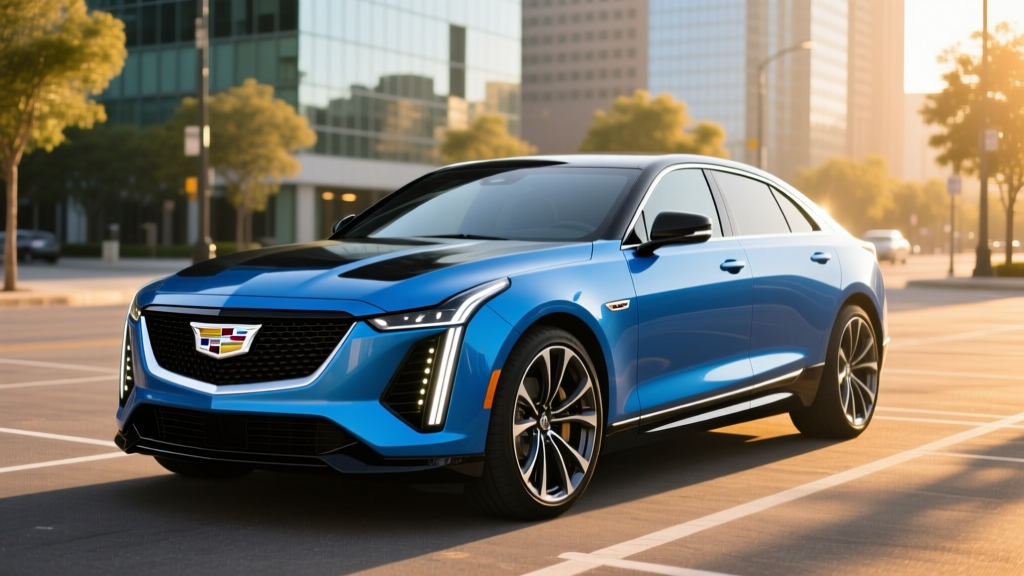
The 2026 Cadillac Optiq V-Series Classic arrives as the brand's most attainable all-electric model, sitting beneath the Lyriq and Celestiq in GM's luxury EV hierarchy. Built on the Ultium platform with a 102 kWh usable battery pack, this compact luxury crossover targets buyers who want the Cadillac badge and Super Cruise capability without crossing $60,000. But with rivals like the Tesla Model Y, BMW iX1, and Genesis GV60 all fighting for the same buyer, the question is whether the Optiq's blend of range, refinement, and technology holds up in daily use — not just on a spec sheet.
After examining EPA data, GM's published specifications, and real-world driving variables, the Optiq V-Series Classic delivers a credible 303-mile EPA range, competitive DC fast-charging speeds, and one of the best hands-free driving systems available at this price point. It's not the quickest in its class, and cargo space trails some competitors, but as a daily commuter and weekend cruiser, it makes a strong case.
Range, Battery, and Real-World Efficiency
| Specification | Value |
|---|---|
| EPA Estimated Range | 303 miles |
| Battery Capacity (usable) | 102 kWh |
| Battery Chemistry | NMC (Nickel Manganese Cobalt) — Ultium pouch cells |
| EPA Combined MPGe | 93 MPGe |
| Energy Consumption | 34 kWh / 100 mi |
| Drivetrain | Rear-Wheel Drive (single motor) |
The EPA's 303-mile figure assumes a mix of city and highway driving at moderate temperatures. In real-world conditions, expect the following:
- Highway cruising (70-75 mph, fair weather): ~255-275 miles
- City/suburban mixed driving: ~280-300 miles (regen braking recovers energy)
- Cold weather (below 30°F, highway): ~210-240 miles — a 20-30% reduction typical of NMC packs without aggressive preconditioning
- Cold weather + city: ~240-265 miles
According to fueleconomy.gov, the Optiq's 93 MPGe combined places it mid-pack among luxury compact EVs — behind the more aerodynamic Tesla Model Y (122 MPGe Long Range) but comparable to the BMW iX1. The 34 kWh/100 mi consumption rate means you'll spend roughly $5.10 per 100 miles at the national average residential electricity rate of $0.15/kWh.
Charging Speeds: DC Fast, Level 2, and Level 1
| Charging Level | Power / Rate | Time or Miles Added |
|---|---|---|
| DC Fast Charge (peak) | 190 kW (NACS connector) | 10-80% in ~27 minutes |
| DC Fast Charge (sustained avg) | ~130-145 kW (10-80%) | Charge curve tapers above 60% SoC |
| Level 2 Home (240V, 48A) | 11.5 kW onboard charger | ~34 miles of range per hour |
| Level 2 Home (240V, 32A) | 7.7 kW | ~23 miles of range per hour |
| Level 1 (120V, 12A) | 1.4 kW | ~4 miles of range per hour |
The Optiq V-Series Classic comes equipped with the North American Charging Standard (NACS) port natively, meaning direct access to Tesla Supercharger stalls (now open to non-Tesla EVs via the NACS standard) without an adapter. At a 350 kW-capable station, the Optiq peaks at 190 kW — not the fastest in its class (the Hyundai Ioniq 5 peaks at 240 kW on 800V architecture), but adequate for road trips.
The charge curve matters more than peak numbers. The Ultium platform sustains strong charging rates between 10-50% SoC, then tapers progressively. Expect the 50-80% portion to add roughly 10-12 minutes to your stop. For a typical highway rest stop — arriving at 15% and leaving at 75% — plan on 30-35 minutes total including plugging in and payment.
For home charging, the 11.5 kW onboard charger is a strong point. A full charge from 10-100% takes roughly 9 hours on a 48-amp Level 2 circuit, meaning overnight replenishment is effortless. Installation of a 48-amp hardwired Level 2 charger typically requires a 60-amp dedicated circuit; budget $800-$2,000 for equipment and licensed electrician work depending on panel proximity and local permitting.
Performance and Drivetrain
| Specification | Value |
|---|---|
| Powertrain | Single rear motor, RWD |
| Horsepower | 340 hp |
| Torque | 325 lb-ft |
| 0-60 mph | 5.9 seconds (manufacturer est.) |
| Top Speed | 124 mph (electronically limited) |
| Towing Capacity | Not rated for towing |
The V-Series Classic is the rear-wheel-drive, single-motor variant of the Optiq lineup. With 340 hp and a 5.9-second 0-60 time, it's quick enough for confident highway merging and passing, but it's not a performance EV in the way the dual-motor Optiq Sport (AWD, ~500 hp) or a Tesla Model Y Performance (3.5 seconds) are. Cadillac positions the "V-Series Classic" trim as the range-maximizing, comfort-oriented choice — and the RWD layout delivers on that promise with slightly better efficiency and a quieter, less aggressive power delivery.
Ride quality benefits from GM's Ultium skateboard architecture, which places the heavy battery pack low in the chassis. The Optiq's curb weight of approximately 4,850 lbs gives it a planted feel, and the five-link rear suspension absorbs bumps with the composure expected of a Cadillac. Steering is light and precise, though not communicative — a deliberate choice for a luxury cruiser rather than a sports sedan.
Interior, Cargo, and Technology
The Optiq's cabin is where Cadillac's luxury ambitions become tangible. A 33-inch curved LED display dominates the dashboard, combining the instrument cluster and infotainment touchscreen into a single sweeping panel running Google Built-In (with native Google Maps, Google Assistant, and Play Store apps). Wireless Apple CarPlay and Android Auto are standard.
| Dimension | Measurement |
|---|---|
| Front Headroom | 39.6 in |
| Front Legroom | 41.2 in |
| Rear Headroom | 38.1 in |
| Rear Legroom | 37.8 in |
| Cargo Volume (behind 2nd row) | 26.0 cu ft |
| Cargo Volume (seats folded) | 54.2 cu ft |
| Front Trunk (Frunk) | None ( Ultium platform packaging) |
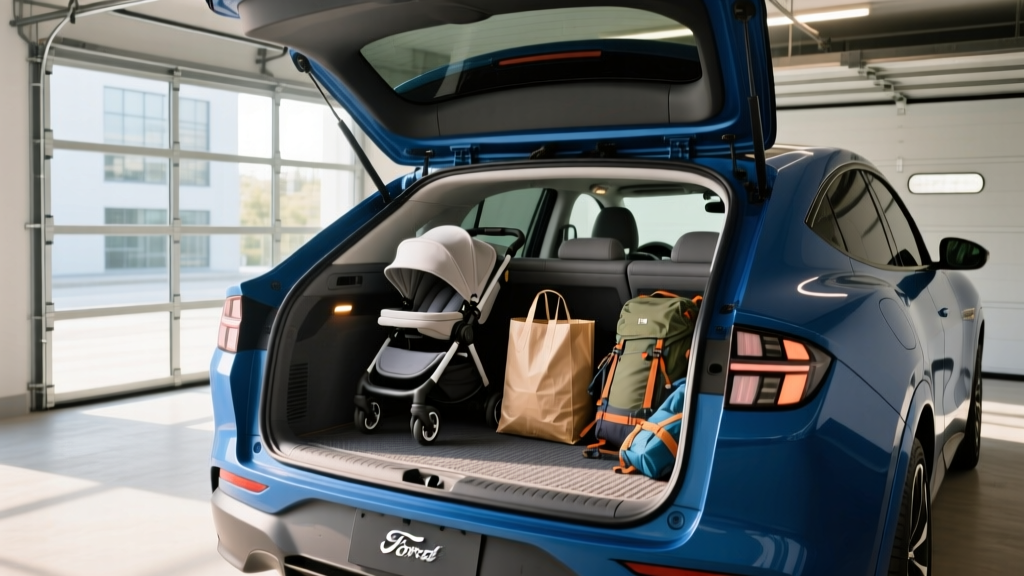
Cargo space is the Optiq's most notable compromise. At 26.0 cubic feet behind the rear seats, it trails the Tesla Model Y (30.2 cu ft) and falls short of what many compact SUV buyers expect for family hauling. The 54.2 cu ft maximum with seats folded is adequate for weekend trips but not class-leading. There is no front trunk (frunk), as GM uses that space for HVAC and power electronics on this Ultium variant.
On the technology front, the Optiq V-Series Classic comes standard with Super Cruise — GM's Level 2 hands-free driver-assistance system — on over 750,000 miles of mapped highways in the US and Canada. This is one of the Optiq's strongest differentiators: true hands-free driving (with eye monitoring) on compatible roads, executed with smooth lane-keeping and adaptive cruise behavior.
Super Cruise is a Level 2 driver-assistance system under SAE J3016 classification. The driver must remain attentive, keep eyes on the road (monitored via infrared camera), and be prepared to take over at any time. It is not autonomous or "self-driving." Hands-free does not mean attention-free.
Pricing, Trims, and Federal Tax Credit Eligibility
| Trim | Drivetrain | Base MSRP | Est. As-Tested* |
|---|---|---|---|
| V-Series Classic (RWD) | Single Motor RWD | $52,990 | $55,500-$58,000 |
| V-Series Sport (AWD) | Dual Motor AWD | $58,990 | $62,000-$66,000 |
| Luxury (RWD) | Single Motor RWD | $49,990 | $52,000-$56,000 |
*As-tested pricing includes destination charge ($1,395), common options (panoramic roof, premium audio, 22-inch wheels), and excludes dealer markups or incentives.
The 2026 Cadillac Optiq may qualify for up to $7,500 under the federal clean vehicle credit, but eligibility depends on multiple requirements that change frequently. As of the current tax year:
- MSRP Cap: SUVs/crossovers must have an MSRP at or below $80,000 — the Optiq clears this easily.
- Buyer Income Cap: Modified AGI must not exceed $150,000 (single), $225,000 (head of household), or $300,000 (joint).
- Battery Sourcing: Critical minerals and battery components must meet phased-in domestic/free-trade sourcing thresholds. GM has worked to qualify Ultium cells, but the exact credit amount ($3,750 or $7,500) depends on the model year's sourcing compliance.
- Point-of-Sale Transfer: Eligible buyers can transfer the credit to the dealer at purchase, reducing the sale price directly rather than waiting for a tax refund.
- Assembly: Final assembly must occur in North America — the Optiq is assembled at GM's Spring Hill, Tennessee plant.
If you qualify for the full $7,500 credit via point-of-sale transfer, the Optiq V-Series Classic's effective price drops to approximately $45,490 — a compelling number for a 303-mile luxury EV with Super Cruise included. If only the $3,750 half-credit applies (due to partial battery sourcing compliance), the effective price lands around $49,240.
Warranty and Ownership Costs
| Coverage | Term |
|---|---|
| Battery & Propulsion (EV powertrain) | 8 years / 100,000 miles |
| Battery Capacity Retention Guarantee | ≥70% of original capacity over 8 yr/100k mi |
| Limited Vehicle Warranty (bumper-to-bumper) | 4 years / 50,000 miles |
| Corrosion Protection | 6 years / 70,000 miles |
| Roadside Assistance | 6 years / 70,000 miles |
GM's 8-year/100,000-mile battery warranty is standard for the industry and matches what Tesla, Ford, and Hyundai offer. The 70% capacity retention threshold means GM will repair or replace the battery if it degrades below 70% of its original 102 kWh capacity within the warranty period. Based on Ultium pack data from the Lyriq (which shares this platform), real-world degradation after 3 years and 40,000 miles has averaged 5-8% — well within the guarantee.
Insurance premiums for the Optiq are expected to run 10-15% higher than a comparably priced gas-powered Cadillac XT4, driven by EV repair costs and battery replacement risk. Expect annual premiums in the $1,800-$2,400 range depending on your state, driving record, and coverage levels.
Who Should Buy the Optiq V-Series Classic?
- You want a luxury-branded EV under $55,000 (before credits) with 300+ miles of range
- Super Cruise hands-free highway driving is a priority — it's standard and genuinely excellent
- You primarily commute and take moderate road trips (200-400 miles), not cross-country hauls
- You value a quiet, comfortable ride over sporty acceleration
- You want native NACS access to the Tesla Supercharger network without adapters
- You need maximum cargo space for family gear (the Model Y offers 30+ cu ft)
- You want AWD and sub-5-second 0-60 performance (step up to the Optiq Sport or consider the BMW iX1 xDrive)
- You frequently tow (the Optiq is not rated for towing)
- You need the absolute fastest DC charging in the segment (the Ioniq 5/GV60 800V architecture charges faster)
Pros and Cons
- 303-mile EPA range — competitive for the class
- Super Cruise standard — best-in-class hands-free driving
- Native NACS connector — no adapter needed for Superchargers
- 11.5 kW Level 2 onboard charger — fast home replenishment
- Premium interior with 33-inch curved display
- Heat pump included for cold-weather efficiency
- Qualifies for up to $7,500 federal tax credit (MSRP/assembly clear)
- Cargo space (26 cu ft) trails key rivals
- No frunk for additional storage
- 190 kW peak DC charge rate is mid-pack, not class-leading
- RWD only on Classic trim — AWD requires Sport upgrade
- Not rated for towing
- Insurance costs 10-15% above gas equivalent
- Real-world highway range drops to ~255-275 mi
Frequently Asked Questions
What is the real-world range of the Cadillac Optiq V-Series Classic?
The EPA rates the Optiq at 303 miles combined. In real-world driving, expect roughly 255-275 miles on highway trips at 70-75 mph, 280-300 miles in mixed city/suburban use, and 210-240 miles in cold-weather highway driving below 30°F. The heat pump helps, but NMC chemistry is inherently less cold-resilient than LFP.
How fast does the Optiq charge at home and on the road?
On a DC fast charger, the Optiq peaks at 190 kW and charges from 10-80% in approximately 27 minutes. At home on a 48-amp Level 2 charger (11.5 kW), you'll add about 34 miles of range per hour, fully replenishing overnight in roughly 9 hours. Level 1 (standard 120V outlet) adds about 4 miles per hour — useful for emergencies or very low daily mileage.
How much does the Optiq cost after federal tax credits?
The V-Series Classic starts at $52,990 MSRP. If you qualify for the full $7,500 §30D credit (meeting income caps and battery sourcing requirements), the effective price is approximately $45,490 via point-of-sale transfer. If only the $3,750 partial credit applies, expect around $49,240. Always verify current sourcing rules at irs.gov before purchasing.
Is the Optiq worth buying over the Tesla Model Y or BMW iX1?
It depends on your priorities. The Optiq wins on luxury interior quality, standard Super Cruise, and a quieter ride. The Model Y wins on cargo space (30.2 cu ft), efficiency (122 MPGe), and DC charging speed. The BMW iX1 offers AWD standard and a sportier drive but with less range (~240 mi EPA). If hands-free highway driving and cabin refinement matter most, the Optiq is the strongest choice in this price bracket.
Does the Cadillac Optiq qualify for the federal EV tax credit?
The Optiq meets two major §30D requirements: its MSRP is under the $80,000 SUV cap, and it's assembled in North America (Spring Hill, TN). The remaining variable is battery component and critical mineral sourcing, which determines whether you receive the full $7,500 or a partial $3,750 credit. Buyer income caps ($150K single / $300K joint) also apply. Confirm eligibility on the IRS clean vehicle credit page before finalizing your purchase.
What is the battery warranty, and how long will it last?
GM covers the Optiq's battery and propulsion system for 8 years or 100,000 miles, guaranteeing at least 70% of original capacity. Based on Lyriq fleet data, Ultium NMC packs show 5-8% degradation after 3 years / 40,000 miles — suggesting the battery will retain roughly 85-90% capacity at the 8-year mark under normal use. Full battery replacement (if ever needed out of warranty) is estimated at $12,000-$16,000 based on current Ultium pack pricing.