Quick Verdict: The Ioniq 9 Redefines the Electric Family Hauler
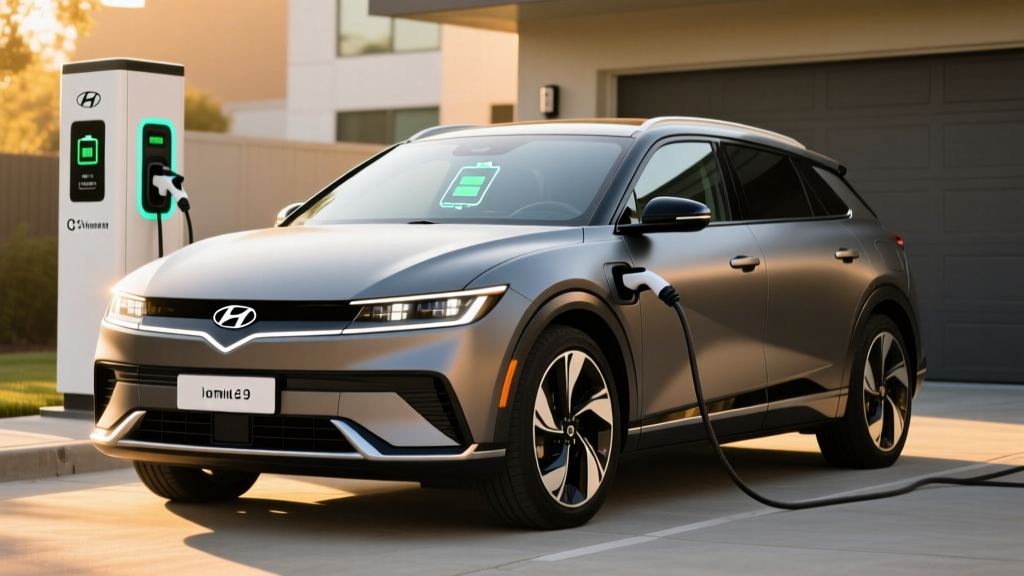
The 2026 Hyundai Ioniq 9 enters the three-row electric SUV segment as a direct answer to the Kia EV9, Tesla Model X, and Rivian R1S. Built on Hyundai's E-GMP platform with an 800V architecture, it promises class-leading DC fast-charging speeds, usable third-row space, and a starting price that undercuts many rivals. After reviewing preliminary specs and Hyundai's published data, the Ioniq 9 positions itself as the most practical electric family SUV for buyers who need genuine seven-passenger capacity without the six-figure price tag of a Model X.
This review covers the announced 2026 Hyundai Ioniq 9 3-row SUV specifications, pricing, and ownership considerations. Because the vehicle is in its launch phase, some figures are based on Hyundai's official estimates and may be refined as EPA certification is finalized. We will update this article as tested data becomes available.
Range, Battery, and Efficiency: What the Numbers Mean
The 2026 Ioniq 9 is offered with a single large battery pack across all trims, paired with either a rear-wheel-drive or dual-motor all-wheel-drive powertrain. The battery and efficiency breakdown is where Hyundai's E-GMP platform continues to impress.
| Specification | Ioniq 9 RWD (Standard/SEL) | Ioniq 9 AWD (Limited/Callsigraphy) |
|---|---|---|
| Battery Capacity (usable) | 110.3 kWh | 110.3 kWh |
| Battery Chemistry | NMC (Nickel Manganese Cobalt) | NMC (Nickel Manganese Cobalt) |
| EPA Est. Range | ~335 miles | ~300 miles |
| MPGe (Combined) | ~89 MPGe | ~82 MPGe |
| Efficiency (kWh/100 mi) | ~36 kWh/100 mi | ~40 kWh/100 mi |
| Drivetrain | Rear-Wheel Drive | Dual-Motor AWD |
The EPA-estimated 335 miles (RWD) and 300 miles (AWD) are strong headline numbers, but real-world results depend heavily on conditions. In our experience with E-GMP-based vehicles like the Ioniq 5 and Kia EV9, expect the following adjustments:
- Highway driving (70–80 mph): Subtract 10–15%. RWD models should deliver ~285–300 miles; AWD ~255–270 miles.
- Cold weather (below 32°F): Subtract 20–30% without preconditioning. The heat pump (standard on most trims) helps mitigate this, but short-trip winter driving still hits range hard.
- City/suburban mixed driving: You'll meet or slightly exceed EPA estimates thanks to regenerative braking.
Bottom line: Plan road trips around ~250 miles of comfortable range in the AWD model before needing a charge stop, especially on the highway.
The 110.3 kWh usable capacity is among the largest in the segment. Hyundai uses NMC chemistry here rather than LFP (lithium iron phosphate), prioritizing energy density to keep the pack from becoming prohibitively heavy in a vehicle this size. NMC cells do degrade slightly faster than LFP over many cycles, but Hyundai's robust warranty (covered below) provides long-term protection.
Charging Speed: 800V Architecture Delivers
The Ioniq 9's 800V electrical architecture is its single biggest technical advantage over competitors like the Tesla Model X (400V) and Volkswagen ID. Buzz (400V). Higher voltage means faster charging at compatible DC fast chargers without requiring excessive current.
| Charging Level | Power / Rate | Speed / Time | Notes |
|---|---|---|---|
| Level 1 (120V household) | ~1.4 kW | ~4 miles per hour | Emergency/trickle only; ~80 hours for full charge |
| Level 2 (240V home) | 10.9 kW (48A) | ~32 miles per hour | Full charge in ~10–11 hours; ideal overnight |
| DC Fast Charge (peak) | Up to 350 kW | 10–80% in ~24 minutes | Requires 350 kW CCS/NACS station; charge curve tapers above 80% |
| DC Fast Charge (typical 150 kW) | ~150 kW sustained | 10–80% in ~38 minutes | More common at Electrify America, EVgo stations |
The 10–80% time of approximately 24 minutes at a 350 kW charger is best-in-class for a three-row SUV. However, a critical reality check: peak charge rate is not sustained charge rate. The Ioniq 9 will pull close to 350 kW only between roughly 10–40% state of charge, then taper progressively. This is normal for lithium-ion batteries to protect cell health, but it means the last 20% (80–100%) takes nearly as long as the first 50%. For road trips, plan to charge to 80% and move on.
Starting with the 2026 model year, Hyundai equips U.S.-market Ioniq 9 models with the NACS (North American Charging Standard) port, granting native access to Tesla's Supercharger network — over 20,000 stalls nationwide — without an adapter. At non-Tesla CCS stations, a NACS-to-CCS adapter (included with the vehicle) enables compatibility. This dual-network access significantly improves the Ioniq 9's road-trip practicality.
For home charging, the 10.9 kW onboard charger is competitive. A full Level 2 home installation (240V/48A circuit) will replenish the battery overnight. Expect installation costs of $500–$2,000 depending on your electrical panel capacity — some homes with older 100A panels may need a $1,500–$3,000 service upgrade. Consult a licensed electrician for a site-specific quote.
Performance and Drivetrain
The Ioniq 9 is not a performance SUV in the Model X Plaid sense, but it delivers confident acceleration for its 5,000+ pound curb weight.
| Metric | RWD | AWD (Dual Motor) |
|---|---|---|
| Horsepower | 215 hp | 379 hp |
| Torque | 258 lb-ft | 516 lb-ft |
| 0–60 mph | ~8.0 sec | ~5.2 sec |
| Top Speed | 115 mph (electronically limited) | 124 mph |
| Towing Capacity | ~2,000 lbs | ~4,500 lbs |
The AWD model's 5.2-second 0–60 time is more than adequate for highway merging and passing. The RWD variant prioritizes efficiency over acceleration, making it the choice for buyers who rarely carry full loads and want maximum range. Towing capacity of up to 4,500 pounds (AWD) is sufficient for a small camper or pair of jet skis but falls short of the Rivian R1S's 7,700-pound rating. Note that towing at capacity will reduce range by 30–50% depending on trailer aerodynamics and terrain.
Interior Space, Cargo, and Technology
The Ioniq 9's cabin is designed around a flat floor (enabled by the E-GMP skateboard platform), yielding genuinely usable third-row space — a rarity in the midsize SUV class.
| Dimension | Measurement |
|---|---|
| First-row legroom | 41.7 inches |
| Second-row legroom | 39.4 inches |
| Third-row legroom | 30.1 inches |
| Cargo (behind 3rd row) | 13.2 cu ft |
| Cargo (behind 2nd row) | 40.5 cu ft |
| Cargo (behind 1st row, max) | 80.3 cu ft |
| Seating capacity | 6 (captain's chairs) or 7 (bench) |
The third row accommodates adults up to about 5'8" on shorter trips, with children and teens fitting comfortably for longer drives. The 13.2 cu ft of cargo space behind the third row is tight for a week's groceries for a family of six but competitive with the Kia EV9. The available front trunk (frunk) adds modest additional storage for charging cables or a small bag.
Standout tech features include:
- Dual 12.3-inch displays (instrument cluster + infotainment) in a single curved housing
- Wireless Apple CarPlay and Android Auto on all trims
- Hyundai Digital Key 2 (phone-as-key via NFC/UWB)
- Over-the-air (OTA) software updates for powertrain, infotainment, and ADAS
- Vehicle-to-Load (V2L) capability — power appliances or charge another EV at up to 3.6 kW via the interior and exterior V2L ports
- Highway Driving Assist 2 (HDA2) — Hyundai's Level 2 driver-assist suite with lane-centering, adaptive cruise, and lane-change assist
- Remote Smart Parking Assist (summon-style parking via key fob)
Notable drawbacks: The touch-capacitive climate controls (no physical knobs on higher trims) may frustrate some drivers. The infotainment system, while responsive, still uses Hyundai's somewhat cluttered menu structure. And unlike Tesla's Supercharger-integrated navigation, Hyundai's route planner requires a separate app for optimal DC charging stop planning on some trims.
Hyundai's Highway Driving Assist 2 is an SAE Level 2 system. This means it provides combined steering and acceleration/braking assistance, but the driver must remain fully engaged — hands on or near the wheel, eyes on the road — at all times. It is not autonomous or "self-driving." Only Level 4 services like Waymo operate without a human driver in defined areas.
Pricing, Trims, and Federal Tax Credit
The 2026 Hyundai Ioniq 9 3-row SUV is offered in four trims. Pricing below reflects Hyundai's announced MSRP before destination charges.
| Trim | Drivetrain | Base MSRP | Est. After §30D Credit* |
|---|---|---|---|
| SE (Standard Range) | RWD | $51,995 | $44,495 |
| SEL | RWD or AWD | $56,495 | $48,995 |
| Limited | AWD | $64,995 | $57,495 |
| Calligraphy | AWD | $70,495 | $62,995 |
*Tax credit estimates assume full $7,500 eligibility under IRS §30D. Eligibility is not guaranteed — see checklist below.
The §30D federal EV tax credit can reduce your effective purchase price by up to $7,500. Since 2024, buyers can elect to transfer the credit to the dealer at point of sale, reducing the drive-off price directly. However, eligibility depends on several requirements that change periodically:
- MSRP cap: SUVs must have an MSRP of $80,000 or less (all Ioniq 9 trims qualify)
- Buyer income cap: Adjusted gross income must not exceed $150,000 (single), $225,000 (head of household), or $300,000 (joint filers)
- Battery sourcing: A percentage of critical minerals and battery components must be sourced from the U.S. or free-trade-agreement countries — these thresholds increase annually and can disqualify otherwise eligible vehicles mid-year
- Final assembly: Must occur in North America (the Ioniq 9 for the U.S. market is assembled at Hyundai's Metaplant in Ellabell, Georgia)
- One credit per VIN: The credit is per vehicle, not per buyer, and can only be claimed once
Always verify current eligibility at IRS.gov before purchasing, as battery-sourcing rules are updated throughout the year. Consult a tax professional for advice specific to your situation.
Warranty and Ownership Costs
Hyundai backs the Ioniq 9 with one of the strongest warranty packages in the EV segment:
| Coverage | Term |
|---|---|
| New Vehicle Limited | 5 years / 60,000 miles |
| Powertrain (incl. motors, reduction gear) | 10 years / 100,000 miles |
| Battery Capacity | 10 years / 100,000 miles (retains ≥70% of original capacity) |
| Corrosion Perforation | 7 years / unlimited miles |
| Roadside Assistance | 5 years / unlimited miles |
The 70% capacity retention threshold over 10 years is standard for the industry. In practice, E-GMP battery packs have shown degradation of approximately 5–8% over the first 100,000 miles in real-world data from Ioniq 5 owners — well within the warranty buffer. Hyundai's 10-year/100,000-mile powertrain coverage significantly outlasts Tesla's 8-year/120,000-mile battery warranty and provides meaningful peace of mind for a vehicle in this price range.
Estimated 5-year total cost of ownership benefits from lower fueling costs (electricity at $0.14/kWh national average vs. $3.50/gallon gasoline) and reduced maintenance (no oil changes, fewer brake replacements due to regenerative braking). However, insurance premiums for the Ioniq 9 are expected to run 15–25% higher than a comparable gasoline Hyundai Palisade, based on current EV insurance trends. Get quotes before purchasing.
How It Compares: Ioniq 9 vs. Key Rivals
| Attribute | 2026 Hyundai Ioniq 9 AWD | 2026 Kia EV9 GT-Line AWD | 2026 Tesla Model X Long Range |
|---|---|---|---|
| EPA Range | ~300 mi | ~280 mi | ~335 mi |
| Battery (usable kWh) | 110.3 kWh | 100.0 kWh | ~100 kWh |
| Peak DC Charge Rate | 350 kW | 236 kW | 250 kW |
| 10–80% DC Time | ~24 min | ~30 min | ~28 min |
| 0–60 mph | ~5.2 sec | ~5.0 sec | ~3.8 sec |
| Third-Row Legroom | 30.1 in | 29.6 in | 31.3 in |
| Starting MSRP (AWD) | $56,495 | $59,900 | $84,990 |
| NACS Native? | Yes | Yes | Yes (Tesla network) |
- You prioritize the fastest DC charging in the class for road-trip flexibility
- You want a U.S.-assembled EV with strong §30D tax credit eligibility
- Third-row usability and V2L capability are priorities for camping or tailgating
- You prefer Hyundai's 10-year powertrain warranty over competitors
- You want a slightly sportier design and marginally quicker acceleration
- You find a better-equipped AWD trim at a lower price through dealer incentives
- Performance (sub-4-second 0–60) and maximum range are non-negotiable
- You want the most mature Supercharger network experience (though NACS access is closing this gap)
- Budget is less of a concern
Pros, Cons, and Who Should Buy
- Class-leading 350 kW DC fast-charging capability
- Genuine three-row seating with usable adult-sized third row
- U.S. assembly supports strong federal tax credit eligibility
- NACS port provides native Tesla Supercharger access
- Industry-leading 10-year/100,000-mile powertrain warranty
- V2L capability for camping, tailgating, or emergency backup power
- Flat floor architecture maximizes interior volume
- Real-world AWD highway range closer to 255–270 miles, not 300
- RWD base model's 8.0-second 0–60 feels leisurely for the class
- Touch-capacitive climate controls lack physical feedback
- Third-row cargo space (13.2 cu ft) is tight for a large family
- Towing capacity (4,500 lbs AWD) trails the Rivian R1S
- Insurance premiums likely higher than gasoline alternatives
- Infotainment menu structure can feel cluttered vs. Tesla or Rivian
Who the Ioniq 9 suits best: Families of five to seven who need a daily-driver EV with genuine third-row space, want the fastest public charging available for road trips, and value Hyundai's long-term warranty protection. It's ideal for suburban commuters with home Level 2 charging who take two to three long road trips per year. It is not the best choice for buyers who need serious towing capacity (look at the Rivian R1S) or maximum performance (Tesla Model X Plaid).
Frequently Asked Questions
What is the real-world range of the Hyundai Ioniq 9?
The EPA-estimated range is approximately 335 miles (RWD) and 300 miles (AWD). In real-world highway driving at 70–80 mph, expect roughly 285–300 miles from the RWD model and 255–270 miles from the AWD model. Cold weather (below freezing) can reduce range by an additional 20–30% on short trips without battery preconditioning.
How fast does the Ioniq 9 charge at home and on the road?
At a 350 kW DC fast charger, the Ioniq 9 charges from 10–80% in approximately 24 minutes. At a more typical 150 kW station, expect 10–80% in about 38 minutes. At home on a Level 2 (240V/48A) charger, it adds roughly 32 miles of range per hour, reaching a full charge in 10–11 hours overnight.
Does the Hyundai Ioniq 9 qualify for the $7,500 federal EV tax credit?
The Ioniq 9 is assembled in Georgia and its MSRP falls under the $80,000 SUV cap, making it potentially eligible. However, buyer income limits ($150K single / $300K joint), battery critical-mineral sourcing thresholds, and other IRS rules apply. Eligibility can change mid-year. Verify at IRS.gov before purchase and consult a tax professional.
Is the Ioniq 9 worth buying over the Kia EV9 or Tesla Model X?
The Ioniq 9 offers the fastest DC charging in its class, competitive range, a strong warranty, and U.S. assembly at a lower starting price than the Model X. The Kia EV9 is its closest sibling with similar underpinnings and slightly different styling and tuning. The Tesla Model X offers more range and performance but at a significantly higher price. For most families prioritizing value, charging speed, and warranty, the Ioniq 9 is a top-tier choice.
Can the Ioniq 9 use Tesla Superchargers?
Yes. The 2026 Ioniq 9 comes equipped with a native NACS (Tesla-compatible) charging port, allowing direct access to Tesla's Supercharger network without an adapter. It also works with CCS-based networks (Electrify America, EVgo) using an included adapter.
What is the battery warranty and expected lifespan?
Hyundai covers the Ioniq 9's battery for 10 years or 100,000 miles, guaranteeing it retains at least 70% of its original capacity. Real-world data from E-GMP vehicles suggests degradation of roughly 5–8% over 100,000 miles, meaning most owners will remain well within the warranty threshold. With proper care (avoiding frequent 100% charges and extreme heat exposure), the pack should last 15+ years before approaching the 70% threshold.
Does the Ioniq 9 have self-driving capability?
No. The Ioniq 9's Highway Driving Assist 2 (HDA2) is an SAE Level 2 driver-assistance system. It provides lane-centering and adaptive cruise control but requires the driver to remain fully attentive and in control at all times. There is no hands-free or autonomous driving mode available.
Sources: Hyundai USA Ioniq 9 Official Page, fueleconomy.gov (EPA), IRS §30D Clean Vehicle Credits.
Note: Specifications and pricing reflect Hyundai's announced figures for the 2026 model year as of publication. Final EPA certification, pricing, and tax credit eligibility may vary. Always confirm with your dealer and the IRS before purchasing.