Quick Verdict: Cadillac's Compact Electric Luxury Play
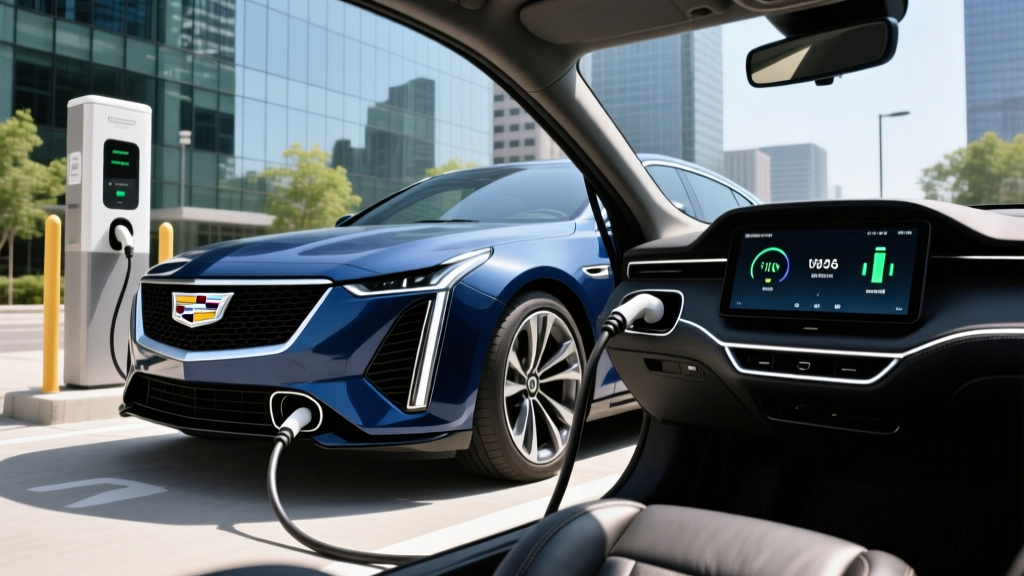
The 2026 Cadillac Optiq slots into one of the most competitive segments in the EV market — compact luxury electric SUVs — and arrives with genuine credibility. Built on GM's Ultium platform and sharing core architecture with the Chevrolet Equinox EV, the Optiq elevates the formula with a quieter cabin, richer materials, and Cadillac's latest digital cockpit. With an EPA-estimated range north of 300 miles, competitive DC fast-charging speeds, and a starting price that undercuts several European rivals, it's a serious contender for luxury buyers ready to go electric without stepping up to the Lyriq's larger footprint and higher cost.
But the Optiq isn't flawless. Its DC fast-charging speed trails the segment's best, the rear-seat legroom is merely adequate, and federal tax credit eligibility depends on your income and the vehicle's battery-sourcing compliance. Here's every number that matters.
Range, Efficiency, and Real-World Expectations
The Optiq draws energy from a 102 kWh (usable capacity) Ultium battery pack using NMC (nickel manganese cobalt) chemistry, chosen for its high energy density in this weight class. The rear-wheel-drive Luxury trim posts the highest range figure, while the all-wheel-drive Sport trims sacrifice roughly 15–20 miles for the traction and power of a dual-motor setup.
EPA Estimated: 307 miles (RWD Luxury) / 288 miles (AWD Sport)
Real-World Highway (70–75 mph, moderate climate): Expect 255–275 miles (RWD) and 240–260 miles (AWD). At sustained highway speeds, aerodynamic drag and the Optiq's 4,800+ lb curb weight reduce efficiency noticeably.
Cold-Weather Impact (below 32°F): Plan for a 20–30% range reduction, dropping effective range to approximately 215–245 miles (RWD). The Optiq includes a heat pump, which mitigates cabin-heating energy draw but cannot fully offset battery chemistry limitations in deep cold.
| Spec | Luxury RWD | Sport AWD |
|---|---|---|
| EPA Range | 307 mi | 288 mi |
| Battery (usable) | 102 kWh, NMC | 102 kWh, NMC |
| Efficiency | 97 MPGe / 35 kWh/100mi | 91 MPGe / 37 kWh/100mi |
| Horsepower | 288 hp | 365 hp |
| 0–60 mph | 7.2 sec | 5.4 sec |
| Drivetrain | RWD, single motor | AWD, dual motor |
| Max DC Charge Rate | 190 kW | 190 kW |
| 10–80% DC Time | ~28 min | ~28 min |
| Level 2 Charge Rate | 11.5 kW (~32 mi/hr) | 11.5 kW (~32 mi/hr) |
| Cargo (rear seats up) | 26.3 cu ft | 26.3 cu ft |
| Cargo (rear seats folded) | 54.7 cu ft | 54.7 cu ft |
| Rear Legroom | 37.8 in | 37.8 in |
| Battery Warranty | 8 yr / 100,000 mi | 8 yr / 100,000 mi |
Charging: Home, Public, and What the Curve Really Looks Like
The Optiq supports a peak DC fast-charging rate of 190 kW on compatible CCS or NACS stations (Cadillac has adopted the NACS connector for 2026, granting access to Tesla Superchargers via the North American standard). That peak rate is competitive with the BMW iX3 and Audi Q4 e-tron, but it trails the Hyundai Ioniq 5's 800V architecture, which can sustain 240+ kW.
| Charging Level | Power | Speed / Time |
|---|---|---|
| Level 1 (120V household) | ~1.4 kW | ~4 mi/hr added |
| Level 2 (240V home/public) | 11.5 kW | ~32 mi/hr added; full charge in ~9.5 hr |
| DC Fast Charge (peak) | 190 kW | 10–80% in ~28 min |
| DC Fast Charge (80–100%) | Tapers to <40 kW | 80–100% adds ~20+ min |
Charging-curve reality check: The 190 kW peak is achieved at a low state of charge (roughly 10–25% SoC) and tapers progressively. Between 50% and 80%, expect sustained rates closer to 90–120 kW. This is normal for 400V-architecture NMC packs, but it means your actual average charging speed on a road trip is closer to 120–130 kW, not the headline 190 kW figure.
Home charging setup: A Level 2 home charger at 11.5 kW (48A on a 60A circuit) will replenish the Optiq from near-empty to full in roughly 9.5 hours — ideal for overnight charging. Budget $500–$800 for a quality Level 2 EVSE (e.g., ChargePoint Home Flex, Emporia Level 2) and $800–$2,500 for professional electrician installation, depending on panel proximity and whether a 200A panel upgrade is needed.
Performance and Driving Dynamics
The single-motor RWD Optiq produces 288 horsepower and 325 lb-ft of torque, reaching 60 mph in 7.2 seconds. That's adequate for highway merging and city driving, though it won't feel particularly quick against sportier rivals. The dual-motor AWD Sport bumps output to 365 hp and 355 lb-ft, dropping the 0–60 time to 5.4 seconds — a meaningful difference when you want confident passing power or live in a region with snow and ice.
Ride quality is where the Optiq earns its luxury badge. GM's tuning prioritizes isolation over sportiness: the suspension absorbs road imperfections with composure, and the cabin remains remarkably quiet at speed — aided by acoustic laminated glass and active noise cancellation. Steering is light and precise, though it lacks the feedback that driving enthusiasts might want. Regenerative braking offers multiple levels, including a one-pedal driving mode that can bring the Optiq to a complete stop without touching the brake pedal.
Interior, Tech, and Cargo Practicality
Inside, the Optiq features a 33-inch diagonal LED display that combines the instrument cluster and infotainment into a single curved panel — a Cadillac signature. Google Built-In handles navigation, voice assistant, and app integration natively. Wireless Apple CarPlay and Android Auto are standard, along with a 19-speaker AKG audio system on higher trims.
Driver assistance: The Optiq comes standard with Cadillac's Super Cruise-compatible hardware on equipped trims (subscription required after trial period). Super Cruise is an SAE Level 2 system — it handles steering, acceleration, and braking on mapped divided highways, but the driver must remain attentive and keep eyes on the road, monitored by a driver-facing camera. It is not self-driving.
Cargo and space: With 26.3 cubic feet behind the second row and 54.7 cubic feet with the rear seats folded, the Optiq is practical for daily use and weekend trips. Rear legroom at 37.8 inches is adequate for adults but trails the Tesla Model Y (41.6 in) and Hyundai Ioniq 5 (39.4 in). There is no front trunk (frunk); the Ultium platform packaging uses that space for HVAC and power electronics.
Pricing, Trims, and Federal Tax Credit Eligibility
The 2026 Optiq launches in three primary configurations:
| Trim | Base MSRP | Est. Federal Credit* | Effective Price |
|---|---|---|---|
| Luxury (RWD) | $52,990 | Up to $7,500 | ~$45,490 |
| Premium Luxury (AWD) | $57,490 | Up to $7,500 | ~$49,990 |
| Sport (AWD) | $59,990 | Up to $7,500 | ~$52,490 |
*Federal tax credit eligibility under IRS §30D is not guaranteed for every buyer or every vehicle. Key requirements for 2026:
- MSRP Cap: SUVs must have an MSRP at or below $80,000. All Optiq trims qualify.
- Buyer Income Cap: Modified adjusted gross income must not exceed $150,000 (single), $225,000 (head of household), or $300,000 (joint filers).
- Battery Sourcing: A percentage of critical minerals and battery components must be sourced from the U.S. or free-trade-agreement countries. GM has worked to localize Ultium supply chains, but the exact credit amount ($3,750 or $7,500) depends on the specific VIN's compliance — verify at the point of sale.
- Point-of-Sale Transfer: Eligible buyers can transfer the credit to the dealer at purchase, reducing the purchase price directly rather than waiting for a tax refund.
- Final Assembly: Must occur in North America. The Optiq is assembled at GM's Spring Hill, Tennessee plant, which satisfies this requirement.
Consult a tax professional to confirm your personal eligibility before relying on the credit in your budget.
How the Optiq Stacks Up Against Key Rivals
The compact luxury EV SUV segment leaves the Optiq with no shortage of competition. Here's how the critical numbers compare:
| Spec | Cadillac Optiq (RWD) | BMW iX xDrive45 | Audi Q6 e-tron | Tesla Model Y LR |
|---|---|---|---|---|
| EPA Range | 307 mi | 310 mi | 308 mi | 330 mi |
| Battery | 102 kWh NMC | 105 kWh NMC | 100 kWh NMC | 82 kWh NMC |
| Peak DC Charge | 190 kW | 205 kW | 270 kW | 250 kW |
| 10–80% Time | ~28 min | ~26 min | ~21 min | ~22 min |
| 0–60 mph | 7.2 sec | 5.0 sec | 5.8 sec | 5.0 sec |
| Base MSRP | $52,990 | $73,800 | $63,800 | $47,990 |
| Cargo (seats up) | 26.3 cu ft | 35.5 cu ft | 28.7 cu ft | 30.2 cu ft |
Choose the Optiq if: You want a quiet, ride-focused luxury compact SUV with a usable 300+ mile range, prefer Cadillac's design language and dealer experience, and value Super Cruise for highway commuting. The RWD Luxury trim at ~$45,500 after the tax credit is a compelling value in luxury EVs.
Look elsewhere if: You prioritize maximum cargo space (BMW iX or Tesla Model Y), the fastest possible DC charging (Audi Q6 e-tron at 270 kW), or need a third row. The Optiq also isn't the pick for driving enthusiasts who want sharper handling dynamics.
Warranty and Long-Term Ownership
GM backs the Optiq's battery pack and electric drive components with an 8-year / 100,000-mile warranty, covering defects and capacity loss below 60% of original capacity — though real-world Ultium degradation data from the Equinox EV and Lyriq suggests most packs retain 90%+ capacity well past 80,000 miles under normal use. The limited vehicle warranty covers 4 years / 50,000 miles, and complimentary scheduled maintenance is included for the first year.
Insurance costs for the Optiq are expected to fall in line with similarly priced luxury EVs — roughly $1,800–$2,400 annually depending on your profile, according to industry averages. Get quotes from your provider before purchase, as EV insurance premiums can exceed comparable gas vehicles by 15–25%.
Pros and Cons at a Glance
- 307-mile EPA range (RWD) is competitive in segment
- Exceptionally quiet, comfortable ride quality
- Super Cruise availability for hands-free highway driving
- 33-inch curved display is visually impressive
- Under $53K base price; eligible for up to $7,500 federal credit
- NACS connector enables Tesla Supercharger access
- 190 kW peak DC charging trails Audi Q6 e-tron and Tesla
- Rear-seat legroom (37.8 in) is tighter than Model Y and Ioniq 5
- No frunk for additional cargo
- RWD base model's 7.2-sec 0–60 feels leisurely at this price
- Real-world highway range drops to ~260 mi; plan accordingly
Frequently Asked Questions
What is the real-world range of the 2026 Cadillac Optiq?
The EPA rates the RWD Optiq at 307 miles and the AWD Sport at 288 miles. In real-world highway driving at 70–75 mph, expect 255–275 miles (RWD) or 240–260 miles (AWD). In freezing temperatures, plan for 20–30% less range due to battery chemistry limitations, even with the heat pump.
How fast does the Optiq charge at home and on the road?
At home on a Level 2 charger (11.5 kW / 240V), the Optiq gains about 32 miles of range per hour, with a full charge taking roughly 9.5 hours. On a DC fast charger, it peaks at 190 kW and reaches 10–80% in approximately 28 minutes, though charging speed tapers significantly above 80% SoC.
Does the 2026 Cadillac Optiq qualify for the $7,500 federal EV tax credit?
The Optiq's MSRP is well under the $80,000 SUV cap, and it is assembled in North America (Spring Hill, TN). However, your personal eligibility depends on income limits ($150K single / $300K joint) and the specific VIN's battery-sourcing compliance under IRS §30D. The credit can be transferred at the point of sale to reduce your purchase price directly. Verify with your dealer and a tax professional.
Is the Cadillac Optiq worth buying over the Tesla Model Y or BMW iX?
It depends on priorities. The Model Y offers more range (330 mi), more cargo space, and a lower price, but lacks the Optiq's luxury materials and ride refinement. The BMW iX is more spacious and quicker but costs $20,000+ more. The Optiq is the value pick in the luxury tier — best for buyers who want comfort, quiet, and Super Cruise without paying a European premium.
What are the biggest drawbacks of the Optiq?
The 190 kW peak charging speed is adequate but not class-leading, adding minutes on long road trips versus rivals like the Audi Q6 e-tron. Rear legroom is tighter than expected for the segment, there is no frunk, and the base RWD model's acceleration is relaxed rather than quick.