Quick Verdict: The Compact Luxury EV Cadillac Needed
The 2026 Cadillac Optiq slots into the brand's EV lineup as the entry point — a compact luxury crossover built on GM's Ultium platform that undercuts the Lyriq in both size and price. With an EPA-estimated range around 305 miles, a tech-forward cabin dominated by a 33-inch LED display, and starting MSRP near $49,990, the Optiq targets buyers who want the Cadillac badge and EV running costs without stepping up to midsize pricing. It's not the fastest-charging EV in its class, and real-world highway range will dip below the sticker number, but as a daily commuter and weekend cruiser, it delivers where it counts.
| Spec | Value |
|---|---|
| EPA Est. Range | ~305 miles (RWD est.) |
| Battery (Usable) | ~85 kWh, NMC (Ultium) |
| DC Fast Charge (Peak) | ~150 kW |
| 10–80% DCFC Time | ~30 minutes (est.) |
| Level 2 Home Charge | 11.5 kW (~32 mi/hr) |
| 0–60 mph | ~6.0 sec (RWD) / ~4.5 sec (AWD est.) |
| Horsepower | ~340 hp (RWD) / ~480 hp (AWD est.) |
| Drivetrain | RWD standard; AWD available |
| MPGe (Combined Est.) | ~95 MPGe |
| Base MSRP | $49,990 (est.) |
| Battery Warranty | 8 yr / 100,000 mi |
Note: The Optiq was announced for the Chinese market first; U.S. specifications for the 2026 model year are preliminary and subject to final EPA certification. Figures above reflect GM's Ultium platform capabilities and early manufacturer disclosures.
Cadillac Optiq Interior: Cabin Design, Tech & Space
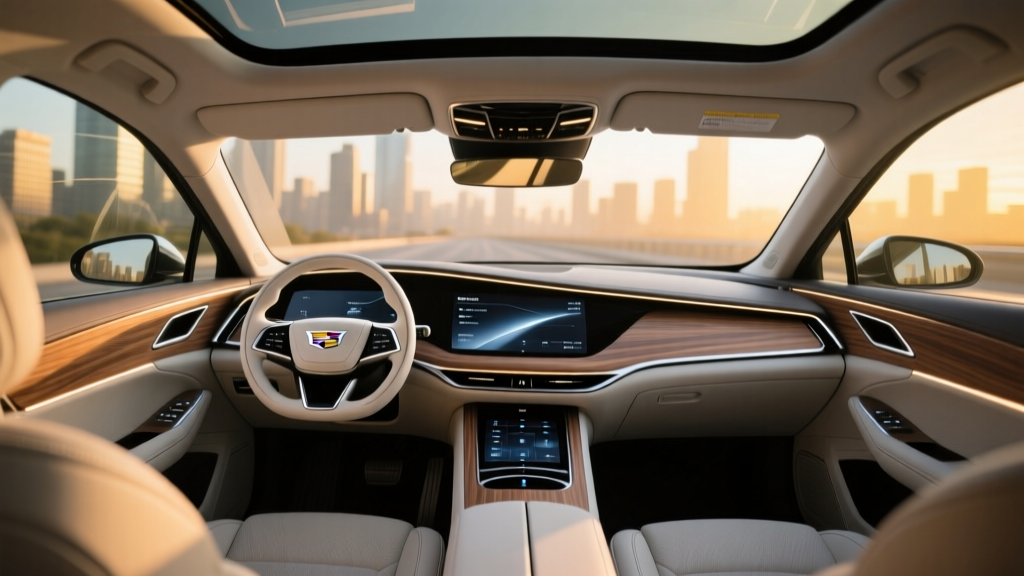
The Cadillac Optiq interior is where this compact crossover makes its strongest case against rivals like the BMW iX1, Genesis GV60, and Volvo EX40. The centerpiece is a sweeping 33-inch diagonal LED display that spans the dashboard, combining the instrument cluster and infotainment into a single curved panel running Google Built-In. This is the same architecture found in the Lyriq and Escalade IQ, meaning you get native Google Maps navigation with real-time charger routing, Google Assistant voice control, and access to the Play Store for media apps.
Materials in the Optiq cabin lean premium for the segment: open-pore wood accents, available leatherette or Nappa leather upholstery, and ambient lighting that integrates with the curved display's themes. The center console uses a rotary controller alongside the touchscreen, which is a practical choice — reaching across a 33-inch screen while driving isn't ideal, and the knob handles volume, zoom, and menu scrolling without pulling your eyes off the road.
Passenger & Cargo Dimensions
As a compact crossover, the Optiq prioritizes front-seat comfort over rear-seat sprawl. Expect roughly 40 inches of front legroom and around 37 inches in the second row — adequate for adults on shorter trips but tighter than the midsize Lyriq. Cargo volume behind the rear seats is estimated at approximately 25 cubic feet, expanding to roughly 55 cubic feet with the 60/40 split rear seats folded. A small front trunk (frunk) adds an estimated 1–2 cubic feet for charging cables or a soft bag.
For context, the Lyriq offers about 28 cu ft of cargo space behind the rear row, and the Tesla Model Y provides roughly 30 cu ft (plus a deeper frunk). If maximum cargo utility is your priority, the Optiq is a step behind — but for a two-person household or a commuter who occasionally hauls groceries and luggage, the space is competitive with the luxury compact segment.
Range, Efficiency & Real-World Expectations
The Optiq is expected to use a version of GM's Ultium battery pack with NMC (nickel manganese cobalt) chemistry and approximately 85 kWh of usable capacity. GM's Ultium platform supports 400-volt architecture (not the 800V systems in the Hyundai Ioniq 5 or Porsche Taycan), which influences both charging speed and efficiency trade-offs.
Range Reality Check
EPA Estimate: ~305 miles (RWD, combined cycle)
Real-World Expectation: Plan for approximately 250–275 miles on sustained highway driving at 70–80 mph. In cold weather (below 30°F), expect a 15–25% reduction, bringing effective range down to roughly 230–260 miles depending on cabin heating use and terrain. City driving with regenerative braking will push closer to or slightly above the EPA number.
The Optiq's estimated efficiency of ~95 MPGe (roughly 33–35 kWh per 100 miles) is typical for a luxury compact crossover in this weight class. It won't match the Tesla Model Y's efficiency (around 28 kWh/100 mi), but the trade-off is a quieter, more insulated cabin and a smoother ride — priorities that align with the Cadillac buyer.
Charging Speed: DC Fast & Home Level 2
Charging is where buyers need to set realistic expectations. The Optiq's 400V Ultium architecture caps DC fast-charging at approximately 150 kW peak — functional, but not class-leading. Competitors like the Hyundai Ioniq 5 (800V, ~240 kW peak) and the Tesla Model Y (~250 kW on V3 Superchargers) will add range significantly faster on a road trip.
| Charging Level | Power | Speed / Time |
|---|---|---|
| Level 1 (120V household) | ~1.4 kW | ~4 miles per hour |
| Level 2 (240V home/public) | 11.5 kW | ~32 miles per hour |
| DC Fast Charge (CCS/NACS) | ~150 kW peak | 10–80% in ~30 min |
The charge curve matters as much as the peak number. Expect the Optiq to sustain close to peak kW from roughly 10% to 50% State of Charge, then taper progressively through 80%, and drop sharply above 80%. This is standard behavior for NMC chemistry to protect long-term battery health — but it means that last 20% on a road trip takes disproportionately long. Plan your DCFC stops around the 10–80% window for the best time-to-range ratio.
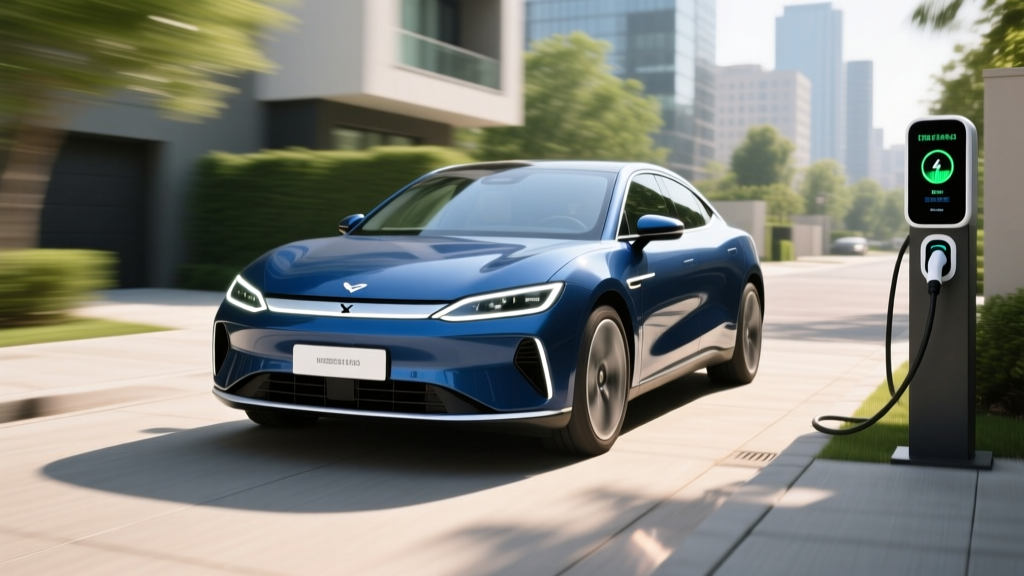
At home on a Level 2 charger (240V, 48A circuit), the 11.5 kW onboard charger will replenish the Optiq's battery from empty to full in roughly 8–9 hours. A standard overnight charge easily covers daily driving needs. GM includes access to the Ultium Charge 360 ecosystem, which aggregates public networks and — critically — provides access to Tesla's Supercharger network via the NACS adapter (standard on 2025+ GM EVs).
Performance & Driving Dynamics
The rear-wheel-drive Optiq is expected to produce approximately 340 horsepower from a single rear motor, delivering a 0–60 mph time in the 6.0-second range. The available all-wheel-drive dual-motor configuration should push output closer to 480 horsepower with a 0–60 time around 4.5 seconds — quick enough for confident highway merging and passing, though not in the performance-EV territory of a Model Y Performance or BMW iX M60.
GM's Ultium platform places the battery pack low in the chassis, giving the Optiq a low center of gravity that translates to composed cornering and minimal body roll for a crossover. The steering is expected to be weighted for comfort rather than sportiness — consistent with Cadillac's touring-oriented tuning philosophy. Regenerative braking offers multiple levels, including a one-pedal driving mode that can bring the Optiq to a complete stop without touching the brake pedal in typical traffic.
Pricing, Trims & Federal Tax Credit Eligibility
The 2026 Cadillac Optiq is anticipated to start around $49,990 for the Luxury RWD trim, with AWD and higher-spec trims (Sport, Premium Luxury) pushing the as-tested price into the $55,000–$62,000 range. This positions the Optiq below the Lyriq (which starts around $58,590) and in direct competition with the BMW iX1, Volvo EX40, and Genesis GV60.
| Trim | Est. MSRP | After §30D Credit (if eligible) |
|---|---|---|
| Luxury RWD | $49,990 | ~$42,490 |
| Premium Luxury AWD | $55,990 | ~$48,490 |
| Sport AWD | $58,990 | ~$51,490 |
Does the Optiq Qualify for the Federal EV Tax Credit?
Under current IRS §30D rules, the $7,500 federal tax credit for new clean vehicles has several eligibility gates that the Optiq must clear:
- MSRP Cap: SUVs must be priced at or below $80,000. The Optiq clears this easily across all trims.
- Buyer Income Cap: Modified adjusted gross income must not exceed $150,000 (single), $225,000 (head of household), or $300,000 (joint). Higher-income buyers are ineligible regardless of the vehicle.
- Battery Sourcing: At least a specified percentage of critical minerals and battery components must be sourced from the U.S. or free-trade-agreement countries. GM has been aggressively reshoring Ultium battery production through its Ultium Cells joint venture plants in Ohio, Tennessee, and Michigan — but specific component-sourcing percentages vary by model year and batch.
- Point-of-Sale Transfer: Eligible buyers can transfer the credit to the dealer at purchase, reducing the out-of-pocket price immediately rather than waiting for a tax refund.
Bottom line: The Optiq is expected to qualify for at least a partial credit ($3,750) and likely the full $7,500 for eligible buyers, given GM's domestic battery manufacturing footprint. However, final eligibility depends on the specific vehicle's battery component and critical-mineral sourcing at the time of purchase. Confirm with your dealer and consult a tax professional before relying on the credit. See the official fueleconomy.gov database for the most current eligibility listings once EPA certification is finalized.
Warranty, Ownership Costs & Who Should Buy
GM backs the Optiq's Ultium battery pack and electric powertrain with an 8-year / 100,000-mile warranty, with a capacity retention threshold of 70% — meaning GM warrants the battery will hold at least 70% of its original capacity over that period. The bumper-to-bumper limited warranty is expected at 4 years / 50,000 miles, with complimentary scheduled maintenance for the first visit.
Who Is the Optiq Best For?
- Daily commuters with home Level 2 charging who want a quiet, premium cabin for 30–60 mile round trips without range stress.
- Luxury brand loyalists transitioning from a Cadillac XT4 or XT5 who want to go electric without changing brand ecosystems.
- Two-person households or empty-nesters who don't need the rear-seat and cargo space of a midsize SUV.
- Not ideal for: Frequent long-distance road trippers who prioritize the fastest possible DC charging, or families needing maximum cargo volume (look at the Lyriq, Model Y, or Hyundai Ioniq 5 instead).
Pros
- Stunning 33-inch curved display and Google Built-In infotainment
- Premium cabin materials at a sub-$50K starting price
- 300+ mile EPA range covers most daily and weekend needs
- Tesla Supercharger network access via NACS adapter
- Competitive 8-yr/100,000-mi battery warranty
- Expected full or partial §30D tax credit eligibility
Cons
- DC fast charging peaks at ~150 kW — slower than 800V rivals
- Rear-seat legroom and cargo space trail segment leaders
- 400V architecture limits future charging-speed upgrades
- Final U.S. specs and EPA certification still pending
- No air suspension or adaptive damping on base trims
How the Optiq Stacks Up Against Key Competitors
| Spec | Cadillac Optiq (Est.) | BMW iX1 | Volvo EX40 | Tesla Model Y |
|---|---|---|---|---|
| EPA Range | ~305 mi | ~240 mi | ~293 mi | ~320 mi |
| Battery | ~85 kWh NMC | ~65 kWh NMC | ~82 kWh NMC | ~75 kWh (LFP/NMC) |
| Peak DCFC | ~150 kW | ~130 kW | ~200 kW | ~250 kW |
| 0–60 mph | ~6.0 sec | ~5.6 sec | ~4.7 sec (Twin Motor) | ~5.0 sec (LR AWD) |
| Base MSRP | ~$49,990 | ~$40,000 | ~$53,500 | ~$44,990 |
| Cargo (behind rear) | ~25 cu ft | ~26 cu ft | ~26 cu ft | ~30 cu ft |
The Optiq's advantage is interior luxury and technology presentation — that 33-inch display and Cadillac's cabin finishing give it a premium feel the Model Y can't match. The BMW iX1 undercuts on price but offers significantly less range. The Volvo EX40 is a close competitor with similar luxury positioning and slightly faster charging. The Model Y wins on efficiency, charging speed, cargo space, and Supercharger convenience, but its interior is austere by comparison.
Frequently Asked Questions
What is the real-world range of the Cadillac Optiq?
With an EPA estimate of approximately 305 miles, real-world highway driving at 70–80 mph will yield roughly 250–275 miles. In cold weather below freezing, expect 230–260 miles depending on heating load and terrain. City driving with regenerative braking will be closest to the EPA sticker.
How fast does the Optiq charge at home and on the road?
On a Level 2 home charger (240V, 11.5 kW), the Optiq adds approximately 32 miles of range per hour, fully charging overnight in 8–9 hours. On a DC fast charger, it peaks at roughly 150 kW, achieving a 10–80% charge in approximately 30 minutes. Above 80%, charging tapers significantly — plan stops around the 10–80% window.
Does the Cadillac Optiq qualify for the $7,500 federal tax credit?
The Optiq is expected to qualify for the full or partial §30D credit for eligible buyers. Its MSRP is well under the $80,000 SUV cap, and GM's domestic Ultium battery production supports the sourcing requirements. However, buyer income limits ($150K single / $300K joint) and specific battery-component sourcing at time of purchase determine final eligibility. Verify with your dealer and consult the IRS §30D guidelines.
Is the Optiq worth buying over a Tesla Model Y or BMW iX1?
Choose the Optiq if cabin luxury, the 33-inch display, and Cadillac brand loyalty are priorities and you charge primarily at home. Choose the Model Y if you road-trip frequently and need the fastest charging and most cargo space. The BMW iX1 is a budget alternative but sacrifices significant range. The Optiq occupies a middle ground: more luxurious than Tesla, more range than BMW, but not the fastest charger in the segment.
What battery chemistry does the Optiq use?
The Optiq uses GM's Ultium platform with NMC (nickel manganese cobalt) lithium-ion chemistry. NMC offers higher energy density than LFP (lithium iron phosphate), which helps the Optiq achieve its 300+ mile range in a compact package. The trade-off is that NMC batteries are typically recommended for daily charging to 80–90% rather than routine 100% fills, with 100% reserved for road trips.
Can I use Tesla Superchargers with the Optiq?
Yes. The 2026 Optiq comes equipped with the NACS (North American Charging Standard) port or includes a CCS-to-NACS adapter, granting access to Tesla's Supercharger network — currently the most reliable and widespread DC fast-charging infrastructure in the U.S. This significantly expands road-trip charging options beyond Electrify America, EVgo, and other CCS networks.