The $125,000 Collector's PHEV: What the Polestar 1 Actually Delivers
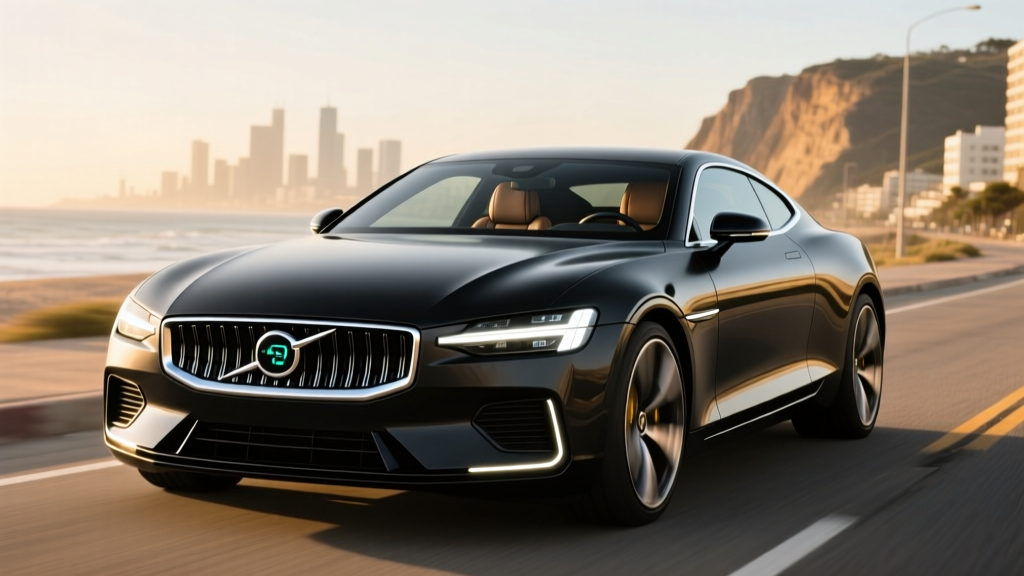
The Polestar 1 occupies a strange corner of the electrified market: a limited-production plug-in hybrid grand tourer that launched at $155,000, saw only 1,500 units built globally between 2019 and 2021, and now trades exclusively on the secondary market. For 2026, it functions less as a new-car purchase and more as a speculative collector acquisition — one that happens to offer 93 miles of EPA-rated electric-only range and a combined 619 horsepower.
If you're researching a Polestar 1 today, you're likely weighing it against modern EVs like the Polestar 2 or luxury PHEVs like the BMW i8 (discontinued 2020). This review breaks down what the Polestar 1 actually offers in range, charging behavior, performance, and ownership economics — with the honest caveats that come with a discontinued, low-volume vehicle.
| Spec | Value |
|---|---|
| Powertrain | 2.0L turbo/supercharged I4 + twin rear electric motors (AWD) |
| Combined Horsepower | 619 HP / 737 lb-ft torque |
| 0-60 mph | 3.8 seconds (manufacturer claim) |
| EPA Electric-Only Range | 93 miles |
| EPA Combined MPGe (EV mode) | 52 MPGe |
| EPA Combined MPG (gas-only) | 26 MPG |
| Battery Capacity | 34 kWh total / ~27 kWh usable (NMC lithium-ion) |
| DC Fast Charge (max kW) | 50 kW (CCS) |
| Level 2 Charge Rate | 3.7 kW (16A) |
| 10-80% DC Charge Time | ~45 minutes (at 50 kW peak) |
| Level 2 Full Charge Time | ~8-9 hours |
| Drivetrain | AWD (gas engine drives front wheels, electric motors drive rear) |
| Cargo Volume | 5.0 cu ft (coupe trunk) |
| Seating | 2+2 (rear seats best for children) |
| Base MSRP (2021) | $155,000 (single trim) |
| Battery Warranty | 8 years / 100,000 miles (capacity retention to 70%) |
Real-World Range: 93 Miles Electric, Then the Gas Engine Takes Over
EPA Electric-Only Range: 93 miles
Real-World Expectation: 70-85 miles in mixed driving; 60-75 miles at sustained 75+ mph highway speeds; 50-65 miles in freezing temperatures with cabin heat.
Total Range (electric + 15.8-gal gas tank): approximately 470-520 miles combined.
The Polestar 1's 34 kWh battery pack (approximately 27 kWh usable, the rest reserved as buffer to protect long-term State of Health) delivers its full 93-mile EPA rating under ideal conditions: moderate temperatures, city speeds under 45 mph, and gentle acceleration. In real-world use, expect 70-85 miles of electric-only range in typical suburban commuting.
Highway driving at 70-80 mph drops electric range to roughly 60-75 miles due to aerodynamic drag — this is a 2+2 coupe weighing 5,184 lbs, and that mass compounds energy consumption at speed. Cold weather (below 32°F) with resistive cabin heating can cut electric range by 30-40%, yielding as little as 50-65 miles before the 2.0L turbocharged and supercharged four-cylinder engine engages.
Once the battery depletes to its buffer threshold, the Polestar 1 operates as a conventional hybrid. The EPA rates it at 26 MPG combined in gas-only mode. Real-world highway driving nets 24-28 MPG; city driving with regen braking assistance can push to 28-30 MPG. The 15.8-gallon fuel tank provides roughly 380-420 miles of gas-only range, extending total trip range past 500 miles — a genuine advantage over pure EVs on long road trips through charging deserts.
Charging Speed: The Polestar 1's Biggest Limitation in 2026
| Level | Power (kW) | Time (Empty-Full) | Notes |
|---|---|---|---|
| Level 1 (120V, 12A) | 1.4 kW | ~20 hours | Emergency/trickle only; adds ~4 mi/hr |
| Level 2 (240V, 16A) | 3.7 kW | ~8-9 hours | Standard home charging; overnight full charge |
| Level 2 (240V, 32A) | 7.2 kW (vehicle-limited to 3.7 kW) | ~8-9 hours | Polestar 1 onboard charger caps at 3.7 kW |
| DC Fast Charge (CCS) | 50 kW peak | ~45 min (10-80%) | Rare for PHEVs; tapers above 80% SoC |
The Polestar 1 charges slowly by 2026 standards. Its 3.7 kW onboard Level 2 charger is the same rate found in early-2010s EVs — meaning even a 48-amp home wall connector will only deliver 3.7 kW to the battery. A full charge from empty takes 8-9 hours, which works for overnight home charging but makes opportunistic top-ups (a 30-minute stop at a public Level 2) nearly pointless.
The 50 kW DC fast-charge capability is unusual for a PHEV and genuinely useful on road trips, adding roughly 40-50 miles of electric range in 30 minutes. However, 50 kW is the peak rate, and the charge curve tapers noticeably above 60% State of Charge. Expect a 10-80% session to take approximately 45 minutes — acceptable if you're already stopping for food, but slow compared to modern BEVs that achieve 10-80% in 15-20 minutes at 200+ kW.
The CCS connector is standard, so compatibility with Electrify America, EVgo, and ChargePoint DC stations is straightforward. However, the 50 kW peak means you'll be occupying a fast-charge stall for nearly an hour — something to consider at busy stations.
Performance: 619 HP With a Split Personality
The Polestar 1's powertrain is genuinely complex: the 2.0L four-cylinder engine (turbocharged and supercharged, producing 316 HP on its own) drives the front wheels through an 8-speed automatic transmission. Two rear electric motors (each producing 116 HP, for 232 HP combined electric) drive the rear wheels. A third, smaller motor functions as an integrated starter-generator. Combined output: 619 HP and 737 lb-ft of torque.
The 0-60 mph time of 3.8 seconds feels accurate in practice — the electric motors provide instant torque-fill at low speeds while the engine builds boost. Above 80 mph, acceleration tapers as the four-cylinder works harder to move 5,184 lbs. Top speed is electronically limited to 125 mph.
In pure electric mode (rear-drive only), the Polestar 1 feels like a 232-HP rear-wheel-drive coupe — adequate for merging and city driving, but not exciting. The AWD hybrid mode is where the car delivers its grand-tourer promise: effortless passing power, torque-vectoring rear motors that rotate the car through corners, and a surprisingly composed ride given the Öhlins adjustable dampers and 21-inch wheels.
The six-piston Akebono front brakes (standard) provide strong, linear stopping power, though regenerative braking is modest compared to modern BEVs — the Polestar 1 does not offer true one-pedal driving. Expect to use the friction brakes frequently in stop-and-go traffic.
Interior, Tech, and Practical Limitations
The Polestar 1's cabin is built on Volvo's Scalable Product Architecture (SPA), and the parts-bin sharing is obvious: the 9-inch Sensus infotainment touchscreen, the digital instrument cluster, the steering wheel, and many switchgear components are lifted directly from the 2018-2020 Volvo S90 and XC90. This isn't inherently bad — Volvo's interior materials and ergonomics are strong — but it does undercut the $155,000 price point's exclusivity promise.
Notable technology includes:
- Adaptive cruise control with stop-and-go (SAE Level 2 driver assist — requires hands-on-wheel supervision)
- Lane-keeping assist and blind-spot monitoring
- 360-degree camera system
- Harman Kardon premium audio
- Heads-up display
- Carbon fiber body panels (hood, trunk, doors) reducing weight by approximately 500 lbs vs steel
The drawbacks are significant for daily use:
- Cargo space: 5.0 cubic feet of trunk volume, compromised by the battery pack intrusion. A weekend trip for two requires soft bags; a family road trip is not feasible.
- Rear seats: Technically a 2+2, but the rear seats accommodate only small children or serve as overflow luggage space. Adults will not fit for any meaningful distance.
- Visibility: The low roofline and thick C-pillars create substantial blind spots; the 360-degree camera is essential for parking.
- Infotainment age: The Sensus system feels dated in 2026 — no wireless Apple CarPlay/Android Auto on early models, slow response times, and a small screen by current standards.
- Ride quality: The Öhlins dampers are manually adjustable (22 settings), but even in the softest setting, the ride is firm over broken pavement. This is a GT car, not a luxury cruiser.
Pricing, Tax Credit Eligibility, and Used Market Reality
| Factor | Detail |
|---|---|
| Original MSRP (2021) | $155,000 (single trim, no options) |
| Used Market (2026) | $90,000 - $140,000 (depending on mileage/condition) |
| Federal §30D New EV Credit | NOT ELIGIBLE — production ended 2021; no new units available |
| Federal §25E Used EV Credit | Potentially eligible for up to $4,000 (30% of sale price, capped) if buyer income ≤ $75k single / $150k joint, vehicle sold by dealer, and sale price ≤ $25,000. In practice, Polestar 1 sale prices exceed the $25,000 cap, making §25E ineligible. |
| IRS MSRP Cap | PHEV sedans/coupes capped at $55,000 MSRP for §30D — Polestar 1's $155k MSRP exceeded this even when new |
| Battery Sourcing Rules | Moot — the vehicle never qualified regardless of sourcing |
The Polestar 1 never qualified for the federal §30D new EV tax credit, even when it was in production. The IRS §30D rules cap eligible PHEV sedans/coupes at $55,000 MSRP — the Polestar 1's $155,000 sticker exceeded that by a factor of three. The buyer income caps ($150,000 single / $300,000 joint for new vehicles) were also likely exceeded by most buyers in this price bracket.
For the used market, the §25E used-EV credit offers up to $4,000 (30% of sale price, capped at $4,000) but requires the vehicle to sell for $25,000 or less. Given that Polestar 1 used values in 2026 range from $90,000 to $140,000, the §25E credit is not applicable. Per IRS §25E guidelines, the sale-price cap is a hard ceiling.
State incentives vary by jurisdiction and may have offered rebates at time of original purchase, but these do not transfer to secondary buyers. Consult your state's energy office or a tax professional for current local incentive availability.
Who Should Buy a Polestar 1 in 2026?
The Polestar 1 is not a rational daily-driver purchase for most buyers. It suits a narrow profile:
- Collector/car enthusiast: One of 1,500 built; carbon fiber body; Öhlins suspension; future classic potential. If you want a conversation piece that also functions as a usable grand tourer, the Polestar 1 fills a niche.
- Commuter with short daily drives: If your round-trip commute is under 70 miles and you can charge at home overnight, you'll drive on electricity 90% of the time. The gas engine exists for weekend road trips.
- Buyer who wants electric range without range anxiety: 93 miles electric covers most daily needs; the gas engine eliminates charging-desert concerns on long trips. This is the PHEV value proposition executed at a luxury tier.
The Polestar 1 does NOT suit:
- Families: No usable rear seats, minimal cargo space, two-door coupe practicality.
- Budget-conscious buyers: $90k-$140k used price, plus premium insurance, plus potential out-of-warranty battery service costs.
- Tech-forward buyers: The 2018-era Sensus infotainment and Level 2 driver assists feel dated compared to 2026 vehicles with advanced ADAS and larger screens.
Pros and Cons: The Honest Assessment
Pros
- 93 miles EPA electric range — among the highest of any PHEV ever produced
- 619 HP with genuine grand-tourer performance (3.8s 0-60)
- Carbon fiber body construction; exotic materials at a (relative) value vs. Ferrari/Lamborghini
- 50 kW DC fast charging — rare for PHEVs; useful on road trips
- Limited production (1,500 units) supports collector value retention
- Öhlins adjustable dampers and Akebono brakes as standard equipment
- Over 500 miles total range (electric + gas) eliminates range anxiety
Cons
- 3.7 kW Level 2 charging is painfully slow by 2026 standards
- 5.0 cu ft cargo space; 2+2 seating with unusable rear seats
- Dated Sensus infotainment from 2018 Volvo parts bin
- $155k original MSRP; no federal tax credit eligibility (new or used)
- Low production volume means limited dealer support and expensive body/parts repair
- Firm ride quality even in comfort damper settings
- High insurance premiums due to carbon fiber repair costs and limited parts availability
Polestar 1 vs. the Alternatives: Is It Worth Buying?
If you're considering a Polestar 1 in 2026, you're likely cross-shopping:
- Polestar 2 (2026, pure EV): EPA range up to 320 miles (Long Range Single Motor); 0-60 in 4.1s; ~$50,000-$60,000 MSRP; eligible for §30D credit (income/sourcing dependent). More practical, more modern tech, significantly cheaper. But no gas backup and no collector exclusivity.
- BMW i8 (used, 2014-2020): The closest competitor in concept — PHEV sports car, limited production. EPA electric range only 18 miles (far below Polestar 1's 93 miles). More brand cachet, worse electric usability.
- Mercedes-AMG GT 4-Door PHEV (2024+): More power, more seats, modern tech, but significantly higher price and lower electric range (~30 miles).
The Polestar 1 wins on electric-only range (93 miles is exceptional for a PHEV) and exclusivity. It loses on practicality, modern tech, charging speed, and service network depth. If you prioritize daily electric commuting with occasional road-trip capability and don't need rear seats or cargo space, the Polestar 1 executes that mission well. If you need a family vehicle or cutting-edge 2026 technology, look elsewhere.
Frequently Asked Questions
What is the real-world electric range of the Polestar 1?
The EPA rates the Polestar 1 at 93 miles electric-only. In real-world mixed driving, expect 70-85 miles. Highway driving at 75+ mph drops this to 60-75 miles. Cold weather (below 32°F) with cabin heat can reduce electric range to 50-65 miles.
How fast does the Polestar 1 charge at home and on DC fast chargers?
Level 2 home charging is limited to 3.7 kW by the onboard charger, requiring 8-9 hours for a full charge. DC fast charging peaks at 50 kW (CCS connector), with a 10-80% session taking approximately 45 minutes. Both are slow by 2026 standards.
Does the Polestar 1 qualify for the federal EV tax credit?
No. The Polestar 1's $155,000 MSRP far exceeded the IRS §30D $55,000 MSRP cap for sedans/coupes, so it never qualified as a new vehicle. On the used market, the §25E credit requires a sale price under $25,000, which Polestar 1 values ($90k-$140k in 2026) do not meet. Consult IRS guidelines or a tax professional for your specific situation.
Is the Polestar 1 a good daily driver?
For a single person or couple with a short commute (under 70 miles round-trip) and home charging, yes — you'll drive on electricity most days. For families, the unusable rear seats and 5.0 cu ft trunk make it impractical. The firm ride and dated infotainment are compromises you'll notice daily.
What happens when the battery degrades or fails out of warranty?
The Polestar 1's battery warranty is 8 years / 100,000 miles (capacity retention to 70% of original). A 2021 model's warranty expires in 2029 or at 100,000 miles, whichever comes first. Out-of-warranty battery replacement cost is not publicly listed by Polestar, but given the 34 kWh NMC pack's complexity and low production volume, expect $15,000-$25,000+ based on comparable luxury PHEV battery service. This is a significant ownership risk for high-mileage examples.
How does the Polestar 1 compare to the Polestar 2?
The Polestar 2 is a practical, modern, all-electric five-door liftback with up to 320 miles of EPA range, 200 kW DC fast charging, current-generation Android Automotive infotainment, and a $50,000-$60,000 price range. The Polestar 1 offers more exclusivity, a gas-engine backup, and more horsepower, but significantly less practicality, slower charging, and older technology. For most buyers in 2026, the Polestar 2 is the more rational choice.
Sources: EPA fueleconomy.gov — Polestar 1, IRS §25E Used Clean Vehicle Credit, Polestar USA archived specifications.