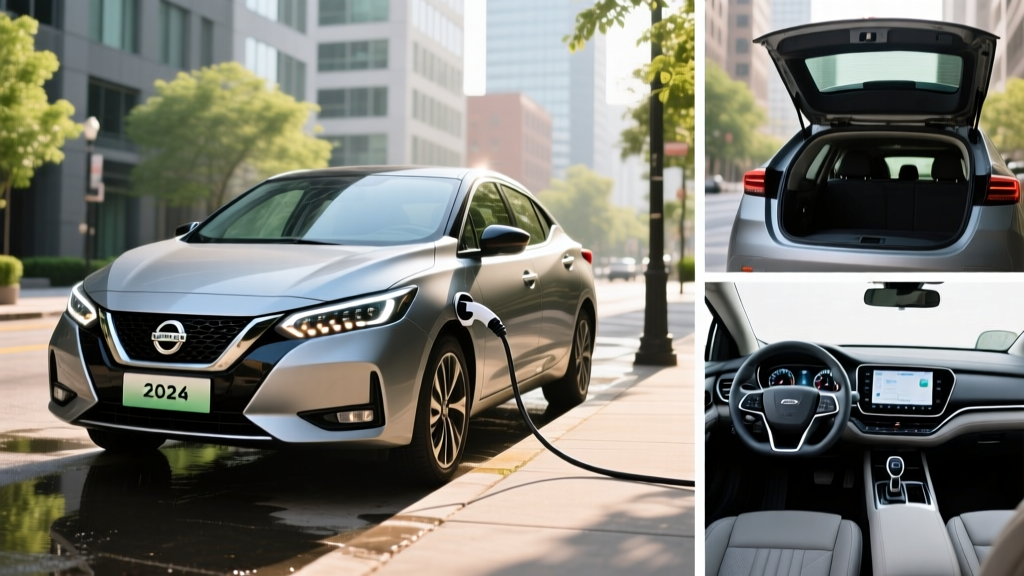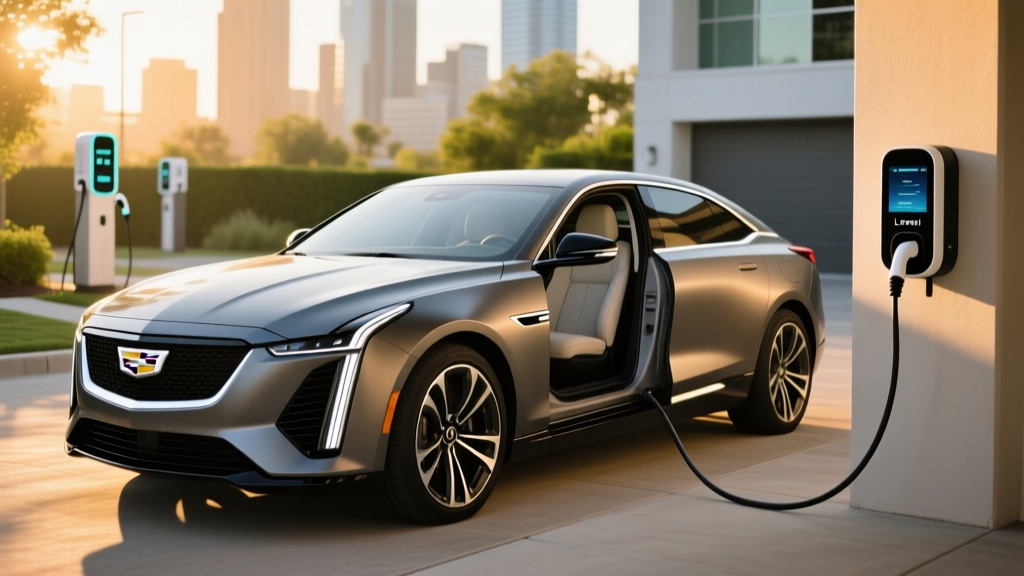
The Cadillac Optiq arrives as GM's premium compact electric crossover, slotting below the Lyriq and built on the Ultium platform. It targets luxury-EV shoppers who want Cadillac styling and a well-tuned ride without stepping up to full-size pricing. For the 2025 model year, the Optiq brings a dual-motor AWD powertrain, a 102 kWh Ultium battery pack, and a 33-inch LED infotainment display. But how does it perform where it matters most — real-world range, charging speed, and total ownership cost?
We break down every spec that matters, from EPA efficiency to cold-weather range loss, and map out exactly who should consider the Optiq in a segment crowded with strong alternatives.
Quick Verdict: What the Optiq Gets Right (and Where It Falls Short)
The 2025 Cadillac Optiq is a compelling luxury compact EV for buyers who prioritize ride comfort, cabin quietness, and GM's Super Cruise hands-free driving system. Its 102 kWh battery delivers competitive EPA range, and its 150 kW peak DC fast-charging rate is adequate if not class-leading. The main trade-offs are a charging speed that lags behind Hyundai/Kia's 800V rivals and a starting price that pushes above $54,000 before incentives.
| Spec | 2025 Cadillac Optiq |
|---|---|
| EPA Range (est.) | ~300 miles |
| Battery | 102 kWh (usable), NMC Ultium |
| Drivetrain | Dual-motor AWD |
| Horsepower | ~340 hp |
| 0–60 mph | ~5.5 seconds |
| Peak DC Fast Charge | 150 kW |
| 10–80% DC Charge | ~34 minutes |
| Level 2 Home Charge | 11.5 kW (~30 mi/hr) |
| EPA Efficiency (est.) | ~89 MPGe / 34 kWh/100 mi |
| Base MSRP | ~$54,000 |
| Battery Warranty | 8 years / 100,000 miles |
Range and Efficiency: EPA Numbers vs. Real-World Driving
The 2025 Optiq uses GM's Ultium NMC (nickel-manganese-cobalt) battery with approximately 102 kWh of usable capacity. The EPA-estimated range is projected at around 300 miles for the dual-motor AWD configuration, though final EPA certification figures should be confirmed via fueleconomy.gov when published.
Real-World Range Reality: EPA estimates assume a mix of city and highway driving at moderate temperatures. Expect the Optiq to deliver approximately 260–280 miles on highway road trips at 70–75 mph, where aerodynamic drag and higher speeds reduce efficiency. In cold weather (below 32°F), plan for 20–30% range reduction, bringing effective range down to roughly 210–240 miles. Preconditioning the battery while plugged in helps mitigate winter losses and improves DC charging speeds.
Efficiency is estimated at roughly 89 MPGe combined (about 34 kWh per 100 miles). That puts the Optiq in line with competitors like the BMW iX xDrive50 and slightly behind the more aerodynamically optimized Tesla Model Y Long Range (approximately 95 MPGe combined). The Optiq's weight — likely over 5,000 lbs — works against it at highway speeds, though regenerative braking with one-pedal driving helps recover energy in stop-and-go traffic.
Charging Speed: DC Fast, Level 2, and Connector Details
Charging infrastructure access is where the Optiq benefits significantly from GM's adoption of the NACS (North American Charging Standard) connector. Starting with the 2025 model year, GM EVs ship with a native NACS charge port, granting access to Tesla's Supercharger network — the most reliable and widespread DC fast-charging network in the U.S.
| Charging Level | Power | Speed / Notes |
|---|---|---|
| Level 1 (120V household) | ~1.4 kW | ~3–4 miles per hour |
| Level 2 (240V home/public) | 11.5 kW | ~30 miles per hour; full charge in ~9 hours |
| DC Fast Charge (NACS) | Peak 150 kW | 10–80% in ~34 minutes |
The Optiq's peak DC charge rate of 150 kW is the most common criticism of GM's current Ultium vehicles. While 150 kW is respectable and adds roughly 150–180 miles in a 30-minute session, rivals using 800V architectures — notably the Hyundai Ioniq 5 and Kia EV6 — can peak at 240 kW and complete a 10–80% charge in approximately 18 minutes. On a long road trip, that 16-minute gap per stop adds up.
For home charging, the 11.5 kW onboard charger is competitive. A full charge from empty takes about 9 hours on a Level 2 home charger (typically a 48-amp circuit). Most owners who charge overnight will wake up to a full battery regardless of daily mileage. Installation of a Level 2 home charger typically costs $500–$2,000 depending on electrical panel capacity and run length — consult a licensed electrician for a site-specific quote.
Performance and Driving Dynamics
The dual-motor AWD powertrain produces an estimated 340 horsepower and delivers a 0–60 mph time of approximately 5.5 seconds. That's brisk enough for confident highway merging and passing, though it doesn't chase the performance numbers of a Tesla Model Y Performance (3.5 seconds) or a BMW iX M60.
Where the Optiq differentiates itself is ride quality. Cadillac tunes its EVs for comfort over sportiness, with well-damped suspension that absorbs road imperfections. The cabin is notably quiet at highway speeds — a hallmark of Cadillac's luxury positioning. Steering is light and precise, making the Optiq easy to maneuver in urban environments despite its compact-crossover footprint.
The Optiq offers multiple drive modes, including a one-pedal driving setting that maximizes regenerative braking. In this mode, lifting off the accelerator slows the vehicle significantly, reducing brake pedal use in city driving.
Interior, Tech, and Cargo Space
The Optiq's cabin centers on a sweeping 33-inch LED display that integrates the instrument cluster and infotainment touchscreen into a single curved panel running on Google Built-In. This provides native access to Google Maps, Google Assistant, and the Play Store, with navigation that factors in charging stops and battery preconditioning for DC fast charging.
Driver Assistance: The Optiq offers GM's Super Cruise — a Level 2 hands-free driving system that operates on over 400,000 miles of mapped highways in the U.S. and Canada. Super Cruise uses a driver-attention camera to ensure you're watching the road, and it handles steering, acceleration, and braking on compatible roads. It is not autonomous driving (SAE Level 4); the driver must remain alert and ready to take over at any time.
SAE Automation Note: Super Cruise is an SAE Level 2 driver-assist system. It requires an engaged, attentive driver at all times. It does not make the vehicle self-driving. Only Level 4 services like Waymo operate without a human driver.
Cargo and Passenger Space: As a compact crossover, the Optiq offers approximately 26 cubic feet of cargo space behind the rear seats, expanding to roughly 55–60 cubic feet with the rear seats folded. Rear legroom is estimated at 37–38 inches, sufficient for adult passengers on longer trips. A small front trunk (frunk) is expected but may be limited in size compared to competitors.
Pricing, Trims, and Federal Tax Credit Eligibility
The 2025 Cadillac Optiq starts at an estimated $54,000 MSRP for the base Luxury trim, with a Sport or Premium Luxury trim expected in the $58,000–$62,000 range. Fully loaded with options, an as-tested price could reach $65,000 or more.
| Trim | Est. MSRP | After Potential §30D Credit |
|---|---|---|
| Luxury (base) | ~$54,000 | ~$46,500 |
| Premium Luxury | ~$58,000 | ~$50,500 |
| Sport | ~$62,000 | ~$54,500 |
Federal Tax Credit (§30D): The Optiq's eligibility for the full $7,500 federal EV tax credit depends on several criteria that shift regularly. As of the current tax year, key requirements per IRS.gov include:
- MSRP cap: The vehicle's MSRP must not exceed $80,000 for SUVs/crossovers — the Optiq clears this threshold.
- Buyer income limits: Modified adjusted gross income (MAGI) must be ≤ $150,000 (single), $225,000 (head of household), or $300,000 (joint filers).
- Battery sourcing: A portion of battery components must be manufactured or assembled in North America, and critical minerals must meet sourcing thresholds. These requirements tighten annually.
- Point-of-sale transfer: Eligible buyers can transfer the credit to the dealer at purchase, reducing the purchase price directly rather than waiting for a tax refund.
Because battery-sourcing rules change and vary by production batch, always verify the specific VIN's eligibility on fueleconomy.gov and consult a tax professional before relying on the credit.
How the Optiq Stacks Up Against Competitors
The compact luxury EV crossover segment is competitive. Here's how the Optiq compares to its most direct rivals:
| Spec | Cadillac Optiq | BMW iX xDrive50 | Hyundai Ioniq 5 (Limited AWD) | Tesla Model Y LR AWD |
|---|---|---|---|---|
| EPA Range | ~300 mi | ~324 mi | ~266 mi | ~310 mi |
| Battery | 102 kWh NMC | 111.5 kWh NMC | 77.4 kWh NMC | ~75 kWh NMC |
| Peak DC Charge | 150 kW | 200 kW | 240 kW | 250 kW |
| 0–60 mph | ~5.5 sec | ~4.4 sec | ~4.5 sec | ~4.8 sec |
| Base MSRP | ~$54,000 | ~$87,000 | ~$57,000 | ~$48,000 |
| Hands-Free Assist | Super Cruise | Highway Assistant | None (HDA2) | Autopilot/FSD |
The BMW iX offers more range and power but costs significantly more. The Ioniq 5 charges dramatically faster thanks to its 800V architecture but has less range and a less premium cabin. The Model Y undercuts on price and charges faster, but its ride quality and cabin materials don't match Cadillac's luxury standard.
Choose the Cadillac Optiq if: You prioritize ride comfort, cabin quietness, and Super Cruise hands-free highway driving. You value NACS/Supercharger network access and want a luxury badge without BMW iX pricing.
Look elsewhere if: Maximum DC charging speed is your top priority (Ioniq 5/EV6), you need maximum range (iX or Model Y), or you want the lowest possible purchase price (Model Y).
Ownership Costs: Warranty, Insurance, and Long-Term Value
GM covers the Optiq's battery and powertrain with an 8-year / 100,000-mile warranty, with a capacity retention threshold of 60% — meaning GM will repair or replace the battery if it degrades below 60% of original capacity within the warranty period. The vehicle limited warranty is 4 years / 50,000 miles.
Insurance premiums for luxury EVs tend to run 15–25% higher than comparable gas vehicles, according to industry data. Expect annual premiums in the $1,800–$2,400 range depending on your location, driving record, and coverage level.
On the savings side, electricity costs for the Optiq average roughly $0.04–$0.06 per mile (based on the U.S. residential average of ~$0.16/kWh and 34 kWh/100 mi efficiency), compared to $0.12–$0.15 per mile for a similar gas-powered luxury crossover at 25 MPG and $3.50/gallon. Over 5 years and 75,000 miles, that translates to roughly $6,000–$7,000 in fuel savings.
Pros and Cons
Pros
- Comfortable, quiet ride befitting the Cadillac brand
- Native NACS connector with Tesla Supercharger access
- Super Cruise hands-free driving on 400,000+ miles of highways
- Competitive 300-mile EPA range with 102 kWh battery
- Google Built-In infotainment with native navigation and charging integration
- Qualifies for §30D credit (MSRP under $80K cap), subject to sourcing rules
Cons
- 150 kW peak DC charge rate trails 800V competitors (240 kW+)
- Starting price above $54K — not the most affordable in the segment
- Heavier weight impacts highway efficiency vs. lighter rivals
- No frunk or limited front cargo space compared to some competitors
- Performance adequate but not sporty — 5.5-sec 0–60 trails rivals
Who Should Buy the 2025 Cadillac Optiq?
The Optiq is best suited for luxury-oriented commuters and small families who value ride refinement and technology over outright performance or fastest-in-class charging. If your daily routine involves a 40–80 mile round-trip commute with highway stretches where Super Cruise shines, the Optiq delivers an effortless experience. Weekend road trips of 200–250 miles are comfortably within range with one DC fast-charge stop.
It's less ideal for buyers who frequently take 400+ mile road trips and want the shortest possible charging stops, or those who prioritize the lowest possible purchase price. Towing capacity is expected to be modest (likely around 1,500 lbs), so it's not suited for trailer or boat hauling.
Frequently Asked Questions
What is the real-world range of the 2025 Cadillac Optiq?
The EPA estimates approximately 300 miles. In real-world highway driving at 70–75 mph, expect 260–280 miles. In cold weather below freezing, plan for 210–240 miles due to battery efficiency losses and cabin heating demands.
How fast does the Optiq charge at home and on the road?
At home on a Level 2 (240V) charger, the Optiq charges at 11.5 kW, adding about 30 miles of range per hour — a full charge takes roughly 9 hours. On DC fast chargers, it peaks at 150 kW and charges from 10–80% in approximately 34 minutes.
Does the 2025 Cadillac Optiq qualify for the $7,500 federal EV tax credit?
The Optiq's MSRP is under the $80,000 SUV cap, making it potentially eligible. However, full credit depends on your income (≤$150K single / ≤$300K joint), battery-component manufacturing origin, and critical-mineral sourcing requirements that tighten each year. Verify your specific VIN on fueleconomy.gov and consult a tax professional.
Is the Optiq worth buying vs. the Tesla Model Y or BMW iX?
The Optiq offers a more luxurious ride than the Model Y at a higher price, and it costs significantly less than the BMW iX while offering slightly less range and power. If comfort and Super Cruise are priorities, the Optiq is a strong choice. If maximum range or lowest price matters more, the Model Y or iX may be better fits.
Does the Optiq have Super Cruise, and is it self-driving?
Yes, the Optiq offers GM's Super Cruise — a Level 2 hands-free driving system for compatible highways. It is not self-driving. The driver must remain attentive and ready to take control. A driver-monitoring camera ensures your eyes are on the road.
What battery chemistry does the Optiq use?
The Optiq uses GM's Ultium NMC (nickel-manganese-cobalt) battery chemistry with approximately 102 kWh of usable capacity. NMC offers high energy density, which helps deliver competitive range in a compact package. It is covered by an 8-year/100,000-mile warranty.