Dimensions, Length, and Exterior Profile
The 2026 Cadillac Lyriq stretches 196.7 inches in overall length — placing it firmly in the midsize luxury electric SUV segment, roughly comparable to the BMW iX (195.5 in) and slightly shorter than the Mercedes EQE SUV (191.5 in wheelbase, 192.5 in length). Its 121.8-inch wheelbase is generous, pushing wheels toward the corners for cabin maximization, while the 67.2-inch height keeps the roofline sleek enough to avoid the slab-sided look of some competitors.
Width measures 77.8 inches (excluding mirrors), which matters for garage fitment — standard US garage bays are 96 inches wide, leaving roughly 9 inches of clearance per side. Curb weight ranges from 5,590 lbs (RWD) to 5,775 lbs (AWD), typical for a 102 kWh battery pack in a luxury wrapper.
| Measurement | Lyriq | BMW iX xDrive50 | Tesla Model X |
|---|---|---|---|
| Overall Length | 196.7 in | 195.5 in | 199.8 in |
| Wheelbase | 121.8 in | 118.1 in | 116.7 in |
| Width | 77.8 in | 77.4 in | 77.3 in |
| Height | 67.2 in | 67.7 in | 64.4 in |
| Curb Weight | 5,590–5,775 lbs | 5,660 lbs | 5,185 lbs |
EPA Range, Battery, and Real-World Expectations
The Lyriq uses GM's Ultium platform with a 102 kWh usable battery (approximately 106 kWh gross), employing NMC (nickel-manganese-cobalt) pouch cells in a 12-module configuration. NMC offers higher energy density than LFP chemistry, which is why GM can package over 100 kWh without compromising interior volume — though it does mean slightly more conservative charging habits are recommended for long-term health (more on that below).
Real-World Expectations:
- Mixed driving (city/highway): 275–295 miles at 70°F
- Sustained 75 mph highway: 255–275 miles (aerodynamic drag and higher speeds reduce efficiency)
- Cold weather (20°F–35°F): 210–245 miles — the Lyriq's heat pump helps, but NMC cells still lose 15–25% in freezing temps
- Towing (3,500 lb max): 160–190 miles — expect range to roughly halve under load
The 314-mile EPA figure applies to RWD trims with the standard 20-inch wheels. Step up to AWD or the available 22-inch wheels, and EPA range drops to 307 miles (AWD) or approximately 285–295 miles (22" wheels) due to increased rolling resistance and weight. Efficiency is rated at 89 MPGe combined (RWD), translating to roughly 37–39 kWh per 100 miles — competitive with the BMW iX (86 MPGe) but trailing the more aerodynamically optimized Tesla Model X (102 MPGe).
Charging Speed: DC Fast and Home Level 2
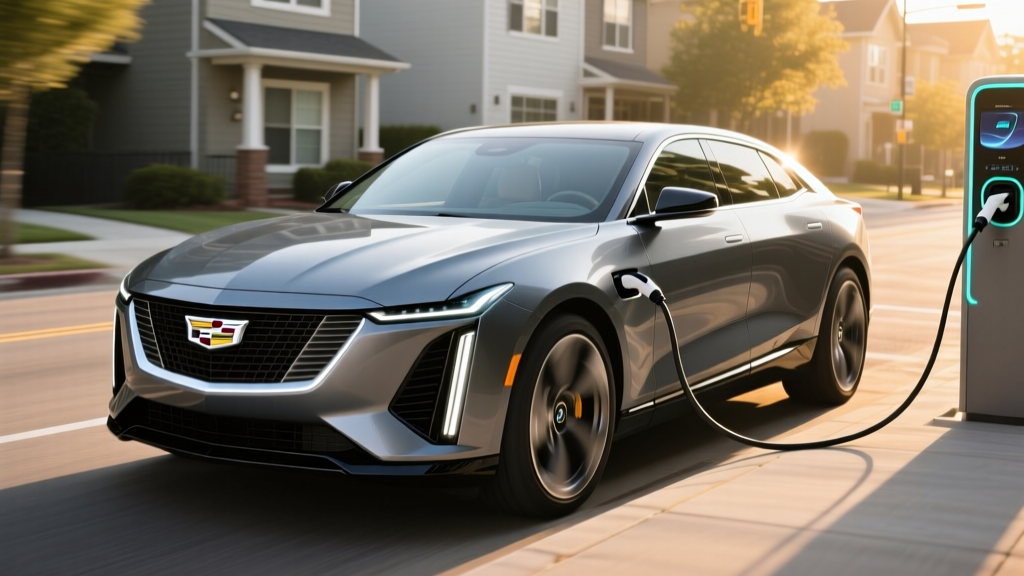
The Lyriq's charging architecture peaks at 190 kW on DC fast charging via its CCS1 connector (NACS adapter available for Tesla Supercharger access). That's not class-leading — the Hyundai Ioniq 5 peaks at 240 kW, and the Porsche Macan EV hits 270 kW — but the Lyriq's large battery means it can sustain useful charging rates for longer.
| Charging Method | Power (kW) | Rate / Time | Notes |
|---|---|---|---|
| DC Fast Charge (10–80%) | 190 kW peak | ~32 minutes (10–80%) | Tapers significantly above 85%; sustained ~120 kW through 60% SoC |
| DC Fast Charge (15 min add) | — | ~76 miles added | GM's official claim; real-world ~65–70 mi on 350 kW EA stalls |
| Level 2 Home (240V, 48A) | 11.5 kW | ~32 miles/hour | Fully charges 0–100% in ~9 hours |
| Level 2 Home (240V, 32A) | 7.7 kW | ~21 miles/hour | Common for NEMA 14-50 outlets; 0–100% in ~13 hours |
| Level 1 (120V, 12A) | 1.4 kW | ~4 miles/hour | Emergency/top-off only; ~75 hours for full charge |
The 10–80% time of approximately 32 minutes is adequate but not exceptional. The charge curve is relatively flat through 50% state of charge (SoC), holding near 150–170 kW, then stepping down to ~90 kW around 70%, and further to ~50 kW past 85%. For road trips, plan 20–25 minute stops for a 10–80% fill — enough time for a restroom break and coffee, but you'll notice the taper if you push past 80%.
Home charging at 11.5 kW (hardwired 48-amp Level 2) is the sweet spot: a full overnight charge in 9 hours means you wake up to 314 miles every morning. Installation typically runs $800–$2,200 depending on panel capacity and conduit length — budget for a 200-amp panel upgrade ($1,500–$3,000) if your home still has 100-amp service.
Performance and Drivetrain
The Lyriq offers two powertrain configurations:
- RWD (single rear motor): 340 hp, 325 lb-ft torque, 0–60 mph in 6.0 seconds
- AWD (dual motor): 500 hp, 450 lb-ft torque, 0–60 mph in 4.6 seconds
The RWD model is the efficiency and range play — it's the 314-mile version, and for most daily driving the 6.0-second sprint is more than adequate. The AWD variant trades roughly 7 miles of range for genuinely quick acceleration and all-weather traction. Neither version is a track car; the Lyriq's 5,600+ lb curb weight is felt in corners, and the steering is tuned for comfort over feedback. This is a grand-touring cruiser, not a sport SUV.
Regenerative braking offers multiple modes including a one-pedal driving option that can bring the Lyriq to a full stop without touching the brake pedal. GM's regen calibration is smooth and progressive — less abrupt than some competitors, which makes the transition from ICE vehicles easier for new EV adopters.
Interior Space, Cargo, and Technology
The Lyriq's 121.8-inch wheelbase translates to generous interior volume. Rear legroom measures 39.6 inches — adults over 6 feet will be comfortable on long trips. Front legroom is 44.3 inches. Total passenger volume is approximately 107 cubic feet.
Cargo space behind the second row is 28.0 cubic feet, expanding to 60.9 cubic feet with the rear seats folded. That's competitive with the BMW iX (35.5 / 77.9 cu ft, though the iX has a hatchback design) and slightly less than the Tesla Model X (37.1 / 85.7 cu ft). Notably, the Lyriq has no front trunk (frunk) — GM uses that space for HVAC and power electronics, a common Ultium-platform trade-off.
The centerpiece of the interior is a 33-inch LED curved display combining the instrument cluster and infotainment into a single pane of glass, running Google Built-In (Maps, Assistant, Play Store). Wireless Apple CarPlay and Android Auto are standard. A 19-speaker AKG audio system is available on higher trims. Build quality is genuinely premium — soft-touch materials, real wood and metal trim, and excellent NVH (noise/vibration/harshness) isolation that leverages the EV's inherent quietness.
Driver assistance comes via GM's Super Cruise (available, not standard) — a Level 2 hands-free system on mapped divided highways. Unlike Tesla Autopilot, Super Cruise uses a driver-facing camera to monitor eye attention and allows true hands-off operation on compatible roads (over 400,000 miles mapped in North America as of 2026). It's genuinely excellent for long highway stretches but is not autonomous driving — you must remain attentive and the system disengages on unmapped roads, construction zones, and adverse weather.
Pricing, Trims, and Federal Tax Credit
The 2026 Lyriq lineup starts at $58,590 (including destination) for the Luxury RWD trim, with the range-topping Sport AWD reaching approximately $73,590 fully optioned.
| Trim | Drivetrain | MSRP | Est. After §30D Credit |
|---|---|---|---|
| Luxury | RWD | $58,590 | $51,090* |
| Preferred | RWD | $61,290 | $53,790* |
| Sport | AWD | $64,090 | $56,590* |
| Sport (fully optioned) | AWD | ~$73,590 | ~$66,090* |
*Federal tax credit estimates assume buyer eligibility. See §30D requirements below.
- MSRP cap: SUVs/trucks/vans must be ≤ $80,000 — all Lyriq trims qualify ✓
- Buyer income cap: AGI ≤ $150,000 (single) / $225,000 (head of household) / $300,000 (married filing jointly)
- Battery sourcing: Critical minerals and battery components must meet phased-in domestic/free-trade-partner thresholds — verify current-year compliance on fueleconomy.gov
- Point-of-sale transfer: Eligible buyers can apply the credit as an upfront discount at the dealer rather than waiting for tax filing
- Non-refundable: You must have sufficient federal tax liability to claim the credit (unless transferred at point of sale)
Verify current eligibility at irs.gov — sourcing rules tighten annually and trim-level eligibility can shift.
Warranty and Ownership Costs
GM backs the Lyriq with a competitive warranty package:
- Battery: 8 years / 100,000 miles (whichever comes first), covering defects and capacity loss below 60% of original capacity — though GM expects less than 10% degradation over that period based on Ultium platform data
- Powertrain: 6 years / 70,000 miles
- Bumper-to-bumper: 4 years / 50,000 miles
- Roadside assistance: 6 years / 70,000 miles
The 60% battery capacity retention threshold in the warranty is less generous than some competitors (Hyundai/Kia guarantee 70%), but real-world Ultium degradation data from fleet vehicles suggests most owners will retain 88–92% capacity at the 8-year mark under normal use. Avoid frequent DC fast charging above 90% SoC and regular 100% charges to maximize NMC longevity — daily charging to 80% is ideal.
Insurance costs run approximately $2,200–$2,900 annually depending on state, driving record, and trim — roughly 15–25% higher than a comparably priced ICE Cadillac XT6, reflecting EV repair costs and parts pricing.
Pros, Cons, and Who Should Buy
- Genuine luxury build quality — quiet, refined, premium materials throughout
- 314-mile EPA range is practical for road trips with planning
- Super Cruise is one of the best Level 2 systems available (hands-free on mapped highways)
- 11.5 kW Level 2 home charging is fast for overnight fills
- 39.6" rear legroom accommodates adults comfortably
- MSRP under $80K cap makes all trims §30D tax-credit eligible
- 190 kW peak DC charging is slower than Korean/German rivals
- No frunk — lost cargo utility for the segment
- Super Cruise is an expensive option, not standard
- 89 MPGe trails more aerodynamic competitors
- 28 cu ft cargo space behind 2nd row is below class average
- Heavy curb weight affects handling dynamics
Best for: Luxury buyers who prioritize ride comfort, cabin quietness, and hands-free highway driving over sporty dynamics. The Lyriq excels as a daily commuter and grand-touring cruiser — ideal for the 30–80 mile round-trip commuter who road-trips 2–4 times per year and can charge at home overnight. Families will appreciate the rear-seat space, though cargo-heavy buyers should cross-shop the Model X or Rivian R1S.
Look elsewhere if: You need maximum cargo volume, the fastest possible road-trip charging (Ioniq 5, Macan EV), or a third row (Kia EV9, Rivian R1S). Performance-focused buyers will prefer the BMW iX M60 or Tesla Model X Plaid.
Frequently Asked Questions
What is the Cadillac Lyriq's exact length?
The 2026 Cadillac Lyriq is 196.7 inches long with a 121.8-inch wheelbase. This places it in the midsize luxury SUV category — shorter than a full-size Escalade (211.9 in) but comparable to the BMW iX and Genesis Electrified GV70.
What is the real-world range of the Lyriq?
EPA-rated at 314 miles (RWD, 20" wheels), expect 275–295 miles in mixed driving, 255–275 miles on sustained highway trips at 75 mph, and 210–245 miles in freezing temperatures. AWD and 22" wheel options reduce range by 7–20 miles.
How fast does the Lyriq charge at home and on the road?
DC fast charging peaks at 190 kW, delivering a 10–80% charge in approximately 32 minutes. Home Level 2 charging at 11.5 kW (48A) adds about 32 miles per hour, fully charging the 102 kWh battery in roughly 9 hours.
Does the Cadillac Lyriq qualify for the $7,500 federal tax credit?
All Lyriq trims fall under the $80,000 SUV MSRP cap for §30D eligibility. However, buyer income caps ($150K single / $300K joint), battery sourcing requirements, and tax liability all affect actual eligibility. Check fueleconomy.gov for current trim-level qualification and consult a tax professional.
Is the Lyriq worth buying vs. the BMW iX or Tesla Model X?
The Lyriq wins on traditional luxury feel, cabin quietness, and Super Cruise quality. The BMW iX offers more cargo space and a slightly more engaging drive. The Tesla Model X provides superior range (348 mi), faster charging, and more cargo room but at a higher price and with less conventional luxury polish. Test-drive all three — the decision usually comes down to whether you prioritize comfort (Lyriq), dynamics (iX), or tech/range (Model X).
Does the Lyriq have a frunk?
No. GM uses the front underhood space for power electronics and HVAC components on the Ultium platform. Total cargo space is 28.0 cu ft behind the second row, expanding to 60.9 cu ft with seats folded.