If you have searched for the Tesla flying Roadster hoping to place a deposit today, the short answer is: you cannot. As of early 2026, Tesla has not opened orders for the next-generation Roadster, and no production vehicle with flight capability has been delivered to a customer. What does exist is a long trail of promises from CEO Elon Musk, a handful of speculative spec sheets, and a growing community of reservation holders who have been waiting since 2017.
This profile gathers every confirmed and estimated data point available, separates marketing claims from engineering reality, and benchmarks the announced Roadster against competitors you can actually buy right now. If Tesla eventually brings this vehicle to market, it will need to clear enormous regulatory and physics hurdles. Here is what the numbers say.
What the Tesla Flying Roadster Actually Is
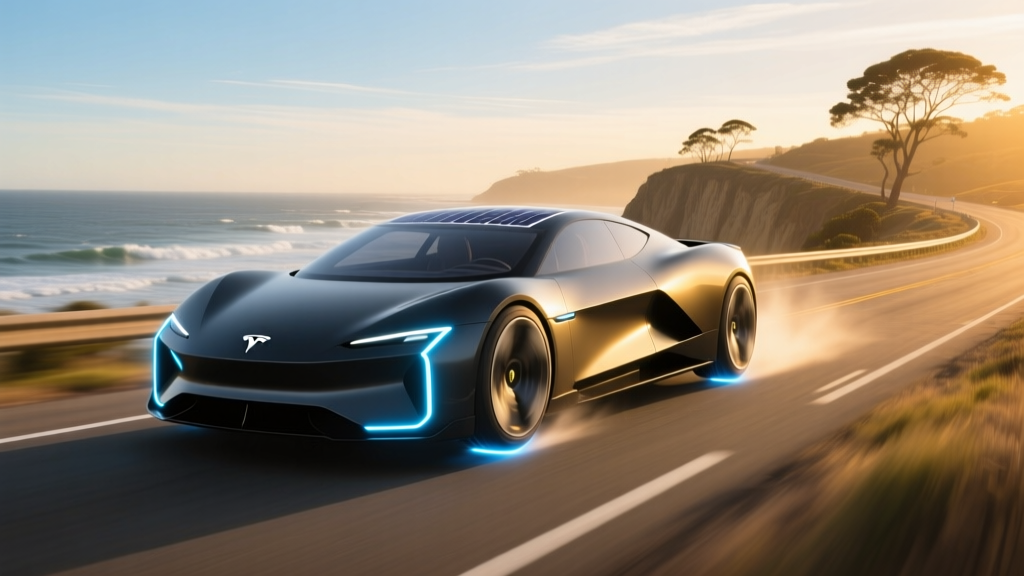
The second-generation Tesla Roadster was unveiled as a prototype in November 2017 with a promised 2020 production date. That date has slipped repeatedly — to 2021, 2022, 2023, 2024, and now tentatively beyond 2025 with no firm commitment for 2026. Along the way, Musk introduced the SpaceX Package, an option that would reportedly use cold-gas thrusters to improve cornering grip, braking, and even enable brief hovering or short-distance flight.
To be precise: the "flying" component has never been demonstrated in a public, road-legal prototype. Musk has described it as using compressed-air thrusters positioned around the vehicle to generate vertical and lateral force. This is fundamentally different from an eVTOL aircraft. The Roadster would remain a car that can, under specific conditions, lift off the ground briefly — not a flying car in the traditional sense.
Announced and Estimated Specifications
Because the Roadster has never entered production, no EPA certification exists. The figures below are compiled from Tesla's 2017 unveiling statements, subsequent Musk social-media posts, and industry analysis. All are preliminary and subject to change.
| Specification | Announced / Estimated |
|---|---|
| EPA Range (est.) | 620 miles (claimed by Tesla, 2017) |
| Battery Capacity | ~200 kWh (estimated, chemistry unconfirmed — likely NMC/NCA) |
| Drivetrain | Tri-motor AWD (one front, two rear) |
| 0–60 mph | 1.9 seconds (claimed); 1.1 sec with SpaceX Package (claimed) |
| Top Speed | 250+ mph (claimed) |
| Horsepower | ~1,000+ hp (estimated from tri-motor output) |
| Peak DC Fast Charge | ~350 kW (estimated based on Cybertruck architecture) |
| 10–80% DC Charge Time | ~25–30 minutes (estimated) |
| Level 2 Home Charge | ~11.5 kW / ~44 mi/hr (est. using Tesla Wall Connector) |
| Base MSRP (announced) | $200,000 (base); $250,000 (Founders Series, sold out) |
| Reservation Deposit | $50,000 (fully refundable) |
| Body Style / Seats | 2+2 coupe; removable glass roof |
| Federal Tax Credit (§30D) | Not eligible — exceeds $55,000 MSRP cap for sedans/sports cars |
Range Reality: 620 Miles Is a Marketing Number
Real-World Expectation: A 200 kWh battery in a heavy, high-performance AWD sports car would likely deliver 450–520 real-world miles under mixed driving. Sustained highway speeds above 75 mph, cold weather (below 40°F), and aggressive throttle use could reduce that to 350–400 miles. No EPA test cycle has been performed on this vehicle.
The 620-mile claim was made in 2017 against the backdrop of a ~200 kWh battery pack. For context, the 2026 Lucid Air Grand Touring achieves an EPA-rated 516 miles from a 112 kWh pack, largely through exceptional aerodynamic efficiency (Cd 0.197) and a lightweight platform. A tri-motor Roadster with wide performance tires and a convertible roof panel will face higher rolling resistance and drag, making 620 miles extremely ambitious.
If Tesla leverages its latest 4680 cell architecture and structural battery pack, the energy density could support a pack this large. But weight becomes the enemy: a 200 kWh NMC pack could add 1,200–1,400 lbs of battery mass alone, pushing curb weight above 4,800 lbs. That mass directly erodes efficiency at highway speeds and in stop-and-go regenerative braking recovery.
Charging Speed and Infrastructure
Charging a 200 kWh battery is a significant logistical challenge. Even at the peak rate Tesla's V4 Superchargers can deliver (~350 kW in the latest deployments), filling such a large pack from 10% to 80% would take roughly 25–30 minutes — assuming the battery thermal management can sustain peak charge rates through the curve.
| Charging Level | Power (kW) | Estimated Miles Added per Hour | Notes |
|---|---|---|---|
| Level 1 (120V) | ~1.4 kW | ~4–5 mi/hr | Not practical for a 200 kWh pack (~140 hours 0–100%) |
| Level 2 (240V / 48A) | ~11.5 kW | ~44 mi/hr | Full charge in ~17 hours; overnight top-up viable |
| DC Fast (V4 Supercharger) | ~350 kW peak | ~1,000+ mi/hr (peak) | 10–80% in ~25–30 min; taper above 80% SoC |
The charge curve matters enormously here. Large packs can sustain peak kW longer than smaller ones because they can distribute thermal load across more cells. But above 80% state of charge, the taper is steep — expect the final 20% to add another 20–30 minutes. For road trips, planning stops around the 10–80% window is essential.
At home, a full Level 2 installation on a 60A circuit (delivering 48A continuous) would be the minimum practical setup. Most Roadster buyers will likely have upgraded 200A or 400A electrical panels capable of supporting this without issue, but installation costs for a dedicated 60A circuit with a Tesla Wall Connector typically range from $800 to $2,500 depending on panel proximity and local permit requirements.
Performance: The Numbers and the Physics
Tesla's claimed 1.9-second 0–60 mph time would have made the Roadster the fastest-accelerating production car at its 2017 announcement. By 2026, however, the landscape has shifted. The Tesla Model S Plaid already achieves 1.99 seconds, and the Rimac Nevera holds a verified 1.81-second record. The Roadster's claimed 1.1-second time with the SpaceX Package would require sustained thrust from cold-gas thrusters during launch — a concept that has never been validated in a production vehicle.
Tri-motor AWD with torque vectoring across the rear axle is a proven architecture (Tesla uses a variant in the Model S Plaid and Cybertruck). Expect over 1,000 combined horsepower, with instantaneous electric torque delivery making the 0–60 time more traction-limited than power-limited. The removable glass roof and 2+2 seating layout suggest a grand-touring focus rather than a pure track car, despite the headline acceleration figures.
Pricing, Tax Credits, and Ownership Cost
| Item | Amount |
|---|---|
| Base MSRP (announced) | $200,000 |
| Founders Series (limited, sold out) | $250,000 |
| SpaceX Package (announced add-on) | Price TBD |
| Federal §30D Tax Credit | $0 — MSRP exceeds the $55,000 cap for cars (IRS §30D rules for 2026) |
| Estimated Insurance (annual) | $5,000–$9,000+ (high-performance sports car class) |
| Reservation Deposit | $50,000 (refundable) |
Under current IRS §30D rules, the federal EV tax credit is capped at vehicles with an MSRP of $55,000 or less for sedans, coupes, and sports cars (the cap is $80,000 for SUVs, trucks, and vans). At a $200,000 base price, the Roadster is categorically ineligible. Buyer income limits ($150,000 single / $300,000 joint AGI) are also a factor for some buyers, though at this price point, the MSRP cap is the binding constraint.
Insurance will be a major ownership cost. A 1,000+ hp, 250+ mph vehicle with a $200,000 replacement value and expensive carbon-ceramic brakes and structural battery pack will command premiums comparable to a Ferrari SF90 or Lamborghini Revuelto. Expect $5,000–$9,000 annually depending on driving record, location, and coverage level.
Who This EV Suits — And Who Should Look Elsewhere
- You want a statement vehicle with record-breaking acceleration and Tesla's Supercharger network access
- You already own a practical daily driver and want a weekend/collector car
- You are comfortable with a $50,000 refundable deposit and indefinite wait
- You value OTA software updates and Tesla's tech ecosystem
- You need a vehicle now — the Roadster has no confirmed production date
- You want verified, independently tested performance data (Rimac Nevera, Lucid Air Sapphire)
- You need more than two usable rear seats or meaningful cargo space
- You want a vehicle that qualifies for any federal or state EV incentive
The Roadster is a halo car, not a practical purchase. Its natural competitors are the Rimac Nevera ($2.2M, 1,914 hp, EPA 287 miles), the Lucid Air Sapphire ($249,000, 1,234 hp, EPA 427 miles), and the Lotus Evija ($2.1M, 1,972 hp). Among those, the Lucid Air Sapphire is the closest in spirit — a four-door luxury performance EV you can drive home today with a verified EPA range and full warranty coverage.
Pros and Cons
- Claimed 620-mile range would shatter every production EV record
- Sub-2-second 0–60 mph with proven Tesla tri-motor architecture
- Full access to Tesla's 50,000+ global Supercharger network
- Removable glass roof for open-air driving
- OTA software updates and Tesla's Autopilot/FSD (Supervised) driver assist
- $50,000 deposit is fully refundable
- Not available — no confirmed production date as of 2026
- $200,000+ price with zero federal tax credit eligibility
- "Flying" SpaceX Package is unproven and likely faces major regulatory barriers
- 2+2 seating means rear seats are essentially unusable for adults
- 200 kWh pack means very long home charging times (~17 hrs at Level 2)
- Insurance costs will be extreme ($5,000–$9,000+/year)
- Specifications are 8+ years old and may change significantly before production
Warranty and Long-Term Battery Outlook
Tesla has not published warranty terms for the Roadster because it has not entered production. For reference, Tesla's current performance-vehicle warranty on the Model S is 8 years / 150,000 miles for the battery and drive unit, with a minimum 70% capacity retention threshold. It is reasonable to expect similar or slightly better terms on a $200,000 vehicle.
A 200 kWh NMC/NCA pack operating under high-performance conditions (frequent hard acceleration, fast charging, high thermal cycling) may experience faster degradation than a commuter-oriented vehicle. Tesla's thermal management systems are among the best in the industry, but physics dictates that larger packs under high C-rate loads will lose capacity faster than smaller packs under gentle loads. Expect 10–15% degradation over 8 years under typical sports-car usage patterns.
Frequently Asked Questions
Can I buy the Tesla flying Roadster right now?
No. As of 2026, the Tesla Roadster has not entered production. You can place a $50,000 refundable reservation, but Tesla has not confirmed a delivery timeline. The "flying" SpaceX Package has never been publicly demonstrated in a road-legal prototype.
What is the real-world range of the Tesla Roadster?
Tesla claims 620 miles, but this figure has not been EPA-certified. Based on a ~200 kWh battery in a heavy, high-performance AWD platform, realistic mixed-driving range would likely fall between 450–520 miles, with highway and cold-weather driving reducing that further to 350–400 miles.
How fast does the Roadster charge?
Estimated peak DC fast-charging is ~350 kW on Tesla's V4 Supercharger network, delivering a 10–80% charge in approximately 25–30 minutes. At home on a Level 2 (11.5 kW) Wall Connector, a full charge would take roughly 17 hours. A 200 kWh battery makes Level 1 (120V) charging essentially impractical.
Does the Tesla Roadster qualify for the federal EV tax credit?
No. Under IRS §30D rules for 2026, the credit is limited to vehicles with an MSRP of $55,000 or less for cars (sedans, coupes, sports cars). The Roadster's announced $200,000 base price exceeds this cap by a wide margin. Buyer income limits and battery-sourcing requirements are additional barriers, though the MSRP cap alone is disqualifying.
Is the Roadster worth waiting for vs. buying a Lucid Air Sapphire or Rimac Nevera?
If you need a vehicle now, no. The Lucid Air Sapphire delivers 1,234 hp, a verified EPA 427-mile range, and a usable back seat for $249,000 — and you can buy one today. The Rimac Nevera offers 1,914 hp and verified 1.81-second 0–60 for $2.2M. The Roadster's appeal rests on its Tesla ecosystem integration, potential range advantage, and lower (relative) price — but only if and when it ships.
Will the SpaceX "flying" package actually work?
The concept uses cold-gas thrusters to generate downforce (for cornering/braking) and brief vertical lift. While cold-gas thrusters are proven in aerospace, integrating them into a street-legal vehicle raises enormous safety, regulatory, and practicality questions. No automotive or aviation regulator has approved such a system. Treat this feature as speculative until Tesla demonstrates a production-ready, road-legal implementation.
Sources: Tesla 2017 Roadster unveiling specifications; IRS §30D Clean Vehicle Credit rules; EPA fueleconomy.gov for competitor range benchmarks. All Roadster specifications are preliminary estimates based on manufacturer statements and are subject to change. This article will be updated if Tesla announces a firm production date or revised specifications.