Quick Verdict: Is the Cadillac Lyriq Worth Leasing in 2026?
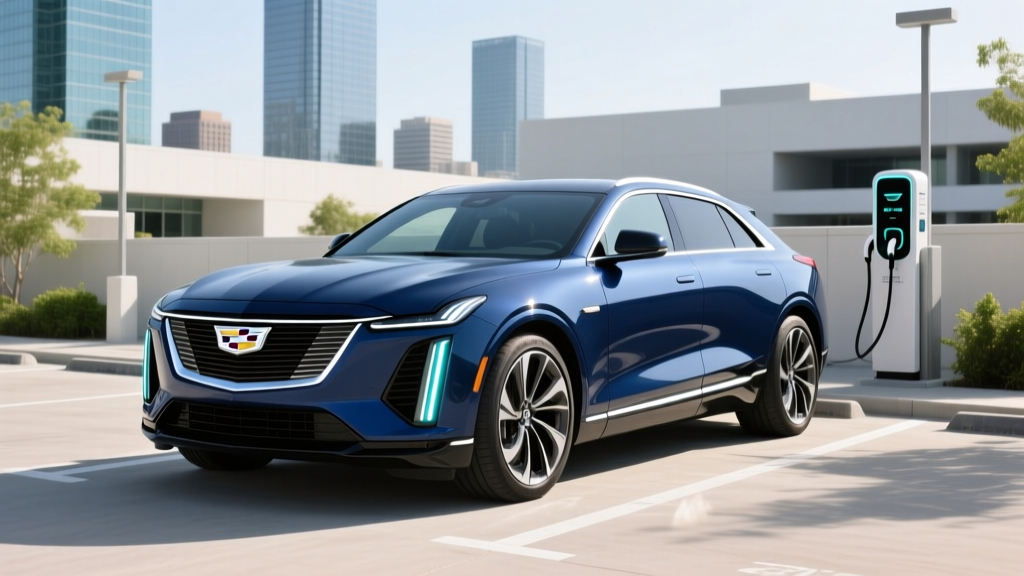
The 2026 Cadillac Lyriq occupies a specific niche in the luxury EV crossover segment: it prioritizes ride comfort, cabin quietness, and design presence over outright performance or segment-leading range. With an EPA-estimated 314 miles on rear-wheel-drive trims and a 102.4 kWh Ultium battery, it's competitive against the BMW iX, Genesis Electrified GV70, and Audi Q8 e-tron — though none of those match its combination of starting price and standard equipment.
For 2026, Cadillac has refined the Lyriq lineup with updated Super Cruise coverage, a revised infotainment stack, and expanded AWD availability. Lease deals remain one of the most popular acquisition paths, especially for buyers navigating the federal EV tax credit's point-of-sale transfer rules. Below, we break down every number that matters before you sign.
| Spec | Lyriq Tech RWD | Lyriq Sport AWD |
|---|---|---|
| EPA Range | 314 mi | 283 mi |
| Battery (Usable) | 102.4 kWh (NMC) | 102.4 kWh (NMC) |
| Horsepower | 340 hp | 500 hp |
| 0–60 mph | 6.0 sec | 4.6 sec |
| Max DC Fast Charge | 190 kW | 190 kW |
| 10–80% DC Time | ~36 min | ~36 min |
| Level 2 Home Charge | 19.2 kW (52 mi/hr) | 19.2 kW (52 mi/hr) |
| MPGe (Combined) | 89 MPGe | 82 MPGe |
| Drivetrain | RWD (single motor) | AWD (dual motor) |
| Base MSRP | $58,590 | $64,590 |
| Battery Warranty | 8 yr / 100,000 mi | 8 yr / 100,000 mi |
Range & Efficiency: EPA vs. the Real World
The Lyriq's 102.4 kWh usable battery pack uses GM's Ultium platform with NMC (nickel manganese cobalt) chemistry, chosen for its energy density advantage over LFP in a vehicle this size. The RWD Tech trim achieves an EPA-estimated 314 miles, while the dual-motor AWD Sport drops to 283 miles due to added weight and drivetrain losses.
- Mixed city/suburban (65°F): ~295–310 mi (RWD) — close to EPA sticker
- Sustained highway (75 mph): ~250–270 mi (RWD) — aerodynamic drag reduces efficiency ~15%
- Cold weather (30°F, highway): ~210–235 mi (RWD) — expect 25–30% loss without preconditioning
- Cold weather + cabin heat (city): ~240–260 mi (RWD)
The Lyriq uses a heat pump as standard equipment, which mitigates some cold-weather range loss compared to resistive-heater EVs. Still, if you live in the northern U.S. and commute more than 100 miles round-trip in winter, the AWD trim's 283-mile EPA rating may feel tight.
Efficiency-wise, the RWD Lyriq returns 89 MPGe combined (roughly 34 kWh/100 mi), which is respectable for a 5,700-lb luxury crossover but trails the more aerodynamic BMW iX xDrive50 (86 MPGe combined with significantly more power). The Lyriq prioritizes comfort over efficiency optimization, and that shows in its consumption profile at higher speeds.
Charging Speed: DC Fast, Level 2, and the Curve Reality
The Lyriq supports a peak DC fast-charge rate of 190 kW via its CCS connector (NACS adapter availability depends on your delivery date and region as GM transitions to Tesla's Supercharger network). At peak rate, GM quotes a 10–80% charge in approximately 36 minutes. However, real-world charging-curve behavior tells a more nuanced story.
| Level | Power / Rate | Miles Added | Use Case |
|---|---|---|---|
| Level 1 (120V) | 1.4 kW | ~4 mi/hr | Emergency/overnight trickle |
| Level 2 (240V, 80A) | 19.2 kW | ~52 mi/hr | Home daily charging (full in ~6 hr) |
| Level 2 (240V, 48A) | 11.5 kW | ~31 mi/hr | Common home setup (full in ~10 hr) |
| DC Fast (peak) | 190 kW | ~200 mi in 20 min | Road-trip stops (10–80% ~36 min) |
| DC Fast (sustained avg) | ~130–150 kW | — | Average rate across 10–80% session |
The charging-curve caveat: The Lyriq hits 190 kW only at low state-of-charge (roughly 10–25%) and tapers progressively. Between 50–80%, expect sustained rates closer to 90–120 kW. This means the back half of your charging session takes noticeably longer than the front half — a reality for virtually all EVs, but one worth understanding before planning road-trip stops. Preconditioning the battery (via navigation-routed charging) helps the Lyriq reach peak rate faster in cold weather.
For home charging, the Lyriq's 19.2 kW onboard AC charger is one of the fastest in its class — most competitors cap at 11.5 kW. This means a hardwired 80-amp Level 2 circuit can fully replenish the 102.4 kWh pack in roughly 6 hours, compared to 10+ hours on an 11.5 kW system. Note: an 80-amp circuit requires a 100-amp breaker and likely a dedicated line from your panel — budget $800–$2,000 for professional installation depending on your electrical setup.
Performance and Driving Dynamics
The RWD Lyriq delivers 340 hp and 325 lb-ft of torque from its single rear motor, achieving 0–60 mph in about 6.0 seconds. That's adequate for highway merging and daily driving but won't surprise anyone stepping out of a performance EV. The AWD Sport variant adds a front motor for 500 hp combined and a 4.6-second 0–60 time, which is genuinely quick for a luxury family hauler.
Where the Lyriq earns its luxury badge is ride quality. GM's five-link rear suspension and standard continuous damping control deliver a compliant, isolated ride that absorbs broken pavement better than the firmer BMW iX or the Audi Q8 e-tron. Cabin noise levels are among the lowest in the segment, aided by acoustic laminated glass and active noise cancellation.
The trade-off: steering feel is deliberately light and numb, and the Lyriq's ~5,700 lb curb weight is noticeable during aggressive cornering. This is a cruiser, not a sport SUV, and Cadillac has clearly tuned it that way.
Interior, Tech, and Cargo Space
The Lyriq's cabin centers on a 33-inch curved LED display that spans the instrument cluster and infotainment touchscreen, running GM's latest Android-based infotainment OS. Wireless Apple CarPlay and Android Auto are standard. Google Built-in provides native Maps, Assistant, and Play Store apps.
Driver assistance: Super Cruise (GM's hands-free Level 2 highway driving system) is available on select trims and covers over 750,000 miles of mapped divided highways in North America as of 2026. It requires driver attention via an infrared eye-tracking camera — this is not autonomous driving, and you must remain engaged. Super Cruise remains one of the most polished Level 2 systems available, rivaling Ford's BlueCruise in capability and exceeding most competitors in smoothness of lane changes and speed management.
Super Cruise is a Level 2 driver-assistance system. The driver must remain attentive, keep eyes on the road, and be prepared to take over at any time. It is not self-driving. Only Level 4 services (e.g., Waymo in designated geofenced areas) operate without a human driver.
Cargo and passenger dimensions:
- Cargo (behind 2nd row): 28.0 cu ft
- Cargo (2nd row folded): 60.9 cu ft
- Front legroom: 44.3 in
- Rear legroom: 39.6 in
- No front trunk (frunk): The Ultium platform packaging in the Lyriq does not include a frunk, which is a notable omission at this price point
Cargo volume trails the BMW iX (35.5 / 77.9 cu ft) and is competitive with the Genesis Electrified GV70. The lack of a frunk means you'll rely entirely on the rear cargo area for storage — plan accordingly if you regularly carry gear.
Pricing, Lease Deals, and the Federal Tax Credit
The 2026 Lyriq lineup starts at $58,590 for the Tech RWD trim (including destination), with the Sport AWD starting at $64,590. Higher Luxury and Premium Sport trims can push the as-tested price past $72,000 with options.
| Trim | Base MSRP | Est. Lease (36 mo) | §30D Credit Eligible? |
|---|---|---|---|
| Tech RWD | $58,590 | $599–$749/mo* | Yes (if sourcing + income met) |
| Luxury RWD | $62,090 | $649–$799/mo* | Yes (if sourcing + income met) |
| Sport AWD | $64,590 | $699–$849/mo* | Yes (if sourcing + income met) |
| Premium Sport AWD | $71,690 | $799–$949/mo* | Yes (if sourcing + income met) |
*Lease estimates vary by region, credit tier, dealer markup, and residual values. Always get a personalized quote.
- MSRP cap: SUVs/pickups must have MSRP ≤ $80,000 (Lyriq qualifies on all trims)
- Buyer income cap: AGI ≤ $150,000 (single) / $300,000 (joint) / $225,000 (head of household)
- Battery sourcing: Critical minerals and battery components must meet phased-in domestic/free-trade-partner thresholds (GM has worked to comply, but verify VIN on fueleconomy.gov before purchasing)
- Point-of-sale transfer: You can transfer the credit to the dealer at purchase to reduce the purchase price — or apply it to reduce capitalized cost on a lease
- Lease loophole: Under §30D, leased vehicles technically qualify under the commercial clean vehicle credit (§45W), which the lessor claims and may (or may not) pass to you as a lower lease payment. Confirm with the dealer how the credit is applied
Always verify current eligibility on IRS.gov and consult a tax professional. Rules are subject to legislative change.
Lease deal dynamics: Cadillac has been aggressive with lease incentives on the Lyriq to compete with BMW and Genesis. Expect dealer discounts of $3,000–$6,000 off MSRP on leases, combined with GM Financial's subsidized money factors. The $7,500 federal credit — when applied as a cap-cost reduction via the lessor — can bring effective monthly payments into the $550–$650 range for well-qualified lessees on the Tech RWD trim. This is where the Lyriq becomes compelling: a 314-mile luxury EV crossover for roughly what a mid-trim BMW X5 leases for.
Ownership Costs and Warranty Coverage
GM backs the Lyriq's battery and propulsion system with an 8-year / 100,000-mile warranty, covering capacity degradation below 70% of original capacity. The bumper-to-bumper limited warranty runs 4 years / 50,000 miles, which is standard for the luxury segment but trails Hyundai/Genesis (5 yr / 60,000 mi) and Kia (5 yr / 60,000 mi).
Total cost of ownership highlights:
- Home charging cost: ~$0.13/kWh national average × 102.4 kWh = ~$13.31 for a full charge (≈ $0.04/mi)
- Gas equivalent: A comparable BMW X5 xDrive40i at 23 MPG combined and $3.50/gal costs ~$0.15/mi — nearly 4× the Lyriq's electricity cost
- Insurance: Expect premiums 15–25% higher than a comparable ICE luxury SUV due to repair-cost data on EV battery enclosures and sensor arrays
- Maintenance: No oil changes, minimal brake wear (regen handles most deceleration), cabin air filter and tire rotation every ~7,500 mi
- Tires: The Lyriq's weight (5,700+ lb) accelerates tire wear — budget for replacement at 25,000–35,000 miles depending on driving style
Pros, Cons, and Who Should Lease the Lyriq
- 314-mile EPA range (RWD) is competitive in the luxury EV SUV class
- 19.2 kW onboard AC charger — fastest home charging in its segment
- Ride quality and cabin quietness exceed most competitors
- Super Cruise is a polished, confidence-inspiring Level 2 system
- All trims under the $80K MSRP cap for federal tax credit
- Aggressive lease incentives keep monthly payments competitive
- No front trunk (frunk) — a miss at this price point
- 190 kW DC peak is slower than Hyundai Ioniq 5 (240 kW) or Lucid Gravity (300+ kW)
- AWD range drops to 283 mi — tight for road trips in cold climates
- Steering feel is numb; not engaging for enthusiasts
- Cargo volume (28.0 cu ft) trails the BMW iX and Rivian R1S
- Infotainment learning curve for first-time GM EV owners
- Choose the Lyriq if: You prioritize ride comfort and cabin isolation over sporty handling, want hands-free highway driving via Super Cruise, and can charge at home with a 19.2 kW Level 2 setup.
- Look elsewhere if: You need maximum cargo space (BMW iX), faster DC charging (Ioniq 5, Kia EV6), three rows (Kia EV9), or engaging driving dynamics (BMW iX, Porsche Macan EV).
- Lease over buy if: You want to maximize the tax credit's impact on monthly payments, prefer swapping vehicles every 3 years, and want to avoid long-term battery-degradation risk.
2026 Cadillac Lyriq FAQ
What is the real-world range of the 2026 Cadillac Lyriq?
The RWD Lyriq achieves an EPA-estimated 314 miles. In mixed real-world driving at moderate temperatures, expect 295–310 miles. Sustained highway driving at 75 mph reduces that to roughly 250–270 miles. In cold weather (below 35°F), plan for 210–260 miles depending on conditions and whether you precondition the battery.
How fast does the Lyriq charge at home and on the road?
At home on a 240V/80A Level 2 circuit, the Lyriq charges at 19.2 kW, adding roughly 52 miles of range per hour and fully replenishing in about 6 hours. On a DC fast charger, it peaks at 190 kW (adding ~200 miles in 20 minutes), with a 10–80% session taking approximately 36 minutes. Sustained rates taper above 50% state of charge.
Does the Cadillac Lyriq qualify for the $7,500 federal tax credit?
All 2026 Lyriq trims fall under the $80,000 MSRP cap for SUVs. Eligibility depends on your adjusted gross income (≤ $150K single / $300K joint), the vehicle's battery-component and critical-mineral sourcing compliance, and whether you purchase or lease. For leases, the lessor claims the commercial credit and may pass savings through as a lower payment. Verify your specific VIN on fueleconomy.gov and consult a tax professional.
Is the Lyriq worth leasing over the BMW iX or Genesis Electrified GV70?
The Lyriq wins on ride comfort, standard Super Cruise availability, and home charging speed (19.2 kW vs. 11–11.5 kW for competitors). The BMW iX offers more cargo space, sharper handling, and faster DC charging (up to 200 kW). The Genesis Electrified GV70 provides a more traditional luxury interior aesthetic but with significantly less range (236 mi EPA). Your priority — comfort vs. performance vs. range — determines the best fit.
Does the Lyriq have a frunk?
No. The 2026 Lyriq does not include a front trunk. All cargo space is in the rear (28.0 cu ft behind the second row, 60.9 cu ft with seats folded).
What is the Lyriq's battery warranty?
GM provides an 8-year / 100,000-mile battery and propulsion-component warranty, covering capacity loss below 70% of original capacity. The bumper-to-bumper warranty is 4 years / 50,000 miles.
Can I use Tesla Superchargers with the Lyriq?
GM is transitioning its EV lineup to the NACS (Tesla) connector. Depending on your Lyriq's build date and region, it may ship with a native NACS port or a CCS port with a GM-approved NACS adapter. Check with your dealer for your specific vehicle's connector configuration before relying on Supercharger access.