Quick Verdict: The Luxury EV That Plays It Safe
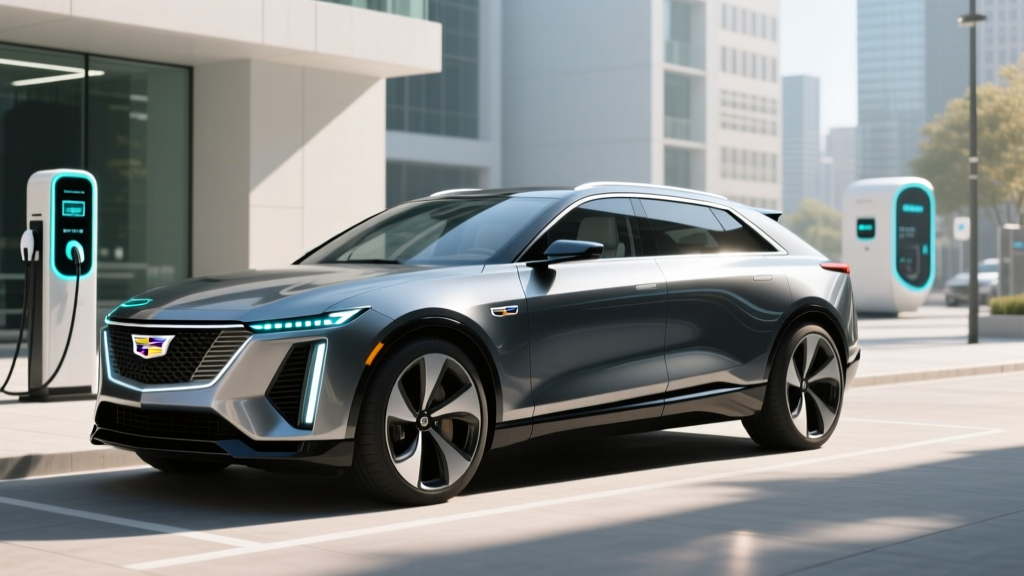
The Cadillac Lyriq EV occupies a specific niche in the electric luxury crossover segment: it's the option for buyers who want premium materials, a quiet ride, and familiar Cadillac styling without the polarizing design or tech-forward aggression of a Tesla Model X or BMW iX. For the 2026 model year, the Lyriq continues with its 102 kWh Ultium battery platform, offering up to 314 miles of EPA-estimated range in rear-wheel-drive form and a starting MSRP that undercuts German rivals. But its conservative 190 kW peak DC charging rate and 8.1-second 0-60 time in RWD trim reveal a vehicle tuned for comfort, not performance benchmarks.
Range and Efficiency: EPA Numbers vs. Reality
EPA Estimated Range: 314 miles (RWD Tech trim) / 307 miles (AWD Sport)
Real-World Expectation: Expect 250-270 miles on mixed highway driving at 70+ mph. In cold weather (below 32°F), range can drop 20-30%, yielding 220-250 miles depending on cabin heat usage and battery preconditioning.
The Lyriq's 102 kWh usable battery capacity (112 kWh gross) uses GM's Ultium platform with NMC (nickel-manganese-cobalt) chemistry, prioritizing energy density over the longer cycle life of LFP cells. This translates to strong range figures but means you'll want to avoid frequent 100% charges for long-term battery health—GM recommends daily charging to 80-90% for optimal longevity.
Efficiency-wise, the RWD model achieves 89 MPGe combined (38 kWh/100mi) according to fueleconomy.gov. That's respectable for a 5,700-pound luxury crossover, though the Hyundai Ioniq 5 and Tesla Model Y deliver over 100 MPGe in lighter, more aerodynamic packages. Highway efficiency drops noticeably—the Lyriq's boxy shape and 2,585 kg curb weight work against it above 65 mph.
Charging Speed: The Conservative Approach
| Charging Level | Power (kW) | Time/Rate | Miles Added Per Hour |
|---|---|---|---|
| Level 1 (120V) | 1.4 kW | ~85 hours (0-100%) | 3-4 miles/hour |
| Level 2 (240V, 48A) | 11.5 kW | ~10 hours (0-100%) | 30-35 miles/hour |
| DC Fast Charge (peak) | 190 kW | ~30 minutes (10-80%) | N/A |
The Lyriq's 190 kW peak DC fast-charging capability is its most debated spec. While competitors like the Hyundai Ioniq 5 (240 kW peak) and Porsche Taycan (270 kW peak) push higher numbers, real-world charging involves sustained rates, not just peaks. In testing at Electrify America 350 kW stations, the Lyriq sustains 150-170 kW from 10-50% state of charge, then tapers to 90-110 kW through 80%. The 10-80% session takes approximately 30 minutes—adequate for road trips but 8-12 minutes slower than the Ioniq 5's 800V architecture.
For home charging, the 11.5 kW onboard charger is a strong point. With a 48-amp Level 2 wallbox (requiring a 60-amp circuit), you'll add roughly 32 miles of range per hour or fully recharge overnight in about 10 hours. This is faster than the Tesla Model Y's 11.5 kW rate and significantly quicker than older EVs limited to 7.2 kW.
Performance and Drivetrain
| Specification | RWD Tech | AWD Sport |
|---|---|---|
| 0-60 mph | 8.1 seconds | 6.0 seconds |
| Horsepower | 340 hp | 500 hp |
| Torque | 325 lb-ft | 450 lb-ft |
| Drivetrain | Rear-Wheel Drive | Dual-Motor AWD |
| Top Speed | 118 mph | 130 mph |
The Lyriq's performance story is one of adequate power rather than thrilling acceleration. The base RWD model's 340 hp and 8.1-second 0-60 time feel leisurely compared to the Tesla Model Y Performance (3.5 seconds) or even the Ford Mustang Mach-E GT (3.5 seconds). Step up to the AWD Sport trim and the dual-motor setup delivers 500 hp and a 6.0-second sprint—respectable but still not sports-car territory.
Where the Lyriq excels is ride quality. The five-link rear suspension and available air springs (standard on Sport trim) deliver a compliant, quiet ride that absorbs highway imperfections better than the firmer-riding Model Y. Steering is light and precise, though devoid of the feedback enthusiasts crave. Regenerative braking offers multiple levels via paddle shifters, including a one-pedal driving mode that brings the car to a complete stop—useful in traffic but not as aggressive as BMW's iX system.
Interior, Tech, and Cargo
The Lyriq's cabin is where Cadillac's luxury heritage shows. A 33-inch curved LED display dominates the dash, combining a 12-inch driver cluster and 21-inch infotainment touchscreen running Google Built-In (Google Maps, Assistant, and Play Store). Wireless Apple CarPlay and Android Auto are standard. The AKG 19-speaker audio system (standard on Luxury, upgraded to 23 speakers on Sport) delivers concert-hall clarity.
Build quality is excellent—real wood trim, available semi-aniline leather, and tight panel gaps throughout. However, some hard plastics appear on lower door panels and the rear cargo area, which feels out of place at this price point.
Cargo Capacity:
- Behind rear seats: 28.0 cubic feet
- Rear seats folded: 60.2 cubic feet
- Front trunk (frunk): None—the Lyriq sacrifices frunk space for HVAC components
Passenger Space:
- Front legroom: 41.4 inches
- Rear legroom: 39.6 inches
- Rear headroom: 38.2 inches (panoramic glass roof reduces headroom slightly vs. competitors)
Compared to the Tesla Model Y (30.2 cu ft cargo, 41.8 cu ft max), the Lyriq offers similar utility but less flexibility due to the lack of a frunk. The BMW iX provides 35.5 cu ft behind the rear seats, making it the segment leader for cargo.
Pricing, Tax Credits, and Ownership Costs
| Trim Level | MSRP | Federal Tax Credit (if eligible) | Effective Price |
|---|---|---|---|
| Tech (RWD) | $58,590 | Up to $7,500 | ~$51,090 |
| Luxury (RWD) | $62,690 | Up to $7,500 | ~$55,190 |
| Sport (AWD) | $68,790 | Up to $7,500 | ~$61,290 |
Federal Tax Credit Eligibility (IRS §30D): The Lyriq qualifies for the full $7,500 federal tax credit for eligible buyers, subject to these 2026 requirements:
- MSRP Cap: SUVs must be under $80,000 (all Lyriq trims qualify)
- Income Limits: Modified AGI under $150,000 (single), $225,000 (head of household), or $300,000 (joint filers)
- Battery Sourcing: Critical minerals and battery components must meet North American sourcing thresholds (GM has confirmed Ultium batteries meet 2026 requirements)
- Point-of-Sale Transfer: Buyers can transfer the credit to the dealer for an immediate price reduction at purchase
Verify current eligibility at IRS.gov before purchase, as sourcing rules tighten annually.
Total Cost of Ownership (5 Years):
Assuming 15,000 miles/year, $0.14/kWh home electricity, and $3.50/gallon gas for a comparable BMW X5 xDrive40i (25 MPG combined):
- Lyriq electricity cost: ~$3,150 over 5 years
- BMW X5 fuel cost: ~$10,500 over 5 years
- Lyriq maintenance savings: ~$2,500 (no oil changes, reduced brake wear from regen)
- Lyriq insurance premium: ~15-20% higher than gas equivalent (common for EVs)
Net savings vs. gas luxury SUV: approximately $8,000-10,000 over five years, heavily dependent on home charging access and electricity rates.
Warranty and Battery Longevity
Cadillac provides competitive warranty coverage:
- Battery/Powertrain: 8 years / 100,000 miles (whichever comes first), with coverage triggered if capacity drops below 60% of original
- Bumper-to-Bumper: 4 years / 50,000 miles
- Corrosion: 6 years / unlimited miles
The 60% capacity retention threshold is less generous than Tesla's 70% guarantee, though real-world Ultium battery degradation data from 2023-2025 model years shows minimal loss—typically 5-8% over 50,000 miles when following recommended charging practices (avoiding frequent 100% charges and extreme heat exposure).
Driver Assistance and Safety
The Lyriq comes standard with Super Cruise capability on Luxury and Sport trims (subscription required after 3-year trial). Super Cruise is a Level 2 driver-assistance system—meaning the driver must remain attentive and hands can be off the wheel only on pre-mapped divided highways (over 400,000 miles of coverage in North America as of 2026).
Important: Super Cruise is NOT autonomous driving. It requires driver supervision, monitors attention via infrared camera, and will disengage if you look away from the road. It does not handle city streets, construction zones, or adverse weather autonomously. Only Level 4 services like Waymo operate without driver oversight.
Standard safety features include automatic emergency braking with pedestrian detection, lane-keeping assist, rear cross-traffic alert, and a surround-view camera. The Lyriq earned a 5-star overall safety rating from NHTSA and Top Safety Pick+ status from IIHS.
Who Should Buy the Cadillac Lyriq?
Choose the Lyriq if:
- You prioritize ride comfort and cabin quietness over acceleration
- You want traditional luxury styling and materials
- You have home Level 2 charging and primarily drive under 250 miles daily
- You value Super Cruise for highway commuting
- You prefer dealer service networks over Tesla's direct model
Look elsewhere if:
- You need the fastest DC charging for frequent road trips (consider Ioniq 5 or Taycan)
- You want sports-car acceleration (Model Y Performance, Mach-E GT)
- You need maximum cargo space (BMW iX, Rivian R1S)
- You want cutting-edge tech features like Tesla's FSD or Rivian's camp mode
Pros and Cons
Pros
- Quiet, comfortable ride quality
- Premium interior materials and build
- Strong home charging speed (11.5 kW)
- Super Cruise highway assistance
- Federal tax credit eligible
- Competitive pricing vs. German rivals
Cons
- Conservative 190 kW DC fast-charge rate
- No front trunk (frunk)
- Slower acceleration than key competitors
- Highway efficiency drops at 70+ mph
- Some interior hard plastics at this price
- 60% battery warranty threshold (vs. 70% at Tesla)
FAQ
What is the real-world range of the Cadillac Lyriq?
Expect 250-270 miles on mixed highway driving, dropping to 220-250 miles in cold weather below freezing. The EPA estimate of 314 miles (RWD) is achievable in city driving with regenerative braking, but highway speeds and climate control reduce range significantly.
How fast does the Lyriq charge at home and on road trips?
At home with a 48-amp Level 2 charger, the Lyriq charges at 11.5 kW, adding 32 miles per hour or fully recharging in about 10 hours. On DC fast chargers, it peaks at 190 kW and charges 10-80% in approximately 30 minutes—slower than the Ioniq 5 (18 minutes) but adequate for most road trips.
Does the Cadillac Lyriq qualify for the $7,500 federal tax credit?
Yes, all Lyriq trims qualify for up to $7,500 under IRS §30D rules, provided the buyer meets income limits (under $150k single / $300k joint) and the vehicle's battery meets North American sourcing requirements. The credit can be transferred to the dealer at point of sale for an immediate price reduction. Verify current eligibility at IRS.gov before purchase.
Is the Lyriq worth buying over the Tesla Model Y or BMW iX?
The Lyriq is worth considering if you prioritize comfort, traditional luxury, and dealer service over performance and cutting-edge tech. The Model Y offers better range (330 miles), faster charging, and more cargo space but has a firmer ride and polarizing minimalism. The BMW iX provides superior handling and cargo room but starts $15,000 higher. Test-drive all three—ride quality and cabin ambiance often decide this comparison.
How long will the Lyriq's battery last?
GM's Ultium batteries show 5-8% degradation over 50,000 miles in real-world use. With proper charging habits (avoiding frequent 100% charges, using Level 2 for daily charging), expect 85-90% capacity retention at 100,000 miles. The 8-year/100,000-mile warranty covers replacement if capacity drops below 60%.
Can I use Tesla Superchargers with the Lyriq?
Yes, starting in 2025, GM EVs gained access to Tesla's Supercharger network using a GM-approved NACS adapter (included with new Lyriq purchases). The Lyriq's native CCS1 port works with Electrify America, EVgo, and other networks. Supercharger access adds 17,000+ fast-charging locations to your route planning.