Cadillac Lyriq at a Glance: What Buyers Need to Know
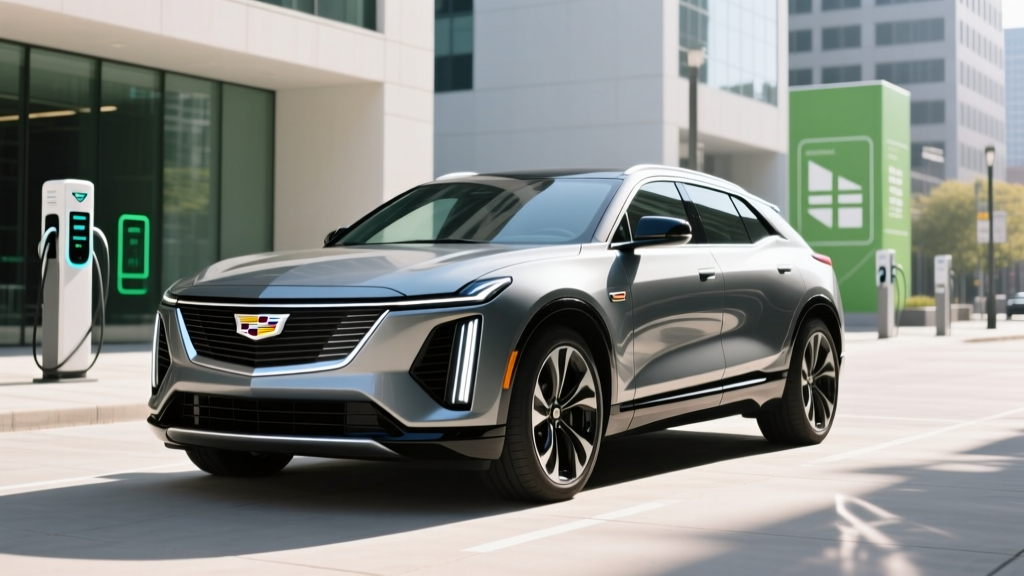
The Cadillac Lyriq is General Motors' flagship electric luxury crossover and the first vehicle built on GM's Ultium platform to reach customers in volume. For 2026, the Lyriq carries over its core architecture — a 102 kWh usable battery pack, available rear-wheel or all-wheel drive, and a 33-inch LED infotainment display — while continuing to anchor Cadillac's electric transition. Buyers researching the Lyriq often start with exterior and interior measurements, then move to range, charging logistics, and total cost. This profile covers every spec that matters, with real-world caveats the sticker sheet omits.
| Spec | RWD (Luxury/Premium) | AWD (Sport/Premium) |
|---|---|---|
| EPA Range | 314 mi | 307 mi |
| Battery (usable) | 102 kWh (NMC) | 102 kWh (NMC) |
| Peak DC Fast Charge | 190 kW | 190 kW |
| 10–80% DCFC Time | ~33 min | ~33 min |
| Level 2 Home Charge | 19.2 kW (~52 mi/hr) | 19.2 kW (~52 mi/hr) |
| Horsepower | 340 hp | 500 hp |
| 0–60 mph | 6.0 sec | 4.6 sec |
| EPA Efficiency | 89 MPGe (38 kWh/100mi) | 88 MPGe (38 kWh/100mi) |
| Base MSRP | $58,590 | $62,090 |
Exterior and Interior Dimensions: How the Lyriq Measures Up
The Lyriq occupies the midsize luxury crossover segment, competing directly with the BMW iX, Audi Q8 e-tron, and Genesis Electrified GV70. Its dimensions give it a long, low-roof profile that prioritizes highway stability and interior volume over the upright SUV stance some buyers expect.
| Dimension | Measurement |
|---|---|
| Wheelbase | 121.8 in |
| Overall Length | 196.7 in |
| Overall Width (mirrors folded) | 77.8 in |
| Overall Height | 63.9 in |
| Ground Clearance | 7.0 in |
| Curb Weight (RWD / AWD) | 5,630 lb / 5,765 lb |
| Front Headroom | 38.6 in |
| Rear Headroom | 37.7 in |
| Front Legroom | 44.3 in |
| Rear Legroom | 39.6 in |
| Cargo (behind rear seats) | 28.0 cu ft |
| Cargo (rear seats folded) | 60.9 cu ft |
| Frunk | None |
A few dimension takeaways for real buyers: the 121.8-inch wheelbase is longer than a BMW X5's, which translates directly to rear-seat legroom — adults over six feet tall will have ample knee clearance. However, the 63.9-inch roof height and sloping rear glass cut into cargo height. You will not fit a full-size dog crate upright behind the second row without angling it. The absence of a frunk (front trunk) is a packaging consequence of the Ultium platform's HVAC and electronics layout; if under-hood storage matters, the Hyundai Ioniq 5 or Ford Mustang Mach-E offer it.
Range and Efficiency: EPA vs. Real-World Expectations
The RWD Lyriq carries an EPA-estimated 314 miles of range, while the AWD drops to 307 miles. These are competitive numbers for the segment, but EPA testing uses a mixed city/highway cycle with moderate climate loads. Real-world results diverge based on speed, temperature, and terrain.
- City/suburban, mild weather: 310–325 mi (regen braking recovers energy)
- Highway (70–75 mph sustained): 255–275 mi (aerodynamic drag dominates)
- Cold weather (below 32°F): 220–250 mi (battery resistance + cabin heating)
- Worst-case (highway + cold + headwind): ~200 mi
The Lyriq's NMC battery chemistry performs better in cold than LFP alternatives, but any EV loses 20–30% range in freezing temperatures without preconditioning. Always precondition the battery via the app or scheduled departure before DC fast charging in winter.
Efficiency lands at roughly 38 kWh per 100 miles (89 MPGe combined for RWD). That is slightly less efficient than the lighter BMW iX xDrive50 (around 86 MPGe combined) but comparable to the Audi Q8 e-tron. At a national average residential electricity rate of $0.17/kWh, charging the Lyriq from empty to full at home costs approximately $17.34 — roughly equivalent to $4.90 per gallon of gasoline in a vehicle getting 25 MPG.
Charging Speed: DC Fast, Level 2, and Connector Details
The Lyriq's Ultium battery supports a peak DC fast-charge rate of 190 kW on a CCS1 connector. For 2026, GM has been rolling out NACS (Tesla-style) adapter compatibility across its EV lineup, but verify with your dealer whether your specific build includes the adapter or a native NACS port. The 190 kW peak is not sustained — like all EVs, the Lyriq's charge curve tapers as the battery fills to protect cell longevity.
| Charge Level | Power / Rate | Speed / Time |
|---|---|---|
| Level 1 (120V household) | ~1.4 kW | ~4 mi/hr |
| Level 2 (240V, 48A circuit) | 11.5 kW | ~31 mi/hr |
| Level 2 (240V, 80A / 19.2 kW capable) | 19.2 kW | ~52 mi/hr |
| DC Fast Charge (peak) | 190 kW | 10–80% in ~33 min |
| DC Fast Charge (sustained avg 10–80%) | ~130 kW | ~180 mi added in 30 min |
The Lyriq's onboard AC charger is a standout: it supports up to 19.2 kW on Level 2, which is double what most competitors offer (the BMW iX and Audi Q8 e-tron max out at 11.5 kW on Level 2). To use the full 19.2 kW, you need a hardwired Level 2 station on a 100-amp circuit — a significant electrical upgrade that may cost $1,500–$3,000 depending on your panel. On a standard 48-amp / 60-amp circuit (the most common home install), you will see 11.5 kW, adding roughly 31 miles per hour of charging. That still replenishes a full day's driving overnight.
On DC fast charging, expect the Lyriq to hold close to 150–160 kW up to about 50% state of charge, then taper to 100 kW by 70%, and further to 50 kW above 85%. If you are road-tripping, plan your stops around the 10–80% window — charging past 80% adds time disproportionately. On a 300-mile highway trip, one 25-minute stop at a 150+ kW charger is sufficient.
Performance and Drivetrain
The RWD Lyriq uses a single rear motor producing 340 hp and 325 lb-ft of torque. The AWD (marketed in Sport and Premium trims) adds a front motor for 500 hp and 450 lb-ft. Both use a single-speed reduction gear — no multi-speed transmission. The Ultium platform's low center of gravity (the battery pack is a structural floor element) gives the Lyriq composed handling for a 5,600+ lb vehicle, though it is not a sports crossover. Steering is weighted and precise; the ride is tuned toward comfort with adaptive dampers on higher trims.
Regen braking is adjustable via steering-wheel paddles, including a one-pedal driving mode that can bring the car to a full stop. The brake pedal feel is progressive — a common EV challenge that GM has handled well. Towing capacity is rated at 1,500 lb with the factory hitch, sufficient for a small utility trailer or a pair of dirt bikes, but not a camper. If you need serious towing (5,000+ lb), look at the Rivian R1S or Tesla Model X.
Pricing, Trims, and Federal Tax Credit Eligibility
The 2026 Lyriq is offered in three main trim families — Luxury, Premium Luxury, and Sport — with RWD and AWD available across most. Base pricing starts at $58,590 for the RWD Luxury, climbing to approximately $73,000 for a fully optioned AWD Sport with the AKG 19-speaker audio, panoramic glass roof, and Super Cruise package.
| Trim | MSRP | Est. Federal Credit* | Effective Price |
|---|---|---|---|
| Luxury RWD | $58,590 | Up to $7,500 | ~$51,090 |
| Premium Luxury RWD | $64,590 | Up to $7,500 | ~$57,090 |
| Sport AWD | $66,090 | Up to $7,500 | ~$58,590 |
| Premium Luxury AWD | $69,590 | Up to $7,500 | ~$62,090 |
*Under IRS §30D rules, the $7,500 credit requires: buyer AGI ≤ $150,000 single / $300,000 joint; vehicle MSRP ≤ $80,000 (SUVs); and battery components + critical minerals meeting domestic-sourcing thresholds that tighten annually. Credit can be transferred to the dealer at point of sale as a price reduction. Verify eligibility with your tax professional — sourcing rules change yearly and not every build configuration qualifies.
The Lyriq's MSRP falls under the $80,000 SUV cap for the federal credit, and GM has worked aggressively to localize battery cell production (at Ultium Cells plants in Ohio, Tennessee, and Michigan) and cathode-material sourcing. As of the 2026 model year, most Lyriq configurations are expected to qualify for the full $7,500, but the critical-minerals requirement is the variable to watch. Always confirm the specific VIN's eligibility on the fueleconomy.gov credit lookup before signing paperwork.
Technology, Safety, and Driver Assistance
The Lyriq's centerpiece is a 33-inch diagonal LED display that spans the instrument cluster and infotainment touchscreen in a single curved panel running Google Built-In (Google Maps, Google Assistant, Play Store apps). Wireless Apple CarPlay and Android Auto are standard. The available AKG Studio 19-speaker audio system is one of the best in the segment. Over-the-air updates continue to refine the software — early 2024 models had notable infotainment lag that has been substantially addressed in subsequent updates.
Super Cruise, GM's hands-off-wheel Level 2 driver-assist system, is available on mapped divided highways (over 750,000 miles of compatible roads in the US and Canada as of 2026). It uses a driver-attention camera to ensure you are watching the road — this is not autonomous driving. You remain responsible for the vehicle at all times. Super Cruise is a $2,500 option (or included in certain Premium trims) and requires a subscription after the initial trial period (~$25/month). It is genuinely excellent for long highway stretches and reduces fatigue measurably, but it does not handle construction zones, unmapped roads, or adverse weather autonomously.
Standard safety equipment includes automatic emergency braking with pedestrian detection, lane-keep assist, blind-spot monitoring, rear cross-traffic alert, and a following-distance indicator. The Lyriq earned a 5-star overall rating from NHTSA and Top Safety Pick+ recognition from IIHS in prior model-year testing (verify current-year status as IIHS criteria tighten).
Warranty and Long-Term Ownership
GM backs the Lyriq's battery pack and electric powertrain components for 8 years / 100,000 miles, with a capacity-retention threshold of 60% — if the pack degrades below 60% of original capacity within that window, GM will repair or replace it. The bumper-to-bumper warranty is 4 years / 50,000 miles. Scheduled maintenance is minimal: cabin air filter replacement, tire rotation, brake-fluid check, and windshield-washer fluid. Expect annual maintenance costs of $150–$300, dramatically less than a comparable ICE luxury crossover.
Long-term battery degradation data on Ultium packs is still accumulating (the Lyriq launched for the 2023 model year), but GM's NMC chemistry and active liquid thermal management system are designed for minimal degradation. Industry data from similar NMC packs (Tesla Model Y, Hyundai Ioniq 5) suggests 8–12% capacity loss over 150,000 miles under normal use. Avoid routine DC fast charging above 90% state of charge and daily charging to 100% to maximize longevity.
Pros, Cons, and Who Should Buy the Lyriq
- 314 mi EPA range is competitive with or exceeds most rivals
- 19.2 kW Level 2 onboard charger is best-in-class for home charging flexibility
- Superior rear-seat legroom (39.6 in) for the segment
- Super Cruise is one of the most capable Level 2 systems available
- Quiet, refined ride quality befitting the Cadillac brand
- Falls under $80K SUV MSRP cap for federal tax credit
- No frunk — lost cargo opportunity
- 190 kW peak DCFC lags behind Hyundai/Kia's 350 kW architecture
- Sloping roofline limits tall cargo behind rear seats
- 1,500 lb towing capacity is low for the class
- Infotainment learning curve; Google Built-In not universally preferred
- AWD model gives up some range and costs $3,500+ more
The Lyriq is best for: Luxury-oriented commuters and two-row families who prioritize ride comfort, highway driving assist, and strong real-world range over sporty dynamics or maximum cargo. It excels as a daily driver with home Level 2 charging and handles 300-mile road trips with one planned stop. If you need three rows, serious towing, or the fastest possible DC charging, look at the Kia EV9, Rivian R1S, or Hyundai Ioniq 5 N instead.
Frequently Asked Questions
What is the real-world range of the Cadillac Lyriq?
The RWD Lyriq is EPA-rated at 314 miles. In real-world highway driving at 70–75 mph, expect 255–275 miles. In freezing temperatures with cabin heat, plan for 220–250 miles. City driving with regenerative braking can match or slightly exceed the EPA number.
How fast does the Lyriq charge at home and on the road?
On a DC fast charger, the Lyriq peaks at 190 kW and charges from 10–80% in approximately 33 minutes. At home on a standard 48-amp Level 2 station, it adds about 31 miles per hour (full charge overnight). On a dedicated 80-amp / 19.2 kW circuit, it gains up to 52 miles per hour — the fastest AC charging in its class.
Does the 2026 Cadillac Lyriq qualify for the $7,500 federal tax credit?
Most 2026 Lyriq configurations are expected to qualify for the full $7,500 under IRS §30D, as MSRP is under the $80,000 SUV cap and GM has localized battery production. However, buyer income limits ($150K single / $300K joint AGI) and annual critical-mineral sourcing thresholds apply. Confirm your VIN on fueleconomy.gov and consult a tax professional before purchase.
How does the Lyriq compare to the BMW iX and Audi Q8 e-tron?
The Lyriq offers more EPA range (314 vs. ~324 for iX xDrive50 but at a higher price, ~285 for Q8 e-tron), superior Level 2 home charging (19.2 kW vs. 11.5 kW), and Super Cruise. The BMW iX handles more sharply and offers a more premium interior; the Audi Q8 e-tron charges faster on DC (up to 170 kW sustained but with a smaller battery). The Lyriq is the value play in the segment, undercutting the iX by $10,000+ at comparable equipment levels.
Is the Lyriq a good family vehicle?
For two-row families, yes. Rear-seat space is generous, safety ratings are excellent, and the 314-mile range covers most family road trips with one stop. The 28 cu ft of cargo space behind the rear seats fits a double stroller plus groceries. Families needing three rows should consider the Kia EV9 or Rivian R1S.
Does the Lyriq have a front trunk (frunk)?
No. The Ultium platform's under-hood packaging does not include a frunk. All cargo must go in the rear hatch area.