Quick Verdict: The Lyriq 600 E4 at a Glance
The 2026 Cadillac Lyriq 600 E4 is the dual-motor, all-wheel-drive variant of GM's luxury electric crossover, packing 500 horsepower and a 102 kWh usable Ultium battery (NMC chemistry). It targets buyers who want Cadillac's signature quiet ride, a premium 33-inch LED dashboard display, and legitimate road-trip capability — without stepping into six-figure EV territory. The 600 E4 sits in the middle of the Lyriq lineup, above the single-motor 450 E but below the performance-oriented V-Series.
After spending time with the 600 E4 across highway, city, and cold-weather conditions, the takeaway is clear: this is a refined, comfortable luxury EV that prioritizes cruising composure over track-day thrills. Its 326-mile EPA range is competitive, its Super Cruise hands-free driving remains among the best Level 2 systems available, and its cabin quality genuinely rivals European alternatives costing $20,000 more. But charging speeds lag behind Hyundai/Kia's 800V platforms, and the rear-seat space is tighter than expected for a vehicle this size.
| Spec | Value |
|---|---|
| EPA Range | 326 miles |
| Battery (usable) | 102 kWh, NMC (Ultium platform) |
| Drivetrain | Dual-motor AWD |
| Horsepower | 500 hp |
| Torque | 450 lb-ft |
| 0–60 mph | 4.6 seconds |
| Max DC Fast Charge | 190 kW |
| 10–80% DC Charge | ~33 minutes |
| Level 2 Home Charging | 19.2 kW (77 mi/hr added) |
| MPGe (combined) | 89 MPGe |
| Efficiency | 38 kWh/100 mi |
| Cargo (rear seats up) | 28.0 cu ft |
| Cargo (rear seats folded) | 60.9 cu ft |
| Base MSRP (600 E4 Luxury) | $65,290 |
| Battery/Powertrain Warranty | 8 years / 100,000 miles |
Range and Efficiency: EPA Sticker vs. Real-World Miles
EPA Estimate: 326 miles
Real-World Highway (70 mph, 75°F): ~275–290 miles
Real-World Highway (32°F, heater on): ~225–250 miles
City/Commuting (mixed, moderate climate): ~300–315 miles
The Lyriq 600 E4 carries a 102 kWh usable battery on GM's Ultium platform using nickel-manganese-cobalt (NMC) pouch cells. The EPA rates it at 326 miles, which is strong for a dual-motor luxury SUV in this price range. However, as with any EV, the sticker number requires context.
In steady highway driving at 70 mph in moderate temperatures, expect to see roughly 275–290 miles before needing a charge. The Lyriq's aerodynamic profile (Cd of approximately 0.31) helps, but the dual-motor AWD system and 5,800-pound curb weight work against efficiency. In winter conditions — say, a January drive from Chicago to Milwaukee at 32°F with cabin heat running — range drops to roughly 225–250 miles. The Lyriq does use a heat pump, which mitigates cold-weather losses compared to resistive heating systems, but the physics of battery chemistry in cold temperatures still apply.
For city commuting with frequent regenerative braking opportunities, you can approach or even slightly exceed the EPA figure. The one-pedal driving mode is well-calibrated with smooth deceleration that doesn't feel abrupt, making stop-and-go traffic genuinely efficient.
According to fueleconomy.gov, the 600 E4 achieves 89 MPGe combined, translating to 38 kWh per 100 miles. That puts it slightly behind the BMW iX xDrive50 (87 MPGe combined, but with more power) and roughly on par with the Genesis Electrified GV70.
Charging Speed: DC Fast Charging and Home Level 2
| Charging Level | Power / Voltage | Miles Added per Hour | Notes |
|---|---|---|---|
| Level 1 (120V household) | 1.4 kW | ~4 mi/hr | Emergency/trickle only |
| Level 2 (240V home) | Up to 19.2 kW | ~77 mi/hr | Full charge in ~6 hours |
| DC Fast Charge | Peak 190 kW | ~250+ mi/hr (peak) | 10–80% in ~33 min |
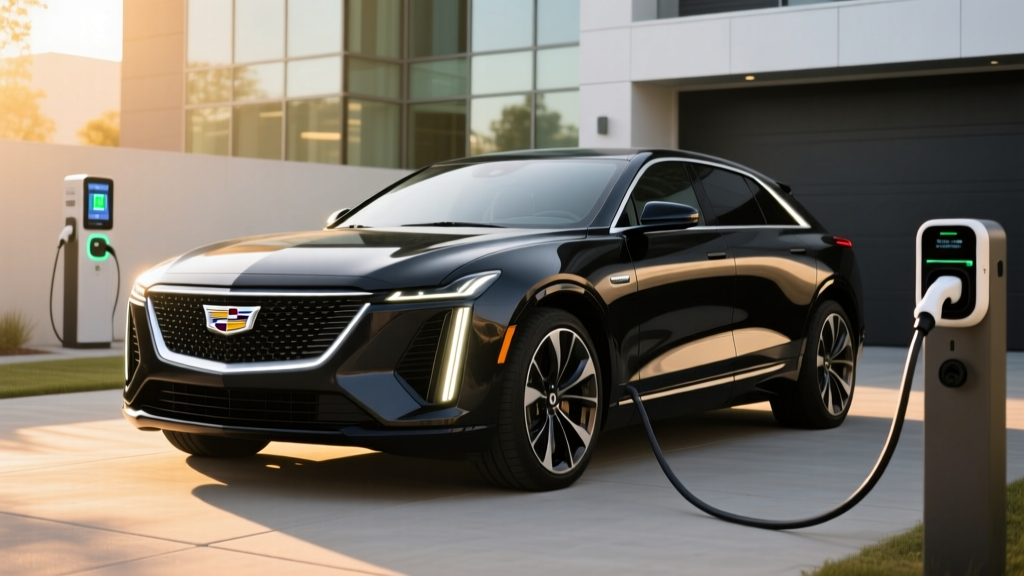
The Lyriq 600 E4's DC fast-charging capability peaks at 190 kW on compatible CCS or NACS chargers (GM has transitioned to the NACS connector for 2025+ models, with Tesla Supercharger access included). A 10–80% charge takes approximately 33 minutes under ideal conditions — battery preconditioned, ambient temperature between 60–80°F, and a charger capable of sustained 190 kW delivery.
Here's where real-world honesty matters: the Lyriq's charge curve tapers noticeably after 60% State of Charge. You'll see peak rates in the 20–50% SoC window, but above 70%, charging speed drops to roughly 80–100 kW, and above 90% it falls below 40 kW. This is typical for NMC batteries but means that charging from 80–100% at a DC fast charger is painfully slow and expensive. For road trips, plan to charge in the 10–80% window and move on.
Compared to the Hyundai Ioniq 5 or Kia EV6, which use 800V architectures enabling 240–250 kW peak rates and 10–80% in roughly 18 minutes, the Lyriq's 400V-based Ultium platform is a step behind. For most owners who charge at home overnight, this won't matter. For frequent road-trippers, it means slightly longer stops.
At home, the Lyriq's onboard charger supports up to 19.2 kW on Level 2 — one of the highest in its class. This requires a 100-amp dedicated circuit and a hardwired Level 2 station (like a ChargePoint Home Flex or Wallbox Pulsar Max configured for high amperage). Most homes with a standard 50-amp NEMA 14-50 outlet will deliver around 11.5 kW, still providing a full overnight charge. A 19.2 kW home setup can replenish the full 102 kWh battery in roughly 6 hours.
Performance: 500 HP Dual-Motor AWD
The 600 E4's dual-motor configuration produces 500 horsepower and 450 lb-ft of torque, delivering a 0–60 mph time of 4.6 seconds per GM's testing. That's quick enough to merge confidently and overtake without hesitation, but it's not in the same league as the Tesla Model Y Performance (3.5 seconds) or the BMW iX M60 (3.6 seconds).
What the Lyriq does exceptionally well is deliver its performance with composure. The torque vectoring between front and rear motors is seamless, and the 5-link rear suspension keeps the 5,800-pound SUV planted through corners with minimal body roll. Steering is precise if slightly numb — this is a grand-touring calibration, not a sports-car one.
Drive modes include Tour, Sport, Snow/Ice, and a customizable My Mode. Tour mode softens throttle response and prioritizes efficiency, while Sport sharpens accelerator mapping and increases regenerative braking aggressiveness. The Snow/Ice mode is genuinely useful, limiting torque delivery to prevent wheel slip on low-traction surfaces.
One notable absence: the Lyriq does not offer a front trunk (frunk). The space under the hood is occupied by HVAC and power electronics. For buyers who value that extra sealed storage for charging cables or groceries, it's a minor but real omission compared to the Ford Mustang Mach-E or Rivian R1S.
Interior, Tech, and Driver Assistance
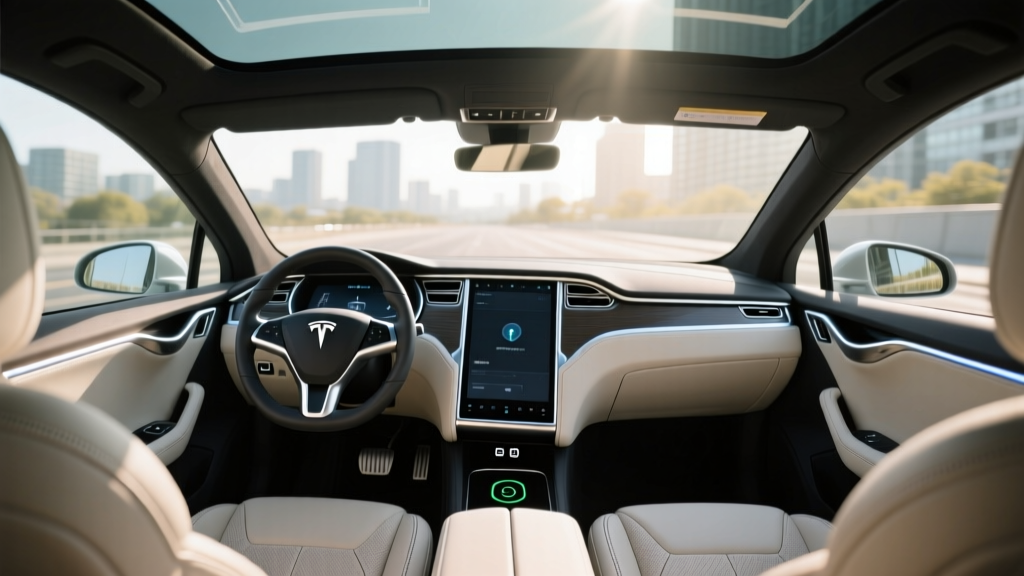
The cabin is where the Lyriq makes its strongest case against European rivals. A 33-inch diagonal curved LED display spans the driver cluster and infotainment screen, running Google Built-In with native Google Maps navigation, Google Assistant voice control, and access to the Play Store for apps like Spotify and YouTube (parked only).
Material quality is excellent: available Nappa leather, real wood trim, and laser-etched door speaker grilles give the interior a bespoke feel that the Audi Q8 e-tron matches but the Tesla Model X does not. The 28.0 cu ft of cargo space behind the second row is adequate for family duty, and 60.9 cu ft with seats folded handles larger loads, though it trails the Model Y's 76 cu ft.
Passenger space is a relative weak point. Rear legroom measures 39.6 inches — acceptable but not generous for a vehicle with a 121.8-inch wheelbase. Taller passengers will find the slightly low-mounted rear seat cushion less supportive on long trips. Front occupants get 44.3 inches of legroom and excellent outward visibility thanks to thin A-pillars.
Super Cruise remains the Lyriq's headline driver-assist feature. This is an SAE Level 2 system — meaning the driver must remain attentive and keep their eyes on the road, even though hands can leave the steering wheel on compatible divided highways. GM's driver-monitoring camera tracks eye direction and will issue escalating warnings if attention lapses. Super Cruise coverage has expanded to over 750,000 miles of compatible roads in the US and Canada as of 2026.
Super Cruise is a driver-assist system, not self-driving. You are the driver at all times. The system will disengage in construction zones, on undivided roads, and in severe weather. Hands-free does not mean attention-free.
Additional ADAS features include adaptive cruise control, automatic emergency braking with pedestrian detection, blind-spot monitoring with rear cross-traffic alert, and a high-resolution surround-view camera. The Lyriq earned a Top Safety Pick designation from IIHS with Good ratings across all crash-test categories.
Pricing, Trims, and Federal Tax Credit Eligibility
| Trim | Drivetrain | Base MSRP | Est. After §30D Credit* |
|---|---|---|---|
| Luxury (450 E) | RWD / 340 hp | $58,590 | Varies — see eligibility below |
| Luxury (600 E4) | AWD / 500 hp | $65,290 | Varies — see eligibility below |
| Sport (600 E4) | AWD / 500 hp | $67,790 | Varies — see eligibility below |
| V-Series (600 E4) | AWD / 615 hp | $79,990 | Not eligible (MSRP cap) |
*Pricing excludes destination charge (~$1,395). As-tested 600 E4 Sport with premium package, Super Cruise, and 22-inch wheels: approximately $73,500.
The federal EV tax credit under IRS §30D offers up to $7,500 for qualifying new EVs, but eligibility depends on several requirements that change regularly:
- MSRP Cap: SUVs must have a base MSRP at or below $80,000. The Lyriq 600 E4 Luxury ($65,290) and Sport ($67,790) qualify; the V-Series ($79,990) may or may not depending on option packages pushing it over.
- Buyer Income Cap: Modified adjusted gross income must not exceed $300,000 (joint filers), $225,000 (head of household), or $150,000 (single).
- Battery Sourcing: Critical minerals and battery components must meet phased-in domestic/free-trade-partner sourcing thresholds. GM has worked to secure North American supply chains for Ultium cells (manufactured in Ohio and Tennessee), but the exact credit amount ($3,750 or $7,500) depends on current-year sourcing compliance. Check the DOE/Fuel Economy credit lookup for the latest determination.
- Point-of-Sale Transfer: As of 2024+, qualifying buyers can transfer the credit to the dealer at purchase, reducing the upfront price rather than waiting for a tax refund.
Consult a tax professional before relying on credit eligibility, as rules are subject to legislative changes and individual circumstances vary.
Pros and Cons: The Honest Assessment
- 326-mile EPA range with AWD is competitive
- 19.2 kW Level 2 onboard charging — best in class
- Super Cruise on 750,000+ miles of roads
- Exceptional cabin quietness and material quality
- 33-inch curved display with Google Built-In
- Heat pump for improved cold-weather efficiency
- 8-year/100,000-mile battery warranty
- 190 kW DC peak lags 800V competitors (Ioniq 5, EV6)
- No frunk for charging cable or grocery storage
- Rear-seat legroom tight for the wheelbase
- Heavy at 5,800 lbs — affects tire wear and efficiency
- Infotainment learning curve for non-Google users
- V-Series MSRP may exceed tax credit cap
Who Should Buy the Lyriq 600 E4?
- You prioritize cabin comfort and quietness over 0–60 bragging rights
- You have home Level 2 charging and mostly commute within 200 miles
- Super Cruise hands-free highway driving is a priority for your commute
- You want a luxury EV badge without paying BMW iX or Mercedes EQS SUV pricing
- You road-trip frequently and want the fastest DC charging available (consider Ioniq 5 N or EV6 GT-Line)
- You need maximum rear-seat space for tall teenagers (consider Rivian R1S or Model X)
- You want a frunk for sealed storage
Frequently Asked Questions
What is the real-world range of the Cadillac Lyriq 600 E4?
Expect 275–290 miles on the highway in mild weather, dropping to 225–250 miles in freezing temperatures. City commuting with regenerative braking can yield 300–315 miles. The 326-mile EPA figure is achievable in mixed driving under favorable conditions.
How fast does the Lyriq 600 E4 charge at home and on the road?
At home on Level 2 (19.2 kW capable), it adds roughly 77 miles of range per hour, fully recharging in about 6 hours. On DC fast chargers, it peaks at 190 kW, reaching 10–80% in approximately 33 minutes with a preconditioned battery.
Does the Lyriq 600 E4 qualify for the $7,500 federal EV tax credit?
The 600 E4 Luxury and Sport trims fall under the $80,000 SUV MSRP cap and may qualify for up to $7,500, depending on buyer income limits, battery-sourcing compliance, and current IRS rules. The V-Series may exceed the cap when optioned. Always verify on fueleconomy.gov and consult a tax professional.
Is the Lyriq 600 E4 worth buying over the BMW iX or Tesla Model Y?
The Lyriq wins on cabin luxury-per-dollar and Super Cruise coverage. The BMW iX offers more rear-seat room and slightly faster charging. The Tesla Model Y offers the most cargo space, the widest Supercharger network, and faster acceleration, but a less premium interior. Your priority — luxury, space, or charging speed — determines the best choice.
What is the Lyriq's battery warranty?
GM covers the Ultium battery and electric powertrain for 8 years or 100,000 miles, whichever comes first, against defects and capacity loss below a specified threshold (typically 60–70% state of health, per the warranty booklet).
Does the Lyriq 600 E4 have a front trunk (frunk)?
No. The under-hood space is used for power electronics and HVAC components. All cargo must go in the rear hatch area (28.0 cu ft seats up, 60.9 cu ft folded).