Quick Verdict: The Stealth Performance EV
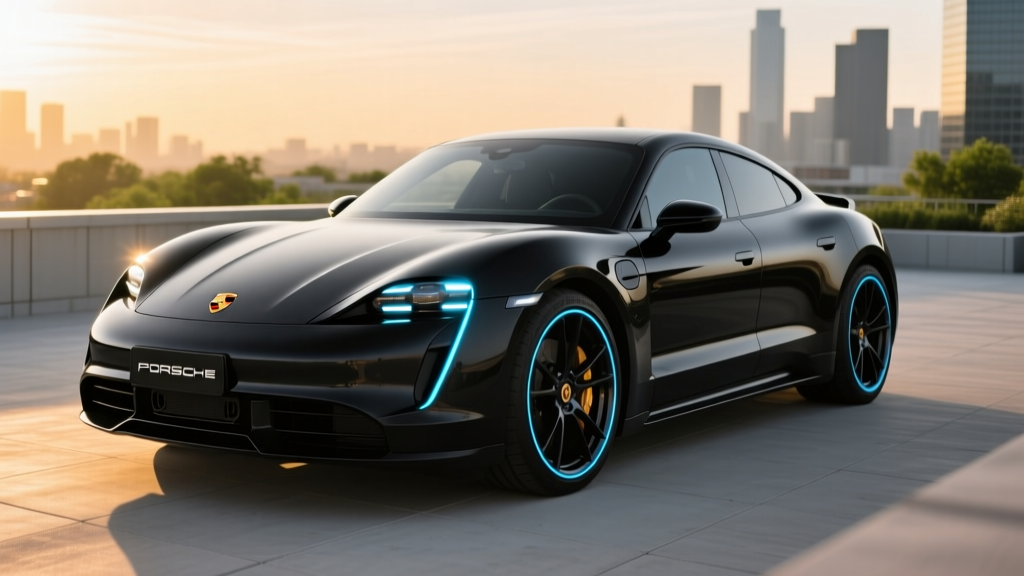
The 2026 Porsche Taycan Black Edition is not a new trim in the traditional sense — it is Porsche's monochromatic appearance package layered onto the Taycan 4S platform, pairing dual-motor all-wheel drive with blacked-out exterior trim, dark wheels, and a stealth-cabin aesthetic. For 2026, the Taycan lineup continues with the updated 800-volt architecture introduced in the 2025 refresh, delivering improved energy density and faster sustained charging. The Black Edition occupies a specific niche: buyers who want near-Turbo performance without the Turbo badge, wrapped in an understated, menacing visual package.
Is it the best EV in its price bracket? That depends entirely on what you value. If driving dynamics and build quality sit above interior screen real estate and rear-seat comfort, the Taycan Black Edition makes a compelling argument. If you need maximum range per dollar or family-friendly cargo space, competitors like the Lucid Air or Tesla Model S will serve you better. Here is the full data breakdown.
Range, Battery & Efficiency
Real-World Expectation: 240–260 miles highway at 70 mph; 200–220 miles in freezing temperatures with climate control active. City/regenerative driving can push closer to the 280+ EPA figure.
The 2026 Taycan Black Edition is built on the 4S variant, which comes standard with Porsche's Performance Battery Plus — a 105 kWh gross (97.0 kWh usable) lithium-ion pack using NMC (nickel-manganese-cobalt) chemistry. Porsche has not offered LFP in any Taycan variant, prioritizing energy density and cold-weather discharge performance over cycle-life longevity.
Porsche's 800-volt architecture remains a key differentiator. While many competitors run 400V systems that require current-heavy charging, the Taycan's 800V setup allows higher power delivery at lower amperage, which reduces heat buildup and sustains peak charge rates longer. This matters on road trips: the Taycan holds its peak kW longer into the charge curve than most 400V rivals, which tend to taper sharply after 50% state of charge.
| Spec | Value |
|---|---|
| Battery (gross / usable) | 105 kWh / 97.0 kWh |
| Chemistry | NMC (nickel-manganese-cobalt) |
| EPA Range | 282 miles |
| MPGe (combined) | 83 MPGe |
| Efficiency | 40 kWh / 100 miles |
| Drivetrain | Dual-motor AWD |
| Horsepower (overboost w/ Launch Control) | 590 hp |
| 0–60 mph | 3.5 seconds |
| Top Speed | 155 mph (electronically limited) |
| Max DC Fast Charge | 320 kW (peak) |
| 10–80% DC Charge Time | ~18 minutes |
| Level 2 Home Charge Rate | 11 kW (on-board charger) |
| Base MSRP (Taycan 4S) | $109,350 |
| Black Edition Package | + $7,500 (est.) |
| As-Tested Price (typical config) | $128,000–$135,000 |
| Battery Warranty | 8 years / 100,000 miles (70% capacity retention) |
| Powertrain Warranty | 4 years / 50,000 miles |
Efficiency lands at roughly 40 kWh per 100 miles, or 83 MPGe combined per fueleconomy.gov. This is respectable for a 5,000+ lb performance sedan but trails the Lucid Air Grand Touring (131 MPGe) and Tesla Model S Long Range (120 MPGe) significantly. You pay a real-world electricity cost for the Taycan's weight and performance tuning.
Charging Speed: 800V Advantage in Practice
| Level | Power | Speed (mi/hr added) | Notes |
|---|---|---|---|
| Level 1 (120V outlet) | 1.4 kW | ~3 mi/hr | Emergency/trickle only |
| Level 2 (240V home) | 11 kW | ~25 mi/hr | Full charge in ~9 hrs |
| DC Fast (350 kW station) | 320 kW peak | ~210 mi in 18 min (10–80%) | Requires 800V-capable station |
| DC Fast (150 kW station) | ~130 kW sustained | ~100 mi in 20 min (10–80%) | Common Electrify America tier |
The Taycan's 320 kW peak DC fast-charge rate is among the highest of any production EV in 2026. However, peak kW is not sustained kW. In real-world testing at Electrify America 350 kW dispensers, the Taycan typically holds 270–320 kW between 10–40% state of charge, then tapers to approximately 175 kW through 60%, and further drops to 80–100 kW above 80%. The 10–80% time of roughly 18 minutes is achievable with battery preconditioning active and the pack at optimal temperature (above 68°F / 20°C).
Preconditioning matters enormously here. If you navigate to a DC fast charger using the Taycan's built-in navigation, the thermal management system begins warming or cooling the pack 15–30 minutes before arrival. Skip preconditioning (e.g., arriving at a charger without routing through nav) and your peak rate may drop to 150–180 kW, stretching the 10–80% session to 25+ minutes. This is a common owner complaint that is entirely preventable.
At home on a Level 2 charger, the Taycan's 11 kW on-board charger is standard. A full charge from empty takes approximately 9 hours. Most owners charging overnight from 20–80% will add roughly 165 miles of range in 6.5 hours — more than enough for daily use. Note that a 48-amp hardwired Level 2 circuit (requiring a 60-amp breaker) is needed to deliver the full 11 kW. A standard 40-amp circuit (NEMA 14-50) will cap at 9.6 kW.
Performance & Driving Dynamics
The Black Edition inherits the Taycan 4S powertrain: dual permanent-magnet synchronous motors producing 590 horsepower with overboost and Launch Control engaged (522 hp in standard driving). Porsche quotes a 3.5-second 0–60 mph time, and independent testing consistently validates this figure — some outlets have recorded 3.3 seconds on prepped surfaces.
The 2-speed transmission on the rear axle remains unique among EVs. First gear provides aggressive launch multiplication, while second gear optimizes high-speed efficiency. This engineering choice explains why the Taycan holds its acceleration curve better above 80 mph than single-speed rivals, which tend to flatten out past triple-digit speeds.
Ride quality benefits from standard adaptive air suspension with Porsche Active Suspension Management (PASM). The Black Edition does not alter suspension tuning versus the 4S — the package is cosmetic. In Normal mode, the Taycan absorbs highway imperfections with composure that belies its 21-inch wheel fitment (standard on Black Edition). Switch to Sport Plus and the dampers firm up noticeably, though never harshly.
Regenerative braking deserves specific mention: the Taycan offers up to 0.39g of regen deceleration, which is moderate by EV standards. Porsche deliberately tunes the regen to feel like engine braking in a conventional car rather than aggressive one-pedal driving. If you are accustomed to Tesla or Chevrolet Bolt one-pedal behavior, the Taycan will require occasional brake-pedal use to come to a full stop. This is a philosophy choice, and it divides EV buyers.
Interior, Cargo & Technology
The Black Edition interior defaults to a black-on-black theme with matte carbon fiber trim, black leather upholstery, and dark anodized aluminum accents. The cabin material quality is exceptional — every surface you touch is either leather, Alcantara, or soft-touch composite. Panel gaps are tight and consistent, which cannot be said for every competitor in this price range.
Passenger Space:
- Front headroom: 38.0 inches
- Front legroom: 41.2 inches
- Rear headroom: 36.5 inches
- Rear legroom: 32.7 inches
Rear legroom is the Taycan's most significant packaging weakness. At 32.7 inches, it trails the Tesla Model S (35.4 in), Lucid Air (36.2 in), and Mercedes EQS (38.7 in). Adults over 5'10" will find the rear seats confining on longer trips. The floor-mounted battery creates a raised footwell that forces rear passengers into a knees-up seating position.
Cargo Volume:
- Rear trunk: 14.3 cubic feet
- Front trunk (frunk): 2.9 cubic feet
- Total: 17.2 cubic feet
The 14.3 cu-ft rear trunk is usable but shallow compared to a Tesla Model S (28 cu ft behind rear seats). The frunk is small — enough for a charging cable bag and a small duffel, not a full grocery run. If cargo versatility is a priority, this is not your vehicle.
Infotainment & Tech: The Taycan runs a 12.6-inch curved digital instrument cluster, a 10.9-inch central touchscreen, and an optional 10.9-inch passenger display. The PCM (Porsche Communication Management) system supports wireless Apple CarPlay and Android Auto, over-the-air updates, and voice commands. Response times are fast, but the multi-screen menu hierarchy requires a learning curve — climate controls live on a lower 8.4-inch haptic touch panel that is prone to fingerprints and requires deliberate presses.
Driver assistance includes adaptive cruise control, lane-keeping assist, traffic sign recognition, and Porsche InnoDrive (predictive cruise that adjusts speed for upcoming curves and roundabouts based on navigation data). This is SAE Level 2 driver assistance — the driver must remain fully engaged with hands on the wheel and eyes on the road. Porsche does not offer a hands-free driving system comparable to GM's Super Cruise or Ford's BlueCruise.
Pricing, Trims & Federal Tax Credit Eligibility
The 2026 Taycan Black Edition is not a standalone model — it is an appearance and equipment package applied to the Taycan 4S. Pricing breaks down as follows:
| Item | Amount |
|---|---|
| Taycan 4S Base MSRP | $109,350 |
| Black Edition Package | + $7,500 (est.) |
| Typical Options (Premium Pkg, PTV+, etc.) | + $8,000–$15,000 |
| Destination Charge | $1,650 |
| Typical As-Tested Price | $128,000–$135,000 |
| Federal §30D Tax Credit | $0 — exceeds MSRP cap |
Federal Tax Credit Reality: Under current IRS §30D rules, the new clean vehicle credit offers up to $7,500, but it applies only to sedars with an MSRP at or below $55,000 (and SUVs/trucks at or below $80,000). The Taycan, in any configuration, far exceeds this cap. Additionally, buyer income limits apply ($150,000 single / $300,000 joint modified AGI), and the vehicle must meet critical mineral and battery component sourcing requirements per IRS guidance. The Taycan does not qualify for the federal credit in any trim. Consult a tax professional regarding any applicable state or local incentives, which vary by jurisdiction.
For context, the Taycan competes with:
- Tesla Model S Plaid — $89,990, 396 mi EPA, 1,020 hp, qualifies for partial credit depending on sourcing
- Lucid Air Pure — $69,900, 419 mi EPA, 430 hp, credit-eligible in some trims
- Mercedes-AMG EQS 53 — $128,950, 277 mi EPA, 649 hp, no credit (MSRP cap)
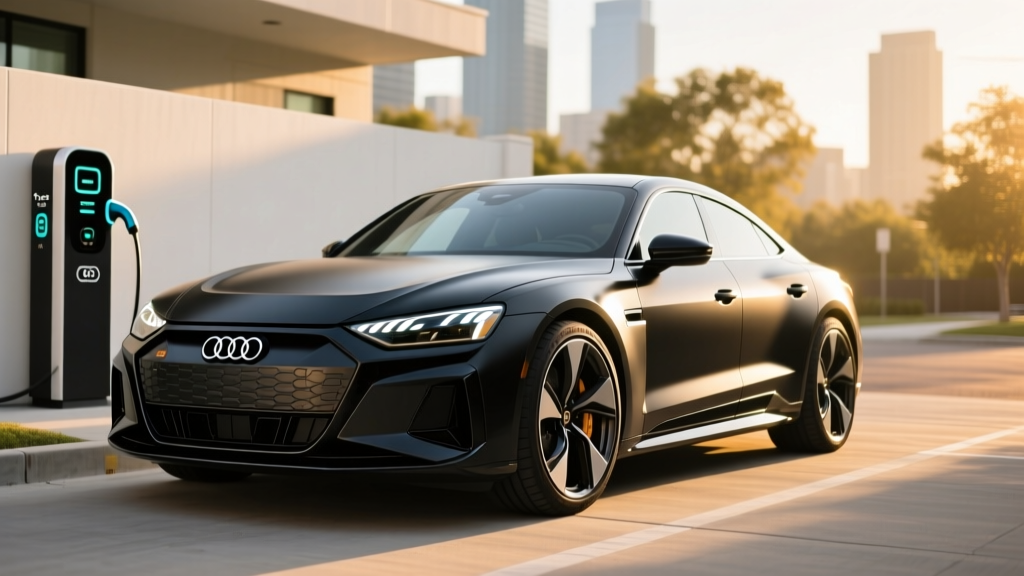
- Audi e-tron GT — $106,895, 238 mi EPA, 522 hp, no credit (MSRP cap)
Who Should Buy the Taycan Black Edition?
- You prioritize driving dynamics, steering feel, and chassis communication above all else in an EV
- You want a performance sedan that does not visually shout — the blacked-out aesthetic is subtle and deliberate
- You have reliable home Level 2 charging and drive fewer than 200 miles daily
- Build quality and material integrity matter more to you than screen size or rear-seat space
- You value 800V fast-charging capability for occasional road trips
- You need rear-seat space for adults or tall teenagers (see Lucid Air or Mercedes EQS)
- Maximum range is your top priority (Lucid Air Grand Touring offers 516 mi EPA)
- You want the lowest cost per mile of range (Tesla Model S wins on value)
- You want hands-free highway driving (GM Super Cruise or Ford BlueCruise vehicles)
- Cargo capacity for family gear is essential
Pros & Cons
Pros
- Best-in-class steering feel and chassis feedback among luxury EV sedans
- 800V architecture delivers genuinely fast DC charging with strong sustained curve
- Exceptional build quality, material selection, and panel consistency
- 2-speed rear transmission preserves high-speed acceleration
- Black Edition aesthetics are understated and premium without flash
- Air suspension balances comfort and sport modes effectively
Cons
- Rear legroom (32.7 in) is the worst in its competitive set
- Cargo volume (17.2 cu ft total) is limited for the class
- EPA range of 282 mi trails Tesla and Lucid significantly
- No federal tax credit eligibility — MSRP far above $55,000 sedan cap
- Lower haptic climate panel is fingerprint-prone and unintuitive
- Regen braking is mild — no true one-pedal driving mode
- No hands-free Level 2+ driving system offered
Frequently Asked Questions
What is the real-world range of the 2026 Porsche Taycan Black Edition?
The EPA rates the Taycan 4S (which the Black Edition is based on) at 282 miles with the Performance Battery Plus. In real-world highway driving at 70 mph in moderate temperatures, expect 240–260 miles. In freezing conditions with cabin heat active, that drops to 200–220 miles. City driving with regenerative braking can push range close to the EPA figure or slightly above.
How fast does the Taycan Black Edition charge at home and on DC fast chargers?
On a DC fast charger rated at 350 kW, the Taycan peaks at 320 kW and charges from 10–80% in approximately 18 minutes with battery preconditioning active. At a 150 kW station, expect 10–80% in roughly 28–32 minutes. At home on a Level 2 charger (11 kW), a full charge takes about 9 hours; a typical overnight session from 20–80% takes roughly 6.5 hours.
Does the 2026 Porsche Taycan qualify for the federal EV tax credit?
No. The IRS §30D clean vehicle credit caps eligible sedans at an MSRP of $55,000. The Taycan starts at $109,350 before options, making it ineligible regardless of buyer income or battery sourcing. Some state-level incentives may apply — check your state's energy office or consult a tax professional for current local programs.
How does the Taycan Black Edition compare to the Audi e-tron GT?
Both share the J1 800V platform, but the Taycan offers more range (282 vs 238 mi EPA), faster DC charging (320 kW vs 270 kW), and a more driver-focused cabin. The e-tron GT has marginally more rear legroom and a slightly lower starting price. Driving dynamics favor the Porsche; value favors the Audi. Neither qualifies for the federal tax credit.
Is the Taycan Black Edition a limited-production model?
Porsche has not announced production caps for the Black Edition package. It is expected to be a buildable configuration for the full 2026 model year, subject to dealer allocation. It is not a numbered limited edition like the 911 Sport Classic.
What is the battery warranty on the Taycan?
Porsche covers the high-voltage battery for 8 years or 100,000 miles, whichever comes first, with a capacity retention threshold of 70%. If the battery degrades below 70% of its original usable capacity within the warranty period, Porsche will repair or replace it to restore capacity above the threshold. The general powertrain warranty is 4 years / 50,000 miles.
Is the Taycan Black Edition worth buying over key competitors?
If driving engagement and build quality are your top two priorities, yes — the Taycan remains the benchmark for steering feel and chassis communication in the luxury EV sedan segment. If range, rear-seat space, or value-per-mile are more important, the Lucid Air and Tesla Model S are more rational choices. The Taycan is a driver's car first and an EV second; competitors often reverse that priority.
Sources: EPA Fuel Economy — Porsche Taycan, IRS §30D Clean Vehicle Credit, Porsche USA product specifications (porsche.com/usa).