Quick Verdict: The 2025 Cadillac Lyriq at a Glance
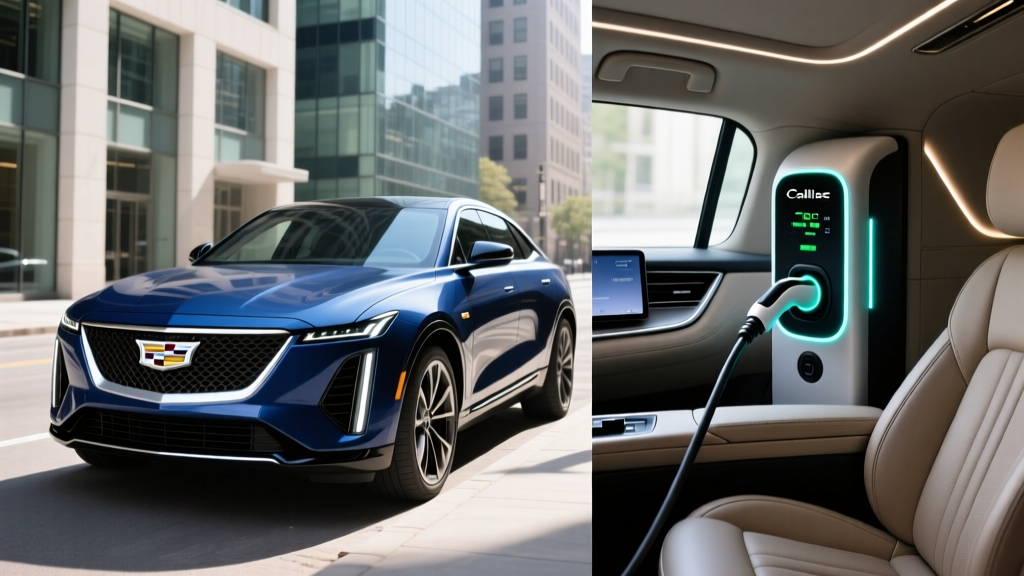
The 2025 Cadillac Lyriq occupies a specific niche in the luxury EV market: a midsize crossover that prioritizes ride comfort, cabin quietness, and design presence over outright performance or charging speed. Built on GM's Ultium platform with a 102 kWh usable battery pack, the Lyriq delivers an EPA-estimated 314 miles of range in rear-wheel-drive form — enough for most daily routines and realistic road trips with planning. The addition of an all-wheel-drive powertrain for 2025 broadens its appeal, especially in northern climates, while the new Sport trim sharpens its visual stance.
But the Lyriq isn't without compromises. Its DC fast-charging peak of 190 kW trails rivals like the BMW iX and Genesis Electrified GV70, and its driver-assistance suite, while competent, doesn't match the hands-free highway confidence of GM's own Super Cruise (which remains limited in availability on this model). If you value a whisper-quiet cabin, a massive 33-inch LED display, and genuine luxury materials over lap times and 10-minute charge stops, the 2025 Lyriq makes a compelling case.
| Spec | RWD (Luxury / Premium Luxury) | AWD (Premium Luxury / Sport) |
|---|---|---|
| EPA Range | 314 mi | 307 mi |
| Battery (Usable) | 102 kWh, NMC (Ultium) | 102 kWh, NMC (Ultium) |
| Horsepower | 340 hp | 500 hp |
| 0–60 mph | 6.0 sec (est.) | 4.6 sec (est.) |
| Max DC Fast Charge | 190 kW | 190 kW |
| 10–80% DC Charge Time | ~33 min | ~33 min |
| Level 2 Home Charge | 19.2 kW (52 mi/hr) | 19.2 kW (52 mi/hr) |
| MPGe (City/Hwy/Combined) | 95 / 82 / 89 | 93 / 80 / 87 |
| Base MSRP | $57,195 (Luxury) | $62,195 (Premium Luxury AWD) |
Range and Efficiency: 314 Miles EPA, but Expect Less on the Highway
The rear-wheel-drive 2025 Cadillac Lyriq carries an EPA-estimated 314 miles of range. The AWD variant drops slightly to 307 miles. Efficiency lands at 89 MPGe combined for RWD, translating to roughly 34 kWh per 100 miles — respectable for a 5,700-pound luxury crossover, though not class-leading against lighter competitors.
EPA tests blend city, highway, and mild-weather driving. In practice, expect the following from the 2025 Lyriq RWD:
- City / suburban mixed driving (65°F): 290–320 mi — close to or slightly above EPA, thanks to regenerative braking in stop-and-go traffic.
- Highway cruising at 70–75 mph (65°F): 240–270 mi — aerodynamic drag and the Lyriq's substantial curb weight reduce efficiency at sustained speed.
- Cold weather (25°F or below, highway): 190–230 mi — the NMC battery loses efficiency in the cold, and cabin heating draws significant energy. The Lyriq's heat pump (standard on Premium Luxury and above) mitigates some of this loss.
For a 300-mile road trip in fair weather, plan one DC fast-charge stop. In winter, budget two stops on trips over 200 miles.
Charging Speed: Adequate, Not Class-Leading
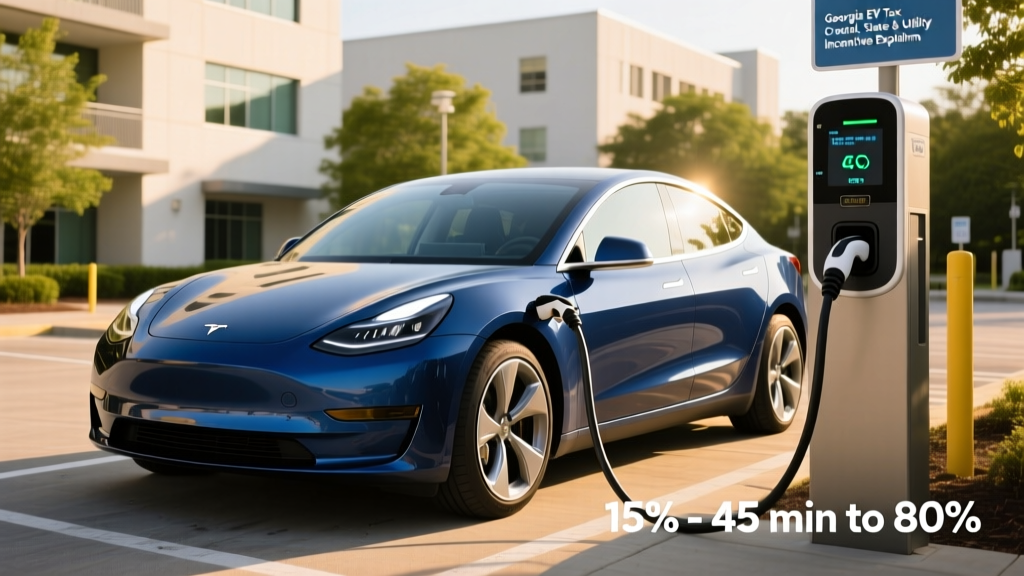
The 2025 Lyriq's 190 kW peak DC fast-charging rate is the most debated spec on the sheet. It's enough to add roughly 76 miles of range in 10 minutes under ideal conditions, and the 10–80% session takes approximately 33 minutes at a functioning 190+ kW station. That's adequate for road-trip comfort stops but noticeably slower than the BMW iX xDrive50 (peak ~200 kW, 10–80% in ~28 min) or the Hyundai Ioniq 5 (peak 240 kW, 10–80% in ~18 min).
| Charging Level | Power | Time / Rate | Notes |
|---|---|---|---|
| Level 1 (120V) | ~1.4 kW | ~3–4 mi/hr | Emergency/top-up only; ~80+ hours for full charge |
| Level 2 (240V, 48A) | 11.5 kW | ~33 mi/hr, ~9.5 hr full | Standard home setup on a NEMA 14-50 outlet |
| Level 2 (240V, 80A) | 19.2 kW | ~52 mi/hr, ~6 hr full | Requires hardwired Wallbox or similar; panel capacity check needed |
| DC Fast Charge | Peak 190 kW | 10–80% in ~33 min | Rate tapers significantly above 80%; plan stops at 10–80% for best efficiency |
At home, the Lyriq's onboard charger supports up to 19.2 kW on Level 2 — one of the highest in its class. On an 80-amp hardwired circuit, you'll recover about 52 miles of range per hour, meaning a full overnight charge from near-empty is realistic. Most owners on a standard 48-amp / 11.5 kW setup will still wake up fully charged every morning. If your daily driving is under 80 miles, even a 32-amp Level 2 unit (7.7 kW) is sufficient.
The Lyriq uses the CCS1 connector for public DC charging. GM has confirmed that NACS (Tesla Supercharger) adapters are available, and 2025 models ship with a CCS port and a dealer-supplied NACS adapter for access to Tesla's Supercharger network — a significant real-world advantage for road trips.
Performance and Drivetrain: RWD Comfort or AWD Punch
The RWD Lyriq sends 340 hp and 325 lb-ft of torque to the rear wheels via a single permanent-magnet motor. The 0–60 mph sprint takes an estimated 6.0 seconds — relaxed by EV standards, but the linear, silent thrust feels quicker than the number suggests. This is a cruiser, not a sport sedan, and the suspension tuning confirms it: soft, composed, and genuinely quiet at highway speeds.
The AWD model adds a front induction motor for a combined 500 hp and 450 lb-ft, dropping the 0–60 time to approximately 4.6 seconds. The extra traction matters in rain and snow, and the AWD system can decouple the front motor during light-load cruising to preserve efficiency. The performance gap over RWD is substantial, but the range penalty is modest — only 7 EPA miles.
Regenerative braking is adjustable via steering-wheel paddles, and the one-pedal driving mode is strong enough to bring the Lyriq to a full stop without touching the brake pedal. The ride quality is a genuine differentiator: this is one of the quietest and most composed crossovers in the segment, rivaling the Mercedes EQE SUV in isolation.
Interior, Tech, and Cargo Space
The cabin centerpiece is a 33-inch diagonal LED display that stretches across the dashboard, combining the instrument cluster and infotainment screen into a single curved panel. Resolution is sharp, and Google Built-In handles navigation, voice commands, and app integration. Wireless Apple CarPlay and Android Auto are standard. The interface is responsive, though the sheer screen width can make some controls a reach for the driver.
Cadillac's Super Cruise — GM's hands-free highway driving system (SAE Level 2) — is available on Premium Luxury and Sport trims. On mapped divided highways, it handles steering, acceleration, and braking with your eyes on the road and hands off the wheel, monitored by a driver-attention camera. This is not autonomous driving; you must remain alert and ready to resume control at any time.
Super Cruise is an SAE Level 2 system. It requires continuous driver supervision. It does not navigate unmapped roads, handle construction zones autonomously, or replace an attentive driver. Compare this to Level 4 robotaxi services (Waymo) that operate without a human driver in geofenced areas.
Cargo space measures 28.0 cubic feet behind the second row and 60.9 cubic feet with the rear seats folded. Rear legroom is generous at 39.6 inches. There is no front trunk (frunk) — the space under the hood houses HVAC components and the 19.2 kW onboard charger. This is a notable omission for a vehicle in this price range, and it limits total storage compared to the Rivian R1S or Tesla Model X.
Pricing, Trims, and Federal Tax Credit Eligibility
| Trim | Drivetrain | Base MSRP | Est. After §30D Credit* |
|---|---|---|---|
| Luxury | RWD | $57,195 | ~$49,695 |
| Premium Luxury | RWD | $62,195 | ~$54,695 |
| Premium Luxury | AWD | $64,695 | ~$57,195 |
| Sport | AWD | $67,095 | ~$59,595 |
*Federal tax credit estimates assume full §30D eligibility. Actual credit depends on battery sourcing, buyer income, and MSRP caps. See details below.
The 2025 Lyriq's MSRP falls under the IRS §30D SUV price cap of $80,000, so all trims clear the vehicle-price threshold. However, the full $7,500 credit is not guaranteed. Eligibility depends on three factors that change regularly:
- Battery sourcing and critical minerals: The Ultium battery pack's component and mineral sourcing must meet escalating annual thresholds. For 2025, the percentages required are higher than in prior years, and some Lyriq configurations may qualify for only $3,750 (half credit) or none at all depending on the build date and supply chain.
- Buyer income caps: Modified adjusted gross income must not exceed $150,000 (single), $225,000 (head of household), or $300,000 (joint filers).
- Point-of-sale transfer: You can transfer the credit to the dealer at purchase to reduce your out-of-pocket cost, rather than waiting to claim it on your tax return.
Before purchasing, verify the specific VIN's credit status on the fueleconomy.gov credit lookup tool and confirm with your tax professional.
Ownership Costs and Warranty
Cadillac covers the Lyriq with a 4-year/50,000-mile bumper-to-bumper warranty and a 8-year/100,000-mile battery and powertrain warranty — standard for the segment. The battery warranty guarantees that the pack will retain at least 70% of its original capacity during the coverage period. GM's Ultium platform has shown modest degradation in early fleet data, typically losing 5–8% capacity over the first 50,000 miles, which is within the expected NMC curve.
Charging costs vary by region, but at the national average of $0.16/kWh for home electricity, a full 102 kWh charge costs approximately $16.32 — yielding a per-mile fuel cost of roughly $0.05. On DC fast chargers averaging $0.40/kWh, that rises to $0.12/mile. Compare this to a gas crossover averaging 24 mpg at $3.50/gallon ($0.15/mile), and the Lyriq delivers meaningful savings, especially for home-charging owners.
Insurance premiums for the Lyriq run 10–20% higher than comparable gas-powered Cadillac crossovers, a pattern common across the EV segment due to higher repair costs and parts pricing. Expect annual premiums in the $2,200–$3,000 range depending on your profile and state.
How the 2025 Lyriq Compares to Key Rivals
The Lyriq competes in a crowded luxury EV crossover segment. Here's how it stacks up against three primary alternatives:
BMW iX xDrive50: The iX charges faster (~200 kW peak, ~28 min 10–80%), offers slightly more range (EPA 324 mi), and has a more advanced driver-assist system. It also costs significantly more — starting around $87,000 — and its polarizing design isn't for everyone. The Lyriq wins on value and ride comfort; the iX wins on tech and charging speed.
Genesis Electrified GV70: Similar price point (~$66,000 starting), but with only 236 miles of EPA range and a smaller 77.4 kWh battery. The GV70 charges faster (peak 240 kW) and has a more conventional luxury interior, but the range gap is substantial. The Lyriq is the better road-trip choice.
Tesla Model Y Long Range: Far more range (EPA 330 mi), access to the Supercharger network natively, and a lower starting price (~$48,000). But the Model Y's ride quality, cabin materials, and noise isolation are a tier below the Lyriq. If luxury is the priority, the Cadillac wins; if efficiency and charging infrastructure matter most, the Tesla is the pragmatic pick.
Pros, Cons, and Who Should Buy the 2025 Cadillac Lyriq
- 314 mi EPA range is competitive for the class
- Exceptionally quiet and comfortable ride
- 33-inch LED display is visually stunning
- 19.2 kW Level 2 onboard charger enables fast home charging
- Super Cruise hands-free highway driving (on equipped trims)
- MSRP under the $80,000 §30D SUV cap
- Generous rear-seat legroom (39.6 in)
- 190 kW DC peak charging is slower than key rivals
- No front trunk (frunk)
- Super Cruise not available on base Luxury trim
- Federal tax credit eligibility varies by build date and sourcing
- AWD performance still trails Porsche Macan EV and BMW iX
- Infotainment learning curve due to screen width
- The luxury commuter: If your daily drive is under 100 miles and you charge at home, the Lyriq's comfort, silence, and 314-mile buffer make it an ideal daily driver.
- The design-conscious buyer: The Lyriq's exterior lighting choreography and interior ambiance stand out in a segment full of minimalist, tech-forward designs.
- The Super Cruise adopter: If you regularly drive mapped divided highways, Super Cruise reduces fatigue meaningfully — just remember it's Level 2, not autonomy.
Look elsewhere if: You need the fastest possible DC charging for frequent long road trips, require a frunk for gear, or want track-capable performance.
Frequently Asked Questions
What is the real-world range of the 2025 Cadillac Lyriq?
The EPA rates the RWD Lyriq at 314 miles and AWD at 307 miles. In real-world highway driving at 70–75 mph in moderate temperatures, expect 240–270 miles. In cold weather (below 25°F), highway range can drop to 190–230 miles. City driving with regenerative braking often yields results close to or slightly above the EPA figure.
How fast does the 2025 Lyriq charge?
On a DC fast charger rated at 190 kW or above, the Lyriq charges from 10% to 80% in approximately 33 minutes, adding about 76 miles in the first 10 minutes. At home on a 19.2 kW Level 2 hardwired charger, it recovers about 52 miles per hour, achieving a full charge in roughly 6 hours. On a standard 48-amp (11.5 kW) home outlet, expect about 33 miles per hour and a 9.5-hour full charge.
Does the 2025 Cadillac Lyriq qualify for the federal EV tax credit?
The Lyriq's MSRP is below the IRS §30D $80,000 SUV cap, so it clears the vehicle-price requirement. Full $7,500 credit eligibility depends on the battery's critical-mineral and component-sourcing percentages for the specific build date, as well as the buyer's income (capped at $150K single / $300K joint). Some Lyriq VINs may qualify for the full credit, a partial $3,750 credit, or none — verify on fueleconomy.gov and consult a tax professional before purchase.
Is the 2025 Lyriq worth buying over the BMW iX or Tesla Model Y?
It depends on your priorities. The Lyriq offers the best ride comfort and cabin quietness in the segment at a lower price than the iX. The BMW charges faster and has more advanced tech; the Tesla Model Y offers more range, faster Supercharger access, and a lower price, but sacrifices luxury. If comfort, design, and a premium experience matter more than peak charging speed, the Lyriq is the strongest choice.
Does the Lyriq have a frunk?
No. The 2025 Cadillac Lyriq does not have a front trunk. The under-hood area houses the onboard charger, HVAC components, and other electronics. Total cargo capacity is 28.0 cu ft behind the second row and 60.9 cu ft with seats folded.
What is the battery warranty?
Cadillac covers the Lyriq's 102 kWh Ultium battery pack for 8 years or 100,000 miles, whichever comes first. The warranty guarantees the battery will retain at least 70% of its original capacity during the coverage period. The bumper-to-bumper warranty is 4 years / 50,000 miles.