The Short Answer on Cadillac's EV SUVs
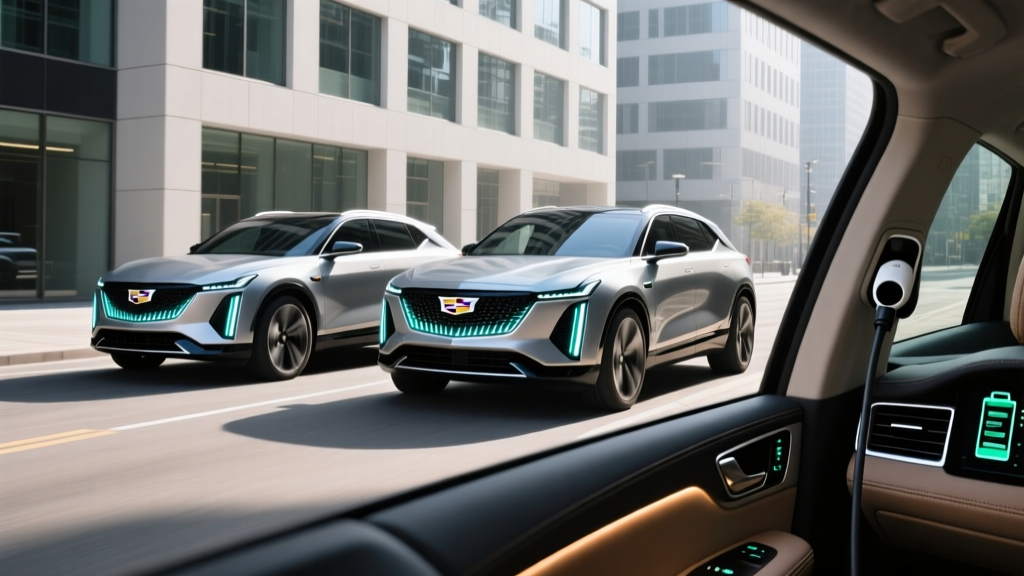
Cadillac currently sells two all-electric SUVs: the midsize Lyriq (starting ~$58,590, EPA range up to 314 miles) and the compact Optiq (starting ~$53,990, EPA range up to 302 miles). Both ride on GM's Ultium platform with NMC battery chemistry, DC fast-charge at up to 190 kW, and qualify for varying levels of the federal §30D tax credit depending on your income, sourcing, and timing. If you want a luxury electric SUV with a traditional Cadillac ride, strong Super Cruise integration, and home-charging convenience, either model works — but your choice hinges on cabin space needs, budget, and whether you can install a Level 2 charger at home.
What Cadillac EV SUVs Are Available Now?
As of the 2026 model year, Cadillac's electric SUV lineup consists of two production models, with a third flagship on the horizon:
- Cadillac Lyriq — A two-row midsize luxury SUV competing with the BMW iX, Genesis Electrified GV70, and Tesla Model X.
- Cadillac Optiq — A compact luxury SUV slotting below the Lyriq, aimed at the Audi Q4 e-tron and Mercedes EQB buyer.
- Cadillac Escalade IQ — A full-size three-row flagship (announced/rolling production) starting above $130,000. Not yet broadly available at dealers.
This guide focuses on the Lyriq and Optiq — the models you can actually buy and take delivery of today.
Lyriq vs Optiq: Spec-by-Spec Breakdown
| Specification | 2026 Cadillac Lyriq | 2026 Cadillac Optiq |
|---|---|---|
| EPA Range (max config) | 314 mi (RWD) | 302 mi (AWD) |
| Real-World Highway Range* | ~255–275 mi | ~245–265 mi |
| Battery (usable) | 102 kWh, NMC | 85 kWh, NMC |
| Drivetrain Options | RWD or AWD | AWD standard |
| Horsepower | 340 hp (RWD) / 500 hp (AWD) | ~300 hp (AWD) |
| 0–60 mph | 6.0s (RWD) / 4.6s (AWD) | ~5.5s (est.) |
| Max DC Fast Charge | 190 kW | 150 kW |
| 10–80% DCFC Time | ~33 min | ~34 min |
| Level 2 Charge Rate | 19.2 kW (AC) | 11.5 kW (AC) |
| MPGe (combined) | 89 MPGe | ~87 MPGe |
| Cargo Volume | 28 cu ft (rear up) / 60.8 cu ft (folded) | ~24 cu ft / ~52 cu ft |
| Base MSRP | $58,590 (Luxury RWD) | $53,990 (Sport AWD) |
| Battery/Powertrain Warranty | 8 yr / 100,000 mi | 8 yr / 100,000 mi |
| NACS (Tesla Supercharger) | Yes (native port) | Yes (native port) |
*Real-world highway range assumes 70–75 mph sustained driving in moderate temperatures. Expect 15–25% range reduction in sub-freezing conditions due to battery heating demands and increased cabin energy use.
Real-World Range Reality Check
The Lyriq's 314-mile EPA figure is measured on a blended city/highway cycle. On a pure 75-mph highway run in 40°F weather, plan for roughly 230–250 miles before needing to stop. The Optiq's smaller 85 kWh pack means highway road trips will require a charge stop roughly every 220–240 miles in similar conditions. Both models support route-based battery preconditioning — activating navigation to a DC fast charger warms the battery to optimal temperature, which can shave 5–10 minutes off your 10–80% charge time in cold weather.
How Do Cadillac's EV SUVs Compare to Gas Equivalents?
The natural cross-shop for a Lyriq buyer is the BMW X5 or Genesis GV70; for the Optiq, it's the Audi Q5 or Mercedes GLC. Here's how the economics stack up over five years and 75,000 miles:
| Cost Factor (5 yr / 75k mi) | Cadillac Lyriq AWD ($62,590) | BMW X5 xDrive40 (~$67,000) |
|---|---|---|
| Purchase Price (MSRP) | $62,590 | $67,000 |
| Federal Tax Credit (§30D) | Up to $7,500* | $0 |
| Effective Purchase Price | ~$55,090 | $67,000 |
| Fuel / Charging Cost | ~$3,200 (home L2 at $0.14/kWh) | ~$9,400 (premium at $3.80/gal, 22 MPG) |
| Maintenance (est.) | ~$1,200 | ~$4,500 |
| Insurance (est. avg) | ~$11,500 | ~$9,800 |
| 5-Year Total Cost of Ownership | ~$70,990 | ~$90,700 |
*§30D credit eligibility depends on buyer AGI, battery critical-mineral sourcing, and MSRP caps. The Lyriq qualifies as an SUV (MSRP cap $80,000). Verify current-year rules at IRS.gov. Point-of-sale transfer is available at participating dealers.
The Lyriq's biggest ownership advantage is fuel cost. At a national average of $0.14/kWh for home charging, filling the Lyriq's 102 kWh pack costs roughly $14.30 — equivalent to about 3.8 gallons of premium. Over 75,000 miles, that's a $6,200 fuel savings. Maintenance savings add another ~$3,300 thanks to no oil changes, no transmission fluid, and regenerative braking extending pad life significantly.
However, EV insurance premiums run 10–20% higher on average due to repair complexity and battery replacement costs. Factor that into your budget.
Charging at Home and on the Road
Owning a Cadillac EV SUV is dramatically more convenient if you can charge at home. Here's what to expect at each charging level:
| Charging Level | Power (kW) | Miles Added per Hour | Typical Use Case |
|---|---|---|---|
| Level 1 (120V outlet) | ~1.4 kW | ~3–4 mi/hr | Overnight top-up; too slow for daily use on large packs |
| Level 2 (240V home) | 11.5–19.2 kW | ~30–52 mi/hr | Primary daily charging; full overnight replenishment |
| DC Fast Charge | 150–190 kW | ~600–750 mi/hr (peak) | Road trips; 10–80% in ~33 min |
Home charging setup cost: A professional Level 2 installation (240V, 48-amp circuit with a hardwired wall connector) typically runs $800–$2,500 if your electrical panel has capacity. If you need a panel upgrade from 100A to 200A service, add $1,500–$3,000. The Lyriq's 19.2 kW onboard charger is among the fastest in its class — it can add roughly 52 miles of range per hour on a compatible Level 2 station, meaning even a depleted battery refills overnight in about 5.5 hours.
Public charging network: Both the Lyriq and Optiq come with native NACS (North American Charging Standard) ports, giving you direct access to Tesla's Supercharger network — over 25,000 stalls in North America — without an adapter. This is a significant practical advantage over CCS-only vehicles, which require a NACS adapter for Supercharger access. Electrify America, EVgo, and ChargePoint stations remain accessible via CCS adapters or legacy connectors where available.
Charging curve reality: The Lyriq's 190 kW peak rate only sustains between roughly 10–40% state of charge. From 40–80%, the rate tapers to 100–130 kW, and above 80% it drops sharply to protect battery longevity. This is normal lithium-ion behavior, not a defect — but it means the last 20% of a DC fast charge can take nearly as long as the first 60%. For road trips, plan to charge from 10–80% and move on rather than waiting for a full battery.
Tax Credit Eligibility: What You Actually Qualify For
The federal §30D clean vehicle credit can reduce your effective purchase price by up to $7,500, but eligibility has multiple gates:
- Buyer income caps: Modified AGI must not exceed $300,000 (joint), $225,000 (head of household), or $150,000 (single).
- MSRP cap: SUVs must have an MSRP at or below $80,000. Both the Lyriq and Optiq clear this threshold in most trims.
- Battery sourcing requirements: Increasingly strict percentages of critical minerals and battery components must be sourced from the US or free-trade-agreement partners. This requirement tightens annually and can disqualify otherwise eligible vehicles mid-year.
- Point-of-sale transfer: You can transfer the credit to the dealer at purchase, reducing your out-of-pocket cost immediately rather than waiting for a tax refund.
- One credit per four years: The §30D credit for new EVs is limited to one vehicle per taxpayer per four-year period.
Always confirm eligibility with your tax professional and check the latest sourcing determinations at fueleconomy.gov before committing to a purchase.
Common Misconceptions About Cadillac's EV SUVs
| Myth | Fact |
|---|---|
| "The battery will need replacing in 5 years." | GM warrants the Ultium battery for 8 years/100,000 miles against defects and capacity loss below 60%. Real-world degradation data from similar NMC packs shows ~8–12% capacity loss over 150,000 miles. Full replacement (if ever needed) currently runs $12,000–$18,000 out of warranty. |
| "Super Cruise means I don't have to pay attention." | Super Cruise is an SAE Level 2 system. It handles steering, acceleration, and braking on mapped divided highways, but you must remain alert and keep your eyes on the road. A driver-monitoring camera enforces this. It is not self-driving. |
| "I can't take road trips — charging takes too long." | At 190 kW DCFC, the Lyriq adds ~200 miles of range in about 20 minutes. On a 600-mile trip, that's two 20-minute stops — comparable to rest stops you'd take anyway for food and stretching. |
| "EVs don't work in cold climates." | Cold weather reduces range by 15–25%, but the Lyriq and Optiq both feature heat pumps and battery preconditioning. Owners in Minnesota and Maine report usable winter ranges of 220–250 miles on the Lyriq — more than adequate for most daily driving and commutes. |
| "The Lyriq is just a rebadged Chevy Equinox EV." | While both use Ultium architecture, the Lyriq has a unique platform, longer wheelbase, 102 kWh battery (vs. 85 kWh), distinct suspension tuning, a 33-inch LED dashboard display, and substantially more sound insulation. The driving experience is meaningfully different. |
Who Should Buy a Cadillac EV SUV?
Decision Framework: Lyriq vs Optiq vs Look Elsewhere
Choose the Lyriq if:
- You need 28+ cu ft of cargo space for family gear, golf clubs, or weekend trips
- You want the longest possible range (314 mi RWD) for highway-heavy commutes
- You value the 19.2 kW Level 2 charge rate for rapid overnight replenishment
- Your budget accommodates a $58,590–$72,000 price range
Choose the Optiq if:
- You primarily drive in urban/suburban environments and rarely need more than 24 cu ft of cargo
- You want AWD standard and a slightly lower entry price (~$53,990)
- You don't mind a ~30-mile range trade-off for a more compact footprint
- Parking ease and city maneuverability matter to you
Look elsewhere if:
- You need three rows — wait for the Escalade IQ or consider the Kia EV9
- You cannot install home charging and your area lacks reliable public DCFC infrastructure
- You regularly tow more than 3,500 lbs (the Lyriq is rated for 1,500 lbs; the Optiq similar)
- You want the absolute fastest DC charging — the Hyundai Ioniq 5 and Porsche Macan EV charge significantly faster (250–270 kW peak)
First-Time EV Buyer Checklist
If the Lyriq or Optiq is your first electric vehicle, here's what to address before signing:
- Confirm home charging feasibility. Check your electrical panel capacity (200A service is ideal). Get a quote from a licensed electrician for a 240V/48A circuit run to your garage or parking spot. If you live in a condo or apartment without charging access, investigate workplace charging or nearby public Level 2 stations before committing.
- Understand your daily mileage. If your round-trip commute is under 80 miles, either vehicle handles multiple days between charges. If it's 150+ miles daily, the Lyriq RWD's 314-mile range provides a more comfortable buffer.
- Factor in insurance early. Get quotes for the exact trim you're considering. EV premiums are typically 10–20% higher than comparable gas vehicles. Some insurers offer EV-specific discounts.
- Verify tax credit eligibility. Don't assume you qualify. Check income caps, confirm the vehicle's current sourcing status, and discuss point-of-sale transfer with your dealer.
- Plan your first road trip route. Use the in-dash navigation or apps like A Better Routeplanner to map a familiar route and identify Supercharger or Electrify America stops. Knowing where you'll charge eliminates first-trip anxiety.
- Learn preconditioning. Both models can precondition the battery when you navigate to a DC fast charger. This is critical in cold weather — a preconditioned battery charges 20–30% faster than a cold one.
Frequently Asked Questions
Does the Cadillac Lyriq qualify for the full $7,500 federal tax credit?
The Lyriq has qualified for the full §30D credit in prior model years, but critical-mineral sourcing requirements tighten annually. As of 2026, eligibility can shift mid-year based on supply chain changes. Always verify at fueleconomy.gov or with your tax professional before purchase.
Can I use Tesla Superchargers with a Cadillac Lyriq or Optiq?
Yes. Both vehicles feature native NACS charge ports, meaning you can plug directly into any Tesla Supercharger V3 or V4 stall without an adapter. This provides access to the most reliable and extensive fast-charging network in North America.
How long will the Ultium battery last?
GM warrants the battery for 8 years or 100,000 miles against defects and degradation below 60% of original capacity. Based on data from earlier Ultium-based vehicles and similar NMC chemistry packs, expect roughly 88–92% capacity retention at 100,000 miles. Many EV batteries remain functional well beyond 200,000 miles with gradual capacity loss.
Is the Cadillac Lyriq good in snow?
The AWD Lyriq delivers 500 hp with torque distributed across both axles, and the Ultium platform's low center of gravity (battery pack mounted under the floor) provides stable handling. Combined with winter tires, owners in northern climates report confident snow and ice performance. Range will drop 15–25% in sustained sub-freezing temperatures.
What does Level 2 Super Cruise actually do?
Super Cruise is an SAE Level 2 driver-assistance system. On compatible divided highways (over 750,000 miles mapped in North America), it controls steering, acceleration, and braking. However, you must remain the responsible driver at all times — a infrared camera monitors your eye gaze and will issue escalating warnings if you look away. It does not handle construction zones, unmapped roads, or complex urban intersections.
How much does it cost to charge a Lyriq at home vs. public DCFC?
At home on Level 2 ($0.14/kWh national average), a full 102 kWh charge costs about $14.30. At a public DC fast charger ($0.35–$0.50/kWh), that same fill costs $35–$51. For lowest ownership cost, prioritize home charging and use DCFC primarily for road trips.